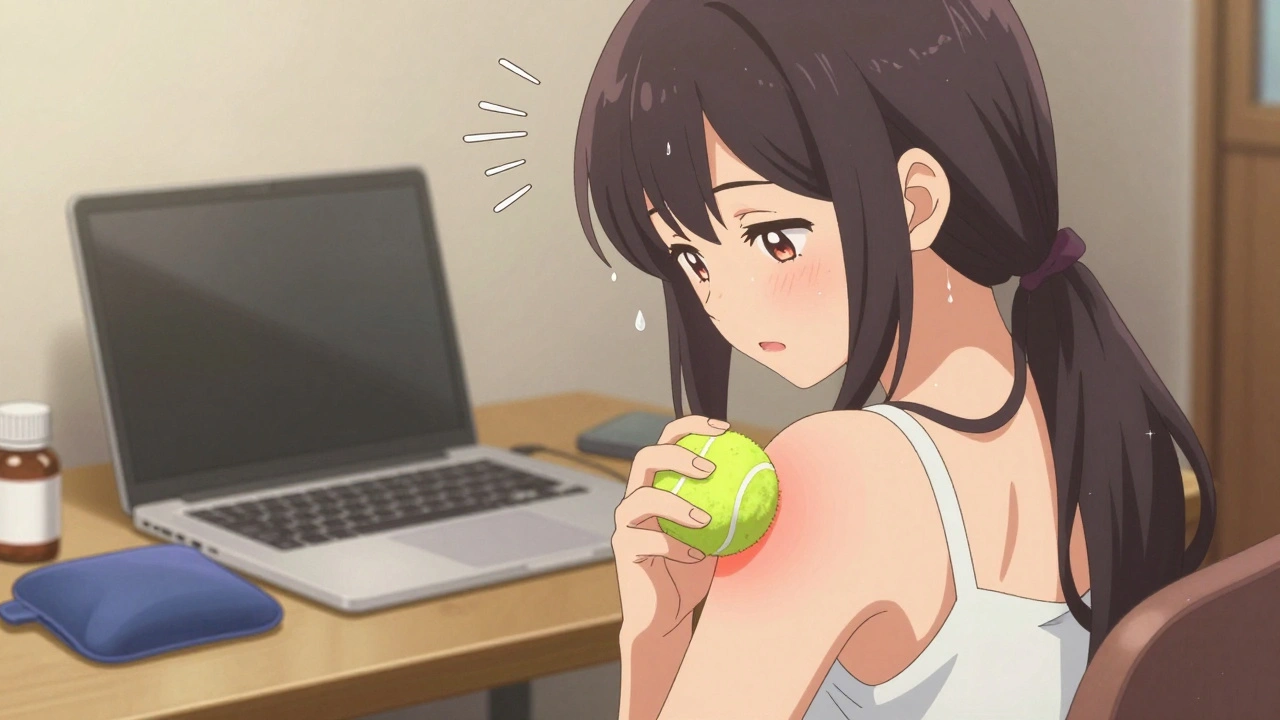
When you have a knot in your shoulder that sends sharp pain down your arm, you’re not dealing with a random ache—you’re likely dealing with a trigger point, a hyperirritable spot in a taut band of skeletal muscle that causes localized and referred pain. Also known as muscle knots, these aren’t just discomfort—they’re neurological glitches that can mimic nerve pain, headaches, or even heart issues. They don’t show up on X-rays or MRIs, but millions of people live with them daily, often misdiagnosed as arthritis, tendonitis, or sciatica.
Trigger points don’t exist in isolation. They’re closely tied to myofascial pain, a chronic condition involving pain and inflammation in the body’s soft tissues, and often flare up after injury, poor posture, or prolonged stress. Many people with muscle tension, persistent tightness from sitting, lifting, or emotional strain develop trigger points without realizing it. The pain can jump from the neck to the head (causing tension headaches), from the buttocks to the leg (mimicking sciatica), or from the jaw to the ear. This is why treating the spot where it hurts rarely works—you need to find the real source.
What makes trigger points tricky is that they’re not just about muscles. They’re linked to how your nervous system processes pain. Overworked muscles develop tiny contractions that cut off blood flow, creating a cycle of pain and tightness. Medications like NSAIDs don’t fix this. Physical therapy, dry needling, and targeted pressure (trigger point therapy) do. Even simple things like stretching, heat, and posture adjustments can break the cycle—if you know where to apply them. Some people find relief with foam rollers; others need a professional to locate and release the exact knot. The key is understanding that the pain isn’t random—it’s a signal from a specific muscle.
The posts below cover real-world cases and solutions. You’ll find how trigger points relate to opioid side effects, why some antidepressants worsen muscle tension, how to spot if your pain is coming from a knot instead of a joint, and what treatments actually work after years of failed meds. No fluff. Just what helps—and what doesn’t.