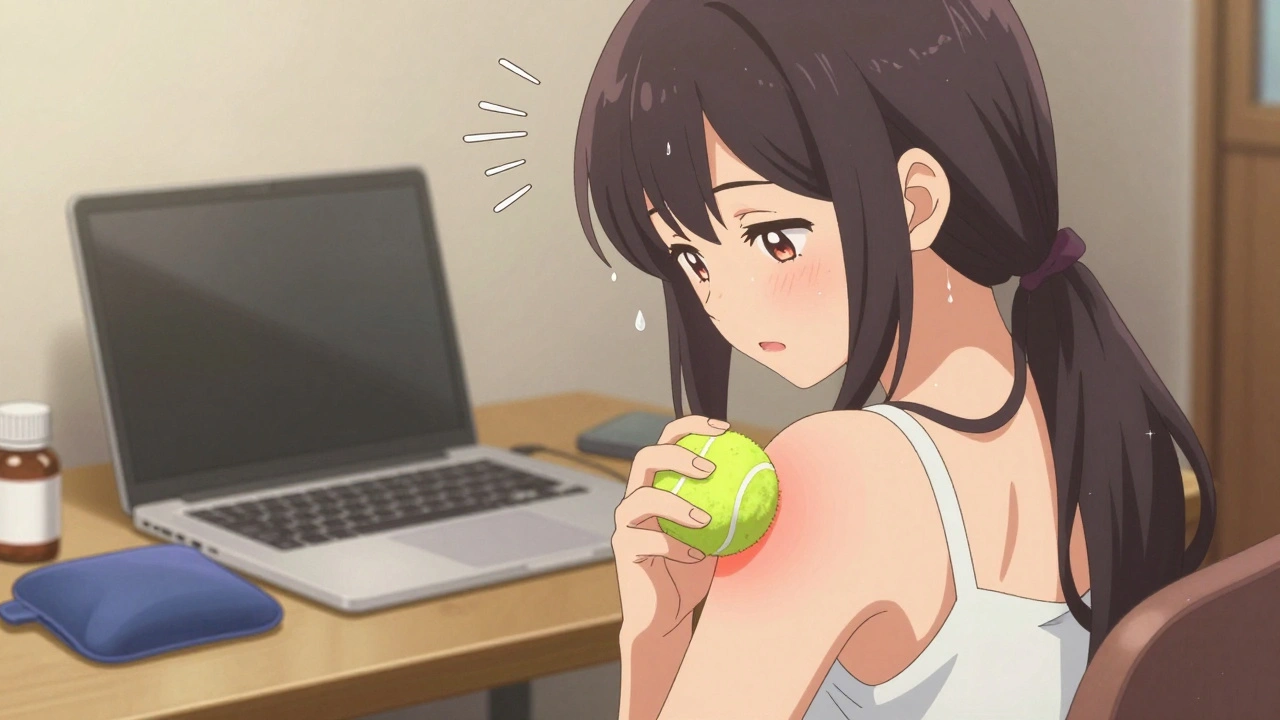
When you feel a tight, aching spot in your shoulder, back, or neck that won’t go away with stretching, you’re likely dealing with a trigger point, a hyperirritable spot in skeletal muscle that causes localized pain and often refers pain to other areas. Also known as muscle knots, these aren’t just tension—they’re functional problems that can limit movement and cause chronic discomfort. Trigger point release is a hands-on technique designed to relax these knots by applying pressure, stretching, or using tools to break up the tight bands of muscle fiber.
This method is closely tied to myofascial pain, a condition where pain originates from the connective tissue surrounding muscles, which often goes misdiagnosed as arthritis or nerve issues. Unlike general soreness, trigger point pain doesn’t fade with rest. It flares up with movement, stays sharp even when you’re still, and can mimic heart, head, or joint pain—making it easy to miss. People who sit all day, lift weights, or have chronic stress are especially prone. The good news? It responds well to targeted treatment.
There are several ways to release these points. Manual pressure from a therapist, foam rolling at home, or even dry needling, a technique where thin needles are inserted directly into the trigger point to stimulate release can work. It’s not magic—it’s physics. Applying sustained pressure tells the muscle to let go, interrupting the pain-spasm cycle. Studies show it’s as effective as some medications for short-term relief, without the side effects. And unlike massage that just feels good, trigger point release targets the source, not just the symptom.
What you’ll find in these posts isn’t just theory. Real people share how they stopped relying on painkillers after learning to manage their knots. You’ll see how trigger point therapy connects to other issues—like how opioid-induced muscle stiffness can make knots worse, or why certain antidepressants increase muscle tension. You’ll also learn what doesn’t work: cheap gadgets that promise quick fixes, or stretching alone when the muscle is locked in spasm. This isn’t about guessing. It’s about knowing which techniques are backed by evidence, how to do them safely, and when to walk away from a treatment that’s not helping.