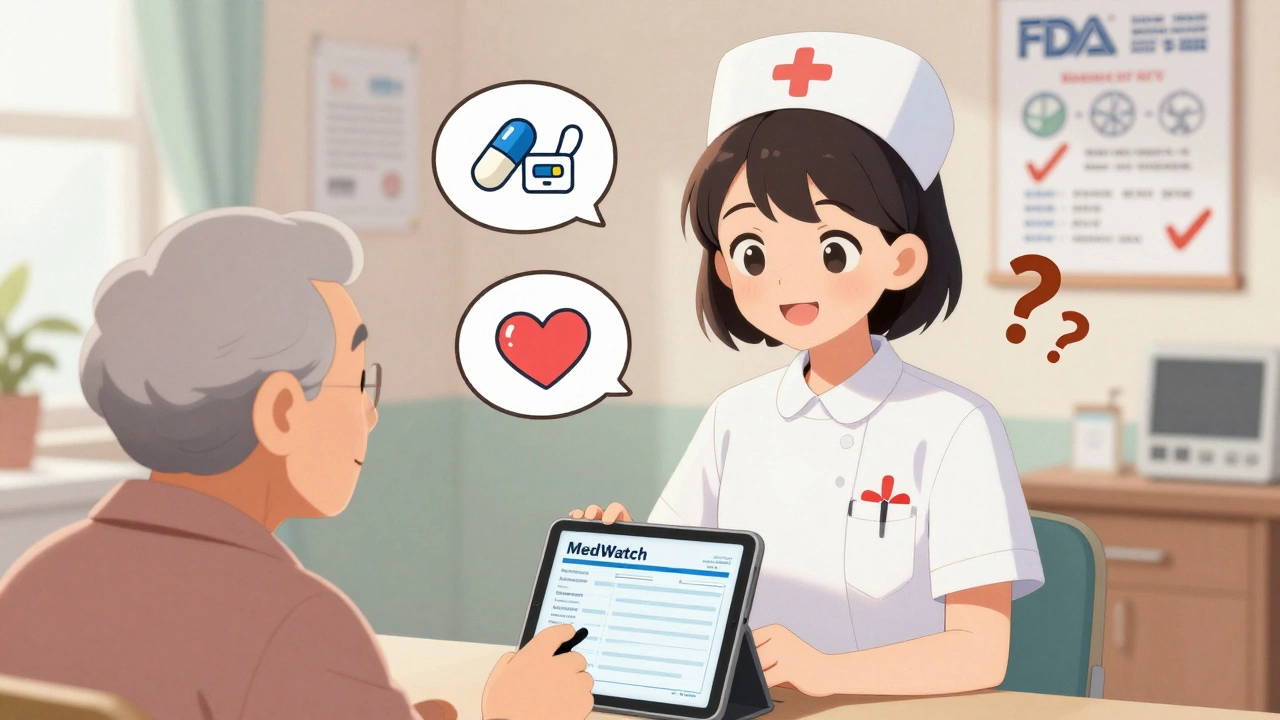
When you take a medication, you trust that it’s safe — but safety doesn’t end at approval. MedWatch, the FDA’s official program for collecting and monitoring reports of adverse drug reactions and product problems. Also known as FDA MedWatch, it’s the backbone of how the agency stays alert to dangers that only show up after thousands or millions of people use a drug. This isn’t just paperwork. It’s how the FDA found that certain antibiotics increase the risk of tendon rupture, or that some antidepressants can trigger dangerous bleeding when mixed with common painkillers.
MedWatch doesn’t just react — it connects the dots. When a pharmacist reports a patient’s unexpected reaction to a generic drug, or a parent notices a child’s severe rash after a new vaccine, those reports get added to a massive database. That data then links to other reports, helping the FDA spot patterns. For example, if ten different people report the same rare side effect from a new blood pressure pill, MedWatch flags it for review. This is how post-approval surveillance, the ongoing monitoring of drugs after they hit the market works. It’s not a one-time check. It’s a continuous watch. And it’s why the FDA can issue warnings about expired pills, hidden allergens in generics, or interactions between SSRIs and NSAIDs — all topics covered in the posts below.
What you might not realize is that your report could save someone’s life. Most people think side effects are just personal bad luck. But if you report an unusual reaction — even something small like unexplained sweating or dizziness after starting a new med — you’re helping the system catch something bigger. pharmacovigilance, the science and activities relating to detecting, assessing, understanding, and preventing adverse effects of medicines relies on real people, not just labs or clinical trials. That’s why MedWatch is so powerful: it turns everyday users into frontline observers.
You’ll find posts here that dig into how the FDA tracks generic drug quality, why allergy alerts in pharmacies are often wrong, and how opioid itching isn’t always a true allergy. These aren’t random stories. They’re all pieces of the MedWatch puzzle — examples of how safety monitoring works in the real world. Whether you’re a patient, a caregiver, or a healthcare worker, understanding MedWatch helps you make smarter choices. It tells you when to question a prescription, when to report a side effect, and when to trust that the system is watching out for you.