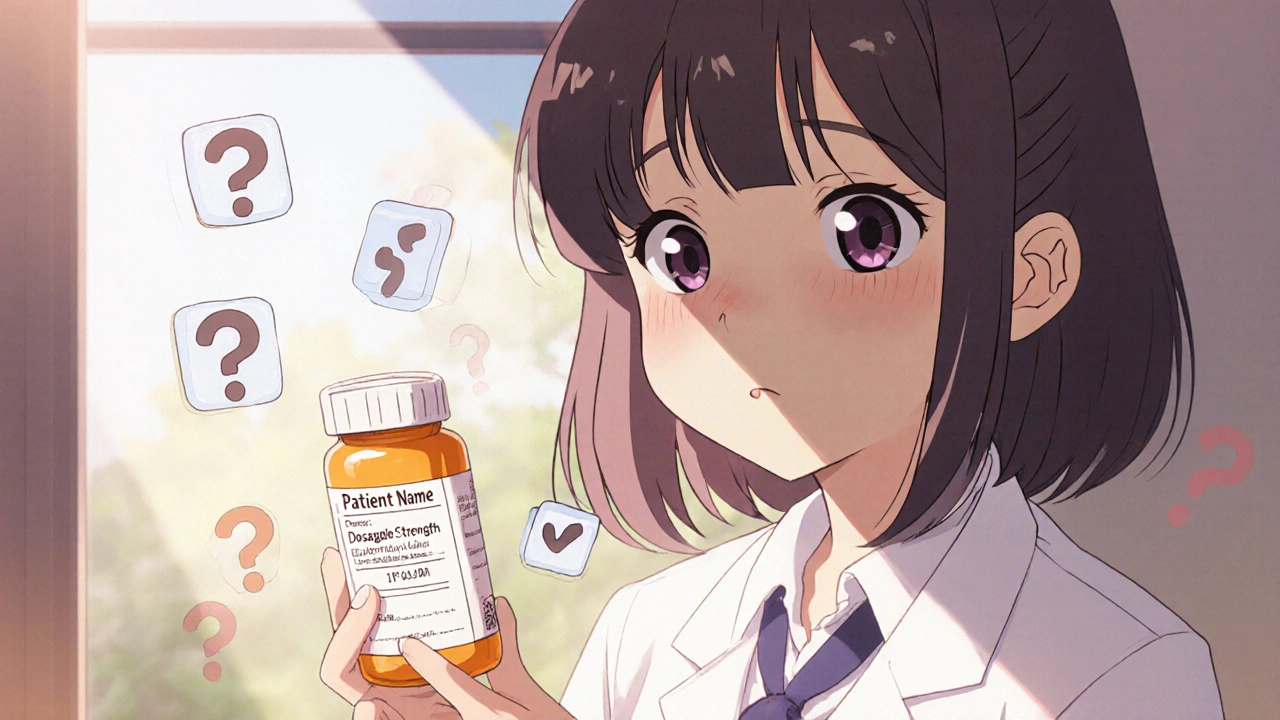
When you pick up a prescription, the medication labels, the printed text on drug containers that tell you how, when, and why to take the medicine. Also known as drug labeling, they’re your first and last line of defense against errors. These aren’t just bureaucratic fine print—they’re life-saving instructions written in plain language, meant to be read, understood, and followed.
Every prescription safety, the system of checks and clear communication that prevents harmful mistakes when taking medicine starts with the label. It tells you the name of the drug, the dose, how often to take it, and what to avoid—like alcohol, other pills, or certain foods. It also lists side effects, expiration dates, and storage rules. Miss one detail, and you could end up with nausea, dizziness, or worse. For example, if you’re taking medication labels for an antibiotic like tetracycline, missing the warning to avoid dairy can cut its effectiveness by half. Or if you store insulin where it gets too hot, it stops working—no warning, no second chance.
But labels don’t just protect you from the drug—they protect you from yourself. Think about how many people skip reading them because they’ve taken the same pill for years. That’s how mistakes happen. A child grabs a bottle because the cap looks like candy. Someone mixes painkillers because they don’t realize both contain acetaminophen. A senior takes a double dose because the tiny font made the instructions unclear. These aren’t rare cases. They’re everyday risks, and medicine instructions, the specific directions on how to use a drug safely and effectively are designed to stop them.
And it’s not just about pills. Inhalers, eye drops, patches, and even over-the-counter gels all come with labels that change how you use them. A wrong inhaler technique can mean 80% of your asthma medicine never reaches your lungs. A glaucoma drop applied wrong won’t lower pressure—it just runs down your cheek. Even something as simple as ferrous sulfate for iron deficiency needs to be taken on an empty stomach, or it won’t absorb. The label tells you all of this—if you look.
What you’ll find below is a collection of real, practical guides that dig into the hidden details behind the words on those labels. From how opioid itching isn’t always an allergy, to why childproof caps aren’t enough, to how generic drugs match brand names down to the factory—they all tie back to one thing: understanding what the label really means. These aren’t theory pieces. They’re stories from people who learned the hard way, and now show you how to get it right. Whether you’re managing diabetes, treating an infection, or just trying to keep your meds safe at home, the answers are on the label. You just need to know what to look for.