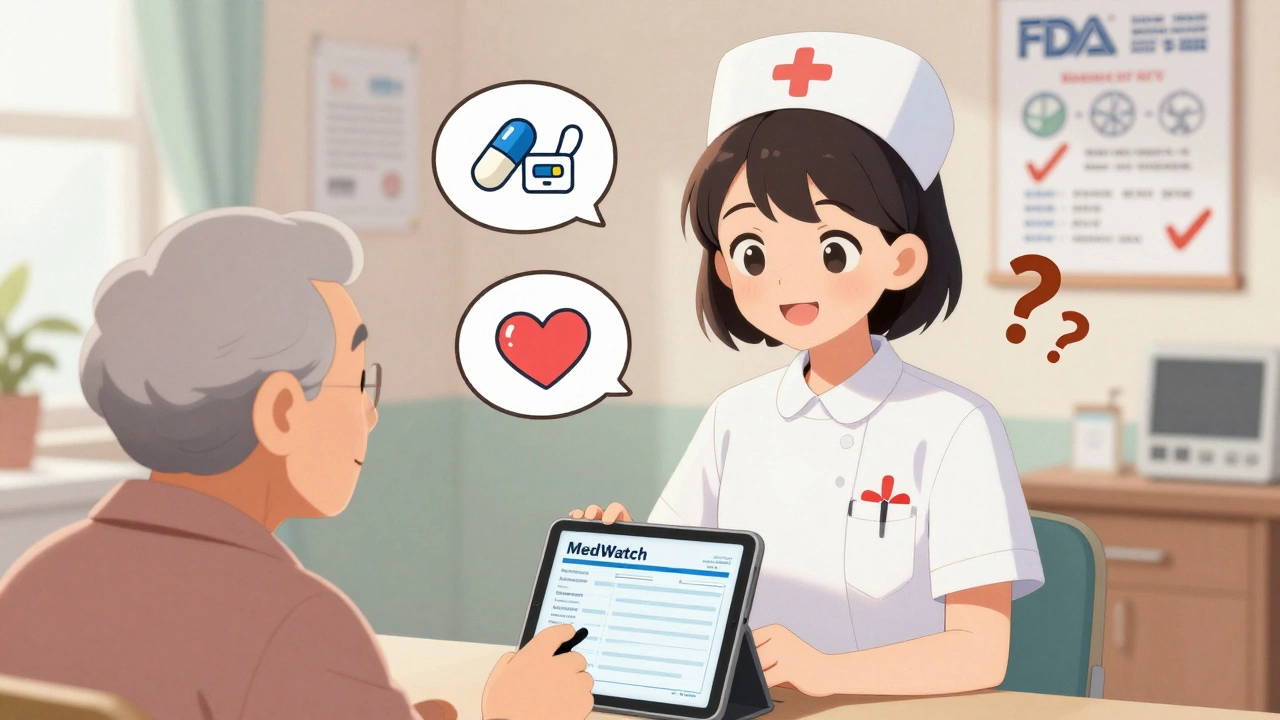
When you take a medicine, the FDA safety reporting, a system that collects and analyzes reports of harmful side effects from patients, doctors, and drug makers. Also known as pharmacovigilance, it’s the hidden safety net that pulls dangerous drugs off shelves or adds black box warnings before more people get hurt. This isn’t just paperwork—it’s how the FDA finds out that a painkiller might cause heart problems, an antibiotic could trigger deadly diarrhea, or a diabetes pill increases stroke risk after thousands of people have already taken it.
The system relies on real-world data, not just lab tests. Anyone can file a report: a patient who got a rash after starting a new pill, a pharmacist who noticed three cases of liver damage linked to a generic drug, or a doctor who saw a pattern of seizures in elderly patients on a new antidepressant. These reports feed into a massive database that looks for signals—things that happen way more often than they should. When the system flags a problem, the FDA digs deeper. They might review hospital records, talk to manufacturers, or even require new studies. This is how drugs like Vioxx and Fen-Phen were pulled, and why warnings now appear on everything from birth control to statins.
It’s not perfect. Many side effects go unreported because people don’t know how, think it’s normal, or assume the doctor already knows. That’s why the FDA also uses electronic health records, insurance claims, and even social media to spot trends. They watch for spikes in emergency room visits tied to specific drugs. They track how often a drug appears in poison control calls. And they compare safety data between brand-name and generic versions—because sometimes the filler in a generic pill causes reactions the brand didn’t.
You don’t need to be a doctor to make a difference. If you or someone you know had an unexpected reaction to a medication—whether it was dizziness, swelling, trouble breathing, or just something that felt "off"—you can report it. It takes five minutes. That report could be the one that triggers a warning, changes a label, or even saves a life down the line. The FDA doesn’t just monitor drugs after approval; it listens to the people using them.
Below, you’ll find real stories and guides that show how this system touches everyday health decisions—from spotting fake generics to understanding why your pharmacist asks about every pill you take. These aren’t just technical articles. They’re about how safety reporting affects what’s in your medicine cabinet, what your doctor prescribes, and why some drugs vanish while others stick around.