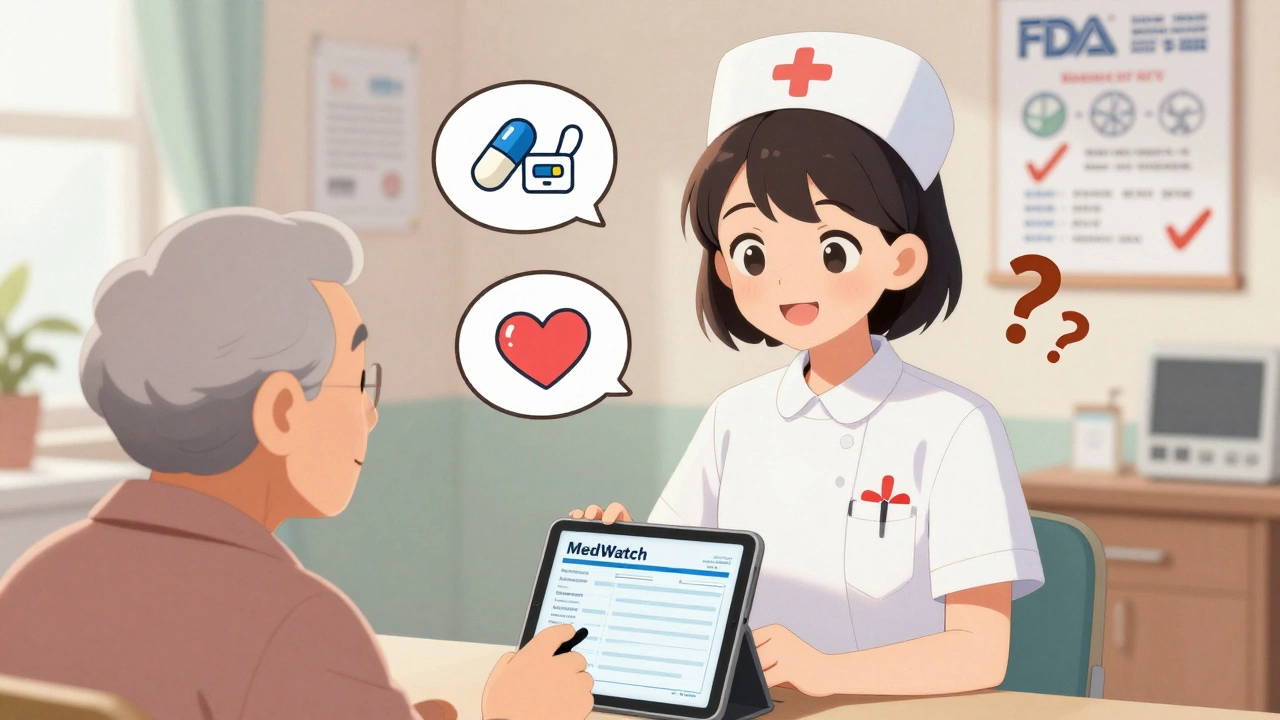
When a drug gets approved by the FDA MedWatch, the U.S. Food and Drug Administration’s system for collecting reports of adverse events and product problems. Also known as FDA Adverse Event Reporting System, it’s not just paperwork—it’s the frontline defense against hidden dangers that clinical trials miss. Think of it this way: clinical trials test drugs on thousands of people over months. But once millions are using a medicine daily for years, rare side effects, manufacturing flaws, or dangerous interactions start showing up. That’s where FDA MedWatch kicks in.
It’s not just doctors and pharmacists who report. Patients, caregivers, and even family members can submit a report if something goes wrong—like sudden liver damage after a new painkiller, unexplained bleeding with an antidepressant, or a batch of pills that crumble in the bottle. These reports feed into a live system that flags patterns. One person reporting itching after a new antibiotic might not mean much. But 50 people reporting the same thing? That’s a red flag the FDA has to investigate. The system also tracks post-market surveillance, the ongoing monitoring of drug safety after approval, which includes everything from lab tests on recalled batches to checking if generic versions match the brand in quality. And it’s not just about side effects—it’s about adverse drug reactions, harmful or unintended responses to medications that can be life-threatening, especially in older adults or people taking multiple drugs.
What you might not realize is how often these reports lead to real changes. A drug gets a black box warning. A warning label gets updated. A whole class of pills gets pulled from the market. The FDA doesn’t act on every single report—but when patterns emerge, they move fast. And your report? It matters. If you’ve had a strange reaction to a medication, even if your doctor didn’t think much of it, reporting it through MedWatch helps protect someone else down the line. This isn’t bureaucracy. It’s public safety built on real-world data.
Below, you’ll find real-world examples of how drug safety issues show up—whether it’s expired pills that turn toxic, generic drugs with hidden allergens, or antibiotics that cause deadly infections. These aren’t theoretical risks. They’re the kinds of problems FDA MedWatch was built to catch. And the more people understand how it works, the better protected we all are.