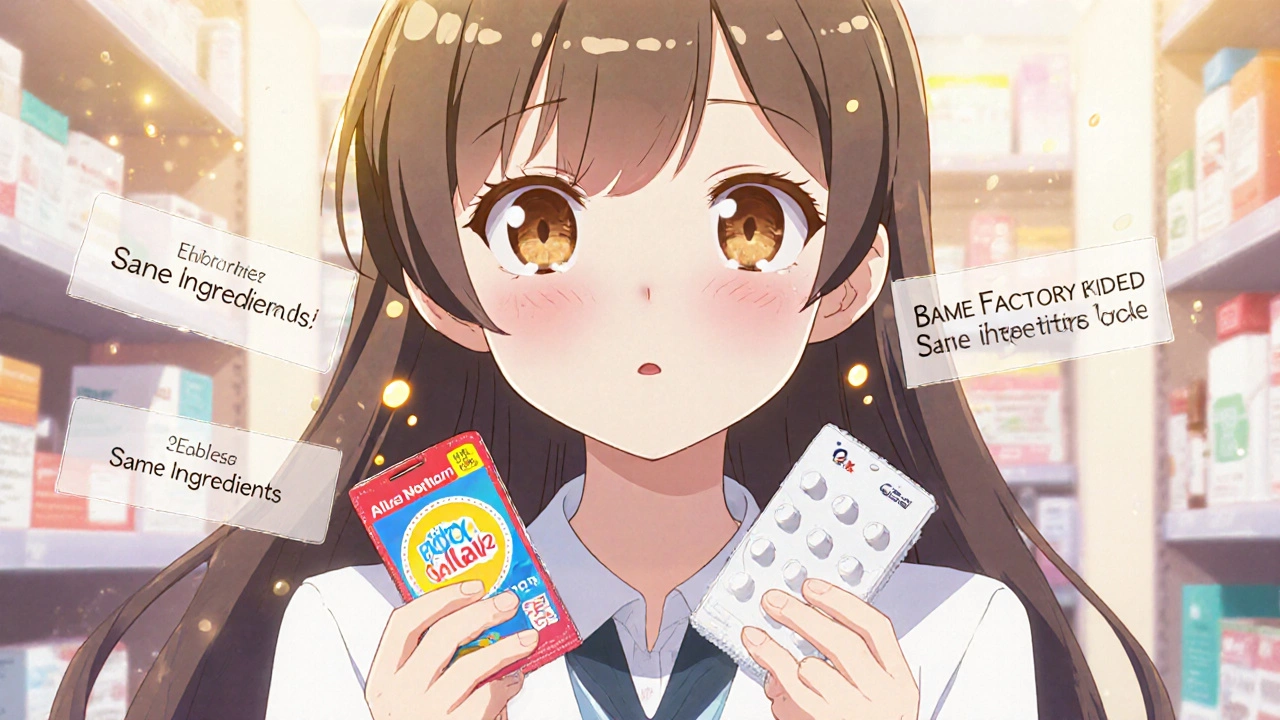
When you hear authorized generics, brand-name medications produced by the original manufacturer and sold under a generic label. Also known as brand generics, these are not knockoffs—they’re the real thing, just without the fancy packaging or marketing. They’re made in the same factory, using the same ingredients, and meet the exact same standards as the brand-name version. The only difference? The price. You get the same pill, same effect, same safety profile—but often for half the cost.
Authorized generics exist because the original drug maker wants to keep control of the market once the patent expires. Instead of letting other companies jump in and undercut them, they launch their own generic version. This means you’re not getting a copy from a random lab—you’re getting the same product from the same company that made the brand-name drug. It’s like buying the same coffee beans, but in a plain bag instead of a branded one. The taste doesn’t change. The quality doesn’t drop. You just pay less.
This matters because people often assume generic drugs are weaker or less reliable. That’s not true for authorized generics. They’re identical in strength, dosage, and how your body absorbs them. The FDA requires them to be bioequivalent, meaning they work the same way in your system. If your doctor prescribed Lipitor, and you switch to the authorized generic version made by Pfizer, your body won’t know the difference. Same active ingredient. Same fillers. Same shelf life. Same results.
And it’s not just about saving money on prescriptions. Authorized generics help cut costs across the board—insurance companies pay less, pharmacies mark up less, and patients end up with more money in their pockets. For people managing chronic conditions like high blood pressure, diabetes, or cholesterol, that savings adds up fast. A $150 monthly brand-name drug might drop to $30 as an authorized generic. That’s not a small change. That’s life-changing.
These drugs are especially common for high-volume prescriptions. Think statins like atorvastatin, blood pressure meds like lisinopril, or even antidepressants like sertraline. You’ll find them in most pharmacies, often right next to the brand name. Ask your pharmacist: "Is there an authorized generic for this?" They’ll know. Many don’t even bother listing it on the label unless you ask.
It’s also worth knowing that not all generics are created equal. Store-brand generics? Fine. But some are made overseas by companies with spotty quality control. Authorized generics remove that uncertainty. You know exactly where it came from. You know who made it. You know it’s the same formula your doctor trusted.
So why aren’t more people using them? Mostly because they don’t know they exist. Or they think "generic" means "inferior." But if you’ve ever bought a store-brand battery that lasted just as long as the name brand, you already get this idea. It’s the same principle. The pill inside the bottle doesn’t care what the label says.
Below, you’ll find real guides on how to spot these drugs, compare them to other options, and make smarter choices about your medications. From understanding how to read labels to knowing which antibiotics or cholesterol pills have authorized versions, these posts give you the tools to save money without risking your health.