
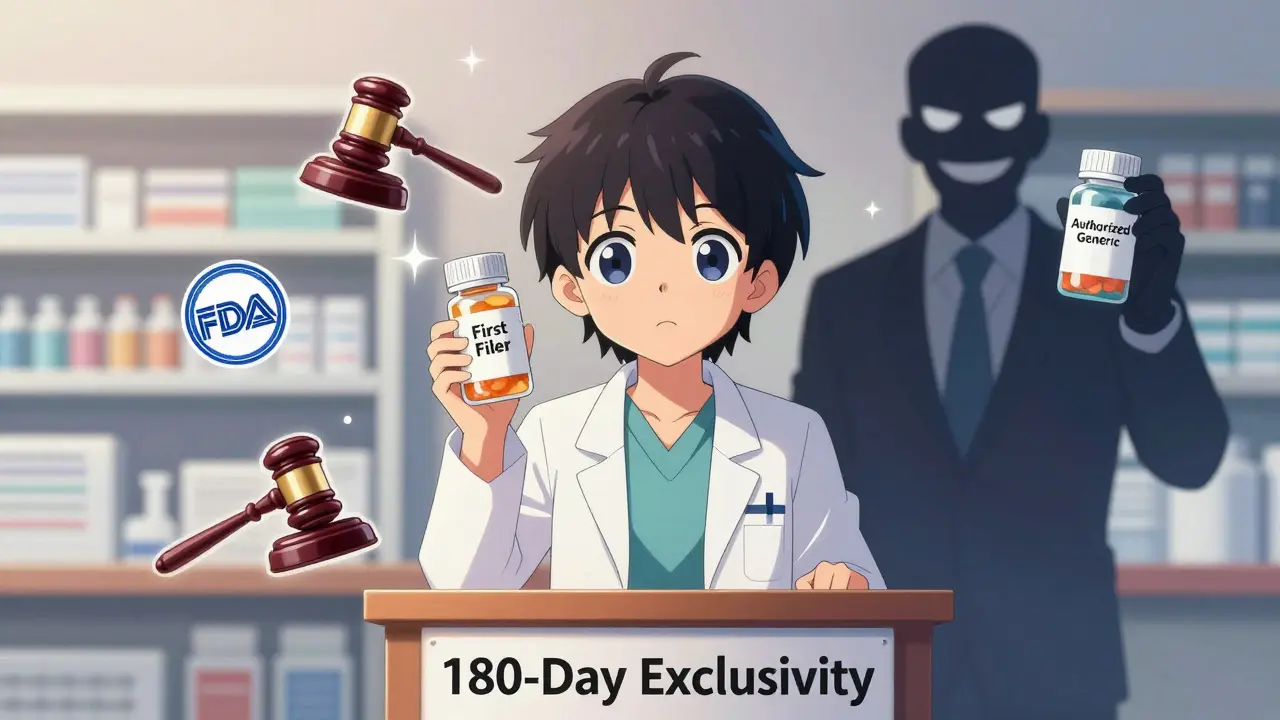
When a generic drug company challenges a brand-name drug’s patent and wins, it gets a powerful reward: 180 days of exclusive right to sell the generic version. This isn’t just a perk-it’s worth hundreds of millions of dollars. But here’s the twist: during that same 180-day window, the original drug maker can launch its own version of the drug-no brand name, same pills-and sell it at a discount. This is called an authorized generic. And it’s legal. It’s also one of the biggest loopholes in U.S. drug policy.
How the 180-Day Exclusivity Rule Works
The 180-day exclusivity rule comes from the Hatch-Waxman Act of 1984. It was designed to balance two things: giving brand-name drug companies time to recoup their R&D costs, and letting generics enter the market faster. The key tool for generics is the Paragraph IV certification. When a generic company files an Abbreviated New Drug Application (ANDA), it can claim that the brand’s patent is invalid, unenforceable, or won’t be infringed. That’s a direct challenge.
If the brand sues, the FDA can’t approve any other generics for 30 months. But if the generic wins in court-or if the brand drops the lawsuit-the clock starts. The first generic to file gets 180 days of market monopoly. During that time, the FDA can’t approve any other generic versions. That means the first entrant has no competition from other generics.
That’s the theory. In practice, it’s messier.
What Is an Authorized Generic?
An authorized generic isn’t a copy. It’s the exact same drug, made by the brand-name company, sold under a different label. No reformulation. No new approval needed. Just a new box, no fancy branding. The active ingredients, dosage, manufacturing line-it’s all identical.
Why does this matter? Because while the first generic company is enjoying its 180-day exclusivity, the brand can flood the market with its own cheaper version. Suddenly, instead of being the only game in town, the first generic is now competing against the original manufacturer. And guess who has better distribution, more shelf space, and deeper pockets? The brand.
Between 2005 and 2015, about 60% of drugs with 180-day exclusivity saw an authorized generic launch during that window. In some cases, the brand’s authorized generic outsold the first generic within weeks.
The Legal Gray Zone
There’s no law against authorized generics during exclusivity. The FDA allows it. Courts have upheld it. And the Hatch-Waxman Act never banned it. But many experts argue it defeats the whole point.
The original intent? Reward the generic company that took the risk. Challenging a patent costs $2 million to $5 million in legal fees. It can take years. The 180-day exclusivity was supposed to be the payoff. But if the brand can just step in and undercut the generic, that reward vanishes.
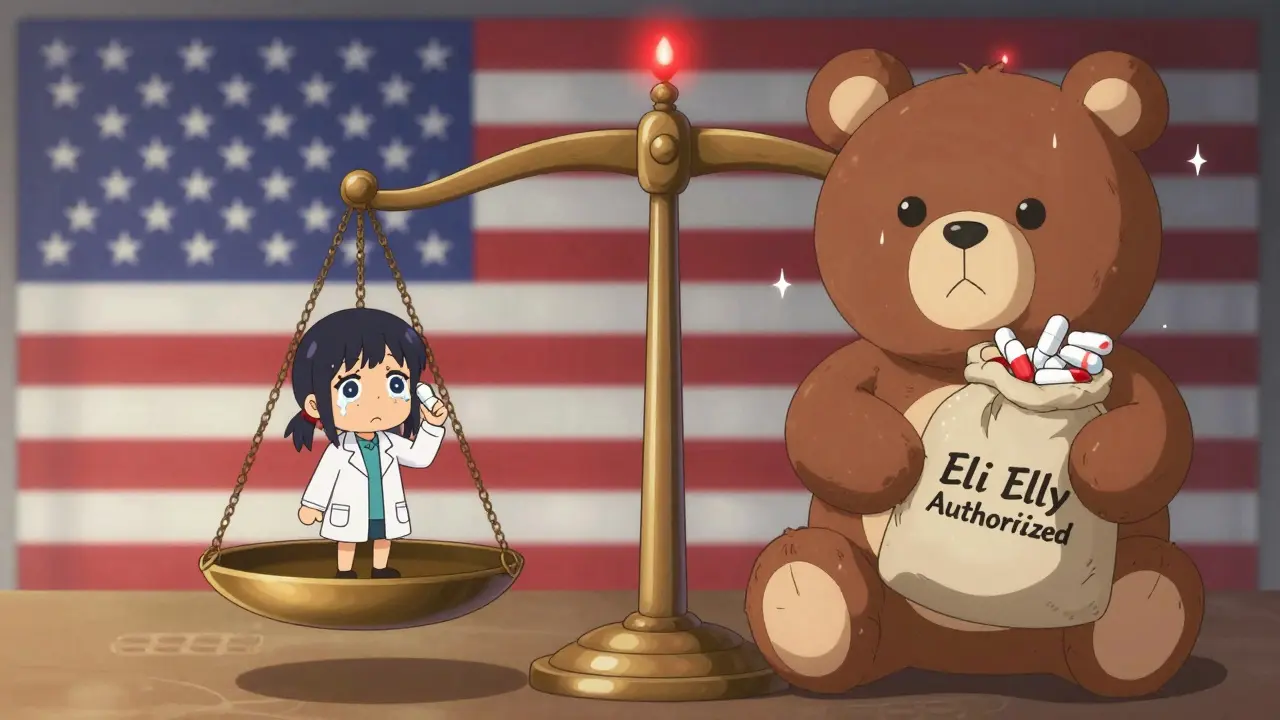
Studies show that when an authorized generic enters during the exclusivity period, the first generic’s market share drops from about 80% to 50%. Revenue losses? Between 30% and 50%. For a blockbuster drug like Humalog, Teva Pharmaceuticals lost $287 million because Eli Lilly launched its own authorized version.
Some generic companies now build this risk into their business plans. They negotiate with brand companies to delay the authorized generic launch. These deals are private, often buried in settlement agreements. Drug Patent Watch found that 78% of first-filer generics now include clauses to block or delay authorized generics.
Who Wins? Who Loses?
Consumers often pay less when authorized generics are on the market. A RAND Corporation study in 2021 showed that prices dropped 15-25% when an authorized generic competed with the first generic. That’s good for patients and insurers.
But the system is rigged against the generic challenger. Smaller companies can’t afford to gamble. If they spend millions on a patent fight, only to see the brand undercut them with an authorized version, they lose money. That’s why fewer small generic firms are filing Paragraph IV challenges today. The risk is too high.
Brand companies argue they’re just giving consumers more choice. But critics say it’s a tactic to squeeze out competition without breaking any rules. The Federal Trade Commission has filed 15 antitrust lawsuits since 2010 against brand manufacturers for allegedly using authorized generics to delay real competition.
What’s Changing?
Lawmakers are starting to notice. The Preserve Access to Affordable Generics and Biosimilars Act, reintroduced in 2023, would ban authorized generics from being sold during the 180-day exclusivity window. FDA Commissioner Robert Califf has publicly supported this idea, saying the current system creates "unintended disincentives" for generic entry.
If passed, this law could change the game. Analysts estimate it would boost first-filer revenues by $150-250 million per drug. That could mean 20-25% more patent challenges filed. For patients, it might mean more competition-not just from one generic, but from multiple.
Right now, the system is stuck in a paradox: it encourages generic companies to fight patents, but then lets the brand fight back with its own version. The law was meant to speed up access to affordable drugs. Instead, it’s become a battleground where the rules favor the deep pockets.
What Generic Companies Must Do
If you’re a generic manufacturer planning a Paragraph IV challenge, here’s what you need to know:
- Assume the brand will launch an authorized generic. Don’t count on exclusivity being worth full value.
- Negotiate terms upfront. Include clauses in settlement agreements to delay or block authorized generics.
- Track the timing carefully. The 180-day clock starts when you first ship the drug to customers-not when you get FDA approval.
- Build a legal and regulatory team early. Mistakes in triggering exclusivity cost companies money. About 28% of first filers between 2018-2022 lost part of their exclusivity due to procedural errors.
- Monitor the Orange Book. Changes in patent listings can reset your eligibility.
Big companies invest $500,000 to $1 million in specialized consultants just to manage exclusivity. Smaller firms? They often walk away.
The Bigger Picture
The U.S. generic drug market is worth $65 billion. Generics make up 90% of prescriptions but only 23% of spending. That’s the power of competition. But the 180-day exclusivity rule, once a game-changer, is now a double-edged sword.
Since 1984, Hatch-Waxman has saved Americans $2.2 trillion in drug costs. That’s real. But the rise of authorized generics has quietly weakened the incentive for companies to challenge patents. If the law doesn’t change, fewer generics will be filed. And that means fewer price drops down the line.
The real question isn’t whether authorized generics help consumers today. It’s whether they’re helping the system work as intended tomorrow. The law was built on trust-that the first challenger would get a fair shot. Right now, that shot is being taken away before it’s even fired.
What is the 180-day exclusivity period for generic drugs?
The 180-day exclusivity period is a legal incentive under the Hatch-Waxman Act that grants the first generic drug manufacturer to successfully challenge a brand-name patent the exclusive right to sell its version for 180 days. During this time, the FDA cannot approve any other generic versions of the same drug. The clock starts when the generic company begins commercial marketing-either after winning a patent lawsuit or after the brand drops its legal challenge.
Can a brand-name company sell its own generic version during the 180-day exclusivity period?
Yes. A brand-name company can launch an authorized generic during the 180-day exclusivity period. An authorized generic is the exact same drug, made by the original manufacturer, but sold without the brand name. This is legal under current FDA rules and does not violate the exclusivity provision. This practice has been widely used since the 1990s and has significantly reduced the financial benefit for the first generic entrant.
Why do brand-name companies launch authorized generics?
Brand-name companies launch authorized generics to maintain market share and revenue after a patent expires. Instead of letting a competitor capture 80% of the market, they enter the market themselves with a lower-priced version. This allows them to control pricing, keep distribution channels active, and prevent other generics from gaining traction. While it benefits consumers with lower prices, it undermines the incentive for generic companies to take on costly patent challenges.
How does an authorized generic affect the first generic company’s revenue?
When an authorized generic enters during the 180-day exclusivity period, the first generic’s market share typically drops from around 80% to 50%. Revenue losses range from 30% to 50%. For example, Teva lost $287 million in projected revenue when Eli Lilly launched an authorized version of Humalog. Industry data shows that between 2015 and 2020, first-filer generics captured only 52% of the potential revenue they were expected to earn under the original Hatch-Waxman design.
Is there any legislation to stop authorized generics during exclusivity?
Yes. The Preserve Access to Affordable Generics and Biosimilars Act (S. 1665/H.R. 3928), reintroduced in 2023, would prohibit brand-name manufacturers from launching authorized generics during the 180-day exclusivity period. The FDA and FTC have both supported this change, arguing it would restore the original intent of Hatch-Waxman and increase generic competition. While it hasn’t passed yet, momentum is growing, especially after the FTC reported that banning authorized generics could raise first-filer revenues by 35% on average.
Sonja Stoces
February 12, 2026 AT 04:02Brand companies get to play both sides - sue 'em, then sell the exact same drug for half price. It's not a loophole, it's a full-on heist. And we wonder why generics are disappearing? This isn't capitalism, it's monopoly theater. #PharmaGreed
Kristin Jarecki
February 12, 2026 AT 20:26Jonathan Noe
February 13, 2026 AT 09:41Jim Johnson
February 15, 2026 AT 09:15Suzette Smith
February 16, 2026 AT 06:29Skilken Awe
February 18, 2026 AT 02:09andres az
February 20, 2026 AT 01:37Ojus Save
February 22, 2026 AT 00:01