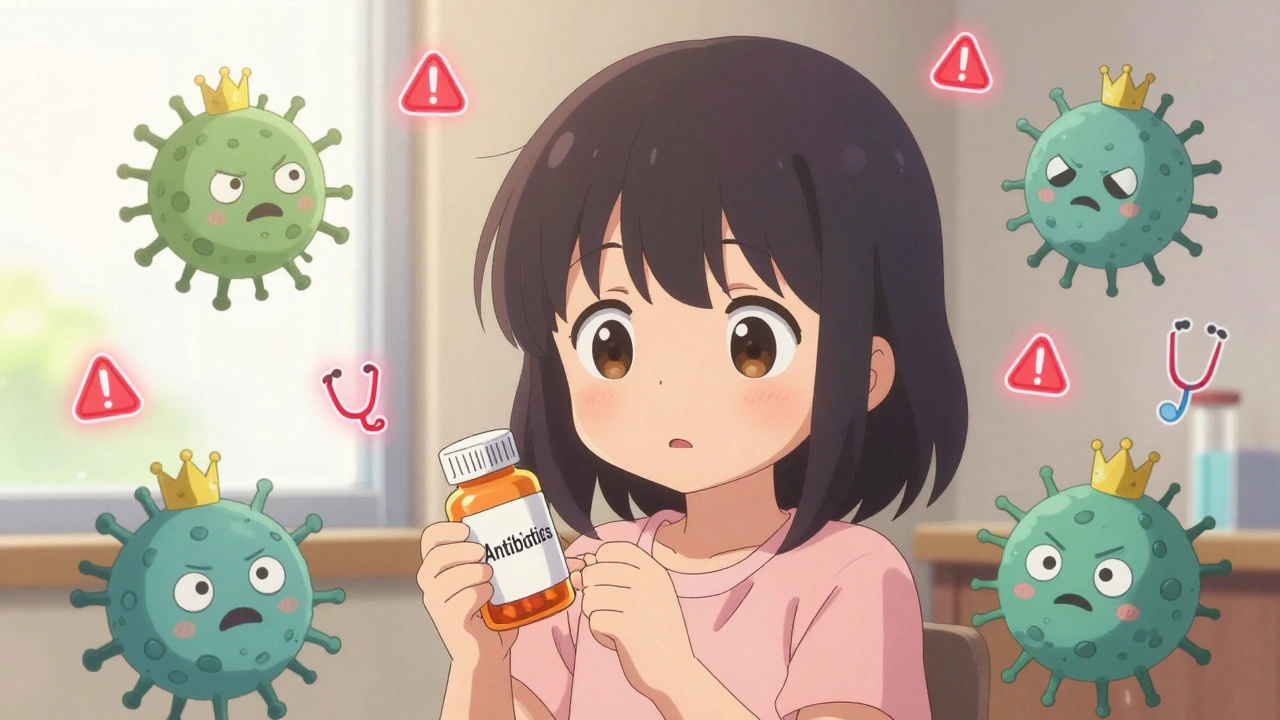
When you take an antibiotic overuse, the unnecessary or incorrect use of antibiotics that leads to reduced effectiveness and rising resistance. Also known as antibiotic misuse, it’s one of the quietest public health emergencies of our time. It’s not just about taking pills when you don’t need them — it’s about how that habit weakens the drugs we rely on for life-threatening infections.
Every time you take an antibiotic for a cold, the flu, or a sore throat that’s viral, you’re not helping yourself. You’re helping bacteria evolve. These bugs learn to survive the drugs meant to kill them. Soon, the same antibiotic that once cured a simple infection won’t work at all. That’s antibiotic resistance, when bacteria change in ways that make antibiotics ineffective against them. And it’s not theoretical — the WHO calls it one of the top 10 global health threats. Hospitals are seeing infections that no drug can touch. Parents are watching kids recover slower from ear infections. Even minor surgeries carry higher risks because we’ve weakened our best tools.
Why does this keep happening? Doctors sometimes prescribe antibiotics out of habit, or because patients expect them. Patients take leftover pills from old prescriptions. Or they stop taking them early when they feel better — not realizing that’s exactly how resistant strains survive. And it’s not just humans. Farms use massive amounts of antibiotics to make animals grow faster, and those resistant bugs can spread to us through food, water, and the environment.
You don’t need to be a doctor to fight this. Start by asking: Is this really a bacterial infection? Most colds, coughs, and sore throats are viral. Antibiotics won’t touch them. If you’re prescribed an antibiotic, ask if it’s necessary. Ask about alternatives. And never share or save antibiotics for later. Each pill you misuse chips away at the effectiveness for everyone.
There are smarter ways to handle infections. Sometimes rest, fluids, and time are all you need. For bacterial cases, there are often safer, narrower-spectrum antibiotics that target only the bad bugs — not your whole microbiome. And new research is looking at phage therapy, probiotics, and targeted treatments that don’t rely on broad-spectrum drugs.
The posts below show how this issue shows up in real life: from how pharmacists catch wrong prescriptions, to why certain antibiotics like ciprofloxacin are being phased out for common infections, to how supplements like calcium can interfere with antibiotic absorption. You’ll see how antibiotic overuse isn’t just a hospital problem — it’s in your medicine cabinet, your grocery cart, and your next doctor’s visit.