

Medication Side Effect Assessment Tool
Important This tool is for informational purposes only. Always consult your healthcare provider for medical advice.
Check Your Symptoms
Select symptoms you're experiencing. The tool will assess if these warrant a second opinion.
Symptom Duration
How long have you experienced these symptoms?
Medication Details
Feeling worse after starting a new medication isn’t normal-and it’s not something you should just tough out. If you’re experiencing strange symptoms, extreme fatigue, or a sudden change in how you feel, it might not be "just part of the adjustment." It could be a sign that your medication isn’t right for you. And that’s when a second opinion isn’t just helpful-it’s necessary.
When Side Effects Are a Red Flag
Not all side effects are equal. Some are mild and fade after a few days. Others? They can derail your life. You should consider a second opinion if your symptoms are severe, persistent, or interfere with daily activities. For example:- Unexplained weight loss or gain of more than 5% of your body weight in two weeks
- Nausea or vomiting that lasts more than 72 hours and stops you from eating
- Tremors, confusion, memory lapses, or dizziness that weren’t there before
- Skin rashes, swelling, or trouble breathing-these can signal a serious allergic reaction
- Extreme mood swings, panic attacks, or suicidal thoughts after starting antidepressants or steroids
These aren’t "maybe" signs. They’re clear signals. According to Solace Health’s 2023 data, 42% of patients who sought second opinions found serious errors in their original prescriptions. In nearly a third of those cases, the mistake was serious enough to require immediate changes to prevent hospitalization.
Timing Matters: How Long Should You Wait?
Waiting too long can make things worse. But rushing into a second opinion too soon can also lead to unnecessary changes. The key is knowing the typical timeline for each medication to take effect-or to show side effects.For antidepressants like SSRIs, it usually takes 4 to 6 weeks to see improvement. If you’re still feeling worse after that, it’s time to ask for help. For cholesterol-lowering drugs like statins, side effects like muscle pain often show up within the first few weeks. If they don’t improve after 3 months, you’re likely not getting the benefit without the cost.
Diabetes medications? If your blood sugar hasn’t improved after 3 to 6 months, or if you’re having constant stomach issues from metformin, it’s not just "normal." You might have an undiagnosed condition like gastroparesis, which changes your whole treatment plan. A 2024 study from the American Diabetes Association found that 127 patients with persistent metformin side effects were later diagnosed with other conditions-only after a second opinion.
Drug Interactions and Hidden Risks
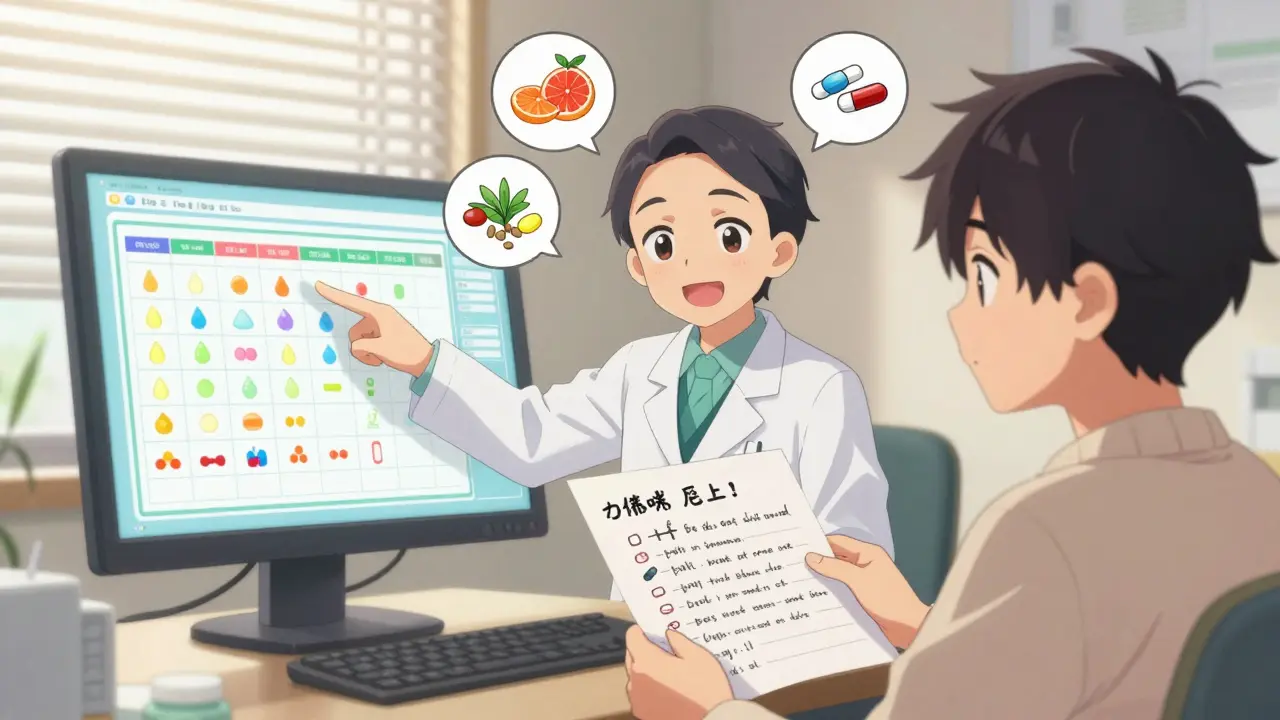
You might not realize that your supplement, over-the-counter painkiller, or even grapefruit juice is making your medication dangerous. The FDA now tracks over 14,000 drug interactions, and many of them are silent killers. A common example: mixing blood thinners like warfarin with certain herbal supplements can cause internal bleeding. Or taking statins with grapefruit juice can spike drug levels in your blood to toxic levels.According to the National Institutes of Health, 31% of side effect reports are linked to interactions between prescription drugs and supplements. That’s why your second opinion checklist must include everything you’re taking-prescription, OTC, vitamins, and even CBD oil. Write it all down. Exact names, doses, and times. Missing one item can mean missing the real cause of your symptoms.
Who Should You See for a Second Opinion?
Not every doctor is the right fit. A general practitioner might not catch subtle signs of a drug reaction that a specialist would. Here’s who to consider:- Psychiatrists for antidepressants, antipsychotics, or anxiety meds-37.8% of psychiatric medication reviews lead to major changes, according to JAMA Internal Medicine.
- Cardiologists or pharmacists for blood pressure, cholesterol, or heart rhythm drugs. Many hospitals now have dedicated clinical pharmacists just for reviewing medication safety.
- Endocrinologists for diabetes, thyroid, or hormone treatments. These drugs have narrow safety margins.
- Pharmacogenetic specialists if you’ve had bad reactions to multiple drugs. New testing can show if your genes make you more likely to process certain meds poorly.
Telehealth services like Solace Health are making second opinions faster-28% quicker than traditional referrals. But if you’re on cancer treatment or other high-risk regimens, the chance of a major change is lower (only 9.3%, per ASCO). That doesn’t mean skip it-it means bring even more data to the table.
How to Prepare for Your Second Opinion
A second opinion isn’t just a second chat with a doctor. It’s a diagnostic tool. And like any tool, it works best when you use it right.Here’s what works:
- Build a medication timeline-list every drug you’ve taken, when you started, when you changed doses, and when symptoms began. Even the hour matters. Research shows symptoms appearing within 72 hours of starting a new drug have a 78% chance of being caused by it.
- Keep a symptom diary-note severity (1 to 10 scale), frequency, and what you were doing when it happened. Did the dizziness come after eating? Did the headache start after taking your pill at night?
- Bring lab results-blood tests, liver function, kidney levels, drug levels if you’ve had them. Recent results (within 30 days) are critical.
- Use the SOMA method when you talk to the doctor: Situation (when symptoms happen), Objective (numbers from your logs), Modifications (did you try taking it with food?), Activities affected (can you still work, sleep, drive?)
A 2024 study in the Annals of Internal Medicine found that patients who brought this level of detail were 63% more likely to get a meaningful change in their treatment.
What Happens After the Second Opinion?
You might walk out with a new prescription. Or a different dosage. Or a complete switch to another drug. Sometimes, you’ll learn your symptoms aren’t from the medication at all-they’re from another condition, like thyroid trouble or vitamin deficiency.Patients on statins who got second opinions had a 73% chance of getting an alternative, like ezetimibe. And 58% of them saw their muscle pain disappear. For people on SSRIs, seeking help within 30 days of side effects cut their recovery time from over 110 days to under 50.
And here’s something surprising: 89% of patients say they felt heard more during their second opinion. Doctors are more likely to use the "teach-back" method-asking you to explain your side effects in your own words-to make sure you understand. That’s not just good care. It’s safer care.
The Bigger Picture: Why This Matters
Medication errors send 1.3 million people to U.S. emergency rooms every year. That’s not just numbers-it’s your neighbor, your parent, your friend. The global market for second medical opinions is growing fast-projected to hit $5.7 billion by 2028. Why? Because people are waking up.Medicare now covers second opinions for 28 types of medications. Hospitals are hiring pharmacists just to review side effects. And the FDA now requires drug makers to give doctors standardized tools to assess reactions. Even AI tools like MedCheck AI can now scan your meds and symptoms to flag risks before you even see a doctor.
This isn’t about doubting your doctor. It’s about protecting yourself. Your body is unique. Your reaction to a drug isn’t just a guess-it’s data. And you’re the only one who lives in your body every day. If something feels wrong, trust that. Push for answers. Bring your logs. Ask for help.
Because when it comes to your health, the second opinion isn’t a last resort. It’s the smartest first step.
Is it rude to ask for a second opinion about my medication?
No, it’s not rude-it’s expected. The American Medical Association explicitly encourages patients to seek second opinions when side effects affect daily life. Most doctors welcome it because it helps them catch mistakes and improve care. In fact, physicians who discourage second opinions are going against current ethical guidelines.
How long does it take to get a second opinion?
It usually takes 2 to 3 weeks, depending on the specialty. Psychiatric consultations average 18.7 days, while primary care appointments can be as fast as 11 days. Telehealth services can reduce this to under a week. If your symptoms are urgent, ask for an expedited referral or go to an urgent care clinic that offers medication reviews.
Will my insurance cover a second opinion?
Yes, in many cases. Medicare covers second opinions for 28 specific medication categories under the 2024 Physician Fee Schedule, paying $187.42 for a 30-minute consultation. Most private insurers also cover it if it’s deemed medically necessary. Always check your plan’s policy, but don’t assume it’s denied-ask.
Can I get a second opinion without telling my current doctor?
You can, but it’s not ideal. Your current doctor has your full history, and withholding that information can lead to incomplete advice. The best approach is to say you’re seeking a second opinion to make sure you’re on the right track. Most doctors will help you get a referral. If they react negatively, that’s a red flag in itself.
What if the second doctor says my current treatment is fine?
That’s still valuable. It means your symptoms might be from something else-stress, sleep issues, another illness. The second opinion gives you confidence to continue safely. If you still feel uneasy, you can ask for a third opinion or request specific tests (like pharmacogenetic screening) to rule out genetic causes.
Are online second opinion services reliable?
Reputable ones are. Services like Solace Health and other accredited platforms use board-certified specialists and require you to upload full medical records. They’re not a replacement for in-person care, but they’re excellent for quick reviews and triage. Always check if the service is accredited by the National Committee for Quality Assurance (NCQA) or similar bodies.
Can pharmacists help with second opinions?
Absolutely. Clinical pharmacists are trained to spot drug interactions, side effects, and dosing errors. Many hospitals and clinics now have pharmacists on staff just for this purpose. You can often schedule a free consultation at your pharmacy-just ask for a medication therapy review.
Dylan Smith
December 16, 2025 AT 20:03I started sertraline last month and by week two I could barely get out of bed. My doctor said it was just adjustment fatigue. I didn't believe him. I pushed for a second opinion and they switched me to bupropion. Within days I was walking again. Don't let anyone tell you to just wait it out if you're falling apart.
Trust your body. It knows.
sue spark
December 17, 2025 AT 23:11Same. I was on metformin for six months and kept losing weight like crazy. My PCP said it was just stress. I brought my symptom log to an endocrinologist and they found I had early-stage gastroparesis. Metformin was making it worse. They changed my meds and now I eat without fear. That diary saved my life.
Randolph Rickman
December 19, 2025 AT 16:58If you're on statins and your muscles feel like they're made of cement, stop waiting. I ignored mine for months. Ended up in physical therapy. Second opinion? Switched to ezetimibe. Muscle pain gone in two weeks. Don't be the guy who loses mobility because he was too polite to ask if his meds were killing him. You deserve to feel good. Push for answers.
And bring your lab results. They matter.
Ron Williams
December 20, 2025 AT 14:47My cousin in India was on a combo of blood pressure meds and herbal tea she thought was harmless. She started having heart palpitations. Her local doctor dismissed it. She flew to the US for a second opinion and found out the tea was interacting with her beta blocker. They adjusted everything. She's fine now. Point is: even stuff you think is safe isn't always. Write it all down. Every pill, every leaf, every drop.
Aditya Kumar
December 22, 2025 AT 08:54Why do we even need to do this? Just take the pill. It's fine.
Billy Poling
December 23, 2025 AT 17:35It is imperative to underscore that the systemic failure of primary care physicians to adequately assess pharmacological reactions constitutes a profound public health crisis. The data presented in the article, while statistically compelling, fails to account for the confounding variables of patient compliance, dietary adherence, and comorbid psychiatric conditions which may independently manifest as side effects. Furthermore, the reliance on self-reported symptom diaries introduces significant recall bias, undermining the validity of the 63% efficacy statistic cited from the Annals of Internal Medicine. One must also consider the potential for confirmation bias in patients who actively seek second opinions, thereby creating a selection effect wherein only those predisposed to perceive adverse reactions are included in the sample. It is not merely a matter of seeking a second opinion-it is a matter of ensuring that the entire diagnostic framework is methodologically sound before any intervention is undertaken. Without rigorous controls, we risk overmedicalization and iatrogenic harm.
Tiffany Machelski
December 24, 2025 AT 09:38thank you for this i was scared to ask for a second opinion but now i feel like its ok to do it
my doctor got mad when i asked but i did it anyway and they changed my med and i feel way better
so dont let them make you feel bad for caring about your own body
Mike Smith
December 25, 2025 AT 20:56Just wanted to add-don’t wait until you’re in crisis to act. I’ve seen too many people suffer for months because they didn’t want to ‘bother’ their doctor. You’re not bothering anyone. You’re doing your part in your own care. Pharmacists are your secret weapon. Walk into your pharmacy and ask for a medication therapy review. Most are free. They’ll spot interactions your doctor missed. And if they say no? Ask again. Or go to another pharmacy. You’ve got this. Your health isn’t a favor you’re asking for-it’s your right.