
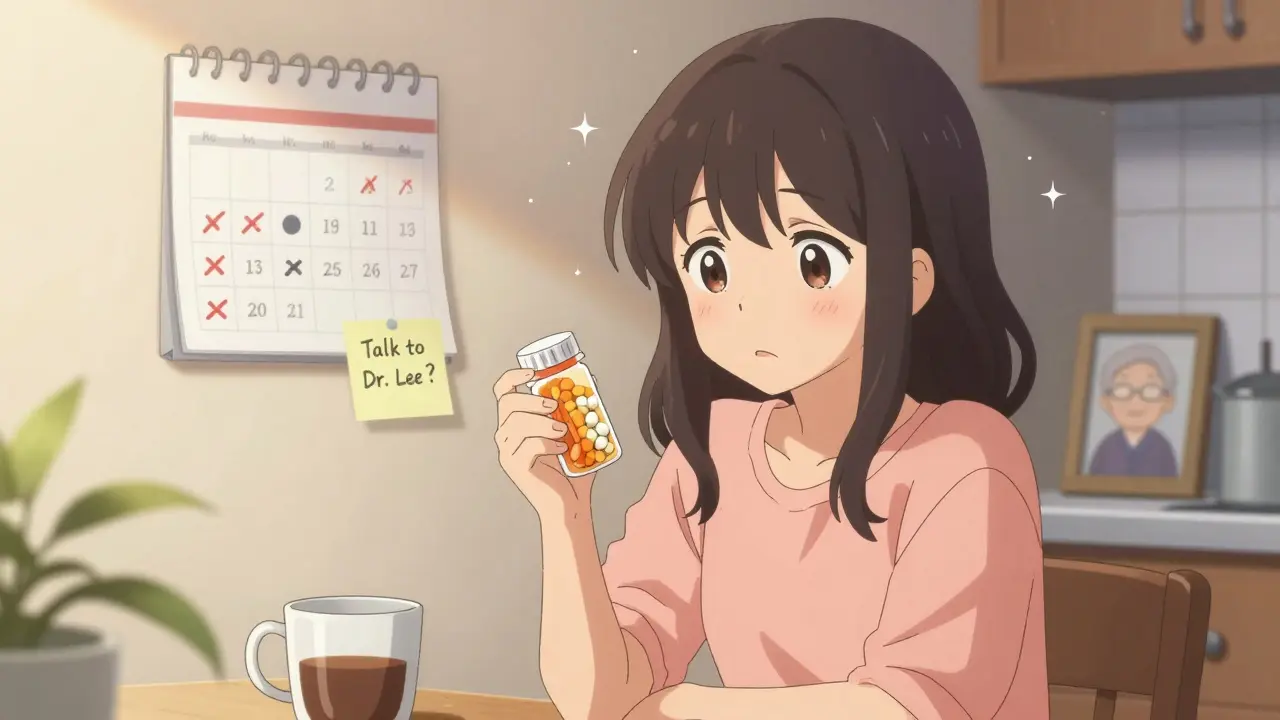
Imagine you’re told to take a pill every morning to keep your blood pressure under control. You mean to do it. Some days you remember. Other days, you’re rushed, the bottle’s empty, or you’re worried about side effects. So you skip it. Now, here’s the question: Are you non-compliant? Or are you simply not adhering? The difference isn’t just semantics-it changes everything about how your care is handled, and whether you’ll stay healthy long term.
The Old Way: Compliance
For decades, doctors and pharmacists used the word compliance. It sounded simple: you get a prescription, you take it exactly as ordered. No questions. If you didn’t? You were labeled non-compliant. It implied failure. Blame. A broken rule. But here’s the problem: compliance treats patients like robots. It ignores why someone skips a dose. Maybe the pill costs too much. Maybe they’re scared of dizziness. Maybe they don’t believe it works. Maybe they’re juggling three jobs and just forgot. Compliance doesn’t ask. It just counts pills. The American Medical Association defines compliance as simply whether a patient took their medicine at the right time. If they took 80% or more? Fine. Less than that? Problem. But that number doesn’t tell you why. And without knowing why, you can’t fix it.The New Way: Adherence
In the early 2000s, healthcare started shifting. Patients weren’t just recipients of care-they were partners. That’s when adherence took over. The American Pharmacists Association defines adherence as: “the extent to which a patient’s behavior matches agreed-upon recommendations.” Notice the word agreed-upon. That’s the game-changer. Adherence means the patient and provider talked. They discussed the plan. The patient had a say. Maybe the original plan was four pills a day. But the patient works nights. So they adjusted it to two pills at bedtime. That’s adherence. It’s not about obeying-it’s about choosing to follow a plan that fits your life. Adherence looks at the whole picture: Did the patient start the medication? Did they keep taking it? Did they stop because of side effects, cost, or confusion? It doesn’t just count doses-it uncovers reasons.Why the Shift Matters
Think about this: Half of all people with chronic conditions like diabetes, high blood pressure, or asthma stop taking their meds within a year. That’s not because they’re lazy. It’s because the system didn’t help them overcome real barriers. A 2022 WHO report found that 50% of patients discontinue treatment not because they don’t care-but because they face practical, emotional, or financial obstacles. Compliance says, “You didn’t take it.” Adherence says, “What stopped you?” The difference shows up in results. Studies show patients who are part of an adherence-focused care plan are 2.57 times more likely to stick with their meds long-term. Why? Because their care team listened. Take the example of a 68-year-old woman with heart failure. Her doctor noticed her refill rate was dropping. Instead of labeling her non-compliant, they asked: “What’s making it hard to take your pills?” She said, “I can’t afford them. And I’m scared they’ll make me dizzy.” They switched to a cheaper generic, adjusted the timing, and connected her with a financial aid program. Six months later, she was taking every dose. That’s adherence in action.How Adherence Is Measured
Adherence isn’t just a feeling-it’s tracked. Here’s how:- Medication Possession Ratio (MPR): How many days of medication you have on hand compared to how many you should have. If you have 80% or more, you’re considered adherent.
- Electronic Monitoring: Pill bottles with sensors (like MEMS caps) record when you open them. Real-time data, no guesswork.
- Pill counts: Pharmacists count remaining pills during visits.
- Self-reporting: Simple questions like, “In the past week, how many doses did you miss?”
- Pharmacy refill records: How often you refill prescriptions. Long gaps mean trouble.

Where Compliance Still Has a Role
It’s not all black and white. There are places where compliance still makes sense. For example, in tuberculosis treatment, patients must take every dose under direct observation (DOT). Missing even one dose can lead to drug-resistant strains. In those cases, strict oversight saves lives. But for chronic conditions like hypertension, arthritis, or depression? Compliance falls apart. People live complex lives. They can’t be monitored 24/7. And punishing them for missing doses doesn’t help-it hurts.What’s Changing in Healthcare
The shift to adherence isn’t just philosophical-it’s financial and regulatory. The Centers for Medicare & Medicaid Services (CMS) now ties 8% of hospital payments to how well patients stick to their meds. If fewer people get readmitted because they’re taking their pills, hospitals get paid more. The FDA and European Medicines Agency now require adherence data in clinical trials. Drug companies can’t just say “it worked”-they have to prove patients actually took it. And in 2025, the American Medical Association added new billing codes (99487-99489) specifically for adherence counseling. That means doctors can now get paid for sitting down, listening, and helping patients figure out how to take their meds. It’s not just good care-it’s good business.How Providers Are Making It Work
The best programs don’t just talk-they adapt. A 2023 Kaiser Permanente study used a smart pill dispenser called Hero Health. It reminded patients, tracked openings, and sent alerts to pharmacists if doses were missed. Result? 42% fewer missed doses. Another program in Australia used Dose Packer-pre-sorted pill packs with day and time labels. Patients didn’t have to sort pills. Pharmacists checked in weekly. Over 12,000 patients saw a 28.7% increase in medication possession. It’s not about tech alone. It’s about training. Providers who took just 8-12 hours of communication training saw 37.6% higher adherence rates. They learned to ask open-ended questions: “What’s your biggest worry about this medicine?” instead of “Are you taking it?”
The Bigger Picture
By 2030, the World Health Organization estimates adherence-focused care could prevent 850,000 premature deaths in low- and middle-income countries alone. That’s not a number-it’s people. Parents. Grandparents. Workers. Friends. It’s also cheaper. McKinsey & Company found adherence models cut avoidable hospital stays by 22-34% and lowered treatment costs by 18-27%. Better outcomes. Lower costs. It’s not a trade-off-it’s a win-win. And the trend is clear. In 2024, 87% of major health systems had fully switched to adherence language and protocols. The term “compliance” is disappearing from brochures, websites, and patient forms. Even the National Patient Advocate Foundation ran a campaign that led 47 organizations to retire the word.What This Means for You
If you’re taking medication for a long-term condition, you’re not a failure if you miss a dose. You’re human. Talk to your doctor. Tell them what’s hard. Cost? Side effects? Confusion? Memory? They can’t help if they don’t know. Ask if there’s a simpler regimen. A once-a-day pill? A lower-cost generic? A pill pack? A reminder app? You’re not supposed to just “follow orders.” You’re supposed to be part of the team. And when you are? Your health gets better.What’s Next
The future of adherence is personal. AI tools are being tested to predict who’s at risk of missing doses-based on income, schedule, mental health, even weather patterns. Google Health’s 2024 study showed algorithms can predict adherence with 83.7% accuracy by analyzing 27 factors. But tech alone won’t fix it. Human connection will. A pharmacist who remembers your name. A nurse who asks how your week went. A doctor who listens. Adherence isn’t about perfect behavior. It’s about partnership. And that’s why it matters.What’s the difference between medication adherence and compliance?
Medication compliance means following a doctor’s instructions exactly as ordered, without input from the patient. Adherence means the patient and provider work together to create a realistic plan the patient can stick to. Adherence considers barriers like cost, side effects, and daily routines, while compliance just checks if pills were taken.
Is 80% pill-taking enough to be considered adherent?
Yes. The American Medical Association defines an adherent patient as someone who takes at least 80% of their prescribed medication over a given period. This is measured using methods like medication possession ratio (MPR), electronic monitoring, or pharmacy refill records. It’s not about perfection-it’s about consistency.
Why do people stop taking their medications?
People stop for many reasons: side effects, cost, forgetfulness, not feeling better, fear of dependency, cultural beliefs, or not understanding why the medicine matters. Adherence-focused care asks these questions instead of blaming the patient. The World Health Organization says half of all chronic disease patients stop within a year-not because they’re careless, but because systems aren’t designed to support them.
Can technology help with medication adherence?
Yes. Smart pill dispensers like Hero Health and Dose Packer have been shown to reduce missed doses by up to 42%. Apps that send reminders, pill organizers with alarms, and electronic monitoring caps help patients stay on track. But tech works best when paired with human support-like a pharmacist checking in or a provider adjusting the plan based on feedback.
Is adherence only important for chronic conditions?
It’s most critical for chronic conditions like diabetes, high blood pressure, asthma, or depression, where missing doses leads to serious complications. But adherence matters for any long-term treatment-even antibiotics for infections, if the full course isn’t taken, resistance can develop. The goal is always to match the treatment to the patient’s life, not the other way around.
Helen Brown
March 2, 2026 AT 15:49John Smith
March 4, 2026 AT 04:22Sharon Lammas
March 4, 2026 AT 06:59marjorie arsenault
March 5, 2026 AT 16:19Deborah Dennis
March 6, 2026 AT 04:19Shivam Pawa
March 6, 2026 AT 10:33tatiana verdesoto
March 6, 2026 AT 20:55Justin Rodriguez
March 6, 2026 AT 21:08Tildi Fletes
March 8, 2026 AT 21:01Siri Elena
March 9, 2026 AT 10:07Divya Mallick
March 10, 2026 AT 15:55Levi Viloria
March 11, 2026 AT 23:23Betsy Silverman
March 13, 2026 AT 06:22Ivan Viktor
March 14, 2026 AT 18:20