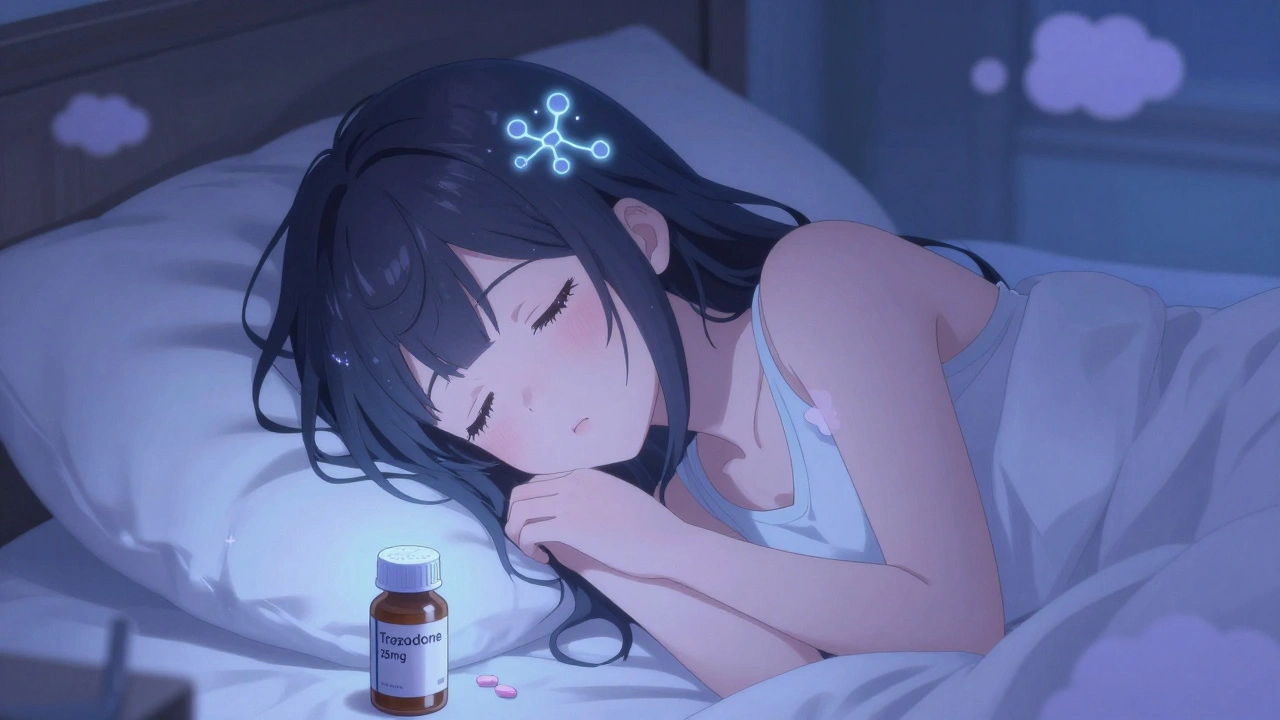
When doctors prescribe trazodone, an antidepressant originally developed to treat depression, but now widely used off-label for sleep problems. Also known as Desyrel, it's one of the most common pills handed out for insomnia—even though it was never meant to be a sleep aid. Many people take it because it makes them drowsy, and it’s cheap, available as a generic, and doesn’t carry the same addiction risk as benzodiazepines. But that doesn’t mean it’s safe or effective for everyone.
How does trazodone actually help with sleep? It blocks certain serotonin receptors and mildly inhibits histamine, which slows brain activity enough to make you feel sleepy. But unlike true sleep medications, it doesn’t improve sleep quality the same way. Studies show it might help you fall asleep faster, but it doesn’t necessarily help you stay asleep or get restorative deep sleep. And while it’s often used in older adults, it can cause next-day drowsiness, dizziness, or even low blood pressure—especially risky if you’re already on blood pressure meds or have heart issues.
It’s also not a long-term fix. Most people who take trazodone for insomnia do so for weeks or months, not years. The body can build tolerance, meaning the drowsiness fades over time, and you might end up taking higher doses just to feel the same effect. Plus, sudden stopping can trigger rebound insomnia or withdrawal symptoms like anxiety, nausea, or nightmares. If you’re using it for sleep, you should be working with your doctor to have a plan to taper off, not just keep taking it indefinitely.
What about other options? There are newer sleep drugs like suvorexant or lemborexant that target the brain’s wake-sleep switch more directly. Behavioral approaches like CBT-I (cognitive behavioral therapy for insomnia) have stronger long-term results than any pill. And sometimes, the real issue isn’t sleep—it’s anxiety, pain, or an undiagnosed sleep disorder like sleep apnea. Trazodone won’t fix those.
Here’s what you need to know if you’re on or considering trazodone: it’s not a cure, it’s a temporary tool. It works best for short-term use in people who struggle to fall asleep but don’t have severe sleep fragmentation. It’s less helpful if you wake up often, feel unrefreshed in the morning, or have other health conditions. And it’s not the only option—just the most commonly prescribed one.
Below, you’ll find real-world insights from posts that dig into how medications like trazodone interact with other drugs, what side effects are often missed, how they affect older adults, and why some people swear by them while others feel worse after taking them. These aren’t theoretical discussions—they’re based on what patients actually experience and what doctors see in practice.