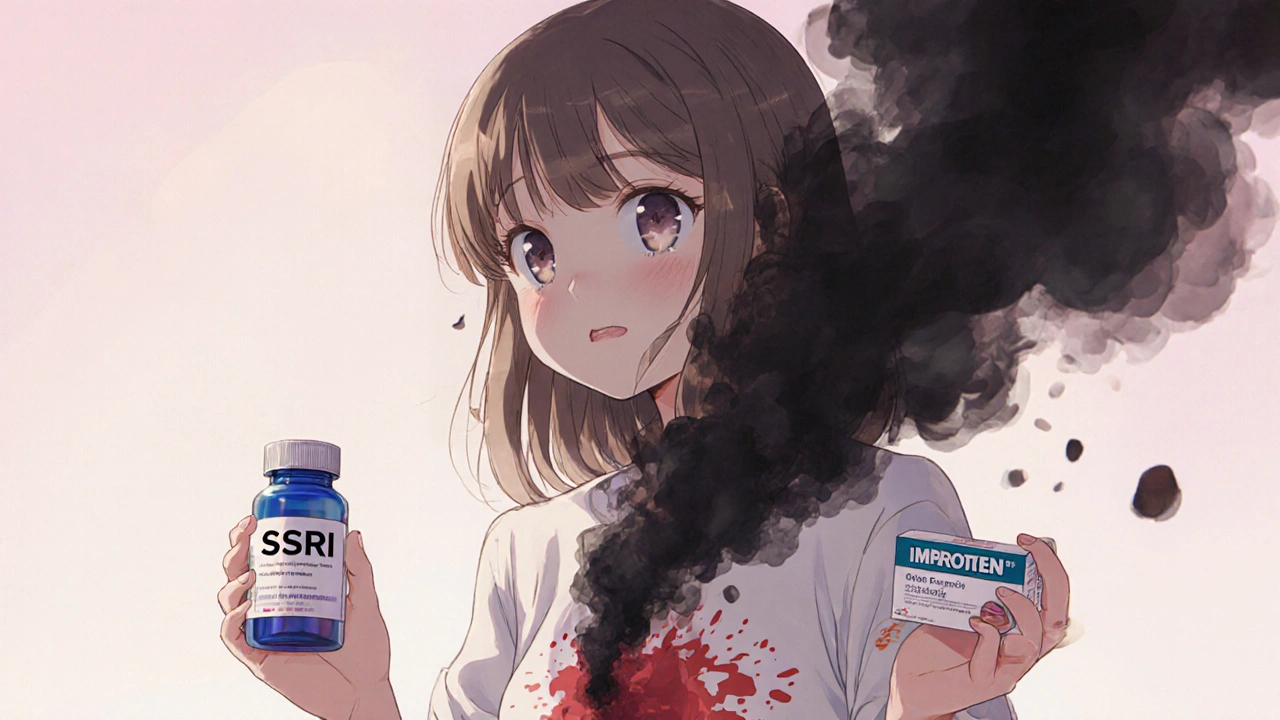
When you take SSRIs, a class of antidepressants that increase serotonin levels in the brain to treat depression and anxiety. Also known as selective serotonin reuptake inhibitors, they include drugs like citalopram, sertraline, and fluoxetine. Many people also use NSAIDs, nonsteroidal anti-inflammatory drugs used to reduce pain, swelling, and fever. Common examples include ibuprofen, naproxen, and aspirin. Together, they seem harmless—until they’re not. The real issue isn’t that one cancels out the other. It’s that they team up in ways most people don’t expect, and the risks are often hidden behind everyday symptoms like bruising, nosebleeds, or stomach upset.
Here’s the problem: SSRIs affect platelets, the blood cells that help clots form. NSAIDs thin the blood by blocking enzymes that protect the stomach lining and help clotting. When you combine them, your body’s ability to stop bleeding drops. Studies show this combo can double your risk of gastrointestinal bleeding, especially if you’re over 60, taking blood thinners, or have a history of ulcers. It’s not rare—it’s common enough that doctors now screen for it during routine checkups. And it’s not just about stomach issues. Some people notice unusual bruising after minor bumps, or bleeding gums when brushing teeth, and never connect it to their meds.
What’s surprising is that this interaction doesn’t always show up in drug labels. You might be taking an SSRI for depression and an NSAID for arthritis pain, thinking both are safe. But if you’re also on aspirin for heart protection, or even taking high-dose fish oil, the risk stacks up. The good news? You don’t have to choose between pain relief and mental health. Alternatives exist. For pain, acetaminophen (Tylenol) is often safer with SSRIs. For depression, some newer antidepressants like bupropion don’t affect platelets the same way. And if you’re on long-term NSAIDs, your doctor might recommend a stomach-protecting drug like a PPI.
There’s no one-size-fits-all answer. What works for someone with chronic back pain and mild depression might be dangerous for someone with a history of stomach bleeding. That’s why knowing your own risk factors matters more than following a general rule. If you’ve noticed unexplained bruising, dark stools, or dizziness after starting a new painkiller or antidepressant, talk to your pharmacist or doctor. Don’t wait for something serious to happen. The posts below cover real cases, safer alternatives, and how to spot early warning signs before it’s too late.