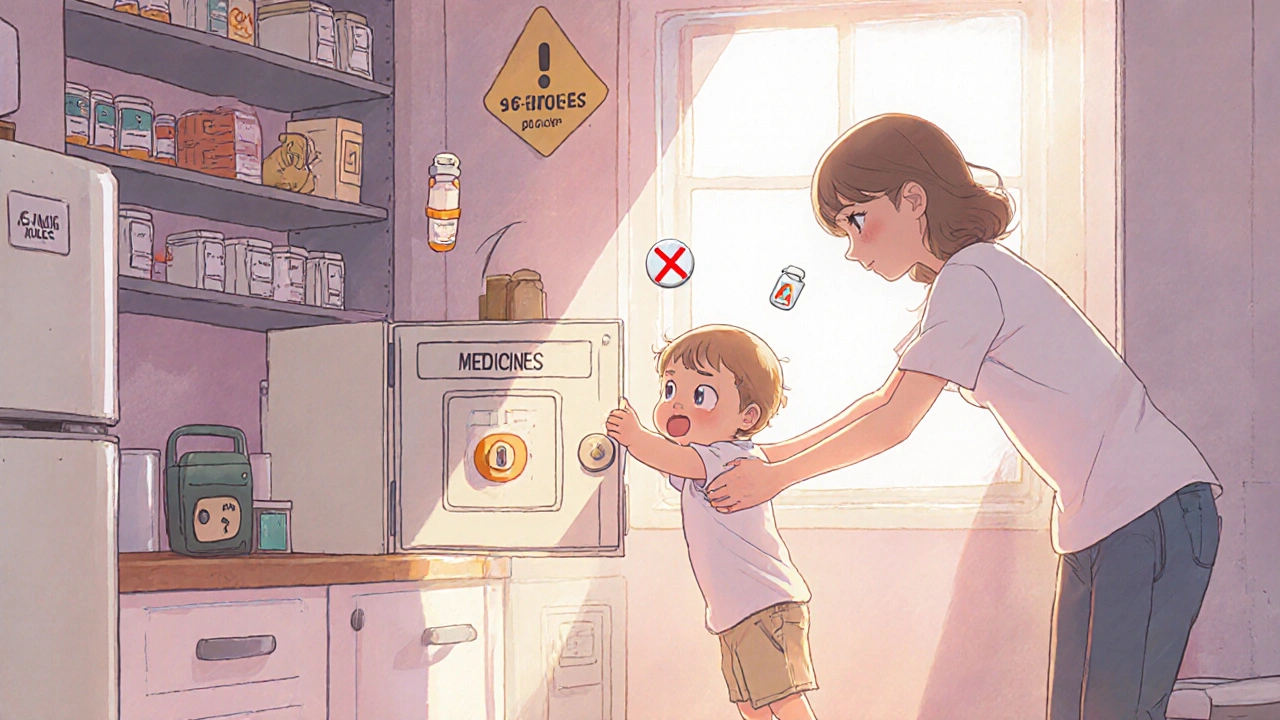
When it comes to safe medicine storage, the practice of keeping pharmaceuticals in conditions that preserve their strength and prevent accidental access or misuse. Also known as drug storage safety, it’s not just about putting bottles in a cabinet—it’s about protecting children, preventing overdoses, and making sure your meds actually work when you need them. A 2023 study by the American Association of Poison Control Centers found that over 50,000 calls each year come from kids under six who got into medicines left within reach. That’s not a rare event. It’s a preventable one.
childproof medicine, a term describing storage methods designed to restrict access by young children. Also known as pediatric medication safety, it’s not just about locking cabinets—it’s about location, lighting, and routine. A bottle left on the bathroom counter might seem convenient, but it’s a magnet for curious toddlers. Same goes for pill organizers sitting on the kitchen counter. The safest spot? A high shelf in a locked closet, away from heat and moisture. And don’t forget expired medication, drugs past their labeled use-by date that can lose potency or become unsafe. Also known as outdated pharmaceuticals, these shouldn’t sit in your drawer for years. Taking old antibiotics or painkillers isn’t just useless—it’s risky. Heat, humidity, and sunlight break down chemicals. Your insulin? Your epinephrine? They can fail when you need them most.
What about seniors? Many older adults keep multiple bottles in one place—bedside tables, nightstands, even the fridge. That’s a recipe for mix-ups. medication safety, the broader system of handling, storing, and using drugs correctly to avoid harm. Also known as pharmaceutical safety practices, it includes labeling, timing, and separation. Use a pill organizer with clear labels. Keep opioids, sedatives, and blood thinners locked up. Don’t just assume your grandkids know not to touch your pills. They don’t. And if you’re storing meds for someone else—like a parent or partner—make sure you know what’s in each bottle. Confusion kills.
And what about travel? You can’t just toss your meds in a suitcase. Heat in a car trunk can ruin your thyroid pills. Moisture in a gym bag can turn your asthma inhaler into a dud. Always carry them in your carry-on, in their original bottles, with labels intact. That’s not just smart—it’s required by airlines and customs.
There’s no magic trick. Safe medicine storage is simple: lock it, label it, keep it cool and dry, and toss what’s old. You wouldn’t leave gasoline sitting on the kitchen counter. Don’t treat your pills any differently. The posts below show you exactly how to do this right—whether you’re managing diabetes meds, antibiotics, or your child’s cough syrup. You’ll learn how to spot dangerous storage habits, what containers actually work, and how to dispose of old pills without hurting the environment. No fluff. Just what you need to keep your household safe.