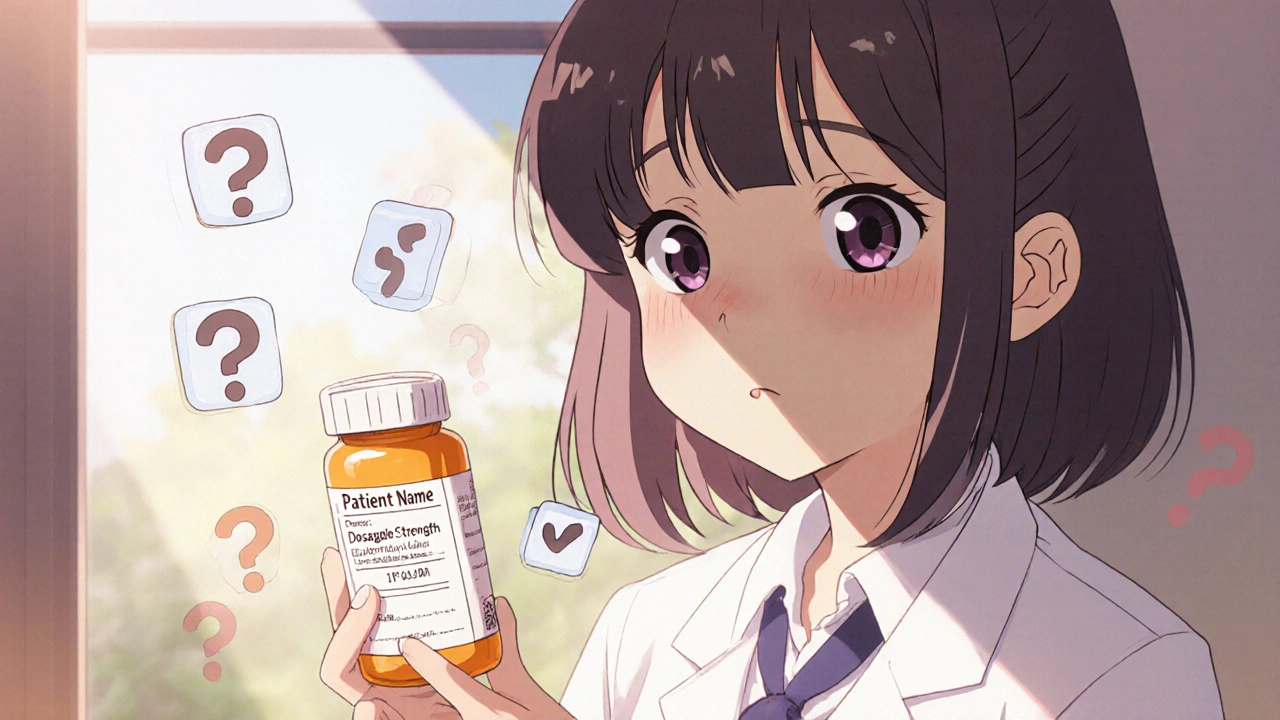
When you pick up a prescription, the label isn't just a piece of paper—it's your reading prescription labels, the process of understanding medication instructions, warnings, and active ingredients to ensure safe and effective use. Also known as interpreting pharmacy labels, it's the first and most important step in taking control of your health.
Most people glance at the name and dosage, then shove the bottle in a drawer. But that’s how mistakes happen. A label tells you more than when to take it—it shows you what could go wrong. For example, if you're on opioid painkillers, medications like morphine or hydrocodone that carry risks of itching, drowsiness, or false allergy reactions, the label might not say "don't mix with alcohol," but your doctor should. If it doesn’t, you’re relying on memory, not facts. And when you're managing diabetes, a condition where even small errors in insulin or metformin dosing can lead to dangerous low blood sugar, reading every word matters. Same goes for antibiotics, like ciprofloxacin or tetracycline, where skipping doses or stopping early can breed resistant bacteria.
What’s on that label? The drug name (brand or generic), strength, how much to take, how often, and why you’re taking it. Then come the warnings: "May cause dizziness," "Avoid sunlight," "Do not take with grapefruit." These aren’t suggestions—they’re red flags. If you see "take with food" and you’re used to taking pills on an empty stomach, that’s not just a preference—it’s about how your body absorbs the drug. Some meds like ferrous sulfate, an iron supplement that can cause stomach upset if taken without food need that detail to work safely. And don’t ignore the expiration date. A pill that’s two years past its date might not harm you, but it won’t help either.
And then there’s the hidden stuff—the ones you don’t see. The label doesn’t tell you if your pill is a brand-name drug or an authorized generic, a version made by the same company as the brand, with identical ingredients and effectiveness. It won’t tell you if your inhaler, a device used for asthma or COPD that requires precise technique to deliver the full dose is being used right. You might think you’re getting the full benefit, but if your technique is off, you’re only getting 20% of the medicine. That’s why knowing how to read the label is just the start—you need to know how to use what it describes.
Parents reading labels for their kids’ meds face another layer. A child-resistant cap isn’t child-proof. Medications stored in a drawer, on a counter, or in a purse can end up in a toddler’s mouth. The label won’t say "lock this up," but you need to. That’s why medication safety, the practice of storing, handling, and using drugs to prevent accidents, misuse, and poisoning starts with the label and ends with your actions.
Every bottle you open is a chance to get it right—or to get hurt. You don’t need a medical degree to read a label. You just need to slow down, ask questions, and never assume. The next time you get a prescription, don’t rush. Read every line. Ask your pharmacist if something’s unclear. Write down what you don’t understand. And if you’re on multiple meds, keep a list. Because when your health is on the line, there’s no such thing as too much attention to detail.
Below, you’ll find real, practical guides on exactly what to look for on your prescriptions—from spotting fake allergies to using inhalers right, storing meds safely, and choosing between generics and brand names. No fluff. Just what you need to stay safe and get the most from your medicine.