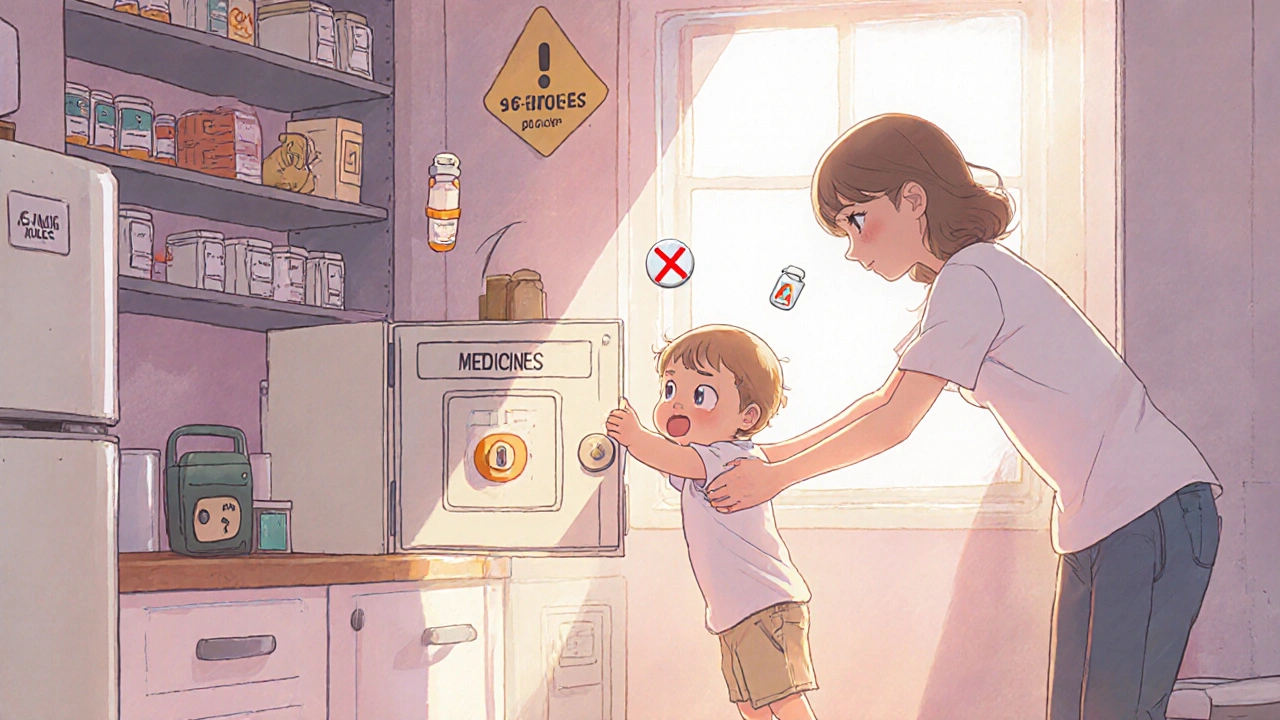
When it comes to pediatric poisoning prevention, the actions taken in your home can mean the difference between a routine day and a life-threatening emergency. Also known as child poison safety, it’s not about being paranoid—it’s about being smart. Kids explore the world with their hands and mouths, and many common household items look harmless but can be deadly in small doses.
Household toxins, including cleaning products, cosmetics, and even certain plants, are behind most non-medical poisoning cases in children under five. But the biggest risk? Medication storage for kids, especially when pills and liquids are left within reach or stored in unmarked containers. One study found that over 60% of accidental pediatric poisonings happen because medicine wasn’t locked up—no matter how "just for a minute" it seemed. Even child-resistant caps aren’t foolproof; toddlers have surprised doctors by opening them in under 30 seconds.
It’s not just pills. Liquid nicotine, button batteries, and iron supplements are silent killers. A single button battery can burn through a child’s esophagus in two hours. Iron overdose from prenatal vitamins can cause organ failure. And while you might think your child won’t touch something that tastes bad, many poisons are disguised as candy or juice—think gummy vitamins with high iron, or flavored cough syrup left on the counter.
You don’t need a fancy childproofing kit to make your home safer. Start with three simple moves: lock up all medicines and cleaners in a high cabinet with a latch, keep all products in their original containers (never transfer to food or drink bottles), and know the number for your local poison control center—save it in your phone and post it on the fridge. If you’re unsure if something is toxic, don’t wait for symptoms. Call poison control immediately. They’re trained to guide you through what to do next, whether it’s watching, rinsing, or rushing to the ER.
The good news? Most pediatric poisonings are preventable. You’re not alone in this. Thousands of parents face the same worries every day. What matters isn’t perfection—it’s consistency. Locking up meds every time. Keeping the bathroom door closed. Checking under the sink before you leave the house. These small habits stack up to big protection.
In the posts below, you’ll find real, practical advice from trusted sources on how to spot hidden dangers, handle accidental exposure, and make your home truly child-safe—not just on paper, but in daily life. From understanding what’s in your medicine cabinet to knowing when to act fast, these guides give you the tools to act confidently, not fearfully.