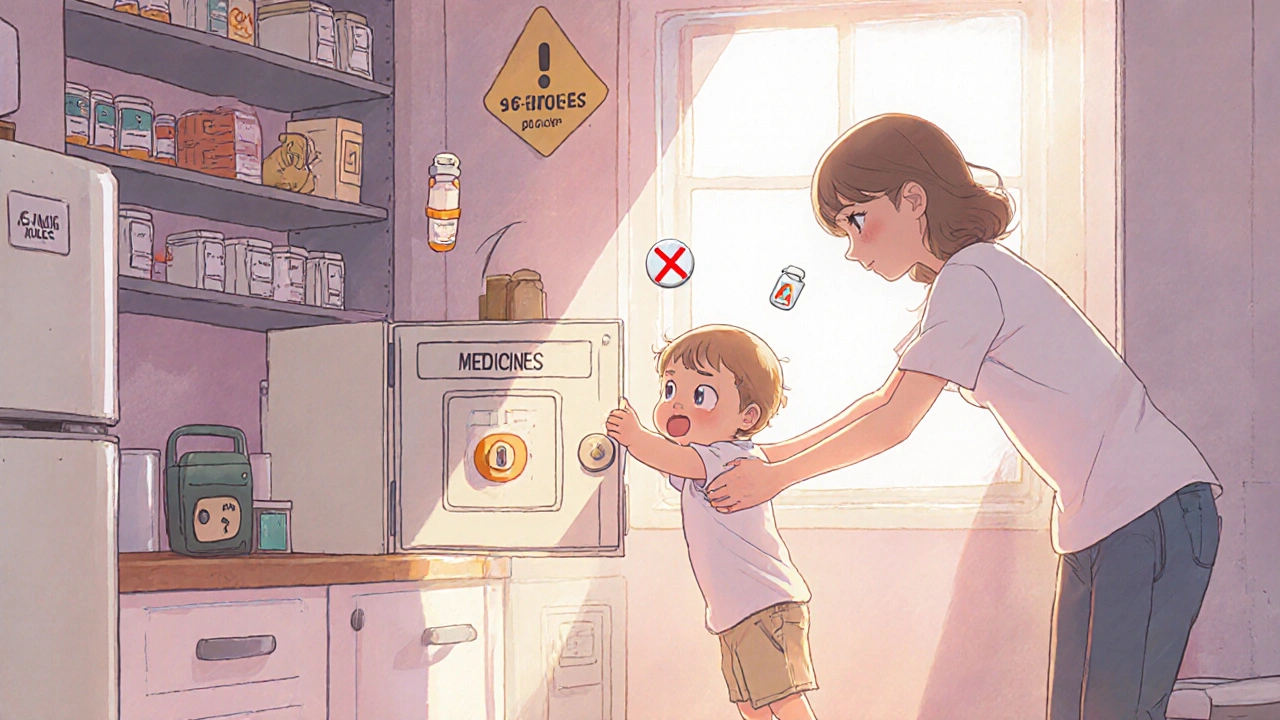
When you think of a locked medicine cabinet, a secure storage space for prescription and over-the-counter drugs, often with a key or combination lock. Also known as a medication safety cabinet, it’s not just a closet with a lock—it’s a critical part of home health safety. Every year, thousands of accidental poisonings happen because medicines are left within reach. Kids grab pills thinking they’re candy. Teens take what’s easily accessible. Even adults accidentally grab the wrong bottle in the dark. A locked medicine cabinet stops most of these mistakes before they start.
It’s not just about keeping kids safe. opioids, powerful painkillers like morphine, oxycodone, and fentanyl, are especially dangerous if misused. The CDC says most people who become addicted to opioids first get them from a friend’s or family member’s medicine cabinet. A locked cabinet makes it harder for someone to take them without permission. Same goes for benzodiazepines, medications like Xanax or Valium used for anxiety or sleep. These can be deadly when mixed with alcohol or taken in high doses. And let’s not forget iron supplements, like ferrous sulfate, which can be fatal to small children even in small amounts. A locked cabinet isn’t a luxury—it’s a basic safety step, like locking your front door.
But a locked cabinet isn’t just about keeping things out—it’s also about keeping things right. Heat, humidity, and light can ruin medicines. A bathroom cabinet? Too damp. A kitchen counter? Too hot. The best place is a cool, dry spot away from windows, like a bedroom closet or hallway cabinet with a lock. And don’t forget to check expiration dates. Old antibiotics, painkillers, or heart meds can lose strength or even become harmful. If you’re unsure what to keep or toss, look at the medication labels, the printed instructions on the bottle that tell you how to use it safely. They often list storage needs and expiration info.
What you store matters too. Keep all prescriptions, including those for diabetes, like insulin or metformin, and blood pressure, like azilsartan or other ARBs, locked up. Even over-the-counter stuff like pain relievers, such as acetaminophen or ibuprofen, can cause liver damage or stomach bleeding if taken in excess. And don’t forget about retinoids, like isotretinoin for acne, which can cause birth defects if taken during pregnancy. A locked cabinet helps prevent accidental exposure.
You don’t need a fancy cabinet. A simple plastic storage box with a padlock works fine. Some pharmacies even sell lockboxes designed just for medicines. The key is consistency: lock it every time, even if you’re just stepping out for a minute. And when you’re done with old pills, don’t flush them or throw them in the trash. Many pharmacies take back unused meds—ask your pharmacist. A locked medicine cabinet isn’t about distrust. It’s about responsibility. It’s about protecting your family, your neighbors, and yourself. Below, you’ll find real guides on how to read labels, manage side effects, and choose safer alternatives—all part of keeping your health in control, one locked cabinet at a time.