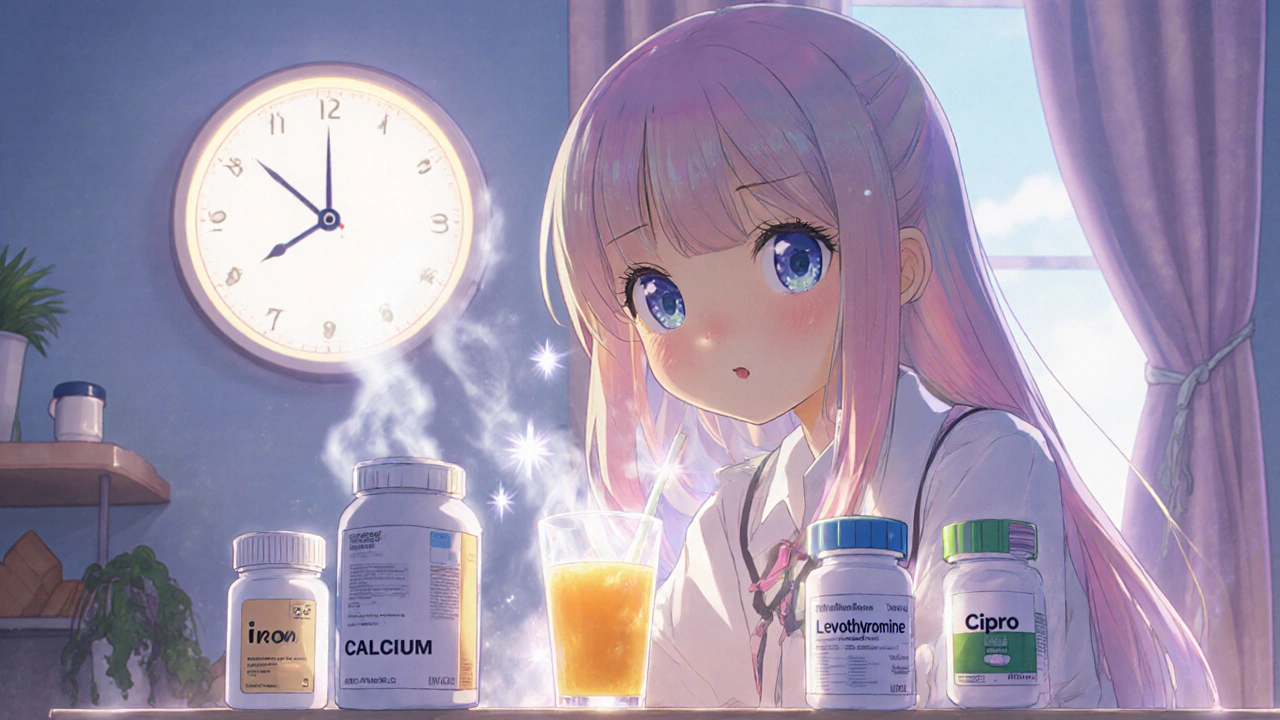
When you take iron and antibiotics, a common combination for people with anemia who also have infections. Also known as iron supplements with antibiotics, it’s not just about popping pills—it’s about timing, absorption, and avoiding reduced effectiveness. Many people don’t realize that iron can bind to certain antibiotics in the gut, stopping them from working right. The same goes the other way: some antibiotics make it harder for your body to absorb iron, which can leave you still feeling tired and weak even after taking your supplement.
Take ferrous sulfate, the most common form of oral iron used for low iron levels. If you take it at the same time as tetracycline, a broad-spectrum antibiotic often prescribed for acne, respiratory, or urinary infections, the iron grabs onto the antibiotic like a magnet. The result? Neither one works well. The same problem happens with ciprofloxacin, a fluoroquinolone antibiotic used for UTIs and other bacterial infections. Studies show that taking them together can cut iron absorption by more than half—and make the antibiotic less effective at killing bacteria.
So what do you do? Space them out. Most doctors recommend taking iron at least two hours before or after antibiotics. If you’re on a daily antibiotic, take your iron at bedtime, or first thing in the morning—just make sure there’s a solid gap. Some people switch to ferrous gluconate, a gentler form of iron that’s less likely to interfere with antibiotics, especially if they’re on long-term treatment. It’s not magic, but it helps. Also, avoid taking iron with milk, calcium supplements, or antacids—they do the same thing. Vitamin C can help iron absorb better, so a glass of orange juice with your iron pill can make a real difference.
You’ll find plenty of posts here that dig into these details. Some compare different iron supplements to see which ones cause fewer stomach issues. Others look at how antibiotics like tetracycline and ciprofloxacin interact with other nutrients. There are guides on reading labels so you don’t accidentally mix dangerous combos. And if you’re managing a chronic condition like anemia while also fighting off infections, you’ll see real advice from people who’ve been there. This isn’t theoretical—it’s practical, tested, and meant for everyday use. What you’re about to read will help you take your meds right, avoid side effects, and actually feel better.