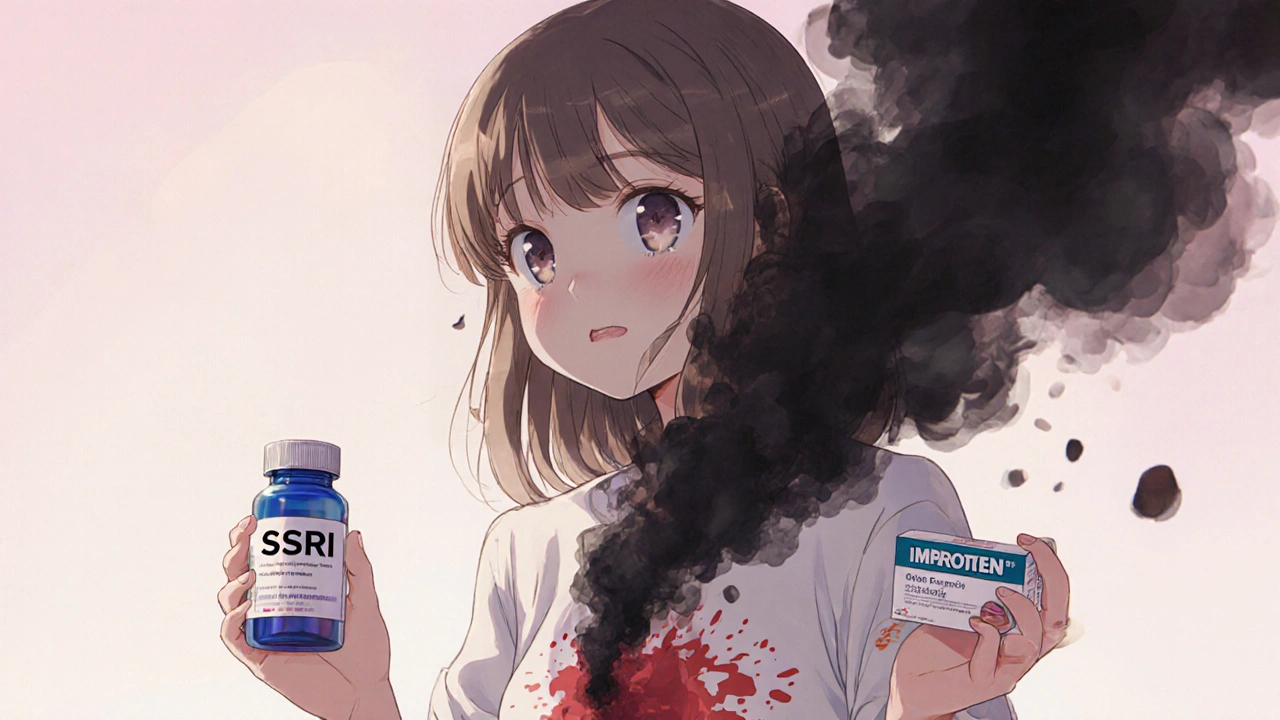
When we talk about GI bleeding risk, the chance of dangerous bleeding in the digestive tract from ulcers, medications, or other conditions. Also known as gastrointestinal hemorrhage, it’s not rare—and it’s often preventable if you know the triggers. This isn’t just about stomach ulcers from spicy food. It’s about what’s in your medicine cabinet, your age, and how you take your daily pills.
NSAIDs, common pain relievers like ibuprofen and naproxen are one of the top causes. People take them for headaches, joint pain, or menstrual cramps, not thinking twice. But long-term use quietly wears down the stomach lining, especially in older adults. Then there’s anticoagulants, blood thinners like warfarin or apixaban. These save lives by preventing clots, but they turn small tears into serious bleeds. Combine NSAIDs with anticoagulants? The risk jumps sharply. And don’t forget stomach ulcers, open sores caused by H. pylori bacteria or long-term acid exposure. Many don’t hurt until they start bleeding—no warning, just dizziness, black stools, or vomiting blood.
It’s not just meds. Age matters. Over 65? Your stomach lining thins. You’re more likely to be on multiple drugs. Alcohol, smoking, and stress add fuel. Even something as simple as taking aspirin daily for heart health can be a silent risk. The good news? You don’t have to live in fear. You can reduce the danger without ditching your meds. Talk to your doctor about alternatives like acetaminophen instead of NSAIDs. Ask if you need a stomach-protecting drug like a PPI. Check if your blood thinner dose is the lowest effective amount. Know the signs: dark, tarry stools, fatigue, or sudden weakness aren’t normal. They’re red flags.
The posts below cover real-world ways people manage these risks every day—from spotting hidden dangers in generic pills to timing iron supplements so they don’t wreck your gut. You’ll find guides on avoiding drug interactions, understanding what your meds really do, and protecting your digestive system without giving up the treatments you need. This isn’t theory. It’s what works when your health is on the line.