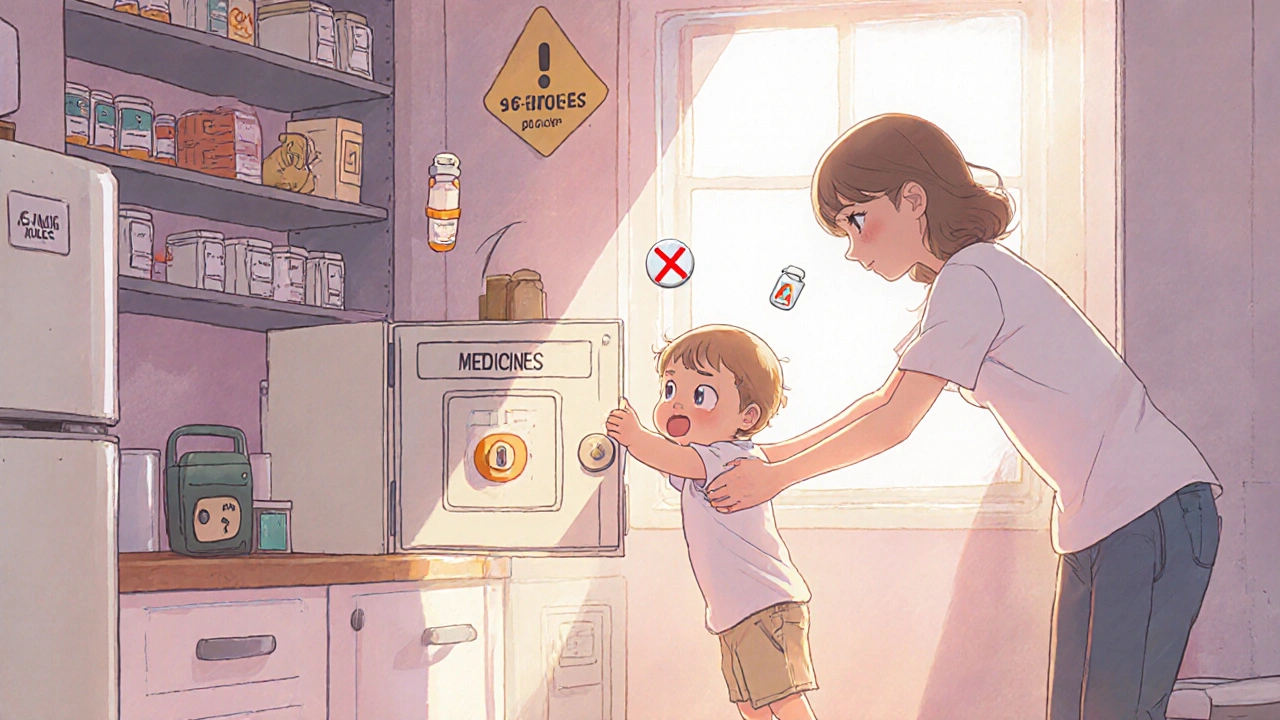
When it comes to keeping kids safe, childproof medicine storage, a system designed to prevent young children from accessing harmful medications. Also known as child-resistant storage, it’s not just about locking cabinets—it’s about understanding how kids think, move, and explore. Every year, over 50,000 children in the U.S. end up in emergency rooms because they got into medicines left within reach. Most of these cases happen at home, often in places parents think are safe—like a nightstand, purse, or bathroom counter.
It’s not enough to rely on child-resistant packaging, bottles designed to be hard for small hands to open. These are helpful, but they’re not foolproof. A 2021 study from the CDC found that 80% of children under age 3 can open these caps within five minutes if they’re determined enough. That’s why the real solution isn’t just the bottle—it’s the medication storage, the physical location where medicines are kept. The safest spot is high up, out of sight, and locked away—not just out of arm’s reach. Think top shelf in a kitchen cabinet, not the bathroom vanity where kids can climb on the counter. And don’t forget: visitors’ bags, coats, and purses often carry pills too. A grandparent’s heart medication or a friend’s painkiller can become a silent danger.
Some parents think, "My child isn’t curious," or "They’re too young to climb." But kids learn fast. One day they’re just watching, the next they’re pulling open drawers. It’s not about being paranoid—it’s about being prepared. Childproof medicine storage isn’t a one-time setup. It’s a habit. Every pill you take, every bottle you put down, every time you leave the room—ask yourself: Could my toddler get to this? If the answer is yes, it’s not safe. Even supplements, vitamins, and topical creams can be dangerous. Iron pills look like candy. Liquid pain relievers smell sweet. And if your child swallows just one, it could be life-threatening.
There’s no magic product that makes this easy. But there are simple steps that work. Use locks on cabinets. Keep medicines in their original containers so you can read the label. Never leave pills on the table while you answer the door. And if you’re ever unsure whether something is dangerous, call poison control—they’re free, fast, and available 24/7. The posts below cover real stories, expert advice, and practical fixes from families who’ve been there. You’ll find guides on reading labels to spot hidden risks, how to handle accidental ingestion, and what to do when you find your child with a bottle in hand. This isn’t about fear. It’s about control. And with the right setup, you can keep your home safe without giving up your freedom.