

DOAC Switch Safety Calculator
Enter values above to see safety assessment
Switching from warfarin to a direct oral anticoagulant (DOAC) isn’t just a change in pill color-it’s a shift in how your body manages blood clotting. For many people, this switch means fewer blood tests, less dietary worry, and more predictable results. But if done wrong, it can be dangerous. Too early, and you risk a stroke. Too late, and you could bleed internally. The key isn’t just picking a DOAC-it’s knowing when and how to make the switch safely.
Why Switch at All?
Warfarin has been around since the 1950s. It works, but it’s finicky. You need regular blood tests (INR checks) to make sure your dose is right. Too low, and clots form. Too high, and you bleed. Most people on warfarin get tested every 1 to 4 weeks. That’s 12 to 24 tests a year. For many, it’s a burden-especially if you live far from a clinic or have trouble remembering appointments. DOACs-like apixaban, rivaroxaban, dabigatran, and edoxaban-don’t need those routine tests. They work more consistently, interact less with food and other meds, and have a lower risk of brain bleeds. In clinical trials, DOACs reduced intracranial hemorrhage by about 30% compared to warfarin. For someone with non-valvular atrial fibrillation, that’s a big deal. But switching isn’t automatic. You can’t just stop warfarin one day and start a DOAC the next. Timing matters. And not everyone is a candidate.Who Shouldn’t Switch?
Some people simply shouldn’t switch from warfarin to a DOAC. If you have a mechanical heart valve, DOACs won’t work for you. They’re not approved for this group, and switching could lead to a life-threatening clot. This isn’t a gray area-it’s a hard stop. Other red flags include:- Severe kidney disease (creatinine clearance below 15-30 mL/min, depending on the DOAC)
- Advanced liver disease (Child-Pugh Class C)
- Pregnancy or breastfeeding
When to Switch: The INR Rulebook
The single most important factor in a safe switch is your INR level on the day you stop warfarin. INR measures how long your blood takes to clot. Warfarin raises it. DOACs don’t affect INR the same way-but if you start a DOAC while your INR is still high, you’re doubling up on anticoagulation. That’s a recipe for bleeding. Here’s what the guidelines say:- INR ≤ 2.0: Start the DOAC immediately. Safe to switch on the same day.
- INR 2.0-2.5: Start the DOAC the same day or wait until the next day.
- INR 2.5-3.0: Wait 1 to 3 days. Recheck your INR before starting.
- INR ≥ 3.0: Delay the switch. Recheck in 3 to 5 days. Warfarin’s half-life is 36-48 hours. If your INR is high, it takes time to clear.
- Rivaroxaban: Safe to start at INR ≤ 3.0
- Edoxaban: Must wait until INR ≤ 2.5
- Apixaban and dabigatran: Require INR ≤ 2.0

Side Effects You Might Not Expect
DOACs are generally safer than warfarin-but they’re not risk-free. The biggest advantage? Less brain bleeding. The biggest downside? Less of a safety net. Warfarin can be reversed quickly with vitamin K or fresh plasma. DOACs? Only one has a dedicated antidote: idarucizumab for dabigatran. Andexanet alfa works for rivaroxaban and apixaban, but it’s expensive and not always available. If you fall and hit your head, or need emergency surgery, that matters. Gastrointestinal bleeding is more common with DOACs than warfarin-especially with dabigatran. If you notice dark stools, vomiting blood, or unexplained fatigue, get checked. It’s not normal. Also, DOACs clear from your system faster. If you miss a dose, your protection drops within 12 to 24 hours. Warfarin lingers for days. That’s why consistency matters. Set phone alarms. Use pill organizers. Don’t skip doses.Dabigatran’s Special Rules
Dabigatran is moisture-sensitive. If you transfer it to a pill box, it can lose potency. Always keep it in its original bottle. The capsule shell protects it from humidity. Other DOACs (rivaroxaban, apixaban, edoxaban) are fine in standard pill organizers. Dabigatran also needs to be taken with food to help absorption. If you take it on an empty stomach, you might not get enough drug into your system. That increases clot risk.What Happens Before and After the Switch?
A safe switch isn’t just about the day you change pills. It’s a process. Before:- Your doctor checks your recent bloodwork: kidney function (CrCl), liver enzymes, full blood count.
- They calculate your creatinine clearance using the Cockcroft-Gault equation. This determines your DOAC dose.
- Your INR is measured the same day or the day before you switch.
- You stop warfarin.
- You start the DOAC at the exact time specified-no guessing.
- You get a patient information sheet and an anticoagulant alert card.
- You’re advised to follow up with your pharmacist. Many pharmacies offer a New Medicine Service to check how you’re doing.
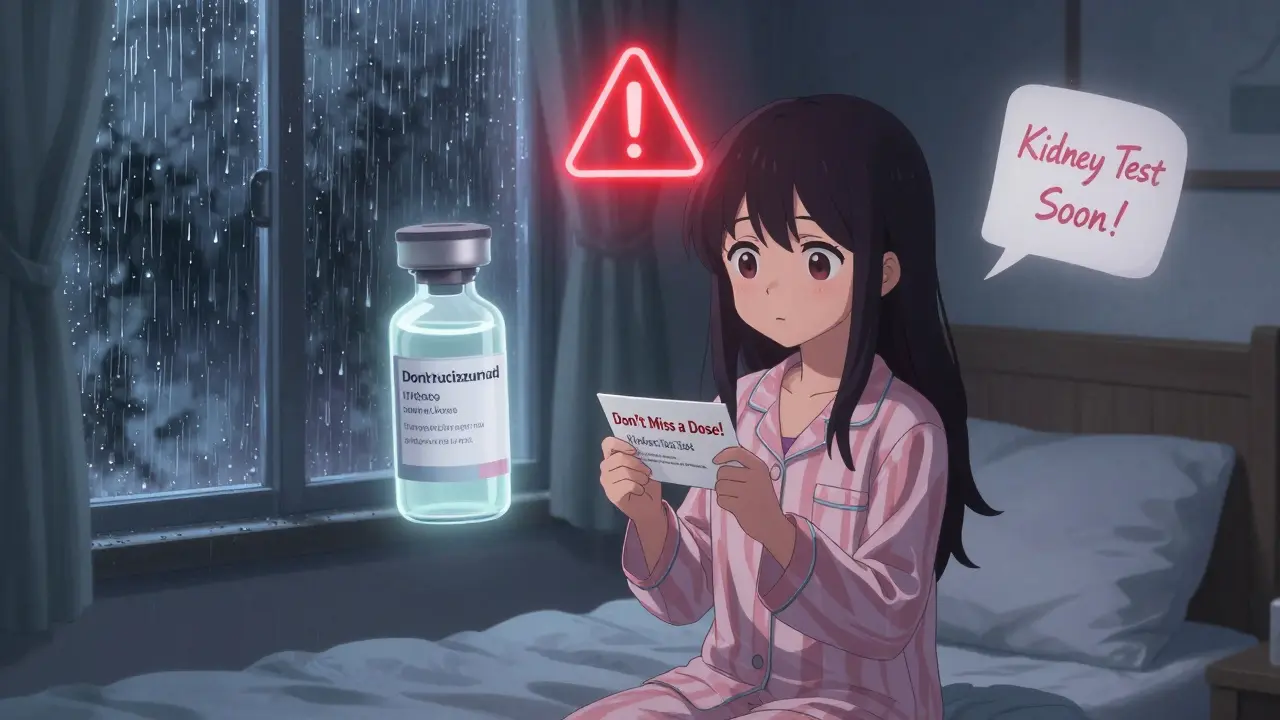
- You’ll still need kidney tests every 6 to 12 months-even though you don’t need INR checks.
What About Surgery or Procedures?
If you’re having a dental extraction, colonoscopy, or surgery, your DOAC needs to be held. But how long? It depends on your kidney function and the procedure’s bleeding risk.- Low bleeding risk + CrCl ≥ 90 mL/min: Hold dabigatran 24-36 hours.
- High bleeding risk + CrCl 45 mL/min: Hold dabigatran 96-108 hours (4-4.5 days).
Cost and Access
DOACs cost $500-$700 a month in the U.S. Warfarin is $10-$30. That’s a huge difference. In Australia, PBS subsidies bring DOAC costs down significantly, but out-of-pocket expenses still vary. If cost is a barrier, talk to your doctor. Sometimes, sticking with warfarin-despite the tests-is the better choice.Final Thought: It’s Not About the Pill. It’s About the Plan.
Switching from warfarin to a DOAC can improve your life. Fewer needles. Less worry about spinach and broccoli. More freedom. But it’s not a DIY project. It needs a plan. A checklist. A doctor who knows the guidelines. If you’re considering this switch, ask:- What’s my current INR?
- Do I have a mechanical valve?
- What’s my kidney function?
- What’s the exact timing for stopping warfarin and starting the DOAC?
- What do I do if I miss a dose?
- What happens if I need emergency care?
Can I switch from warfarin to a DOAC on my own?
No. Switching must be done under medical supervision. Only clinicians experienced in anticoagulation management should make this change. Incorrect timing can lead to stroke or dangerous bleeding. Your doctor will check your INR, kidney function, and medical history before deciding if and when to switch.
Do I still need blood tests after switching to a DOAC?
You won’t need regular INR tests anymore. But you still need kidney function tests (creatinine clearance) every 6 to 12 months. DOACs are cleared by the kidneys, and if your kidney function drops, your drug levels can build up and increase bleeding risk. Liver function and blood counts may also be checked periodically.
Which DOAC is safest?
There’s no single “safest” DOAC-it depends on you. Apixaban has the lowest risk of major bleeding in most studies. Dabigatran has a higher risk of stomach bleeding but is effective for stroke prevention. Rivaroxaban is once daily, which helps with adherence. Your doctor will choose based on your kidney function, age, weight, bleeding risk, and other medications.
What if I forget to take my DOAC?
If you miss a dose, take it as soon as you remember-if it’s within 6 hours of your usual time. If it’s more than 6 hours late, skip the missed dose and take your next one at the regular time. Never double up. DOACs leave your system quickly, so missing a dose reduces protection. Set phone alarms and use pill organizers to stay on track.
Can I drink alcohol while on a DOAC?
Moderate alcohol (one drink a day for women, two for men) is generally okay. But heavy drinking increases bleeding risk and can affect liver function, which changes how DOACs are processed. If you drink regularly, tell your doctor. They may adjust your dose or recommend avoiding alcohol altogether.
Are DOACs safe during pregnancy?
No. DOACs are not safe during pregnancy. They can cross the placenta and harm the developing baby. If you’re pregnant or planning to become pregnant, you’ll need to switch to heparin injections, which don’t cross the placenta. Always tell your doctor if you’re trying to conceive or suspect you’re pregnant.
What happens if I need emergency surgery?
If you need emergency surgery, tell the medical team you’re on a DOAC. They’ll check when you last took it. For dabigatran, there’s an antidote called idarucizumab. For rivaroxaban or apixaban, andexanet alfa can reverse the effect-but it’s not always available. In urgent cases, doctors may use activated charcoal (if taken recently), dialysis (for dabigatran), or supportive care like blood products.
jaspreet sandhu
January 3, 2026 AT 02:23Switching to DOACs is just another way pharma pushes expensive pills. Warfarin works fine if you just do the blood tests. People today want everything easy-no effort, no responsibility. You think skipping INR checks means freedom? It just means you’re flying blind. I’ve seen people bleed out because they thought ‘no monitoring’ meant ‘no risk.’
LIZETH DE PACHECO
January 4, 2026 AT 21:59This is actually one of the clearest explanations I’ve read on this topic. Thank you for breaking down the INR thresholds and the kidney function stuff-it’s stuff your doctor might rush through. I switched last year and the pill organizer with alarms saved my life. Seriously, set those reminders.
Kristen Russell
January 6, 2026 AT 11:11Just don’t skip doses. That’s the whole game.
Matthew Hekmatniaz
January 8, 2026 AT 06:37I’ve been on apixaban for three years now. My dad was on warfarin for a decade-18 INR tests a year, constant diet tweaks, and he still had one scary bleed. I don’t miss the needles. The one thing I wish someone told me? Get a medical alert bracelet. Not because you’re at risk, but because ER staff don’t always ask the right questions.
sharad vyas
January 10, 2026 AT 05:40In India, we don’t even have consistent access to DOACs. My cousin got prescribed rivaroxaban, but the pharmacy kept saying it was ‘out of stock.’ He went back to warfarin. The cost difference is insane here-DOACs are like a luxury. It’s not about what’s better scientifically, it’s about what’s accessible. We need better systems, not just better pills.
Liam George
January 11, 2026 AT 00:06They say DOACs are safer-but have you ever wondered who funds those clinical trials? Big Pharma. The FDA approves these drugs because they make billions. The ‘antidotes’? Andexanet? Costs $50,000 a dose. Hospitals won’t stock it. So who really benefits? The insurance companies that stop paying for INR tests. Meanwhile, you’re stuck with a pill that can’t be reversed unless you’re rich. This isn’t medicine-it’s a financial trap disguised as convenience.
Lee M
January 12, 2026 AT 12:33Look, if you’re over 70, have kidney issues, or take any other meds, DOACs are a gamble. I’m a nurse. I’ve seen three patients in the last year bleed internally because they thought ‘no monitoring’ meant ‘no danger.’ The guidelines are clear: if your CrCl is below 50, you’re playing Russian roulette. Don’t let marketing fool you.
Bryan Anderson
January 13, 2026 AT 21:19I appreciate the detailed breakdown of INR thresholds and DOAC-specific guidelines. One thing I’d add: many patients don’t realize that even though they don’t need INR checks, their kidney function can decline slowly over time. A creatinine clearance of 60 now might be 40 in a year. I recommend a simple blood test every six months-even if your doctor doesn’t bring it up. It’s easy to overlook, but it’s critical.
Olukayode Oguntulu
January 15, 2026 AT 00:29There’s a metaphysical irony here: we trade the tyranny of the INR needle for the silent tyranny of the pill schedule. Warfarin made you accountable to the lab; DOACs make you accountable to your own discipline. The body doesn’t care about convenience-it only cares about concentration gradients and half-lives. You think you’ve escaped the system? No. You’ve just internalized it. The clock is your new INR machine.
Alex Warden
January 15, 2026 AT 15:24People act like DOACs are magic. They’re not. I had a friend take dabigatran and forget to take it with food. He got a clot in his leg. Took him six months to recover. The pill doesn’t care if you’re busy or tired. It needs food, it needs timing, it needs consistency. And if you mess up? No second chances. Warfarin at least gave you a warning sign with the INR. DOACs? They just… stop working. Quietly. And then you’re dead.
Richard Thomas
January 17, 2026 AT 06:07I switched from warfarin to apixaban two years ago. The biggest change wasn’t the pills-it was the mental shift. No more worrying about kale or cranberry juice. No more driving 40 miles for a blood test. But the real win? I stopped feeling like a patient. I started feeling like someone who just manages a condition. That’s huge. The only thing I’d stress to others? Talk to your pharmacist. They know the ins and outs of timing, interactions, and storage better than most doctors. I learned about the moisture thing with dabigatran from my pharmacist-not my cardiologist. That saved me.