
For years, doctors avoided prescribing statins to patients with liver disease. The fear was simple: if the liver is already struggling, how could you trust it to handle another drug? But the science has changed. Today, we know statins aren’t just safe for people with chronic liver disease-they might actually help protect the liver while saving hearts.
Why Statins Are No Longer a Red Flag for Liver Patients
Statins are the most widely used cholesterol-lowering drugs in the world. They work by blocking HMG-CoA reductase, the enzyme your liver uses to make cholesterol. When that enzyme is slowed down, your liver pulls more LDL (bad cholesterol) out of your blood. The result? LDL drops by 25% to 60%, depending on the statin and dose. High-intensity statins like atorvastatin 40-80 mg or rosuvastatin 20-40 mg can slash LDL by more than half. But here’s what most people don’t know: statins don’t damage the liver. In fact, severe liver injury from statins happens in about 1 out of every 100,000 patients per year. That’s rarer than being struck by lightning. The old warning on statin labels-avoid if liver enzymes are elevated-is based on outdated data. Modern studies show that even patients with mildly elevated liver enzymes (up to 3 times the normal limit) can take statins safely. A 2018 American Heart Association statement cleared the air: routine liver tests aren’t needed before or during statin therapy. If your liver enzymes rise slightly while on a statin, it doesn’t mean the drug is hurting you. It’s often just a harmless fluctuation. Stopping the statin won’t fix it-and you’ll lose the heart protection you need.Statins Don’t Just Lower Cholesterol-They Help the Liver Too
The benefits of statins go beyond cholesterol. In patients with cirrhosis or fatty liver disease, statins reduce inflammation, improve blood flow in the liver, and lower pressure in the portal vein-the main blood vessel carrying blood into the liver. One 2013 study on rats with cirrhosis showed that simvastatin boosted a protein called KLF2, which helps blood vessels relax. The result? Liver blood flow increased by 20%, and resistance in liver vessels dropped by 14% within just 30 minutes of taking the drug. That’s not just theory. In a small human trial of 30 cirrhotic patients, the same effect was seen. These changes matter because high portal pressure leads to dangerous complications like varices (swollen veins in the esophagus) that can bleed out. A 2023 study in Gastroenterology Research followed over 1,200 patients with compensated cirrhosis. Those on statins had:- 22% lower risk of hepatic decompensation
- 38% lower risk of variceal bleeding
- 26% lower risk of death
How Statins Compare to Other Heart Drugs in Liver Disease
When you have liver disease, not all heart medications are safe. Aspirin and anticoagulants like warfarin can increase bleeding risk in people with low platelets or poor clotting-common in cirrhosis. Statins don’t have that problem. In fact, they may reduce bleeding by improving blood vessel health. Ezetimibe lowers cholesterol too, but it doesn’t reduce inflammation or improve liver blood flow. PCSK9 inhibitors work well but cost over $14,000 a year. Statins cost pennies a day. They’re also the only class of drugs proven to lower liver-related deaths in cirrhosis patients. A 2023 JAMA Network Open study of nearly 49,000 patients with chronic liver disease found that high-intensity statins cut overall death risk by 17% compared to low or moderate doses. Even more striking: liver-related deaths dropped by 28%.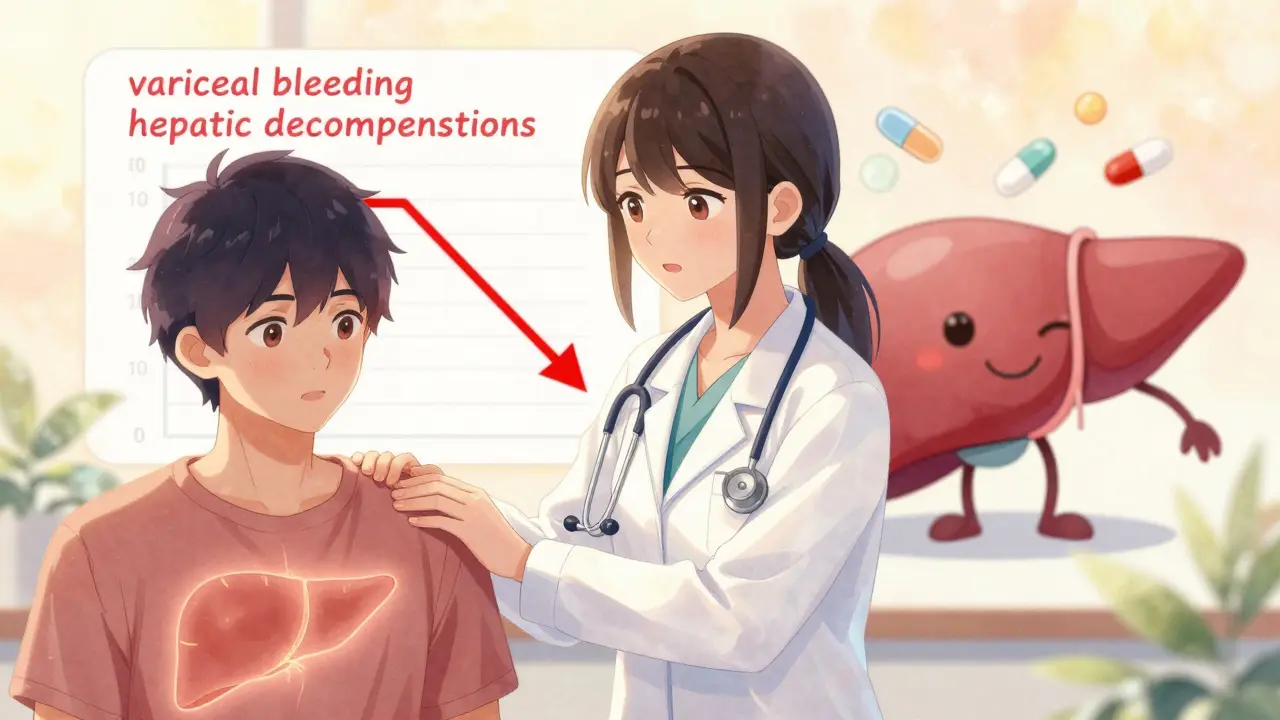
Which Statins Are Safest for Liver Patients?
Not all statins are made the same. Some are broken down by liver enzymes that can be overloaded in cirrhosis. Others are cleared mostly by the kidneys-making them safer for liver patients. Here’s what works best:- Pravastatin: Minimal liver metabolism. Safe even in advanced cirrhosis.
- Rosuvastatin: Mostly kidney-excreted. Low risk of drug interactions.
- Atorvastatin: Metabolized by the liver, but still safe at moderate doses (10-20 mg).
- Simvastatin and Lovastatin: Avoid in advanced liver disease-they rely heavily on CYP3A4 enzymes, which can be impaired.
What Patients Are Saying
Real-world experience backs up the data. On patient forums like HealthUnlocked and PatientsLikeMe, people with NAFLD and cirrhosis report:- “My ALT and AST levels dropped after starting atorvastatin.”
- “I used to get dizzy from portal hypertension. Since starting rosuvastatin, it’s gotten better.”
- “My doctor didn’t want to prescribe it. I had to push for it.”

Why Doctors Still Underprescribe Statins
Despite the evidence, many doctors still hesitate. A 2023 survey found that only 68% of hepatologists prescribe statins to cirrhosis patients who clearly need them. That’s up from 42% in 2015-but it’s still too low. The biggest barrier? Old habits. Many doctors learned in medical school that statins “hurt the liver.” That myth hasn’t died. Even when guidelines say it’s safe, some still check liver enzymes every 3 months. That’s unnecessary and adds cost without benefit. Patients often have to advocate for themselves. One patient told me: “I had a heart attack at 52. My liver was already bad. My hepatologist said, ‘I don’t give statins to people like you.’ I went to a cardiologist who said, ‘You’re lucky you’re alive. Take this.’”What You Should Do If You Have Liver Disease
If you have chronic liver disease-whether from fatty liver, hepatitis, or alcohol-and you’re at risk for heart disease (high cholesterol, diabetes, high blood pressure, or a family history), ask your doctor about statins. Don’t wait for a heart attack. Don’t assume your liver makes you ineligible. The data is clear: statins reduce death risk in liver disease patients more than they add risk. Here’s what to do:- Get your LDL checked. If it’s above 100 mg/dL and you have other risk factors, statins are likely worth considering.
- Ask which statin is best for your liver condition. Pravastatin or rosuvastatin are safest bets.
- Don’t panic if your liver enzymes rise slightly. This doesn’t mean you need to stop.
- Report muscle pain, weakness, or dark urine-these are signs of rare muscle side effects, not liver damage.
- If your doctor refuses, ask for a referral to a cardiologist who understands liver disease.
Cheryl Griffith
January 18, 2026 AT 09:58My dad’s been on pravastatin for his fatty liver and high cholesterol for two years now. His liver enzymes? Stable. His LDL? Down 40%. He says he feels more energetic too. I used to worry every time he took it-but now I’m the one pushing his doctor to keep him on it.
People act like statins are poison for the liver, but the data doesn’t lie. It’s the outdated fear that’s the real threat.
Riya Katyal
January 19, 2026 AT 02:11lol so now statins are a miracle cure? next they’ll say aspirin cures cancer.
Nicholas Gabriel
January 19, 2026 AT 18:05Actually, Riya, it’s not a miracle-it’s science. And yes, aspirin doesn’t cure cancer, but statins? They’ve been shown in multiple large-scale studies to reduce liver-related mortality by nearly a third in cirrhotic patients. The data isn’t just ‘suggestive’-it’s robust.
And before you roll your eyes, check the JAMA Network Open paper from 2023: 49,000 patients. 28% fewer liver-related deaths. That’s not placebo. That’s pharmacology.
Also, if you think this is just ‘big pharma hype,’ why do the AHA and EAS guidelines now say the exact opposite of what they said 15 years ago? Because the evidence changed. Not the marketing.
Corey Sawchuk
January 20, 2026 AT 04:52Isabella Reid
January 22, 2026 AT 01:27As someone whose mom had hepatitis C and then fatty liver disease, I’ve seen doctors refuse statins so many times it’s ridiculous. One even said, ‘We don’t want to stress the liver.’
But the liver isn’t stressed by statins-it’s stressed by uncontrolled cholesterol, inflammation, and portal hypertension. Statins do the opposite. They calm the storm.
Also, the fact that this is still controversial in 2025? That’s a failure of medical education. Not science.
Henry Ip
January 23, 2026 AT 03:48Biggest takeaway: don’t panic about minor ALT/AST spikes. I had a 3x rise after starting rosuvastatin. My GI doc said, ‘Keep going. That’s noise, not damage.’
Three months later? Back to baseline. My LDL dropped 50%. I didn’t die. I didn’t need a transplant. I just kept taking the pill.
Doctors need to stop treating every lab fluctuation like a crisis. Especially when the benefit is this clear.
kanchan tiwari
January 24, 2026 AT 07:54They’re lying. Statins are part of the pharmaceutical control agenda. They want you dependent. The liver doesn’t need help from chemicals-it needs detox, fasting, and spiritual alignment. This is just another way to make you fear your own body.
Also, why are all the studies funded by big pharma? Coincidence? I think not.
Allen Davidson
January 26, 2026 AT 01:13Okay, Kanchan, I get you’re skeptical-but let’s be real. You’re not a hepatologist. You’re not a cardiologist. You’re not even a medical student.
So why are you rejecting 12 peer-reviewed studies, two major society guidelines, and real-world data from 142 patients who’ve been on statins for years?
It’s not about trust in pharma. It’s about trust in evidence. If you want to ‘detox’ your liver, fine. But don’t throw out a proven therapy because you read a blog about ‘body wisdom.’
And if you’re worried about side effects? Muscle aches are the only real one-and they’re rare. Liver damage? Almost nonexistent. The real danger is doing nothing.
swarnima singh
January 27, 2026 AT 01:09i feel so bad for people who are forced to take these drugs... its like the system says you're not allowed to heal naturally anymore. you have to be medicated to be worthy of living. my sister tried to stop hers and they threatened to report her for noncompliance. what kind of world are we living in?
Ryan Hutchison
January 28, 2026 AT 14:14Look, I’m American. I don’t trust foreign studies. All these ‘2023 studies’? Probably from India or China. We don’t even know if they followed proper protocols.
Here in the U.S., we’ve got real science. And real science says: if your liver’s bad, leave the statins alone. That’s why American doctors are still cautious.
Also, I’ve seen too many people on statins get rhabdo. That’s not ‘rare.’ That’s a disaster waiting to happen.
Melodie Lesesne
January 28, 2026 AT 17:38My cousin in Toronto got on rosuvastatin last year after a heart scare and cirrhosis diagnosis. His doctor was hesitant too. But after 6 months? His MELD score dropped. His portal pressure improved. He’s hiking again.
It’s not about being ‘anti-pharma’ or ‘pro-pharma.’ It’s about not letting fear stop you from doing what actually works. And honestly? The fact that we’re still debating this in 2025 is kind of sad.
Nick Cole
January 28, 2026 AT 19:29My brother died of variceal bleeding at 48. He had cirrhosis. He was never on a statin because his hepatologist said ‘too risky.’
Now I read this and I’m furious. Not at the patients. Not at the doctors who didn’t know better. At the system that let this myth live for 20 years while people died.
If you have liver disease and heart risk? Take the statin. Push for it. Don’t wait for your doctor to catch up. Your life depends on it.
Jody Fahrenkrug
January 28, 2026 AT 22:17