
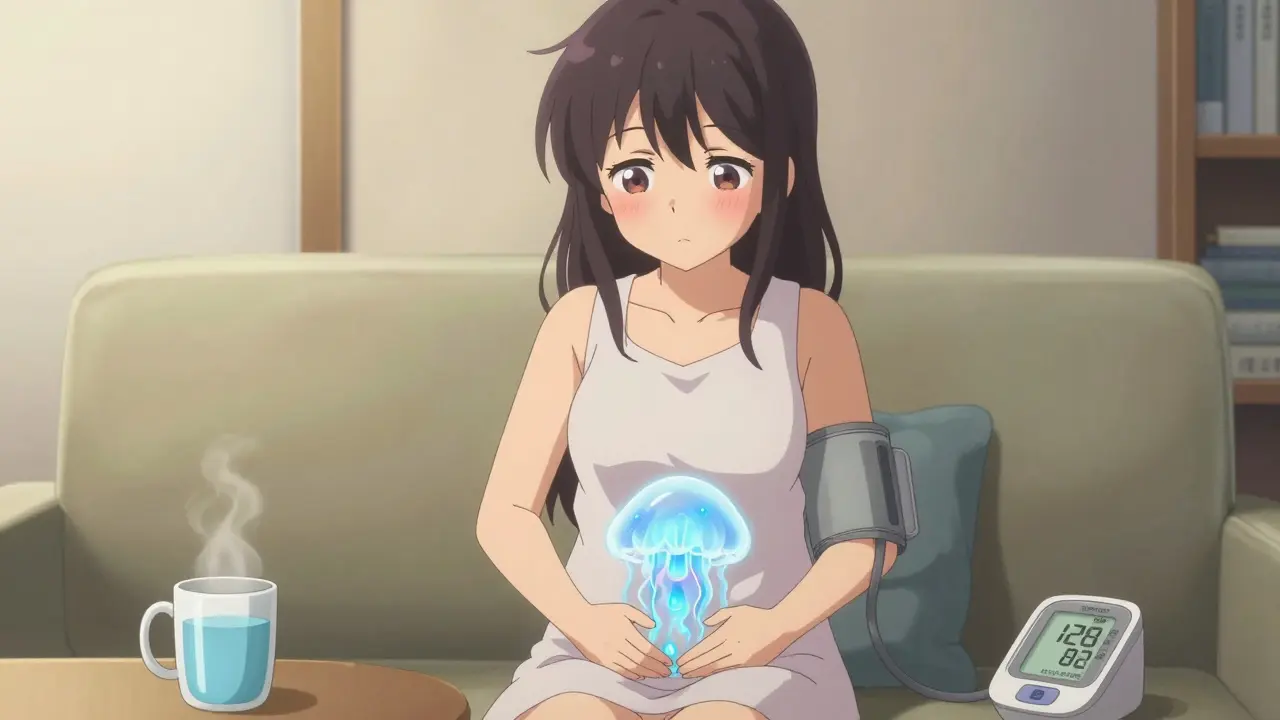
Polycystic kidney disease (PKD) isn’t just a slow-progressing condition-it’s a genetic time bomb that quietly reshapes your kidneys over decades. Imagine your kidneys, normally the size of two fists, swelling to the weight of a small bowling ball, filled with hundreds of fluid-filled sacs called cysts. These aren’t harmless bumps. They grow. They press. They destroy healthy tissue. And for half of those affected, they eventually lead to kidney failure. This isn’t hypothetical. It’s the daily reality for over 600,000 people in the U.S. alone, and millions more worldwide.
Two Types, One Root Cause
Not all PKD is the same. There are two main forms, and they’re as different as day and night. The most common, autosomal dominant polycystic kidney disease (ADPKD), makes up more than 98% of all cases. You only need to inherit one faulty copy of either the PKD1 or PKD2 gene to develop it. PKD1 mutations cause the worst cases-symptoms hit earlier, cysts grow faster, and kidney failure often comes by age 50-60. PKD2? Slower progression. Many live into their 70s without needing dialysis.
The rarer form, autosomal recessive polycystic kidney disease (ARPKD), requires both parents to pass down a mutated PKHD1 gene. It’s like flipping two tails in a row-only a 25% chance per child. This form doesn’t wait for adulthood. Babies are born with enlarged kidneys, high blood pressure, and liver damage. Many don’t make it past infancy. Those who do face lifelong complications, including breathing problems and liver scarring.
Here’s how they stack up:
| Feature | ADPKD | ARPKD |
|---|---|---|
| Genes involved | PKD1 (78%), PKD2 (15%) | PKHD1 |
| Inheritance pattern | Autosomal dominant (one faulty gene) | Autosomal recessive (two faulty genes) |
| Onset of symptoms | 30-40 years old (usually) | Before birth or early childhood |
| Prevalence | 1 in 400-1,000 people | 1 in 20,000 people |
| Kidney failure by age 70 | ~75% | Variable; many survive into adulthood |
How It Starts: Genetics in Action
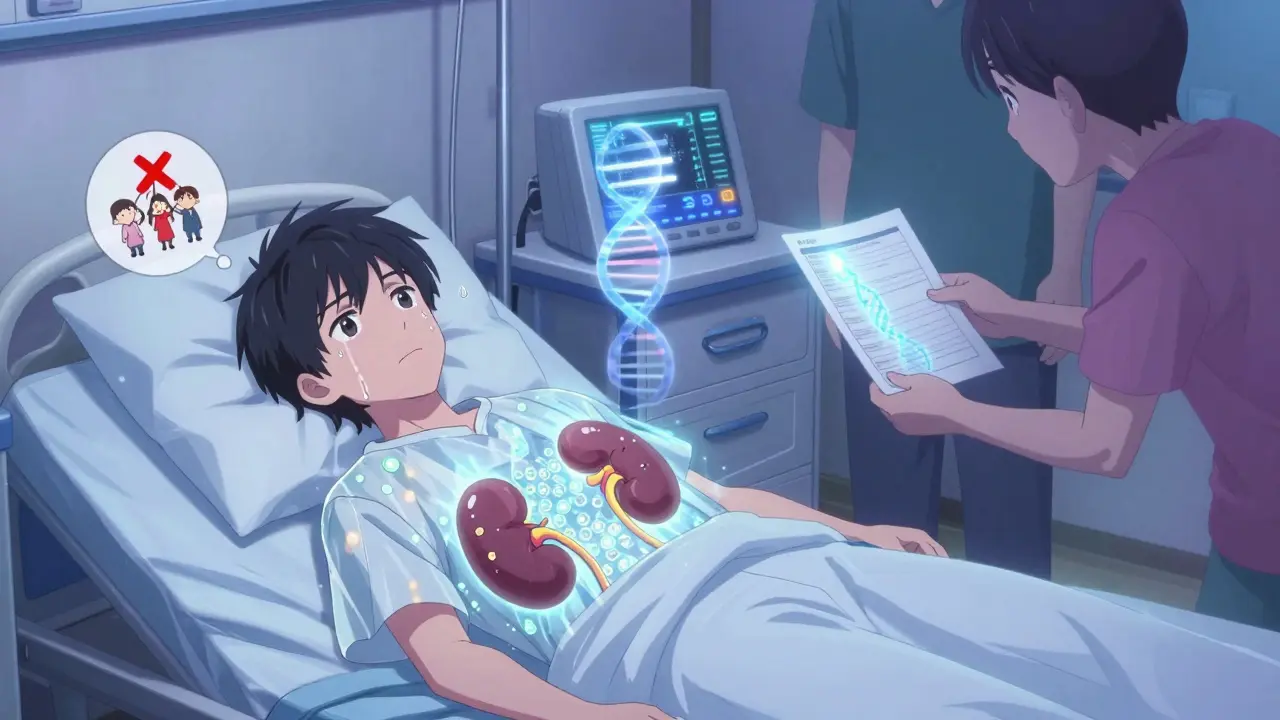
Here’s the brutal truth: if you have ADPKD, there’s a 50% chance you passed it to each of your kids. About 90% of cases are inherited. But that leaves 10%-people with no family history. How? A brand-new mutation. One random glitch in a parent’s sperm or egg. That’s how someone ends up with PKD and no one else in their family does.
And it’s not just about which gene you inherit. The second hit theory explains why symptoms vary so wildly. You’re born with one broken copy of PKD1 or PKD2. But somewhere down the line, a second mutation knocks out the healthy copy in a kidney cell. That’s when cysts start forming aggressively. Two people with the same gene mutation can have totally different outcomes-because the second mutation happens at different times, in different cells.
For ARPKD, it’s simpler but crueler. Both parents must be carriers. They feel fine. They don’t know. Then, out of nowhere, their child is born with life-threatening kidney and liver issues. Genetic testing before pregnancy can catch this-but most people don’t get tested unless there’s a known family history.
What Happens Inside Your Kidneys
Your kidneys filter about 120-150 quarts of blood daily. Each day, they produce 1-2 quarts of urine. That’s the job. In PKD, cysts hijack that system. They start small-tiny bubbles in the tubules. Over years, they swell, stretch, and crush the normal tissue around them. Blood vessels get damaged. Scar tissue builds up. The kidneys lose their ability to concentrate urine, regulate blood pressure, and remove toxins.
By age 30-40, someone with ADPKD might have 100+ cysts. By 50, it’s hundreds. The kidneys can balloon to three or four times their normal size. Some patients describe feeling a heavy, constant pressure in their sides. Others feel nothing until their kidneys fail.
It’s not just the kidneys. Cysts form in the liver, pancreas, and even the heart. About 80% of ADPKD patients develop liver cysts. They don’t usually cause liver failure, but they can swell and cause pain, bloating, or early satiety. High blood pressure? Nearly universal. It starts early-even before kidney function drops. And it’s not just a symptom. It’s a major driver of damage.
Diagnosis: When and How
Many people go years undiagnosed. Symptoms are vague: back pain, high blood pressure, urinary tract infections. One Reddit user shared, “It took seven years and three doctors before I got the right diagnosis-even with a family history.” That’s not rare.
Doctors use three tools:
- Imaging: Ultrasound is first. By age 30-39, if you have a family history and at least 10 cysts in each kidney, it’s ADPKD. MRI and CT scans show more detail and track cyst growth over time.
- Genetic testing: Not always needed. But if symptoms are early, atypical, or you’re planning kids, testing for PKD1/PKD2 mutations gives clarity. Panels now cost around $1,200 and are covered by many insurers.
- Blood and urine tests: eGFR (estimated glomerular filtration rate) tells you how well your kidneys filter. A drop below 60 mL/min signals decline. Protein in urine? Another red flag.
Screening kids with ARPKD? Done at birth-ultrasound shows enlarged kidneys. Blood pressure is monitored closely. Liver function tests start early.
Management: What Actually Works
There’s no cure. But there are things you can do to slow it down-and live longer, better.
Control your blood pressure. This is the single most important thing. Target: below 130/80 mmHg. For some, even lower-110/75, based on the HALT-PKD trial. ACE inhibitors or ARBs are first-line. They don’t just lower pressure. They reduce cyst growth.
Hydrate. Avoid caffeine. Drinking 2-3 liters of water daily may help slow cyst growth. Caffeine? It mimics vasopressin, a hormone that fuels cyst expansion. Skip soda, energy drinks, and excessive coffee.
Medication: Tolvaptan (Jynarque). Approved by the FDA in 2018, this is the first drug proven to slow kidney decline in rapidly progressing ADPKD. It blocks vasopressin. In trials, it cut the rate of kidney function loss by 1.3 mL/min/year. But it’s expensive-$115,000 a year. And it has side effects: extreme thirst, frequent urination, and liver toxicity. Not for everyone. Only if your kidney function is declining fast and you’re under close monitoring.
Watch for complications. Kidney stones? Painful. UTIs? Can spread to cysts. Brain aneurysms? Screen if you have a family history. Regular MRIs or CTs of the brain are recommended for high-risk families.
Don’t ignore pain. A 2023 survey from the PKD Foundation found 78% of patients struggle with chronic pain. It’s not just physical. It’s emotional. Physical therapy, heat, and sometimes nerve blocks help. Avoid NSAIDs like ibuprofen-they can hurt kidneys further.

What’s on the Horizon
Research is moving fast. Tolvaptan was a breakthrough. Now, new drugs are in phase 3 trials:
- Lixivaptan: Similar to tolvaptan, but potentially safer. Results expected in 2024.
- Bardoxolone methyl: Targets inflammation and oxidative stress. A 2022 study showed a 4.9 mL/min higher eGFR after 48 weeks vs. placebo.
- Gene therapies: Still early, but CRISPR-based approaches aim to correct PKD1 mutations in lab models.
And it’s not just drugs. Kidney transplants are more successful than ever. Survival rates after transplant are over 90% at five years. Dialysis? It works. But transplant gives better quality of life. Wait times? 3-5 years in the U.S., depending on blood type and location.
Living With PKD: The Human Side
It’s not just about numbers and drugs. It’s about anxiety. About telling your kids they might inherit this. About watching your parents go through dialysis. One patient on the American Kidney Fund forum said, “Starting blood pressure control at 28 kept my kidney function at 65% at age 45.” That’s hope.
But for others, it’s isolation. Chronic pain. Financial strain. The average cost of care before dialysis? $45,300 a year. In the year before dialysis? Nearly $96,000. Medicare covers it-but many still struggle with copays, travel, time off work.
Support groups matter. The PKD Foundation, Reddit communities, local nephrology clinics-they’re lifelines. Talking to someone who gets it? That’s medicine too.
What to Do Now
If you have a family history of PKD:
- Get tested. Genetic screening is faster and cheaper than ever.
- Start monitoring blood pressure now-even if you feel fine.
- See a nephrologist by age 25. Don’t wait for symptoms.
- Drink water. Cut caffeine. Avoid NSAIDs.
- Consider genetic counseling if you’re planning a family.
If you’ve been diagnosed:
- Don’t panic. Progression varies. Many live full lives.
- Work with a kidney specialist. Not a general doctor.
- Track your eGFR yearly. More often if it drops below 60.
- Ask about tolvaptan-if you’re a candidate.
- Connect with others. You’re not alone.
PKD doesn’t have to be a death sentence. It’s a marathon, not a sprint. And with the right care, you can run it for decades.
Arshdeep Singh
February 19, 2026 AT 22:24Benjamin Fox
February 20, 2026 AT 11:22Jonathan Rutter
February 20, 2026 AT 22:34Ashley Paashuis
February 22, 2026 AT 13:16aine power
February 22, 2026 AT 17:33John Cena
February 23, 2026 AT 05:35Hariom Sharma
February 24, 2026 AT 00:18Taylor Mead
February 25, 2026 AT 20:07Jana Eiffel
February 27, 2026 AT 10:59