

Why Physical Therapy Works When Pills Don’t
Medication can mask pain, but it doesn’t fix what’s broken. If you’ve been relying on pills for chronic pain and still feel stiff, sore, or limited, you’re not alone. Thousands of people in Australia and beyond are turning to physical therapy-not as a last resort, but as the first real solution. It’s not magic. It’s science. And it works because it doesn’t just numb the pain. It changes how your body moves, heals, and feels.
Physical therapy for pain is built on three pillars: exercise, stretching, and restoration. Not fancy machines. Not expensive treatments. Just movement-done right. Studies show that 50 to 75% of people see significant pain reduction in just 6 to 8 weeks when they stick to a well-designed program. That’s not a guess. That’s from clinical trials published in the Journal of Orthopaedic & Sports Physical Therapy.
Exercise That Reduces Pain, Not Worsens It
Most people think if it hurts, they shouldn’t move. That’s the biggest mistake. Movement triggers your body’s natural painkillers-endorphins-and helps calm overactive nerves. But not all exercise is created equal.
For joint pain like osteoarthritis, walking, swimming, or cycling at a steady pace (65-75% of your max effort) for 20-30 minutes, three to five times a week, cuts pain by 35-40%. Water-based exercise is especially powerful: it cuts knee pressure in half compared to walking on land. If you’re dealing with back pain, strength training with light weights (60-80% of your one-rep max) for 2-3 sets of 8-15 reps, twice a week, builds support around your spine. Research from UT Health Austin shows 70% of chronic back pain sufferers reduce their pain significantly with consistent home exercises.
Here’s the catch: intensity matters. Pushing past 80% of your max heart rate can actually make fibromyalgia pain worse. In one study, 22% of patients had increased pain with high-intensity workouts, while only 8% did with moderate efforts. You don’t need to sweat buckets. You need to move consistently, safely, and with control.
Stretching: The Forgotten Key
Stretching isn’t just for athletes. If your muscles are tight, they pull on joints, irritate nerves, and create pain. Static stretching-holding a stretch without bouncing-for 30 to 60 seconds, five to seven days a week, increases flexibility by 15-25 degrees in just four weeks. That’s not small. That’s life-changing.
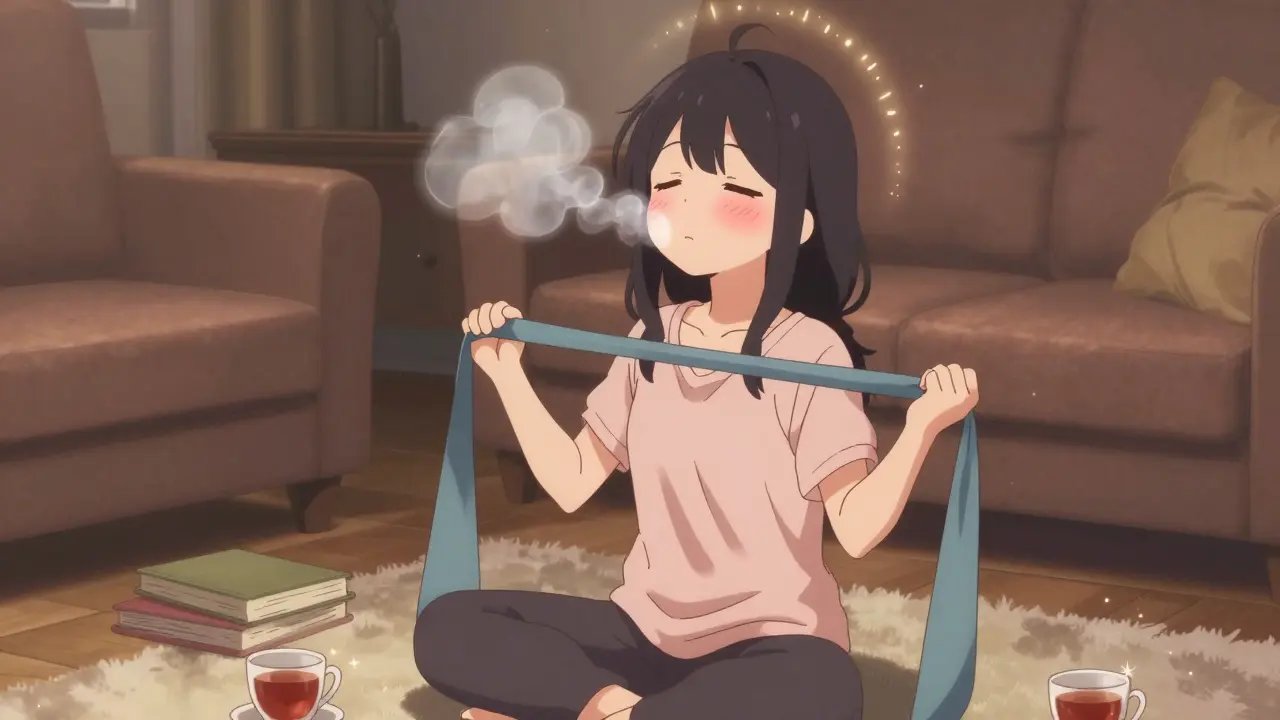
For neck and shoulder pain from sitting at a desk, you don’t need 10 minutes. A 2021 Duke University study found that just two minutes of daily stretching with resistance bands gave the same pain relief as 12 minutes. One simple move: sit tall, gently pull your chin back like you’re making a double chin. Hold for 30 seconds. Do it five times a day. People in that study reported 31% less pain after four weeks.
And breathing? Don’t skip it. Holding your breath during a stretch tenses your muscles. Breathe slow and deep. In through the nose, out through the mouth. It tells your nervous system it’s safe to relax.
Restoration: Getting Back to What You Love
Pain doesn’t just hurt. It steals your life. You stop walking the dog. You skip the garden. You avoid lifting your grandchild. Restoration means getting those things back-not just reducing pain, but rebuilding function.
Physical therapists don’t just give you exercises. They teach you how to move again. That means relearning how to bend, reach, stand, and sit without triggering pain. It’s not about being strong. It’s about being smart with your body.
Take sciatica. One Reddit user, u/BackPainSufferer, said straight leg raises cut his pain from 7/10 to 2/10 in three weeks. That’s not luck. That’s targeted restoration. The exercise gently mobilizes the nerve, reduces inflammation, and retrains the muscles around the hip and lower back. Same with fibromyalgia. One person on Reddit cut their pain by 80% after 16 weeks of daily tai chi. Why tai chi? Because it combines slow movement, balance, and deep breathing-all proven to calm the nervous system.
What Doesn’t Work (And Why People Quit)
Not everyone succeeds. And the reason isn’t that physical therapy doesn’t work. It’s that it’s done wrong.
42% of negative reviews on Healthgrades say their pain got worse at first. That’s usually because:
- They did too much too soon
- They didn’t learn proper form
- They ignored pain signals
The rule of thumb? If your pain goes up during exercise but drops back to normal within one hour after, you’re okay. If it’s still sore two hours later, you overdid it. That’s called the “2-hour pain rule.” It’s simple. It’s reliable. And most clinics don’t tell you about it.
Another big mistake: skipping the home program. Only 45% of people stick with exercises at home without support. But when they get video demos, adherence jumps to 78%. That’s huge. You don’t need to go to a clinic every day. You need to know what to do, when, and how.
What the Experts Say (And What They Don’t)
Dr. James Fricton from UT Health Austin says targeted exercises for the spine can reduce chronic back pain in 70% of cases. Dr. Cynthia Harrell from Duke says even two-minute routines help arthritis sufferers. But not everyone agrees.
Dr. Jane Smith from Advanced Pain Medical warns that exercise alone rarely fixes the root cause. And she’s right. About 35% of people need more than movement. Maybe they need manual therapy, posture correction, or even psychological support. Pain is complex. It’s not just muscles and bones. It’s nerves, stress, sleep, and emotions.
That’s why the best physical therapy programs don’t just hand you a sheet of exercises. They assess you. They listen. They adjust. And they know when to refer you to someone else.
How to Get Started-Without Getting Overwhelmed
You don’t need a gym membership. You don’t need expensive gear. Here’s how to begin:
- Find a licensed physical therapist. Ask if they use evidence-based pain protocols. Don’t settle for someone who just gives you a massage.
- Start with one exercise. Walking 10 minutes a day. Or two minutes of neck stretches. Just one.
- Track your pain. Use a 0-10 scale. Write it down. Did it go up? Down? Stay the same?
- Be patient. Improvement takes weeks, not days. But the first sign? You sleep better. You move without bracing yourself. You smile when you stand up.
The Arthritis Foundation’s two-minute exercise protocol has helped over 1,200 people. It’s free. It’s simple. And it’s backed by data. You can find it online. Do it before you brush your teeth. That’s how you build a habit.
The Bigger Picture: Why This Matters Now
More than 58 billion dollars was spent globally on non-drug pain treatments in 2023. Physical therapy makes up nearly a quarter of that. Why? Because the opioid crisis forced healthcare systems to find safer ways. Medicare now covers 80% of physical therapy costs. The American College of Physicians says exercise should come before pills for back pain.
And it’s growing. Telehealth physical therapy is now offered in 63% of clinics. Wearable sensors track your movement. Apps remind you to stretch. You can do it from your living room. That’s accessibility. That’s progress.
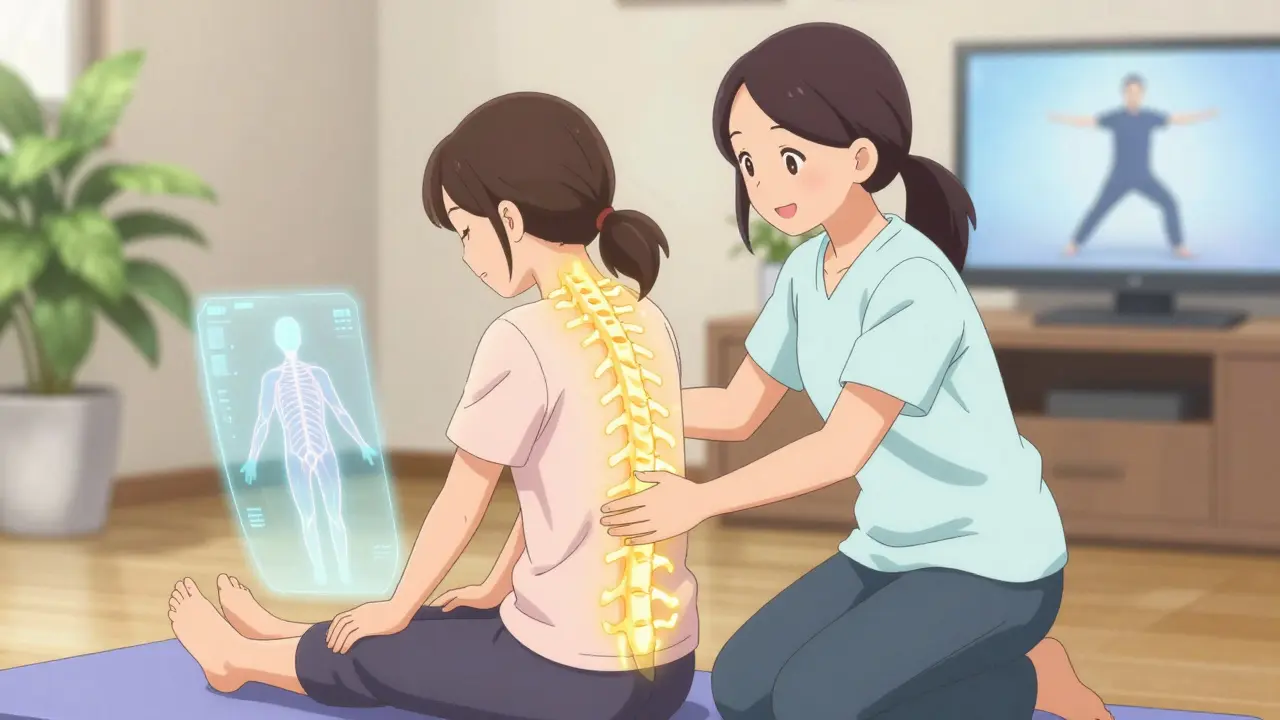
But here’s the truth: no app replaces a good therapist. No video replaces proper feedback. You need someone who can see your posture, adjust your form, and tell you when to push-and when to stop.
Final Thought: Movement Is Medicine
Pain doesn’t have to be your life sentence. You don’t need to live with stiffness, fear, or limits. Physical therapy gives you back control. Not with a pill. Not with a needle. With movement. With consistency. With patience.
Start small. Stay steady. Listen to your body. And remember: every step, every stretch, every breath is part of the healing.
Thomas Anderson
December 15, 2025 AT 04:51Best part? I can now play with my kids without wincing.
Edward Stevens
December 15, 2025 AT 06:42Alexis Wright
December 15, 2025 AT 14:29And don’t get me started on ‘evidence-based protocols.’ That’s just corporate jargon for ‘we ran a 12-person study funded by a brace company.’
Daniel Wevik
December 16, 2025 AT 16:05But most clinicians skip the foundational motor control drills and jump straight to strengthening - which explains why 42% of patients report exacerbation. The 2-hour pain rule is gold. Use it.
Rich Robertson
December 17, 2025 AT 17:15But I won’t deny the science. A guy in my township started doing seated marches while watching TV. Three months later, he walked to the clinic without his cane. No meds. Just consistency.
Natalie Koeber
December 18, 2025 AT 13:19Rulich Pretorius
December 19, 2025 AT 01:38Wade Mercer
December 20, 2025 AT 23:01Dwayne hiers
December 22, 2025 AT 01:43Jonny Moran
December 22, 2025 AT 09:08Sarthak Jain
December 24, 2025 AT 05:52Tim Bartik
December 25, 2025 AT 12:59Sinéad Griffin
December 25, 2025 AT 14:56jeremy carroll
December 25, 2025 AT 22:07