
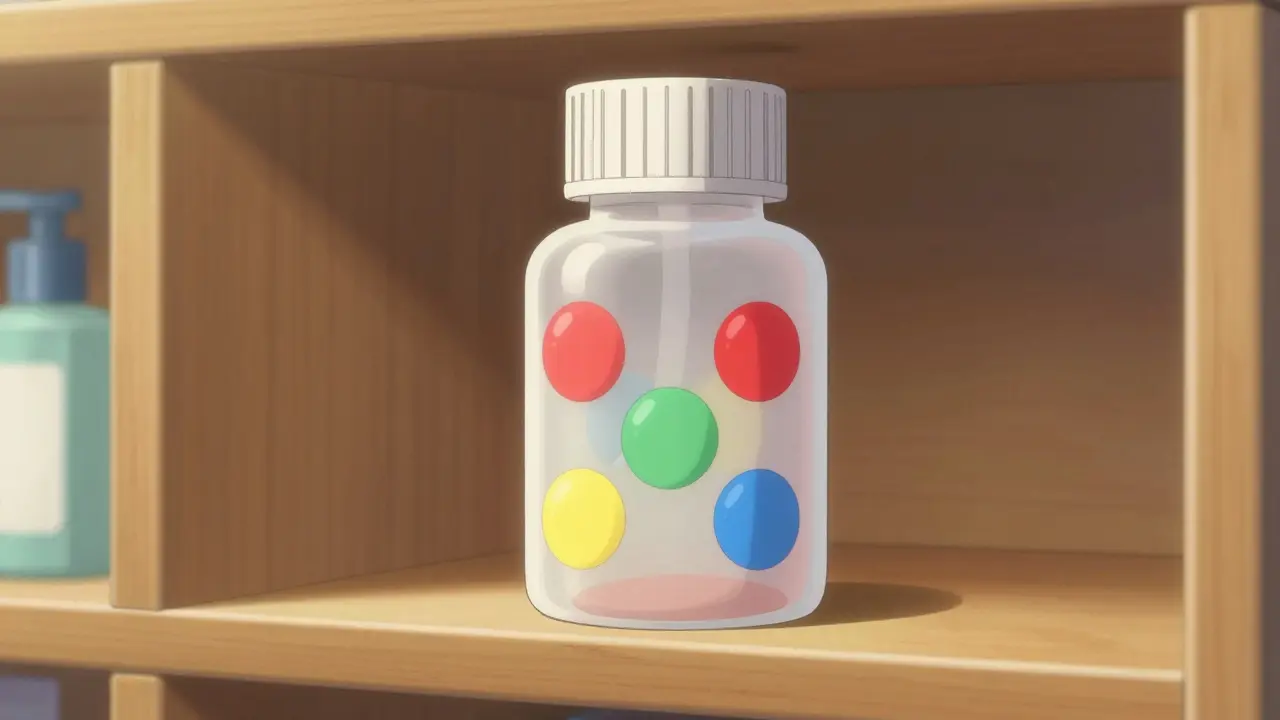
Key Takeaways
- Auxiliary labels provide critical safety info missing from the main prescription label.
- Color coding helps quickly identify risk levels-red means danger, yellow means caution.
- These stickers reduce medication errors by catching overlooked instructions like storage or food interactions.
- Up to 50% of patients forget verbal instructions, making these visual aids vital.
- Patient engagement is key: always ask your pharmacist to explain unfamiliar stickers.
The Silent Guardians on Your Pill Bottle
You pick up your new medication from the counter, hand it over to the pharmacist, and walk away with a bottle covered in tiny, colorful stickers. There is the big white label with your name and dosage, but then there are the smaller ones. Some are red, some yellow, maybe a blue one or two. Have you ever wondered what those little stickers actually say beyond the basics? You are looking at Pharmacy Auxiliary Labels, the unsung heroes of patient safety.
While the main label tells you what the medicine is and how much to take, these smaller stickers carry the heavy lifting regarding how that drug interacts with your life. They tell you about potential dangers, storage tricks, or dietary clashes that could ruin the treatment or hurt you. Think of them as the fine print made visible. If you ignore them, you might miss crucial advice that saved others from serious trouble. But with so many different colors and messages flying around, decoding them feels like learning a secret language.
This guide breaks down exactly what these labels mean, why they look the way they do, and how you can use them to stay safe when managing chronic or acute health conditions.
What Are Auxiliary Labels Exactly?
To understand the stickers, we need to distinguish them from the official prescription label. The primary label is legally required. It lists the patient's name, the drug name, strength, quantity, directions for use, prescriber details, and the pharmacy contact info. Without that, the medication is essentially illegal contraband. Auxiliary labels, however, sit on top of that foundation.
Auxiliary labels are adhesive warning and advisory labels applied to medication containers to convey supplemental information not included on primary prescription labels. They were developed organically within pharmacy practice over decades because pharmacists realized patients kept forgetting verbal instructions. By 2023, over 48 state pharmacy boards strongly recommended their use, even though federal regulations like the FDA guidelines don't mandate every specific sticker. They serve as a bridge between the clinical decision made by a doctor and the practical application done by a patient at home.
Research from the Institute for Safe Medication Practices highlights a stark reality: about half of all patients forget verbal medication instructions within 48 hours of leaving a consultation room. Auxiliary labels act as a permanent physical reminder sitting right in front of you in the bathroom cabinet or purse. They are designed to catch those forgotten details before they become medical emergencies.
The Psychology Behind the Colors
If you have handled medication bottles from different pharmacies, you likely noticed a pattern. Most pharmacies follow an industry convention for coloring these labels, similar to traffic lights. This isn't just for aesthetics; it is a cognitive trigger designed to alert you instantly to the nature of the information.
| Color | Meaning | Typical Usage |
|---|---|---|
| Red | Critical Warning | Danger, Habit-Forming, Severe Interactions |
| Yellow | Cautionary Advice | Sedation, Dizziness, Sun Sensitivity |
| Green | General Instructions | How to Take, Food Requirements, Timing |
| Blue | Storage/Housing | Fridge, Room Temp, Light Protection |
When you see a red label, stop and read it carefully. These are usually reserved for high-risk situations. Common messages include "May Be Habit Forming" for opioids or benzodiazepines, or "Dangerous if Missed" for specific antibiotics where incomplete courses breed resistance. According to a University of Florida College of Pharmacy study, red warning labels appear on approximately 37% of auxiliary labels used for safety risks.
Yellow stickers are your heads-up signs. They warn you of side effects that affect your daily functioning. A label saying "May Cause Drowsiness" or "Do Not Operate Machinery" falls into this category. While serious, they aren't immediately life-threatening if followed, but ignoring them could lead to accidents.
Green is the most common, covering general usage. "Take With Food" is a classic green message. This protects your stomach lining or improves absorption, depending on the drug. For example, NSAIDs like Ibuprofen often require food to prevent gastric ulcers. Blue is rarer but specific to physics and chemistry. "Keep Refrigerated" ensures the drug stays potent, especially for biologics like insulin.
Common Messages You Will Encounter
While there are over 200 standardized messages available, you will likely encounter a core set frequently. Understanding the nuance of these messages prevents confusion later.
Taking with Food vs. On an Empty Stomach You might see "Take With Food" and wonder if that means a full meal or a cracker. Generally, if the label does not specify a type of meal, eating something substantial is safer than a mouthful of crumbs. Conversely, "Take On An Empty Stomach" means water only for one hour before and after dosing. This distinction exists because food particles can bind to certain antibiotics (like Tetracycline) and neutralize them completely, rendering the antibiotic useless.
Storage Conditions Humidity is the enemy of stability. Many tablets degrade in bathrooms due to shower steam. A label stating "Store at Room Temperature" implies keeping it away from windowsills, car gloveboxes, or damp cupboards. For medications requiring refrigeration, such as liquid antibiotics, temperature fluctuations matter immensely. Using a cooler box during travel is essential here.
Interactions with Lifestyle Two major lifestyle factors show up repeatedly on stickers: Alcohol and Driving. Mixing alcohol with painkillers, sedatives, or even certain antihistamines increases the risk of respiratory depression. Similarly, drugs affecting vision or reaction times trigger a "Do Not Drive" warning until you know how your body reacts. These interactions are often dose-dependent, meaning one glass might be safe, but three could be dangerous.
The Problem of Label Clutter
Despite their benefits, too many stickers create their own safety hazard. When a bottle looks like a mosaic of paper, patients experience "label fatigue." They start skimming and miss the most important warnings. Studies suggest that 31% of prescriptions suffer from excessive clutter. The sweet spot recommended by safety experts is usually between one and three auxiliary labels per container.
Pharmacists have to make tough choices about which sticker wins the battle for real estate on a small plastic vial. If a patient takes five different drugs, each comes with its own warnings, leading to conflicting instructions. For instance, one pill might say "Avoid sunlight," while another requires taking it outdoors at noon to boost vitamin absorption (rare, but illustrates the conflict).
This is why the trend in pharmacy technology is shifting towards digital augmentation. By Q3 2023, 17% of chain pharmacies were testing QR codes on labels. Instead of stuffing the bottle with physical tape, a code links to a video or detailed text on your phone. This keeps the bottle clean while giving you access to more comprehensive information tailored to your specific needs.

Pictograms and Accessibility
Not everyone reads English fluently, nor do all patients have perfect eyesight. To combat this, modern pharmacies increasingly use Pictorial Representations alongside text. Research published in the Annals of Pharmacotherapy quantified this benefit, showing a 47% higher comprehension rate among low-literacy patients when instructions included simple icons.
Imagine an image of a glass of milk next to the words "Take With Food" or a picture of a sun with a slash through it for "Avoid Sun Exposure." These visual cues bypass language barriers. However, accessibility remains a gap. Only 22% of US pharmacies consistently provide labels in languages other than English, despite millions of people speaking Spanish or Mandarin at home. Always ask if a translation is available.
Your Personal Safety Checklist
Now that you know the ropes, here is how to handle your medication delivery safely.
- Inspect Before Leaving: Check the bottle while you are still at the pharmacy. If you see a red sticker you don't understand, ask immediately.
- Cross-Check Instructions: Compare the auxiliary labels with the leaflet inside the box. Sometimes they complement each other.
- Consolidate Storage: Don't let pills live in drawers where moisture ruins them. Keep them in a cool, dry place unless the blue label says otherwise.
- Review Regularly: As you renew refills, re-read the warnings. Sometimes dosages change and old risks remain relevant.
- Discard Properly: Expired medications shouldn't be thrown in household trash. Follow local disposal guidelines to protect the environment.
Why do I get a red label on some bottles but not others?
Red labels indicate a critical safety risk. They are mandatory for drugs with severe side effects like addiction potential or interaction hazards. Milder warnings get yellow, and routine instructions get green.
Can I reuse the bottles and stickers?
Never reuse old bottles. The auxiliary labels match specific medicines. Reusing a bottle meant for a mild allergy pill for a strong painkiller confuses the color coding system and causes dangerous mix-ups.
Does 'Take With Food' mean a full meal?
It depends. Usually, yes. Some drugs need fat to absorb correctly (like certain antifungals). Others just need food to coat the stomach. Ask your pharmacist for specifics.
Are these labels legal requirements?
While federal law mandates the main label, auxiliary labels are a quality standard enforced by state pharmacy boards. Almost all professional pharmacies use them to protect patients.
What do I do if a sticker peels off?
Contact your pharmacy immediately. Do not guess what was on it. They can reprint the label for free to ensure you have the safety information again.
Victor Ortiz
March 30, 2026 AT 13:18The primary issue here isn't the existence of the labels but the lack of standardization across different chains. Pharmacies operate in silos that prioritize brand loyalty over universal safety protocols. You might find a red label indicating habit formation at one store while another uses orange for the exact same risk classification. This inconsistency leads to patient confusion when switching providers for insurance reasons.
We need regulatory bodies to enforce a strict global palette rather than letting individual pharmacists decide on color meanings locally.
Amber Armstrong
April 1, 2026 AT 09:59My grandmother struggles with reading small print and it really worries me sometimes. She used to mix up her pills constantly before these stickers became standard practice everywhere. Now she relies heavily on the color coding system we discussed in the main post today. It really gives her peace of mind when checking her medicine cabinet every morning. Sometimes the pharmacist puts too many stickers on the bottle which overwhelms her. This creates clutter that confuses her even more than having nothing on the bottle. I try to help her consolidate them into a personal binder instead of leaving them on glass. We write down what each color means in her own handwriting for better retention. It bridges the gap between clinical jargon and daily life perfectly without fail. The red ones always scare her a little bit though since they stand out visually. I explain that they just mean you need to pay closer attention today specifically. It isn't always a death sentence warning like it looks initially to her eyes. Yellow is mostly about feeling tired or needing food nearby with the dose. Green is basically just housekeeping instructions for the medication storage and timing. These little things save us from awkward hospital visits later on unnecessarily.
Kendell Callaway Mooney
April 1, 2026 AT 14:06That is such a helpful strategy for keeping track of everything at home. Writing it out yourself definitely helps memory retention compared to just peeling stickers off. I wish more caregivers knew this trick for managing chronic medications safely. It keeps the information accessible even if the bottle gets lost or damaged somehow.
RONALD FOWLER
April 1, 2026 AT 14:11i see your point but standardization is hard because state laws differ so much. maybe one day it happens but not anytime soon probably
Cameron Redic
April 2, 2026 AT 11:49This stuff actually saves lives.
Charles Rogers
April 3, 2026 AT 20:03Most people ignore these stickers until something goes wrong unfortunately. They think the big white label has all the necessary legal information already. It is a dangerous assumption that leads to preventable errors in treatment plans. Pharmacists spend hours verifying these warnings apply correctly to each patient profile. We need to trust their judgment instead of questioning the clutter on our bottles.
Vikash Ranjan
April 5, 2026 AT 08:52I disagree that color coding works for everyone since color blindness affects a huge portion of the male population. Why not use braille or distinct shapes instead of relying solely on sight alone? It seems lazy to assume visual cues are enough for safety compliance globally.
William Rhodes
April 6, 2026 AT 05:35You bring up a valid concern about accessibility that is often overlooked in design discussions. Visual barriers exclude people who need tactile feedback for essential health information. However current technology costs make braille labels prohibitively expensive for mass production yet. We must demand inclusive innovation regardless of the initial price tag involved.
Debbie Fradin
April 7, 2026 AT 22:44It is hilarious how people panic over a yellow sticker when the actual danger lurks in the unmarked interactions. Half the population drinks water with their meds ignoring the fat requirement completely. Safety theater is just marketing for the pharmaceutical giants anyway. Stop worrying about the colors and read the leaflet instead.
Marwood Construction
April 8, 2026 AT 13:02Regulatory frameworks regarding auxiliary labeling vary significantly by jurisdiction and pharmacy board oversight. The FDA provides guidelines but state boards enforce specific implementation standards strictly. Understanding the legal basis helps clarify why inconsistencies persist between regions currently.
Ruth Wambui
April 10, 2026 AT 00:02The vivid chromatic signatures embedded in these adhesive seals suggest a deeper surveillance mechanism at play. Pharmaceutical conglomerates utilize spectrometric identification to track ingestion patterns through smart bin waste analysis later. Trust none of the pastel palettes masking corporate espionage agendas.
Jonathan Sanders
April 11, 2026 AT 15:56Your imagination runs wilder than the actual medication risks involved here. Nobody is scanning my trash for pill residue to sell to insurance bots. It is a sticker telling you to drink milk with your stomach protector drug.
Michael Kinkoph
April 11, 2026 AT 16:39It is quite apparent, however, that the layperson; often lacks the requisite cognitive faculties; to interpret nuanced pharmacological warnings accurately. Therefore, we must accept; as a societal norm; the paternalistic approach to medication labeling enforcement rigorously.
Biraju Shah
April 12, 2026 AT 13:53I stand firmly by the assertion that patient education remains the cornerstone of therapeutic success regardless of sticker color schemes. Clarity wins over complexity every single time in clinical outcomes measurement.