
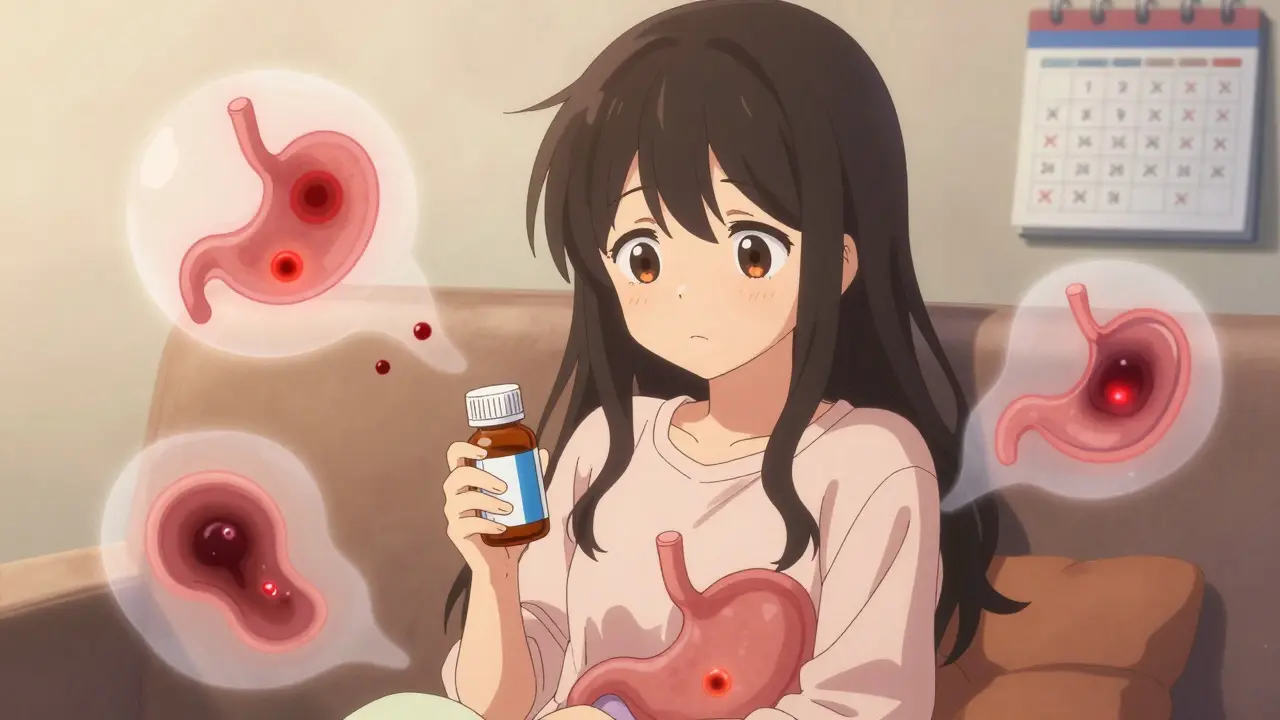
Every year, thousands of people end up in the hospital because of something they thought was harmless: a daily painkiller. NSAIDs-like ibuprofen, naproxen, and even low-dose aspirin-are everywhere. You can buy them over the counter, keep them in your medicine cabinet, and take them without thinking. But when you take too much-or even just too long-you’re not just risking a stomach upset. You’re risking gastrointestinal bleeding, and it doesn’t always come with warning signs.
NSAIDs Don’t Just Hurt Your Stomach-They Can Bleed It
NSAIDs work by blocking enzymes called COX-1 and COX-2. That’s how they reduce pain and inflammation. But COX-1 also helps protect the lining of your stomach and intestines. When you block it, that protective layer breaks down. Over time, this leads to tiny sores, deep ulcers, and eventually, bleeding.What’s scary is that most people don’t feel it coming. Studies show that up to 70% of long-term NSAID users have visible damage in their GI tract-erosions, ulcers, bleeding spots-yet only about 10% report any symptoms like heartburn or nausea. That means you could be bleeding internally for weeks without knowing it. The first sign might be fatigue from iron deficiency anemia, or black, tarry stools (melena), or even sudden dizziness from blood loss.
It’s not just prescription NSAIDs. Over-the-counter pills like Advil or Aleve are just as dangerous if taken daily for months. One study found that over one-third of people admitted for GI bleeding were taking low-dose aspirin they bought themselves-no doctor’s note, no warning.
Who’s at Highest Risk?
Not everyone who takes NSAIDs bleeds. But some people are far more vulnerable.- People over 65: Age weakens the stomach lining and slows healing. Daily aspirin at 300 mg increases bleeding risk nearly four times compared to 75 mg.
- Those with a history of ulcers or GI bleeding: If you’ve had one bleed, your chance of another is five times higher if you keep taking NSAIDs.
- People on blood thinners or antiplatelets: Combining NSAIDs with aspirin, clopidogrel, or warfarin is like pouring gasoline on a fire. The risk of bleeding jumps two to four times. Even more dangerous: taking NSAIDs after a heart attack while on dual antiplatelet therapy (like aspirin + clopidogrel). That combo increases GI bleeding risk by over 200%.
- People with H. pylori infection: This common stomach bacteria multiplies the damage. NSAID users with H. pylori have a 1.2 times higher risk of bleeding than those without it.
- Those taking multiple NSAIDs: Taking ibuprofen and naproxen together? Or adding aspirin on top? That’s not doubling the pain relief-it’s doubling the risk.
And here’s the kicker: enteric-coated or buffered aspirin doesn’t help. Neither does taking NSAIDs with food. These myths keep people safe in their own minds-but the damage still happens.
The Silent Killer: Anemia Without Symptoms
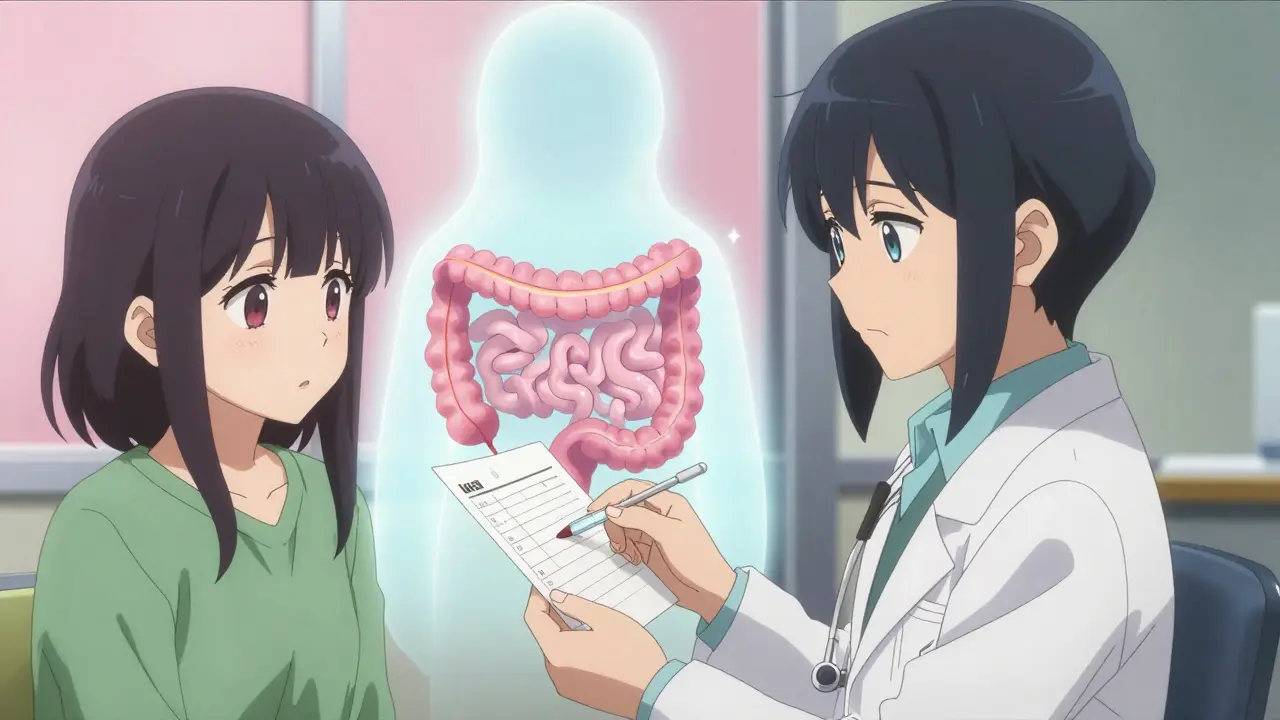
Most people think GI bleeding means vomiting blood or passing black stool. But that’s only part of the story. In clinical trials, more than half of NSAID users who became anemic showed no signs of bleeding at all. Their hemoglobin dropped, they felt tired, their skin turned pale-but their endoscopy showed no ulcers, no lesions. Where was the bleeding? In the small intestine. NSAIDs don’t just hurt the stomach. They damage the entire GI tract, including the lower bowel, causing slow, hidden blood loss that leads to iron deficiency over months.Doctors often miss this. They check for stomach ulcers and stop there. But if you’re on long-term NSAIDs and feel constantly tired-even without abdominal pain-you need a blood test. Hemoglobin, ferritin, iron levels. Don’t wait for black stools. By then, it’s too late.
What Should You Do If You’re on NSAIDs?
If you’re taking NSAIDs regularly-even just one pill a day-you need to ask yourself three questions:- Why am I taking this?
- How long have I been taking it?
- Am I on any other medications that thin my blood?
If you’re on low-dose aspirin for heart protection, don’t add ibuprofen for arthritis unless your doctor says it’s safe. In fact, the American College of Cardiology and the American Heart Association say: never exceed 81 mg of aspirin daily. Higher doses don’t protect your heart more-they just make you bleed more.
If you’re over 60 and have taken NSAIDs for more than three months, talk to your doctor about switching to acetaminophen (paracetamol) for pain. It doesn’t cause GI bleeding. It’s not perfect-it won’t reduce inflammation-but it’s safer for your gut.
If you absolutely need an NSAID, ask about a proton pump inhibitor (PPI) like omeprazole. It reduces stomach acid and helps heal ulcers. But here’s the catch: PPIs don’t protect your small intestine. They help the stomach, but not the rest. So they’re not a full solution.
What If You Think You’ve Had an Overdose?
An NSAID overdose isn’t always a single massive dose. Sometimes, it’s just taking 800 mg of ibuprofen every day for six months. But if you’ve taken a large amount at once-say, 10 pills of naproxen-call emergency services immediately. Symptoms of acute overdose include:- Nausea, vomiting
- Stomach pain
- Dizziness, confusion
- Blurred vision
- Difficulty breathing
- Black or bloody stools
Don’t wait. Go to the ER. There’s no antidote for NSAID overdose. Treatment is supportive: IV fluids, blood transfusions if needed, endoscopy to stop bleeding, and monitoring for kidney damage. The sooner you get help, the better your outcome.

What’s the Real Solution?
The answer isn’t stopping painkillers. It’s using them smarter.For chronic pain-arthritis, back pain, tendonitis-experts now recommend non-drug options first: physical therapy, weight management, heat/cold therapy, even acupuncture. If you need medication, start with acetaminophen. If that doesn’t work, use the lowest effective NSAID dose for the shortest possible time. Never use them daily unless your doctor has assessed your risk and approved it.
And if you’re on aspirin for your heart? Don’t combine it with other NSAIDs unless there’s no alternative. If you must, your doctor should prescribe a PPI and monitor your blood regularly.
NSAIDs are powerful tools. But they’re not harmless. Millions of people take them without thinking-and every year, thousands pay the price with internal bleeding, hospital stays, and even death. The good news? Almost all of it is preventable.
What to Ask Your Doctor
Next time you refill your NSAID prescription, ask:- Is this still necessary for me?
- Am I at risk for GI bleeding?
- Should I be on a stomach protector like omeprazole?
- Could I switch to something safer?
- Do I need a blood test to check for anemia?
Don’t be afraid to push back. Your doctor wants you to be safe. But they can’t read your mind. If you’re taking NSAIDs without talking about it, they assume it’s fine. It’s not.
Can I take ibuprofen if I’m on low-dose aspirin for my heart?
It’s risky. Combining ibuprofen or other NSAIDs with low-dose aspirin can cancel out aspirin’s heart protection and increase your risk of stomach bleeding by two to four times. If you need pain relief, take acetaminophen instead. If you must use ibuprofen, space it at least eight hours apart from your aspirin-but only under your doctor’s guidance. Never combine them daily without medical approval.
Do NSAIDs cause bleeding in the lower intestine too?
Yes. While most attention focuses on the stomach and duodenum, NSAIDs damage the entire GI tract-including the small and large intestines. This can cause slow, hidden bleeding that leads to iron deficiency anemia without visible symptoms like black stools. Endoscopies often miss this because they don’t always reach the small bowel. If you’re on long-term NSAIDs and have unexplained fatigue or low iron, ask for a capsule endoscopy or stool test for occult blood.
Are COX-2 inhibitors like Celebrex safer for the stomach?
They reduce upper GI ulcers compared to traditional NSAIDs-but only if you’re not taking aspirin. When combined with low-dose aspirin, COX-2 inhibitors offer no extra protection and still carry a 7.5% annual risk of serious GI events. They also come with higher cardiovascular risks. So they’re not a magic solution. The safest approach is avoiding NSAIDs altogether when possible.
Can I stop NSAIDs cold turkey if I’ve been taking them for years?
It depends. If you’re using them for chronic pain like arthritis, stopping suddenly can cause rebound inflammation and worsen symptoms. Talk to your doctor first. They may recommend tapering slowly or switching to a non-NSAID pain management plan. Never stop without guidance-especially if you’re also on blood thinners or have kidney issues.
What are the signs I’m bleeding internally from NSAIDs?
The signs aren’t always obvious. Look for: persistent fatigue, pale skin, shortness of breath, dizziness when standing, or unexplained weakness. More obvious signs include black, tarry stools or vomiting blood. But many people have no symptoms until they collapse from severe anemia. If you’ve been on NSAIDs for more than three months and feel off, get a blood test. Hemoglobin and ferritin levels tell the real story.
dean du plessis
December 26, 2025 AT 16:26Elizabeth Ganak
December 27, 2025 AT 00:01Gerald Tardif
December 28, 2025 AT 17:24Alex Lopez
December 30, 2025 AT 02:17Will Neitzer
December 30, 2025 AT 09:50John Barron
December 31, 2025 AT 19:04Janice Holmes
January 2, 2026 AT 18:14Kishor Raibole
January 3, 2026 AT 21:24Elizabeth Alvarez
January 4, 2026 AT 22:49Miriam Piro
January 5, 2026 AT 19:59Monika Naumann
January 7, 2026 AT 02:35Kylie Robson
January 7, 2026 AT 08:29