

What Are Refractive Errors?
When light doesn't focus correctly on the retina due to refractive errors, vision becomes blurry. These optical imperfections affect over half of adults over 40. The National Eye Institute explains that refractive errors happen when the eye's shape prevents light from focusing precisely on the retina-the light-sensitive tissue at the back of the eye. This misfocus causes blurred vision at various distances, depending on the type of error.
Myopia (Nearsightedness)
Myopia is a type of refractive error where the eye is too long or the cornea too curved, causing light to focus in front of the retina. This condition affects approximately 30% of the global population, with higher rates in East Asia. Myopia typically begins in childhood and progresses until the late teens or early adulthood.
Adults with myopia often struggle to see distant objects clearly-like road signs or TV screens-while close-up tasks remain sharp. The National Eye Institute reports axial lengths exceeding 24mm or corneal curvatures above 43 diopters cause this condition. Genetics play a big role, but environmental factors like excessive screen time and limited outdoor activity also contribute. High myopia (over -6.00 diopters) raises risks of retinal detachment by 5-10 times compared to normal vision.
Hyperopia (Farsightedness)
Hyperopia happens when the eye is too short or the cornea too flat, causing light to focus behind the retina. This makes close-up work like reading difficult while distant vision stays clearer.
Around 5-10% of Americans have hyperopia, often present at birth but not always noticeable early on. As people age, the lens loses flexibility, worsening symptoms. The Cleveland Clinic notes that children with hyperopia may squint or complain of headaches after schoolwork. Corrective lenses for hyperopia use plus (+) power to bend light forward onto the retina. Without correction, chronic eye strain can lead to headaches and reduced productivity.
Astigmatism
Astigmatism occurs when the cornea or lens has an irregular shape-more like a football than a basketball. This causes light to focus on multiple points instead of one, distorting vision at all distances.
Approximately 30-60% of people have astigmatism, often alongside myopia or hyperopia. Unlike other refractive errors, astigmatism affects both near and far vision simultaneously. A 2023 Reddit user shared, "It took me three weeks to adjust to my new cylinder correction axis at 175 degrees." Space Coast Ophthalmology explains that uncorrected astigmatism can cause distorted vision "like looking through water," leading to eye strain and night driving difficulties. Corrective lenses require specific cylindrical power and axis alignment to fix this irregular curvature.
Correction Methods Compared
| Method | Pros | Cons |
|---|---|---|
| Glasses | Immediate correction, no infection risk, easy to adjust | Can fog up, limit peripheral vision, require carrying |
| Contact Lenses | Wider field of vision, no frame obstruction | 3-4% risk of microbial keratitis (CDC), daily maintenance |
| LASIK Surgery | Permanent correction, 4.5/5 average satisfaction (AllAboutVision) | 20-40% temporary dry eyes, not for unstable prescriptions |
| SMILE Surgery | Less dry eye risk than LASIK, faster recovery | Limited availability, higher cost |
Latest Advancements in Treatment
Orthokeratology (Ortho-K) lenses worn overnight temporarily reshape the cornea. Studies cited by the National Eye Institute show 36-56% reduction in myopia progression in children. Low-dose atropine eye drops (0.01%-0.05%) cut myopia progression by 50-80% over two years, making them a promising option for young patients.
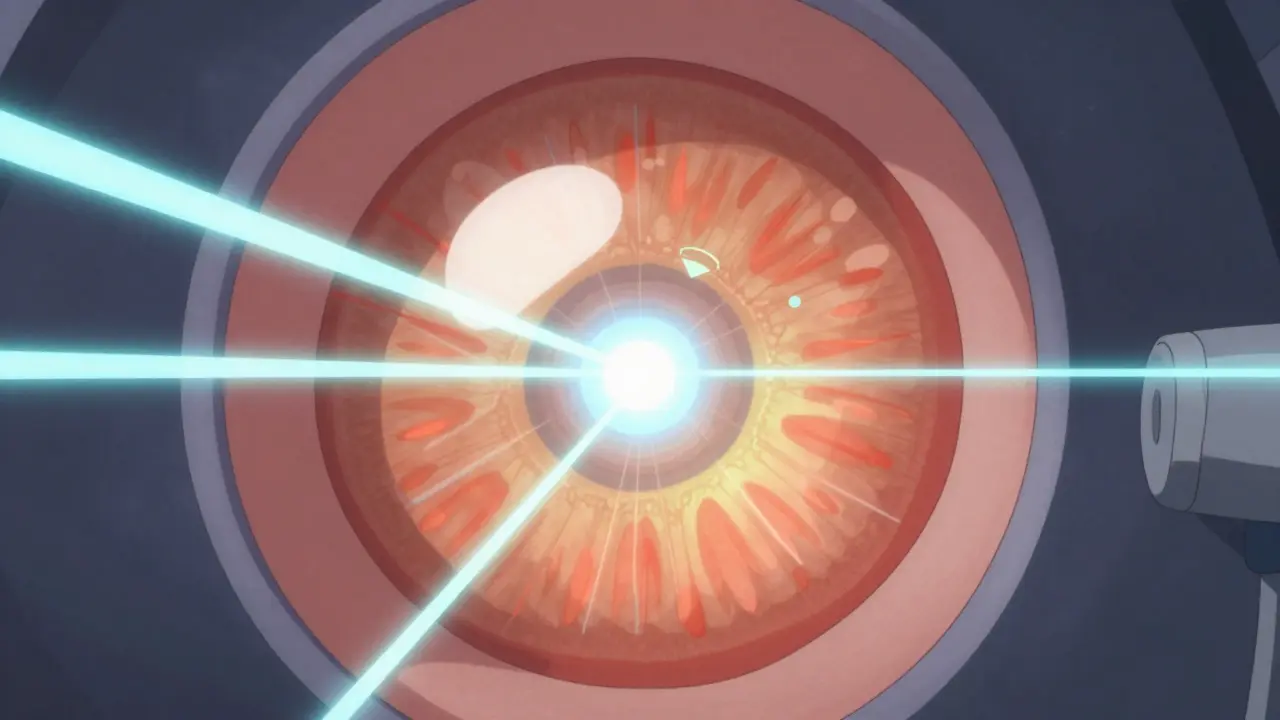
Wavefront-guided LASIK uses detailed eye mapping to correct complex astigmatism with precision within 0.25 diopters. Colorado Eye Clinic reports this technology reduces night vision issues by 40% compared to traditional LASIK. SMILE procedures are growing at 15% annually through 2028 due to fewer dry eye complications. The American Academy of Ophthalmology expects these innovations to expand access to safer, more effective corrections.
Risks of Untreated Errors
Ignoring refractive errors can lead to serious complications. The World Health Organization states uncorrected refractive errors cause 123.7 million cases of blindness or severe vision impairment globally. High myopia increases risks of retinal degeneration by 5-10 times, while uncorrected astigmatism contributes to chronic headaches and eye strain.
Children with uncorrected hyperopia may develop amblyopia (lazy eye), affecting 2-3% of kids according to Nicklaus Children's Hospital. Early intervention is critical-Dr. Jack Wolfsdorf from Nicklaus Children's Hospital emphasizes, "Refractive errors are multifactorial with genetic and environmental factors playing a role. Regular eye exams catch issues before they worsen." The Cleveland Clinic confirms that "nearsightedness usually develops in kids around age 10," making childhood screenings essential.
What You Can Do Today
Start with a comprehensive eye exam. The American Academy of Ophthalmology recommends annual checkups for adults and biannual visits for children. If you wear glasses or contacts, ensure your prescription is up-to-date-changes of 0.25 diopters can significantly impact clarity.
For myopia control in children, discuss Ortho-K or atropine drops with your eye doctor. If considering surgery, verify your prescription stability for at least 12 months and confirm corneal thickness exceeds 500 microns. The FDA requires these criteria for LASIK candidates. Remember, 250,000+ members of Myopia.org share experiences and support for managing these conditions.
Can refractive errors get worse with age?
Yes, but it depends on the type. Myopia often stabilizes in early adulthood, though high myopia may continue progressing. Hyperopia worsens as the lens loses flexibility with age, leading to presbyopia. Astigmatism changes gradually over time. Regular eye exams are essential to monitor changes and adjust corrections.
Is LASIK safe for everyone?
No. LASIK requires stable prescriptions for at least 12 months, corneal thickness over 500 microns, and no active eye diseases. People with severe dry eyes, thin corneas, or autoimmune disorders may not qualify. The FDA mandates preoperative evaluations to ensure safety. Always consult a board-certified ophthalmologist for personalized advice.
Why do my eyes feel dry after LASIK?
Temporary dry eyes affect 20-40% of LASIK patients due to nerve disruption during surgery. Most recover within 3-6 months using artificial tears and prescription eye drops. SMILE surgery causes fewer dry eye issues because it preserves more corneal nerves. Always follow your surgeon's post-op care instructions for the best recovery.
Can children outgrow refractive errors?
No. Myopia typically worsens until the late teens but stabilizes afterward. Hyperopia may improve slightly as the eye grows, but rarely disappears completely. Astigmatism usually persists throughout life. Early correction is vital for children to prevent amblyopia and ensure proper visual development. Always follow pediatric ophthalmologist recommendations for glasses or contacts.
How often should I get my eyes checked?
Adults aged 18-60 should have exams every two years unless vision changes. Those over 60 need annual checks due to higher risks of cataracts and glaucoma. Children should have exams at 6 months, 3 years, before first grade, and annually thereafter. Diabetics or high-risk patients require more frequent monitoring as directed by their eye doctor.
lance black
February 5, 2026 AT 22:48Just got my new glasses-world looks sharper already!
Georgeana Chantie
February 7, 2026 AT 05:58As an American, I can confidently say the US leads in eye care technology. LASIK here is safer and more advanced than anywhere else. Other nations should take note and adopt our standards. 🇺🇸
Carol Woulfe
February 8, 2026 AT 10:02The government has been secretly manipulating our vision for decades. Every time you look at a screen, it's part of a larger scheme to weaken our eyesight. The eye care industry is in on it, pushing expensive surgeries like LASIK to keep us dependent on them. I've done my research and found that the real cause of myopia is 5G radiation. The FDA and WHO are covering this up. Only a few enlightened individuals know the truth. They're using eye drops and surgeries to insert microchips into our retinas. It's all about control. I refuse to get LASIK because I know they'll use it to implant tracking devices. You should all get your eyes checked by a holistic practitioner instead. The data is there for those who look. It's a massive conspiracy that's been going on for years. The truth is out there if you know where to look.
Kieran Griffiths
February 8, 2026 AT 21:06While the US does have great eye care, other countries like Germany and Japan also have excellent standards. It's important to look at the global picture rather than just national pride. Maybe we can all learn from each other's approaches.
Johanna Pan
February 10, 2026 AT 19:32I'm from India and we have some amazin eye care too! Maybe we can share knowledge globally. Vison correction is a global issue and we all need to work together. 😊
Jenna Elliott
February 12, 2026 AT 08:07US is best others are inferior no debate needed
Elliot Alejo
February 13, 2026 AT 23:17It's great to see different perspectives. Let's focus on sharing accurate information to help everyone. The key is finding what works best for each individual.
anjar maike
February 14, 2026 AT 06:16India has great eye care too! 🌏 Many people here use traditional methods. The results are amazing. 😃
Samantha Beye
February 16, 2026 AT 01:46Regular eye exams are essential for catching refractive errors early. I've been visiting my optometrist every year since I was 18, and it's helped me manage my mild myopia. Early detection can prevent complications like retinal issues later on.