
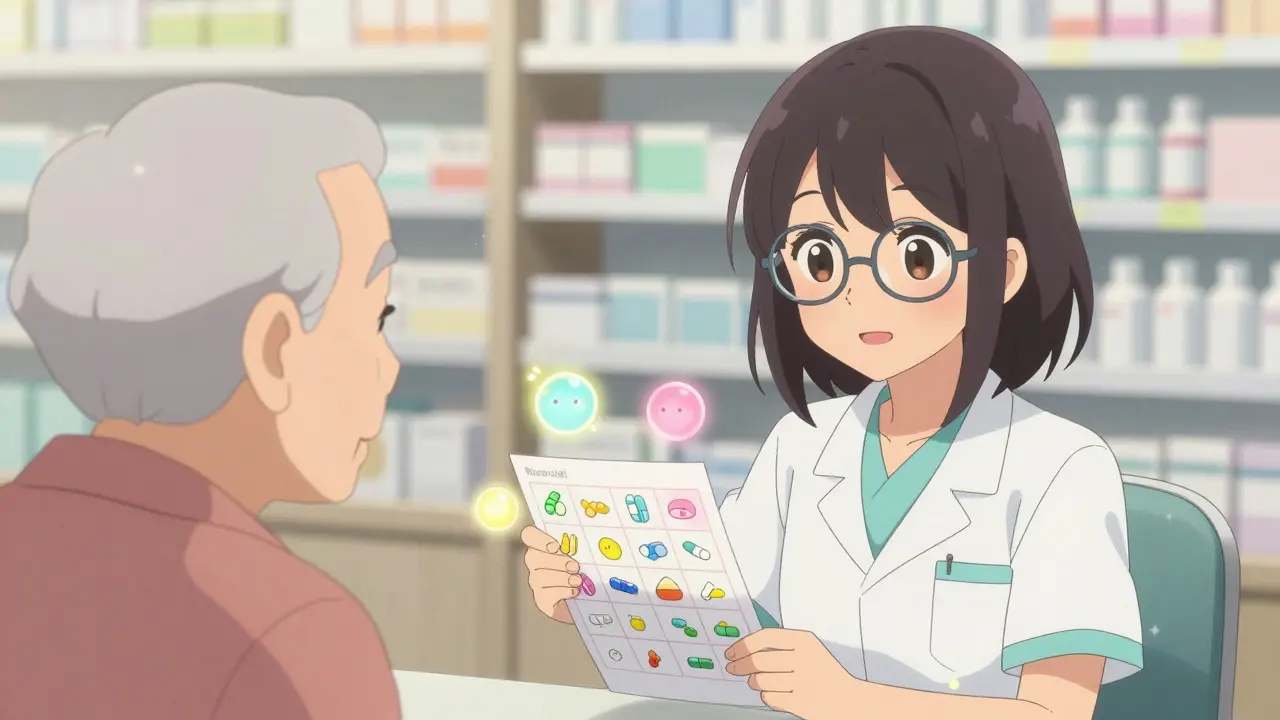
Every year, millions of people in the U.S. skip doses, stop taking meds early, or switch to cheaper options because they can’t afford their prescriptions. And it’s not because they don’t care-they’re just trying to survive. That’s where pharmacists stepping into medication therapy management (MTM) make a real difference. Not just filling bottles, but sitting down with patients, reviewing every pill they take, and asking: Can we make this safer? Cheaper? More effective? Especially when it comes to generic drugs.
What Exactly Is Medication Therapy Management?
MTM isn’t just a buzzword. It’s a structured, face-to-face service where pharmacists take a deep dive into a patient’s entire medication list-prescription, over-the-counter, vitamins, even herbal stuff. The goal? Make sure every drug is doing what it’s supposed to, without causing harm or wasting money.
The American Pharmacists Association defines it as a patient-centered service focused on improving therapeutic outcomes. It’s not about how fast you can hand over a script. It’s about understanding the whole picture: Why is the patient on this med? Are they taking it? Is there a cheaper version that works just as well? And most importantly-does it actually help them feel better?
Since 2006, Medicare Part D has required all its plans to offer MTM to high-risk patients. That means if you’re on five or more chronic disease meds, spend over $5,000 a year on prescriptions, or are at risk for hospitalization, you’re eligible. And guess who runs it? Pharmacists. Not doctors. Not nurses. Pharmacists.
The Generic Drug Advantage-And Why Patients Doubt It
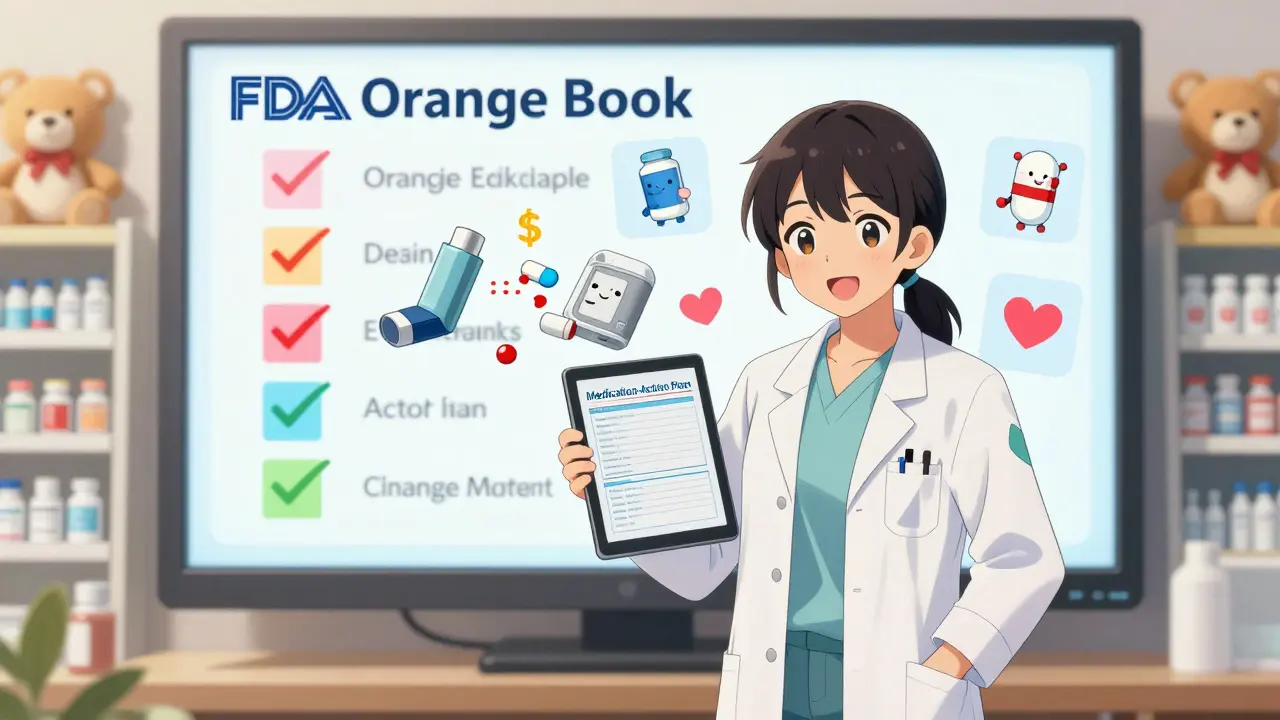
Generic drugs aren’t cheap knockoffs. They’re exact copies of brand-name drugs, approved by the FDA with the same active ingredient, dose, strength, and route of administration. The FDA’s Orange Book rates them as “A” for therapeutic equivalence-meaning they’re interchangeable with the brand.
Here’s the kicker: generics cost 80-85% less. A brand-name inhaler might run $400 a month. The generic? $15. Same active ingredient. Same effectiveness. Same side effects. But patients still hesitate.
Why? Because of myths. “Generic means weaker.” “My doctor prescribed the brand, so it must be better.” “I tried it once and it didn’t work.”
That’s where MTM pharmacists come in. They don’t just suggest a switch. They explain it. They show the FDA data. They check if the patient had a bad experience with a different generic brand-maybe the filler ingredients caused stomach upset. They ask: What did you feel when you switched? And then they adjust.
One HealthPartners study found that when pharmacists proactively reviewed med lists and recommended generic substitutions, patients saved an average of 32% on their monthly drug costs. That’s not a small number-it’s life-changing for someone choosing between insulin and groceries.
How Pharmacists Actually Do This Work
MTM isn’t a quick chat at the pickup window. It’s a 20-40 minute appointment. Pharmacists pull up the patient’s full history: prescriptions from all doctors, ER visits, lab results, even OTC meds they didn’t tell anyone about.
They use tools like the Medication Appropriateness Index (MAI), which scores each drug on 10 criteria: Is it needed? Is the dose right? Is it safe with other meds? Is it affordable? And yes-can we switch to a generic?
They don’t just flag problems. They prioritize them. Maybe the patient is on three blood pressure meds, two of which are brand-name and overlapping. One of them has a cheaper generic that’s just as effective. The pharmacist calls the doctor, suggests a switch, and documents it in a SOAP note: Subjective (what the patient says), Objective (what the data shows), Assessment (the problem), Plan (the solution).
They also create a Medication-Related Action Plan (MAP)-a simple, written guide the patient can keep. It lists what to take, when, why, and what to watch for. It includes cost-saving tips: “Switch to generic lisinopril-saves $180/month.”
Why Pharmacists Are Better at This Than Doctors
Doctors see 20-30 patients a day. They’re juggling diagnoses, labs, referrals. They rarely have time to audit every med a patient is on.
Pharmacists? They’re the medication experts. Their entire training is built around drug interactions, bioavailability, cost-effectiveness, and adherence barriers. In one study, pharmacists running MTM services identified an average of 4.2 medication-related problems per patient. Doctors, in the same setting, caught about 1.3.
And the results? MTM reduces hospital readmissions by 23% in the first 30 days. It cuts medication errors by 61%. And when it comes to generics? A 2022 review of 47 studies showed that interventions focused on generic substitution accounted for 37% of the total cost savings from MTM programs.
One patient on Reddit shared how her MTM pharmacist found she was paying $400/month for a brand-name inhaler. The generic was $15. She was crying because she was skipping doses to make it last. After the switch, she could breathe again-and afford rent.
Challenges Holding MTM Back
Despite the evidence, MTM isn’t everywhere. Why?
Reimbursement is the biggest roadblock. Medicare pays $50-$150 per Comprehensive Medication Review. Commercial insurers? $25-$75. Many community pharmacies can’t afford to pay a pharmacist for 30 minutes of time if they’re only getting $30 back.
Then there’s awareness. Only 15-25% of eligible Medicare patients actually sign up for MTM. Most don’t know it’s free. They think it’s just another pharmacy service they have to ask for.
And tech? Only 38% of community pharmacies have seamless electronic health record (EHR) integration. That means pharmacists are still printing forms, faxing doctors, or calling on the phone. It’s slow. It’s frustrating.
Even state laws vary. Only 42 states let pharmacists practice MTM under collaborative agreements with doctors. In others, they can’t adjust meds or even document interventions without a physician’s signature.
What’s Changing-And What’s Next
MTM is growing. In 2022, 12.7 million Medicare beneficiaries received MTM services. Commercial plans cover another 85 million people. Employers love it-they get $3.17 back for every $1 spent on pharmacist-led MTM.
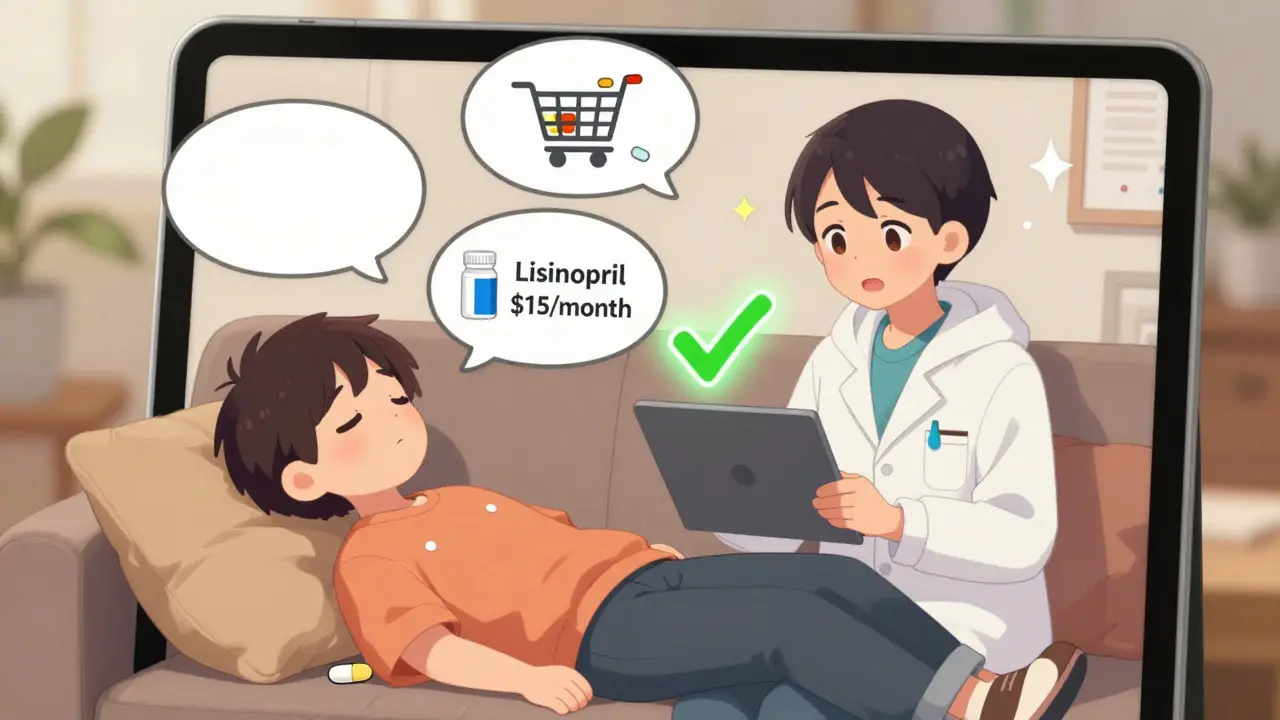
Telehealth is making it easier. Since the pandemic, 63% of MTM programs now offer virtual visits. Patients can do it from their couch. No need to drive to the pharmacy.
New tools are coming too. Pharmacists are now using pharmacogenomics-testing how a patient’s genes affect drug metabolism-to decide if a generic is truly the best fit. For some people, a brand-name drug might be necessary because their body breaks down the generic too quickly.
And legislation? The Pharmacist Medicare Benefits Act, passed by the House in 2021, could expand direct Medicare reimbursement for pharmacist services. If it passes the Senate, 38 million more Americans could get access.
What Patients Should Know
If you’re on multiple meds, especially for chronic conditions like diabetes, high blood pressure, or heart disease, ask your pharmacy: Do you offer MTM? If they say no, ask why. If it’s because of reimbursement, tell them you’re willing to pay out of pocket-it’s worth it.
Don’t assume your brand-name drug is better. Ask: “Is there a generic version? Is it FDA-approved? Will it work the same?”
And if you’ve had a bad experience with a generic-maybe you felt worse after switching-don’t just quit. Bring it up in your MTM session. It might be the filler, not the drug. The pharmacist can try a different generic brand.
MTM isn’t about replacing doctors. It’s about filling the gap they don’t have time to see. It’s about making sure your meds don’t break your bank-and that they actually help you live better.
Pharmacists aren’t just dispensers. They’re medication detectives. And with generic drugs, they’re also cost-savers, educators, and sometimes, lifelines.
What is medication therapy management (MTM)?
Medication Therapy Management (MTM) is a service provided by pharmacists to help patients get the most benefit from their medications. It involves a comprehensive review of all drugs a patient takes-including prescriptions, over-the-counter meds, and supplements-to identify problems like interactions, duplications, unnecessary drugs, or cost barriers. The goal is to improve health outcomes by making medication use safer, more effective, and more affordable.
Can pharmacists really switch my brand-name drug to a generic?
Yes, but not unilaterally. Pharmacists can recommend a generic substitution based on FDA therapeutic equivalence ratings and your medical history. However, they must communicate with your prescribing doctor to get approval for the change. In many states, pharmacists can make the switch under a collaborative practice agreement, especially if the generic is FDA-approved and clinically appropriate. In MTM sessions, pharmacists often draft a recommendation letter to your doctor to make the process smoother.
Are generic drugs really as good as brand-name drugs?
Yes, according to the FDA, generic drugs must contain the same active ingredient, strength, dosage form, and route of administration as the brand-name version. They must also meet the same strict manufacturing standards. The only differences are in inactive ingredients (like fillers or dyes), which rarely affect how the drug works. For 95% of medications, generics are just as safe and effective. The FDA’s Orange Book lists all approved generics and their equivalence ratings.
Who qualifies for free MTM services?
Under Medicare Part D, you qualify for free MTM if you have multiple chronic conditions (like diabetes, heart disease, COPD), take at least five Medicare-covered maintenance medications, and your annual drug costs exceed $5,000. Many commercial insurers and employer plans also offer MTM to high-cost or high-risk patients. You don’t need to apply-your pharmacy or plan will notify you if you’re eligible.
How much money can MTM save me on generic drugs?
On average, patients save $214 per month through MTM-guided generic substitutions, according to a 2022 APhA Foundation survey. In one HealthPartners case, patients saved 32% on their total monthly drug costs after pharmacists optimized generic use. For expensive drugs like insulin, inhalers, or cholesterol meds, switching to a generic can cut costs by 80-85%. That’s often hundreds of dollars a month.
Oluwapelumi Yakubu
January 5, 2026 AT 16:01Man, this MTM thing is like the unsung hero of healthcare-pharmacists sitting there like chess masters, moving pills around like pawns to save lives and wallets. I mean, we got AI diagnosing cancer and robots delivering pizza, but the guy behind the counter who knows your meds better than your doctor? That’s next-level wisdom. 🌍💊
Clint Moser
January 5, 2026 AT 23:39wait… so you’re telling me the fda just says ‘yep same chem’ and we’re supposed to trust it? but what if the fillers are laced with microchips? or worse-glyphosate? i’ve seen the docs. the ‘inactive’ ingredients are the real payload. they’re testing on us. this ‘generic’ thing is a corporate psyop to control the masses via subliminal excipients. 🤯
Michael Rudge
January 6, 2026 AT 09:22Oh wow, a pharmacist ‘optimizing’ your meds? How quaint. I’m sure the guy who failed organic chemistry in college and now wears a lab coat to impress old ladies knows more about your hypertension than your cardiologist. Pathetic. You’re trading clinical expertise for a 30% discount on lisinopril. What a society we’ve become.
Ethan Purser
January 7, 2026 AT 00:05I had a pharmacist cry with me last week. I was skipping my insulin because the brand was $500. She found a generic. I cried harder. I didn’t know people still cared. I thought medicine was just a profit margin with a stethoscope. Turns out? There are still humans in white coats. I’m not okay. I’m not okay. I’m not okay.
Doreen Pachificus
January 7, 2026 AT 22:24Interesting. I never realized pharmacists did this kind of deep dive. My local one just hands me the script and says ‘take twice daily.’ Maybe I should ask if they do MTM. I’m on five meds and I still can’t tell which one makes me sleepy.
Cassie Tynan
January 9, 2026 AT 21:27Let me get this straight-you’re saying the guy who’s been counting pills since 1998 and remembers your grandma’s birthday is the real healthcare MVP? Meanwhile, doctors are out here doing 7-minute visits like they’re on a TikTok timer. 😂 We need to give pharmacists a damn Nobel Prize. Or at least a raise. And a nap.
Rory Corrigan
January 10, 2026 AT 03:38generic = same active ingredient 💯
but what if your body hates the filler? 🤔
pharmacist = detective 🕵️♂️
my insulin saved 💸
thank u, next
Stephen Craig
January 11, 2026 AT 03:27MTM works. I’ve seen it. Pharmacists catch what doctors miss. Simple as that.