
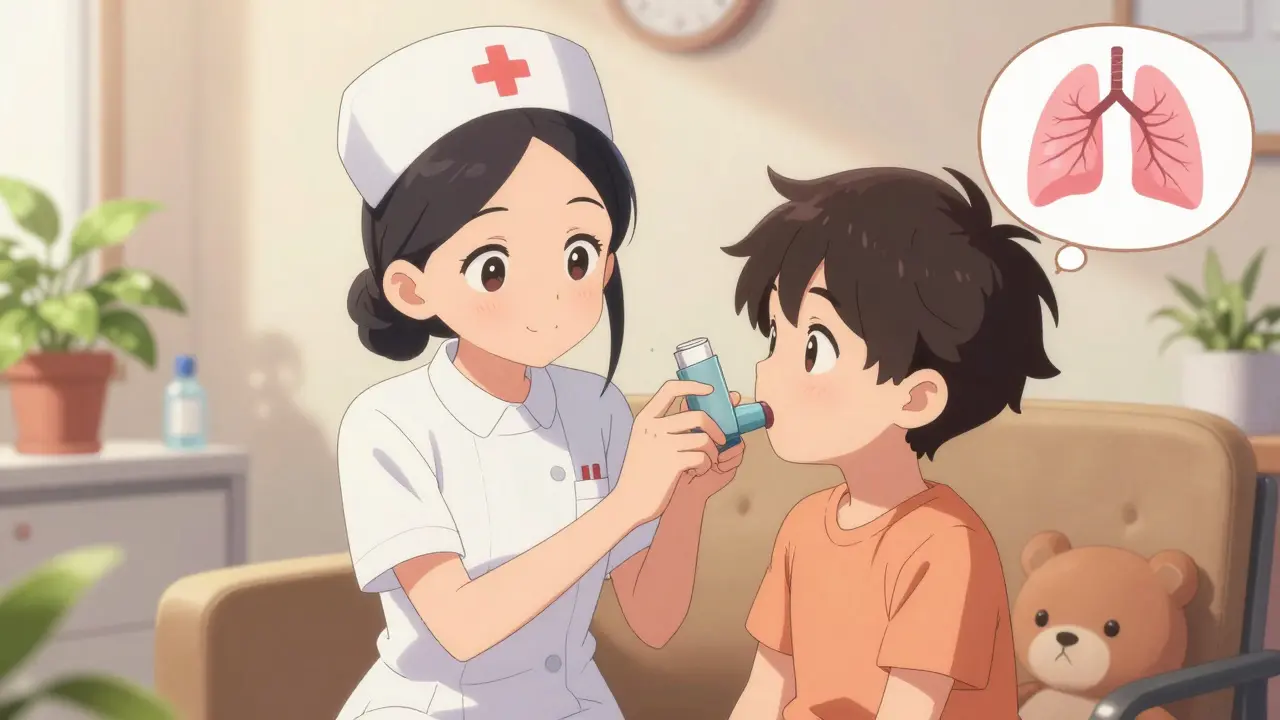
When teaching patients about their condition-whether it’s managing diabetes, understanding heart failure, or learning how to use an inhaler-how do you know they truly get it? Not just that they nodded along during the appointment, but that they can explain it back, apply it at home, and make smart choices when no one’s watching? That’s the real goal: generic understanding. It’s not about memorizing facts. It’s about knowing how to use what you’ve learned in real life, in messy, unpredictable situations.
Why Generic Understanding Matters More Than Memorization
Patient education isn’t like a school test where you cram for a multiple-choice exam and forget it the next day. If a diabetic patient can list the symptoms of low blood sugar but doesn’t know what to do when they feel shaky at 3 a.m., the education failed. Generic understanding means they can recognize the signs, respond correctly, and adapt if things change-like if they skip a meal or get sick. Studies show that patients who truly understand their condition are 40% less likely to be readmitted to the hospital. But most clinics still measure success by asking, “Did you understand?” and getting a quick “Yes.” That’s not enough. You need proof.Direct vs. Indirect Ways to Measure Understanding
There are two main ways to find out if learning stuck: direct and indirect methods. Direct methods look at what patients actually do. For example:- Asking them to demonstrate how to use their inhaler or insulin pen in front of you
- Giving them a short scenario: “Your blood sugar is 320. What do you do next?”
- Reviewing their medication log or food diary over the past week
- Having them explain their treatment plan in their own words
- “Did you find this helpful?”
- “Do you feel confident managing your condition?”
- Follow-up surveys sent by email or mail
Formative Assessment: Checking In Along the Way
Think of formative assessment like a car’s dashboard. It doesn’t wait until you break down to tell you something’s wrong. It gives you constant feedback: low fuel, engine light, tire pressure. In patient education, this means checking understanding during-not just after-the teaching session. Simple tools work best:- Teach-back method: “Can you tell me how you’ll take this medicine tomorrow?”
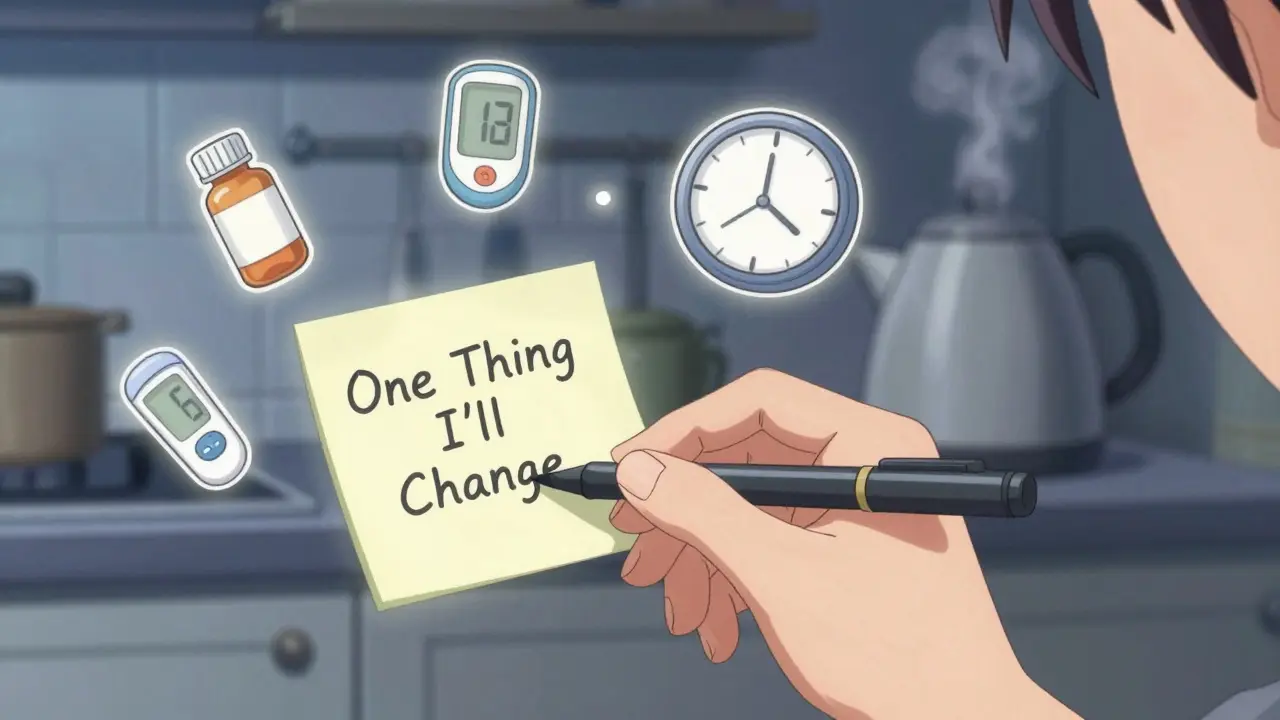
- Exit tickets: At the end of a visit, hand the patient a slip with one question: “What’s the one thing you’ll change this week?”
- 3-question quick check: After explaining a new diet, ask: “What food should you avoid? What’s a good snack? What should you do if you feel dizzy?”
Summative Assessment: Did They Learn It All?
Summative assessment happens at the end. It’s the final check. For patients, this might be:- A follow-up call two weeks after discharge
- A short quiz during a routine check-up
- Reviewing their self-reported logs for consistency and accuracy
Using Rubrics to Make Judgment Fair and Clear
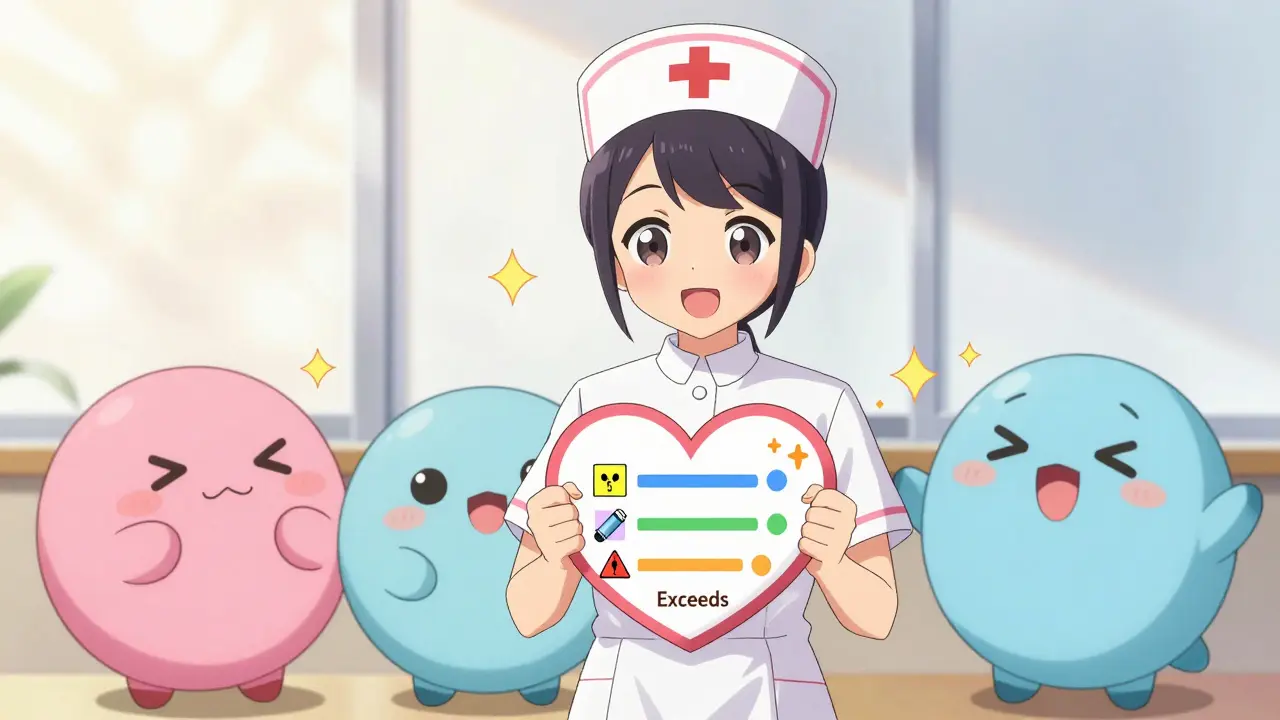
How do you decide if a patient’s explanation is “good enough”? That’s where rubrics come in. A rubric breaks down what good looks like. For example, when teaching asthma action plans:| Criteria | Needs Improvement | Meets Expectations | Exceeds |
|---|---|---|---|
| Identifies triggers | Names 0-1 trigger | Names 2+ common triggers | Names triggers and explains how to avoid them |
| Uses inhaler correctly | Cannot demonstrate | Demonstrates with 1 minor error | Demonstrates perfectly, explains why each step matters |
| Knows when to seek help | Doesn’t know or says “call 999 anytime” | Names specific symptoms requiring urgent care | Explains difference between urgent and emergency signs |
What Doesn’t Work (And Why)
Some methods sound good but miss the point.- Alumni surveys for patients: Sending a survey six months after discharge? Response rates are often below 15%. You’re not getting real data-you’re getting the opinions of the most engaged (or most frustrated) few.
- Norm-referenced tests: Comparing patients to each other (“You’re in the top 30% of people who understood this”) doesn’t help. What matters is whether they met the standard for safety and self-care.
- Just handing out pamphlets: If you don’t check for understanding, you’re just giving information, not education.
The Future: AI and Personalized Feedback
New tools are emerging. Some clinics are testing AI chatbots that ask patients follow-up questions after a visit: “You said you’ll drink more water. How’s that going?” These aren’t replacing humans. They’re helping clinicians scale. A chatbot can send a daily check-in to 500 patients. A nurse can’t. But the nurse still needs to review the responses and step in when something’s off. By 2027, the World Health Organization predicts that 60% of patient education programs will use some form of adaptive feedback-where the system adjusts what it teaches based on how the patient responds.Start Small. Measure Real Behavior.
You don’t need fancy tech to start measuring generic understanding. Just begin with one simple change:- Choose one key skill you teach-like taking insulin or using a nebulizer.
- At the end of every session, ask the patient to demonstrate it.
- Write down what you see-not “they got it,” but “they missed the shake step,” or “they explained why timing matters.”
- Adjust your teaching next time.
How do I know if a patient really understands their condition?
Don’t rely on yes/no answers. Ask them to explain it in their own words, show you how to do a task, or describe what they’ll do in a real-life scenario. If they can teach it back accurately, they understand it. Use teach-back or demonstration methods to confirm, not assume.
Are patient surveys useful for measuring education effectiveness?
Surveys tell you how patients feel, not what they know. They’re helpful as a supplement-but not as proof. A patient might say they feel confident but still miss doses or skip appointments. Always pair surveys with direct observation or performance checks.
What’s the difference between formative and summative assessment in patient education?
Formative assessment happens during teaching-like asking a quick question or watching a demo-to give immediate feedback and fix misunderstandings. Summative assessment happens after-like a follow-up call or quiz-to see if the patient learned overall. Use both: formative to improve, summative to evaluate.
Why are rubrics important in patient education?
Rubrics make judgment clear and consistent. Instead of saying “they did okay,” you can say “they correctly identified two triggers but didn’t explain avoidance strategies.” This helps you improve your teaching and gives patients a clear target to aim for.
Can technology help track patient understanding better?
Yes. Interactive apps, chatbots, and video demos can reinforce learning and collect data on how patients respond. But tech doesn’t replace human judgment. Use it to scale, not substitute. The best systems combine tech for tracking and staff for interpreting and responding.
Hilary Miller
January 22, 2026 AT 21:19Just started using teach-back with my diabetic patients. One guy showed me how he’d inject insulin while watching TV-missed the air bubble step. We fixed it before he left. No surveys needed.
Liberty C
January 24, 2026 AT 10:22Let’s be real-most clinicians treat patient education like a box-ticking exercise. You hand out a pamphlet, say ‘Any questions?’ and call it a day. That’s not education, that’s negligence dressed up as efficiency. If you’re not observing, you’re guessing-and guessing kills people. The rubric example? That’s the bare minimum. We need mandatory competency checks, not optional ‘nice-to-haves.’
And don’t get me started on those ‘confident?’ surveys. I’ve seen patients nodding like bobbleheads while their HbA1c climbs. Confidence ≠ competence. You think a driver who says ‘I feel ready’ should be allowed on the highway without a test? Exactly.
Teach-back isn’t new. It’s been proven since the 90s. The fact that we’re still debating this is a systemic failure. Hospitals are funded on volume, not outcomes. So they optimize for speed, not safety. The 38% drop in readmissions? That’s not magic-that’s accountability.
And yet, I’ve worked in places where nurses were told ‘We don’t have time for teach-back.’ Time? You don’t have time to avoid a 30k readmission cost? You don’t have time to prevent a preventable death?
It’s not about tech. It’s about will. If you care, you’ll find five minutes. If you don’t, you’ll keep inventing excuses wrapped in buzzwords like ‘scalable’ and ‘digital transformation.’
Stop romanticizing surveys. Stop fetishizing pamphlets. Start watching. Start listening. Start demanding better-not because it’s trendy, but because it’s ethical.
Lana Kabulova
January 25, 2026 AT 09:57Wait-so you’re saying we should stop using surveys? What about patient experience? What about their autonomy? What if they’re embarrassed to demonstrate? What if they’re traumatized by past medical experiences? You’re reducing human complexity to a checklist. This is dehumanizing.
And who decides what ‘exceeds’ in your rubric? A nurse? A doctor? A hospital administrator who’s never met the patient? This is surveillance disguised as care.
I’ve seen patients get labeled ‘noncompliant’ because they couldn’t mimic a technique under pressure-but they were managing fine at home with their family’s help. You’re punishing cultural differences, language barriers, and trauma with standardized metrics.
Yes, observation matters. But not like this. Not without context. Not without empathy.
Margaret Khaemba
January 26, 2026 AT 05:49Love this. I’ve been doing the 3-question exit ticket with my asthma patients and it’s been a game-changer. One lady said she’d avoid ‘dusty places’-but when I asked what that meant, she said ‘like my grandma’s house.’ Turns out she visits weekly and never told anyone. We adjusted her plan. She cried. Said she felt seen.
It’s not about perfection. It’s about connection. The rubric helps, but the moment you lean in and ask ‘What does that look like for you?’-that’s when real learning happens.
Also, the tablet module? My clinic switched and we saw a 40% drop in missed doses. Not because it’s fancy-because it reminded them daily. Simple. Human. Effective.
Malik Ronquillo
January 26, 2026 AT 23:32So basically you’re saying nurses should become teachers and doctors should become examiners? And we wonder why staff are burned out? This is just more bureaucracy with a pretty name. ‘Generic understanding’? Sounds like corporate jargon for ‘do more with less.’
I’ve got 12 patients an hour. You want me to watch them demo an inhaler? Do you know how long that takes? And then write it down? And then fix it? And then follow up? I’m not a robot. I’m not a teacher. I’m a nurse trying not to cry in the supply closet.
Yeah, yeah, ‘watch and listen.’ Cool. Tell that to the admin team that cut our staffing by 30% last year.
Alec Amiri
January 27, 2026 AT 06:21Here’s the truth no one wants to say: most patients don’t care. They want the pill. They want the shot. They want the magic fix. You can teach them till you’re blue in the face, but if they don’t want to change, nothing you do matters. Stop blaming the system. Start blaming the people who won’t take responsibility for their own health.
I’ve seen diabetics eat a whole cake and say ‘I didn’t know that had sugar.’ Bullshit. They knew. They just didn’t care.
Teach-back? Fine. But don’t act like it’s a silver bullet. It’s not. People are messy. Life is messy. Stop pretending you can fix it with a checklist.
Ryan Riesterer
January 28, 2026 AT 01:56Formative assessment is a well-established pedagogical principle, and its application in clinical settings is both theoretically sound and empirically supported. The cognitive load theory suggests that active recall and performance-based feedback reduce schema consolidation errors. The fact that 78% of educators report improved efficacy with rubrics aligns with constructivist learning models. The key is fidelity of implementation-not just adoption. Most institutions deploy these tools as checklists rather than dynamic feedback loops. The real barrier isn’t methodology-it’s institutional inertia.
Akriti Jain
January 29, 2026 AT 00:55AI chatbots? Really? Next they’ll be implanting microchips to track if you drank your water. This is how they control us. First they make you feel guilty for not knowing how to use an inhaler, then they monitor your every move, then they deny you care if your ‘data’ is bad. Welcome to healthcare dystopia.
And who programmed the AI? Big Pharma? The insurance companies? You think they care if you understand your condition? They care if you don’t get readmitted so they don’t pay. That’s not care. That’s profit.
They’ll replace nurses with bots, then say ‘We tried to help you.’ Meanwhile, your real symptoms get ignored because your ‘compliance score’ is low.
😂
Patrick Roth
January 29, 2026 AT 12:15Oh please. You think this is new? I’ve been doing this since 2008. Teach-back? Rubrics? We used mimeographs and paper logs. The only thing that’s changed is the buzzwords. You call it ‘generic understanding’-I call it ‘common sense.’
And the WHO prediction? 60% by 2027? That’s not innovation, that’s lip service. Most clinics still use the same 1990s handouts. This isn’t progress. It’s rebranding.
Also, why is everyone from the US acting like they invented patient education? We’ve been doing this in Europe for decades. You’re late to the party.
Lauren Wall
January 31, 2026 AT 03:58Just say no to surveys. They’re useless. Watch them. Listen. Done.
Kenji Gaerlan
January 31, 2026 AT 21:45lol who has time for this? i just give em the pamphlet and hope they dont die. also i think the word 'inhaler' is spelled wrong in the article. just saying.
Mike P
February 1, 2026 AT 15:15Let me get this straight-you want to turn healthcare into a high school final exam? You think patients are students? Nah. They’re people. Some are smart. Some are scared. Some are tired. Some are just trying to survive another day. You don’t grade a person’s life.
And you think this works in rural Alabama or inner-city Chicago? Nah. You think a single mom working two jobs has time to ‘demonstrate’ her insulin technique? She’s choosing between rent and her meds. You want to measure her? Fine. But don’t act like you’re helping.
This isn’t education. It’s performance. And the people who get punished? The ones who need help the most.
Stop trying to fix poverty with checklists.
Malik Ronquillo
February 2, 2026 AT 17:30Yeah, but what if they’re just bad at explaining? What if they’re nervous? What if English isn’t their first language? You think they’re lying? Nah. They’re scared. And you’re making them perform for a paycheck.
My aunt had a stroke. She knew what to do. But she couldn’t speak right. So the nurse marked her ‘didn’t understand.’ She got discharged with no follow-up. Two weeks later, she was back in the ER.
It’s not about the method. It’s about the heart.