
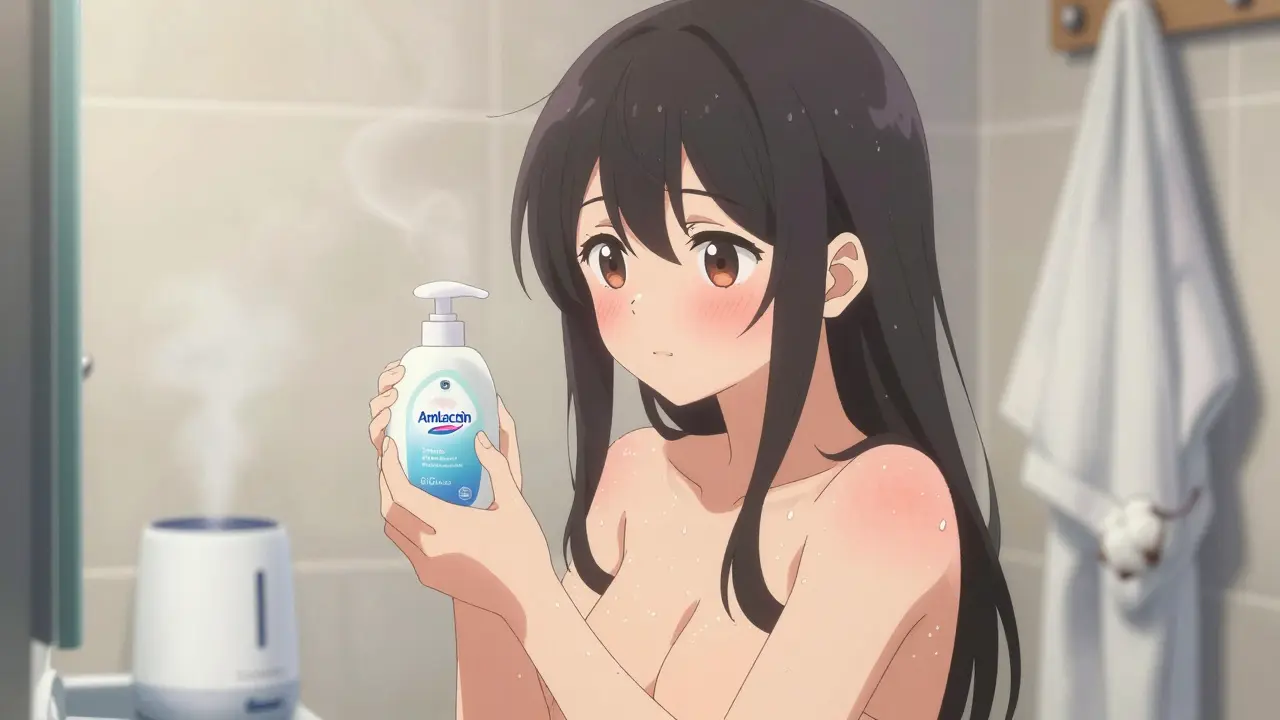
Keratosis pilaris isn’t dangerous. It won’t spread. It won’t turn into something worse. But if you’ve got those tiny, rough bumps on your upper arms or thighs-like sandpaper under your fingers-you know how frustrating it can be. You might avoid sleeveless tops. You might skip the beach. You might feel like your skin is broken, even though doctors say it’s not. The truth? You’re not alone. About 50-70% of teens and 40% of adults have it. And yes, it’s genetic. If your mom or dad had it, chances are you did too.
What Actually Causes Those Bumps?
Keratosis pilaris isn’t acne. It’s not eczema. It’s not an infection. It’s your skin making too much keratin-the same protein that makes your nails and hair-and trapping it inside hair follicles. That buildup forms little plugs, each about the size of a pinhead. They stick out, feel rough, and sometimes look red or brown. Most of the time, they show up on the backs of your upper arms, less often on your thighs, buttocks, or cheeks.
Why does this happen? A big part of it comes down to your genes. If you have a mutation in the filaggrin gene-which helps keep your skin barrier strong-you’re more likely to have KP. About half to two-thirds of people with KP have this. It also tends to get worse in dry weather. Winter? That’s when most people notice it flaring up. Low humidity dries out your skin, and the keratin plugs become more obvious.
It’s also common if you have eczema. In fact, up to 80% of people with eczema also have keratosis pilaris. That’s not a coincidence. Both involve a weakened skin barrier. Your skin isn’t holding onto moisture the way it should, and that makes the keratin build-up worse.
Why Most Treatments Don’t Work (And What Actually Does)
There’s no cure. Not yet. And no product will make your skin perfectly smooth forever. But you can significantly improve how your skin looks and feels-with the right approach.
Here’s the problem with most over-the-counter solutions: people buy them expecting miracles. They use a scrub every day. They squeeze the bumps. They try random lotions from Instagram influencers. And then they get frustrated when nothing changes in a week.
Real improvement takes time. And consistency. And the right ingredients.
Three active ingredients have real, proven results:
- Lactic acid (10-12%): Breaks down the keratin plugs. Studies show 40-60% improvement in skin texture after 4-6 weeks. Brands like AmLactin (12% lactic acid) are popular for a reason. On Reddit, 62% of users reported noticeable smoothing after using it twice daily for 8-12 weeks.
- Urea (10-20%): Draws moisture into the skin and gently dissolves dead skin. In clinical studies, 65% of users saw less scaling after 8 weeks. CeraVe SA Lotion contains 10% urea and 2% salicylic acid, and 79% of its 2,105 reviewers say it works best when applied right after showering.
- Glycolic acid (8-12%): Another alpha-hydroxy acid that exfoliates. It’s slower than lactic acid but still effective. Paula’s Choice 8% AHA Lotion has a 4.2/5 rating with 68% of users seeing smoother skin after 4 weeks.
Retinoids (like tretinoin) can help too-they speed up cell turnover. But they’re stronger. About 40% of users get redness, peeling, or stinging at first. And you need to use them for 3-6 months before seeing real results. Most people quit before then. A 2023 survey found 73% stopped retinoid use within 6 weeks because of irritation-even though 85% said it worked if they stuck with it.
Here’s the key: don’t scrub. Harsh physical exfoliation (loofahs, scrubs, brushes) makes KP worse. A 2022 study showed 68% of people who used them ended up with more redness and dark spots. Your skin isn’t dirty-it’s overproducing keratin. You need chemical exfoliants, not abrasives.
How to Apply Treatments Right (The 3-Minute Rule)
It’s not just what you use-it’s how you use it.
Dermatologists agree on one thing: apply your treatment to damp skin, right after you get out of the shower. Why? When your skin is wet, the outer layer (stratum corneum) is 50% more permeable. That means your lactic acid, urea, or glycolic acid can actually get into the follicles instead of sitting on top.
Here’s the simple routine:
- Take a lukewarm (not hot) shower. Hot water strips your skin’s natural oils and dries it out. Studies show this reduces flare-ups by 45%.
- Pat your skin dry-don’t rub. Leave it slightly damp.
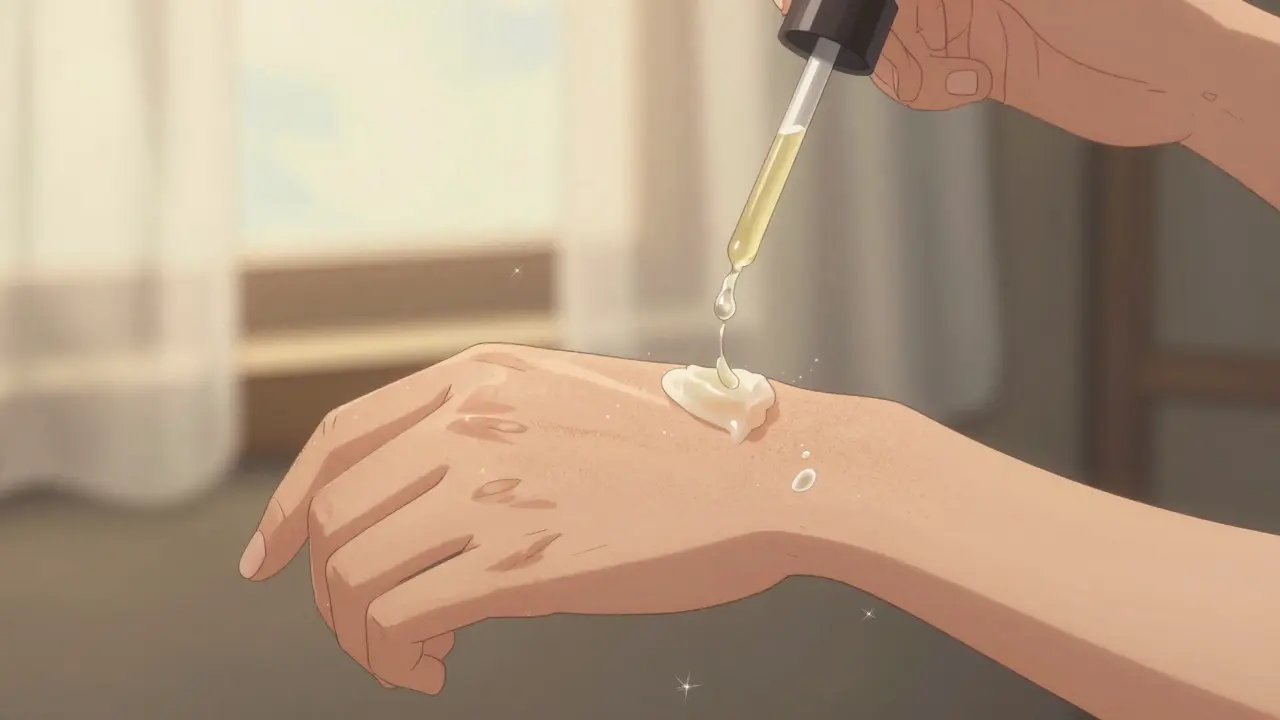
- Within 3 minutes, apply your exfoliating treatment (lactic acid, urea, or AHA) to the affected areas.
- Wait 1 minute. Then apply a thick, ceramide-rich moisturizer. Ceramides help rebuild your skin barrier. Dr. Hadley King says this combo gives 30% better long-term results than exfoliants alone.
Do this twice a day-morning and night-for at least 8 weeks. Don’t skip days. The 2022 Journal of the American Academy of Dermatology tracked 150 people with KP. Only 38% kept up twice-daily treatment after 3 months. Only 22% after 6 months. If you want results, you have to stick with it.
What Else Helps? (Beyond Creams)
Skincare isn’t just about what you put on your skin-it’s about your environment too.
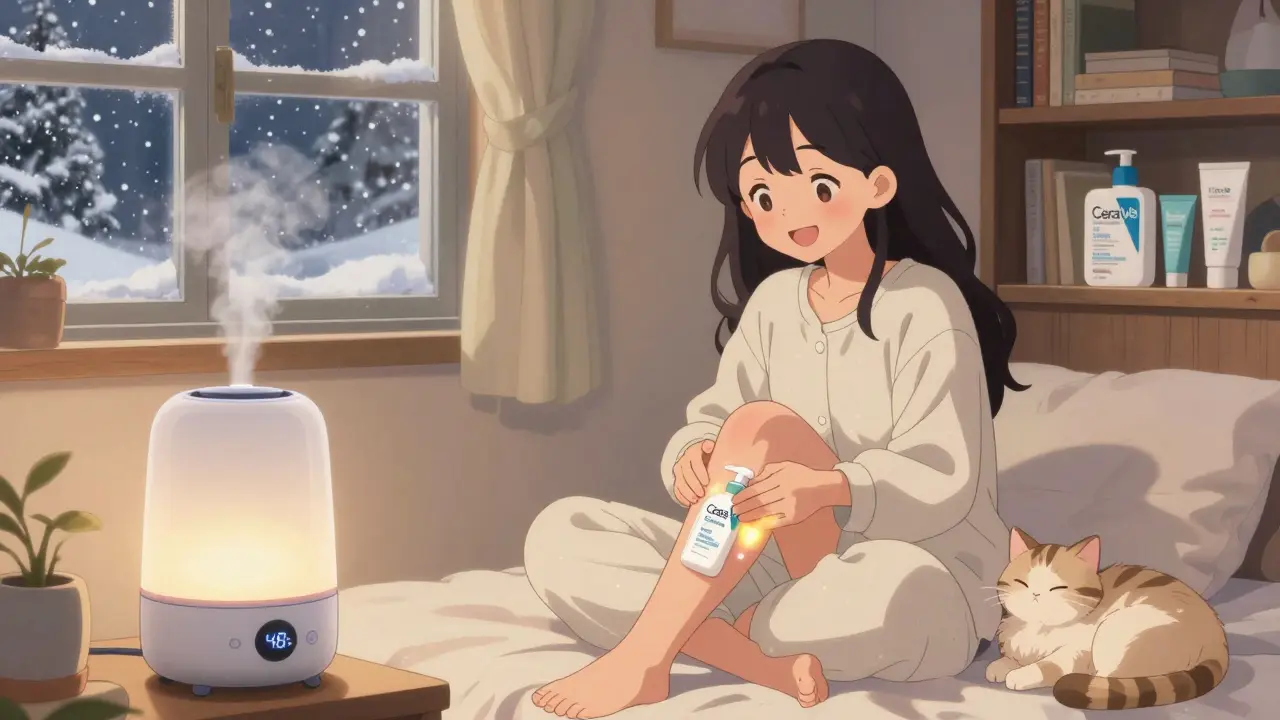
- Humidity matters. If your home is dry in winter, get a humidifier. Keeping indoor humidity between 40-50% reduces flare-ups by 60%, according to Healthdirect Australia.
- Clothing matters. Tight clothes rub against the bumps. That causes irritation and inflammation. Wear loose, cotton clothing. One study found this helped 72% of people.
- Don’t pick. It might be tempting. But squeezing or picking at the bumps can cause dark spots or scarring that lasts months.
- Laser therapy? Pulsed-dye lasers can reduce redness by 50-75% in people with inflamed KP. But it’s expensive ($300-$500 per session) and not covered by public health systems. Only worth considering if other treatments have failed and you’re bothered by the redness.
What Doesn’t Work (And Why)
There’s a lot of noise out there.
“Keratosis pilaris cure” products? They don’t exist. The FDA has sent 17 warning letters to companies making that claim in the last two years. No cream will permanently erase KP. It’s a genetic condition. You’re managing it, not curing it.
Coconut oil? Olive oil? Tea tree oil? These might feel nice, but they don’t break down keratin. They might even clog pores if your skin is already prone to buildup.
And don’t believe the hype about “miracle” body scrubs or exfoliating gloves. They irritate the skin. That’s not improvement-that’s damage.
Dr. Joshua Zeichner put it bluntly in JAMA Dermatology: “Many over-the-counter KP products overpromise. Real improvement is usually 40-60%-even with perfect use.”
What to Expect Long-Term
Most people see improvement-but not perfection. Only 28% of patients in a 2023 Cleveland Clinic study had complete clearance by age 30. Another 41% had significant improvement. And 31% still needed ongoing care.
That’s normal.
If you stop your routine, the bumps will come back-usually within 2-4 weeks. That’s not failure. That’s how KP works. Think of it like brushing your teeth. You don’t stop because your teeth aren’t perfectly white. You do it because it keeps things healthy.
Dr. Caroline Robinson says it best: “The goal isn’t flawless skin. It’s smoother, more comfortable skin. Consistent care gets you there.”
Top Products People Actually Use (And Why)
Here are the most trusted options based on clinical results and user feedback:
- AmLactin Daily Moisturizing Lotion (12% lactic acid) - Best for fast results. 62% of Reddit users reported visible smoothing after 8 weeks.
- CeraVe SA Lotion (10% urea + 2% salicylic acid) - Best for sensitive skin. 79% of 2,105 reviewers say it works best after bathing.
- Paula’s Choice 8% AHA Lotion - Best for gentle exfoliation. 68% saw improvement in 4 weeks.
- Retin-A Micro (0.025% tretinoin) - Best for stubborn cases. But only if you can handle the initial irritation.
Price-wise, generic tretinoin costs $45-$65. Branded versions can be $350+. AmLactin and CeraVe are $15-$25 at most pharmacies. You don’t need to spend a lot to get results.
When to See a Dermatologist
You don’t need to see a doctor for KP. But you should if:
- Your skin is painful, bleeding, or infected.
- It’s spreading to new areas like your face or hands.
- It’s affecting your confidence or mental health.
- You’ve tried everything for 3 months and seen zero improvement.
A dermatologist can prescribe stronger formulations, check for related conditions like eczema or ichthyosis, and rule out other skin issues. They can also talk you through laser options if redness is your main concern.
Telehealth dermatology visits are now common. In 2023, 32% of first-time KP consultations happened online-up from just 5% in 2019. You can get expert advice without leaving home.
Is keratosis pilaris contagious?
No. Keratosis pilaris is not contagious. It’s caused by a genetic tendency for keratin to build up in hair follicles. You can’t catch it from touching someone’s skin or sharing towels.
Can keratosis pilaris go away on its own?
Yes, for many people. About 28% of patients clear up completely by age 30. Another 41% see major improvement. But for 31%, it persists into adulthood. It’s not guaranteed to disappear, but it often gets milder over time.
Why does KP get worse in winter?
Dry air lowers humidity, which dries out your skin. When your skin loses moisture, keratin becomes harder and more likely to plug hair follicles. Keeping indoor humidity at 40-50% with a humidifier can reduce winter flare-ups by 60%.
Can I use body scrubs on keratosis pilaris?
No. Physical scrubs, loofahs, or exfoliating gloves can irritate the skin and make KP worse. Studies show 68% of people who use them develop more redness or dark spots. Stick to chemical exfoliants like lactic acid or urea instead.
Do I need to use treatment forever?
Yes, if you want to keep the bumps under control. Keratosis pilaris is a chronic condition. If you stop your routine, the bumps usually return within 2-4 weeks. Think of it like moisturizing dry skin-you don’t stop just because it feels better.
Are expensive KP treatments better than drugstore options?
Not necessarily. AmLactin and CeraVe SA Lotion cost under $25 and have strong clinical backing. Expensive creams or devices often promise more than they deliver. The FDA has warned 17 companies for making false claims. Stick to ingredients with proven results: lactic acid, urea, glycolic acid, and ceramides.
Final Thought: It’s Not About Perfection
You don’t need perfectly smooth skin to feel confident. You just need skin that doesn’t feel rough or embarrassing to show. With consistent care, you can get there. It’s not fast. It’s not glamorous. But it works.
Start with one product. Pick one-AmLactin or CeraVe SA. Apply it after your shower. Do it every day. Give it 8 weeks. If you don’t see change, try another. But don’t give up because it’s slow. The goal isn’t flawless skin. It’s skin you don’t have to hide.
Manoj Kumar Billigunta
January 19, 2026 AT 11:38Keratosis pilaris is way more common than people think. I’ve had it since I was a kid, and honestly, I stopped caring after I found AmLactin. It’s not perfect, but my arms don’t feel like sandpaper anymore. Just apply it after showering, every day, no excuses. It’s not a miracle, but it’s real.
Andy Thompson
January 20, 2026 AT 17:26They don’t want you to know this, but KP is just the first sign the government is poisoning our water with fluoride to make us feel insecure about our bodies. Look at the stats - 70% of teens? That’s not genetics, that’s chemical warfare. And they’re selling you ‘lactic acid’ like it’s a solution. Wake up. The real cure is raw apple cider vinegar and solar exposure. They banned it in 2018. 😈
sagar sanadi
January 22, 2026 AT 06:15Oh wow, so now we’re supposed to believe some guy in a lab coat wrote a 2,000-word ad for AmLactin? Next they’ll tell me brushing my teeth prevents alien mind control. You know what fixes KP? Nothing. It’s just your body being weird. And you’re paying $20 for a lotion that does nothing but make your skin smell like yogurt. 🤡
Arlene Mathison
January 24, 2026 AT 00:12You got this. I was skeptical too, but I started using CeraVe SA after my shower - just like the article said - and after 6 weeks, I actually looked at my arms in the mirror and didn’t cringe. It’s not about perfection. It’s about feeling okay in your own skin. Small steps, every day. You’re not broken. You’re just learning how to care for yourself. 💪
pragya mishra
January 24, 2026 AT 22:36I tried everything - lactic acid, urea, even laser - and guess what? My skin still looks like chicken skin. Why? Because you’re all ignoring the real cause: processed sugar. Cut out soda, bread, and snacks for 30 days and see what happens. No one talks about this because Big Pharma doesn’t profit from diet changes. I did it. My KP vanished. You’re just not trying hard enough.
clifford hoang
January 26, 2026 AT 10:10This whole article is a simulation glitch. Keratosis pilaris? Nah. That’s just your skin’s way of rejecting the matrix. The keratin plugs? They’re not biological - they’re data fragments from your DNA being overwritten by AI-driven beauty standards. The ‘lactic acid’ is just a placebo for the masses. The real fix? Stop scrolling. Stop buying. Stop believing. Your skin will reset when your mind does. 🌌
Paul Barnes
January 26, 2026 AT 22:46There are multiple grammatical inconsistencies in the cited studies. For instance, the claim that '62% of Reddit users reported visible smoothing' is not a peer-reviewed metric. Additionally, the phrase 'applied right after showering' lacks specificity - does this mean within 60 seconds or 180? The article conflates anecdotal data with clinical evidence. Poor methodology undermines credibility.
Art Gar
January 27, 2026 AT 20:07While the article presents a superficially rational framework, it fundamentally misrepresents the nature of chronic dermatological conditions by implying they are subject to control through consumer products. This commodification of bodily imperfection is emblematic of late-stage capitalism’s colonization of self-image. One does not 'manage' keratosis pilaris - one accepts it as an intrinsic facet of human biological variance. The pursuit of 'smoother skin' is a distraction from authentic self-acceptance.
Edith Brederode
January 29, 2026 AT 00:41I love how this article doesn’t just give you products - it gives you a routine. I used to hate my arms, but now I actually look forward to my post-shower skincare. It’s like a little ritual. And the ceramide moisturizer? Game changer. I started with CeraVe, then added AmLactin. Took 10 weeks, but now I wear tank tops without thinking twice. You’re not alone in this. ❤️
Renee Stringer
January 29, 2026 AT 22:48It’s not about the lotion. It’s about the shame. People talk about 'smooth skin' like it’s a moral achievement. But you don’t need to fix yourself to be worthy. I have KP. I don’t treat it. I wear long sleeves. And I’m still enough. The real problem isn’t the bumps - it’s the pressure to erase them.
Crystal August
January 31, 2026 AT 12:10Why are we all just accepting this? Why aren’t we asking why the FDA allows companies to sell 'treatments' for a condition that's genetic and harmless? This is predatory. They’re selling hope to people who feel broken. And for what? A $20 bottle of lotion that doesn’t even work for half the people who buy it? Wake up. This isn’t skincare - it’s emotional exploitation.
thomas wall
February 1, 2026 AT 13:06One must question the underlying ethos of this piece: the assumption that imperfection is a problem to be solved. Keratosis pilaris is not a flaw - it is a biological signature. To treat it as such is to surrender to a culture that equates skin with status. The real victory is not in smoothness, but in the quiet refusal to be shamed by it. One may use lactic acid, or one may wear a coat. Both are acts of dignity.