
Antidepressant Sleep Effect Checker
Which antidepressant are you taking?
Select your antidepressant to see sleep impact
This tool provides general information based on clinical studies. Always consult your doctor for personalized advice.
Important: Do not stop or adjust your medication without consulting your healthcare provider. This tool is for informational purposes only.
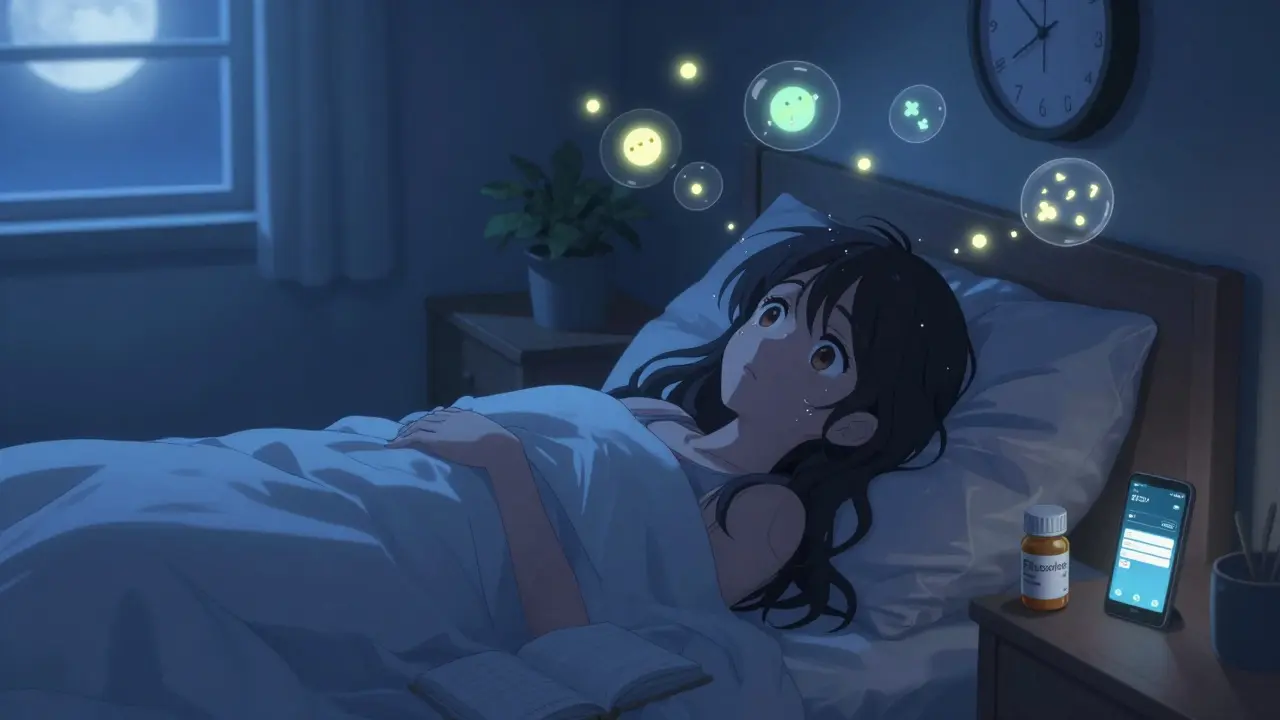
Many people start antidepressants hoping to feel better, only to find their sleep gets worse instead. Insomnia, vivid dreams, or waking up in the middle of the night aren’t just side effects-they’re common, well-documented reactions to how these drugs work in the brain. If you’re struggling with sleep after starting an antidepressant, you’re not alone. About 70-75% of people with depression who also have trouble sleeping find their insomnia gets worse in the first few weeks, especially with SSRIs like fluoxetine or sertraline.
Why Do Antidepressants Mess With Sleep?
Antidepressants don’t just lift your mood-they change the brain’s chemistry in ways that directly affect sleep. Most work by boosting serotonin, norepinephrine, or dopamine. These chemicals aren’t just about mood. They’re also key players in your sleep-wake cycle. For example, serotonin suppresses REM sleep, the stage where dreaming happens. When SSRIs increase serotonin, REM sleep drops by 18-29% in the first week. That might sound minor, but it throws off your whole sleep rhythm.Some antidepressants, like tricyclics (e.g., amitriptyline), do the opposite-they increase deep sleep and reduce REM. Others, like mirtazapine, help you fall asleep faster and stay asleep longer. But even that comes with trade-offs, like next-day grogginess. The bottom line? Not all antidepressants affect sleep the same way. The drug you’re on determines whether your sleep improves, worsens, or just shifts around.
Which Antidepressants Cause the Most Insomnia?
If you’re dealing with insomnia after starting an antidepressant, the culprit is likely an SSRI. Fluoxetine (Prozac) tops the list-78% of users report trouble sleeping in the first two weeks. Sertraline (Zoloft) and paroxetine (Paxil) follow close behind, with 65-70% of users affected. These drugs are activating. They’re great for people who feel sluggish or oversleep, but terrible for those already struggling with insomnia.On the flip side, some antidepressants are actually prescribed for sleep. Mirtazapine (Remeron) increases total sleep time by nearly an hour on average and cuts the time it takes to fall asleep by 28 minutes. Trazodone (Desyrel), often used off-label as a sleep aid, reduces nighttime awakenings by 37%. Agomelatine, a newer option, preserves REM sleep better than SSRIs and has been shown to improve both mood and sleep continuity more effectively than escitalopram in direct comparisons.
Timing Matters More Than You Think
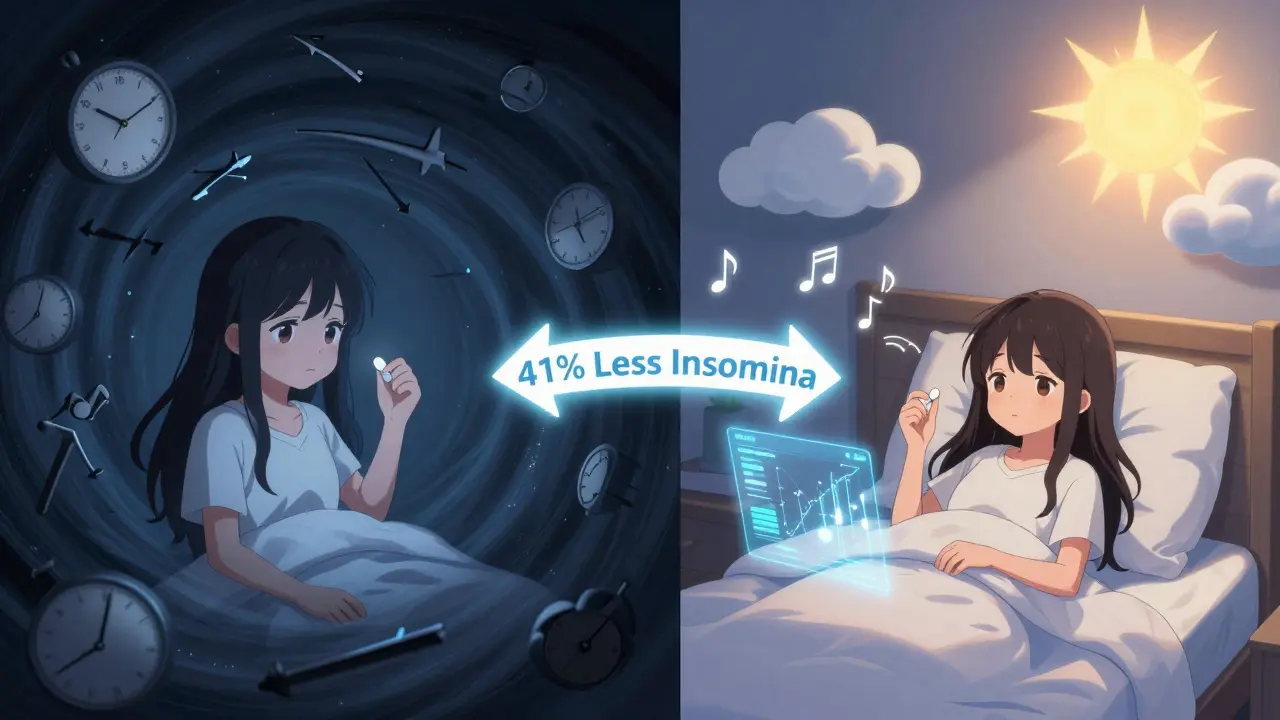
Taking your antidepressant at the wrong time of day can make sleep problems much worse. SSRIs and other activating medications should be taken in the morning-ideally before 9 a.m.. A 2020 study found that shifting SSRIs to the morning reduced insomnia risk by 41%. If you’re taking fluoxetine at night, you’re basically giving your brain a caffeine boost when it should be winding down.For sedating antidepressants like trazodone or mirtazapine, timing is just as important-but in the opposite direction. Take them 2-3 hours before bedtime. Taking trazodone right before bed can lead to next-day drowsiness, brain fog, or even a “hangover” effect. The goal isn’t to knock you out-it’s to help your body naturally transition into sleep.

What to Do If Your Sleep Gets Worse
If you’re having trouble sleeping after starting an antidepressant, don’t panic. For many, the insomnia improves on its own. Studies show sleep disruption from SSRIs usually peaks between days 3 and 7 and begins to fade after 21 to 28 days. But waiting it out isn’t always the best plan.Here’s what actually works:
- Track your sleep for two weeks with a simple diary: note when you go to bed, how long it takes to fall asleep, how many times you wake up, and how rested you feel. This helps your doctor spot patterns.
- Don’t double up on stimulants. Caffeine, nicotine, or even too much screen time before bed can make SSRI-related insomnia worse. Cut back on all three.
- Try splitting your dose. Some users report better sleep when they take half their SSRI in the morning and half in the early afternoon. A clinical trial at the University of Michigan is currently testing this approach.
- Watch for restless legs or REM behavior disorder. If you’re kicking, thrashing, or acting out dreams, talk to your doctor. About 68% of SSRI users show signs of REM sleep without atonia (RSWA), which can be a precursor to more serious sleep disorders.
When to Switch Antidepressants
If your sleep hasn’t improved after four weeks-or if it’s gotten worse-your doctor might consider switching. This isn’t failure. It’s smart treatment.For people with insomnia-predominant depression, guidelines from the Canadian Network for Mood and Anxiety Treatments (CANMAT) and the Mayo Clinic recommend starting with low-dose mirtazapine (7.5-15 mg) or trazodone (25-50 mg) at bedtime. These aren’t just sleep aids-they’re effective antidepressants with proven sleep benefits. Mirtazapine, for example, has an effect size of 0.8 for sleep improvement, compared to just 0.3 for SSRIs.
But mirtazapine isn’t perfect. At doses above 30 mg, 63% of users report excessive daytime sleepiness. Trazodone can cause dizziness or headaches. Agomelatine is another option, especially if you want to preserve REM sleep. It’s not available everywhere, but where it is, it’s becoming a top choice for those with both depression and sleep issues.
What About Bupropion?
Bupropion (Wellbutrin) is often seen as a “non-sedating” antidepressant. But combining it with an SSRI is a red flag. Over 127 users on Reddit reported severe insomnia after mixing the two. The FDA issued a warning in 2022: this combo increases insomnia risk by 2.4 times. If you’re on bupropion and still need help with mood, ask your doctor about alternatives instead of adding an SSRI.What’s New in 2025?
The field is changing fast. In July 2023, the FDA approved zuranolone (Zurzuvae), the first antidepressant specifically designed to improve sleep within two weeks. In clinical trials, it cut insomnia symptoms by 54%. That’s a game-changer for people who can’t wait weeks to feel better.Genetic testing is also entering the scene. In early 2025, Genomind launched a $349 test that analyzes 17 genes linked to sleep regulation to predict how you’ll respond to 24 different antidepressants. It’s not perfect yet, but it’s a step toward personalizing treatment instead of guessing.
Researchers are now using machine learning to analyze over 2,000 sleep variables-from heart rate variability to micro-awakenings-to predict which drug will work best for your sleep profile. In early tests, these algorithms predicted antidepressant success with 82% accuracy.
Final Advice: Don’t Give Up, But Don’t Suffer in Silence
Sleep problems from antidepressants are frustrating, but they’re not inevitable. Many people assume they have to “tough it out,” but that’s outdated thinking. Your sleep matters-not just for how rested you feel, but for how well your antidepressant works. Studies show that people whose REM sleep normalizes within the first two weeks are more likely to recover from depression.Work with your doctor. Bring your sleep diary. Ask about timing, dosage, and alternatives. If your current medication is wrecking your sleep and you’ve waited four weeks, it’s time to reconsider. There are better options out there-not just for your mood, but for your rest.
Do all antidepressants cause insomnia?
No. While SSRIs like fluoxetine and sertraline commonly cause insomnia, especially in the first few weeks, other antidepressants like mirtazapine, trazodone, and agomelatine are actually used to improve sleep. The effect depends on the drug’s chemical profile and how it interacts with your brain’s sleep-wake system.
How long does antidepressant-related insomnia last?
For most people, insomnia from SSRIs peaks between days 3 and 7 and starts improving after 21 to 28 days. But if sleep hasn’t improved by week four, it’s unlikely to get better on its own. At that point, adjusting the medication or switching to a more sleep-friendly option is usually needed.
Should I take my antidepressant at night or in the morning?
For activating antidepressants like SSRIs or bupropion, take them in the morning-ideally before 9 a.m. This reduces the chance of nighttime wakefulness. For sedating antidepressants like trazodone or mirtazapine, take them 2-3 hours before bedtime to avoid next-day grogginess while still helping you fall asleep.
Can I use melatonin with antidepressants?
Melatonin is generally safe to use with most antidepressants and may help reset your sleep cycle, especially if your internal clock is off. However, it doesn’t fix the root cause-medication-induced changes in REM sleep. It’s a short-term aid, not a solution. Always check with your doctor before combining supplements with prescription meds.
Is it safe to stop my antidepressant if my sleep is bad?
No. Stopping abruptly can cause withdrawal symptoms, worsen depression, or trigger rebound insomnia. If sleep problems persist, talk to your doctor about adjusting your dose, changing the timing, or switching to a different medication. Never stop on your own.
What’s the best antidepressant for someone with both depression and insomnia?
Mirtazapine (7.5-15 mg at bedtime) is often the top choice because it improves both mood and sleep with a strong effect size of 0.8. Trazodone (25-50 mg) is another good option, especially if cost is a concern. Agomelatine is ideal if REM sleep preservation is important. SSRIs are generally avoided unless the person also has hypersomnia.
Mussin Machhour
December 25, 2025 AT 09:36Been on sertraline for 6 months and my sleep went from garbage to actually decent after I switched to morning dosing. No more 3 a.m. panic awakenings. Also cut out caffeine after 2 p.m. and that was the real game changer. Don't sleep on timing.
Oluwatosin Ayodele
December 26, 2025 AT 00:22SSRIs are just chemical chaos. Your brain's sleep architecture isn't designed to handle artificial serotonin surges. It's like forcing a diesel engine to run on kerosene. The fact that doctors still push fluoxetine as first-line is criminal. You want sleep? Don't touch SSRIs unless you're already sleeping 12 hours a day.
Linda B.
December 27, 2025 AT 02:05They never tell you the real reason antidepressants wreck sleep... it's because the pharmaceutical industry wants you to stay dependent. Sleep is a threat to profit margins. If you sleep well you don't need pills. They don't want you well. They want you compliant.
Christopher King
December 28, 2025 AT 14:51EVERYTHING IS A CONSPIRACY. The FDA approved zuranolone because the deep state wants us all docile and sleeping through the collapse. They know if you're well-rested you'll start asking questions about the real causes of depression. The sleep industry is just a front for social control. Wake up. The system doesn't want you to dream. It wants you to count sheep until your soul dies.
Rick Kimberly
December 30, 2025 AT 09:17It is noteworthy that the pharmacological modulation of monoaminergic neurotransmission exerts differential effects on sleep architecture depending on receptor affinity profiles. For instance, the 5-HT2A antagonism exhibited by mirtazapine confers a distinct advantage in preserving sleep continuity when compared to selective serotonin reuptake inhibition. This is empirically supported by multiple randomized controlled trials published in the Journal of Clinical Psychiatry between 2018 and 2023.
Gary Hartung
December 31, 2025 AT 15:57Look, I've tried everything... trazodone, melatonin, magnesium, weighted blankets, white noise machines, sleep hypnosis apps, cryotherapy, infrared sauna before bed, even a $1,200 smart mattress. The only thing that worked? Switching to mirtazapine. And now I'm just... fine. Not cured. Not happy. Just... not screaming into the void every night. That's progress. I guess.
Ben Harris
January 2, 2026 AT 09:46So you're telling me I'm supposed to take my meds at 8am and then wait 2 hours before bed for the sedative ones? That's not treatment that's a full-time job. Who has time for this? I work two jobs, I have kids, I'm barely surviving. You act like this is a spa day. This is survival mode. And now you want me to keep a sleep diary too? Give me a break.
Jason Jasper
January 2, 2026 AT 23:18I've been on bupropion for two years. Never had sleep issues. Then my doctor added sertraline for 'better mood coverage.' Two nights later I was wide awake at 3 a.m. thinking about every mistake I'd ever made. Took me three weeks to convince them to take me off it. Don't mix them. It's not worth it.
Carlos Narvaez
January 3, 2026 AT 01:18Genomind test is a scam. 349 dollars for a list of probabilities. I'd rather gamble at the casino.