
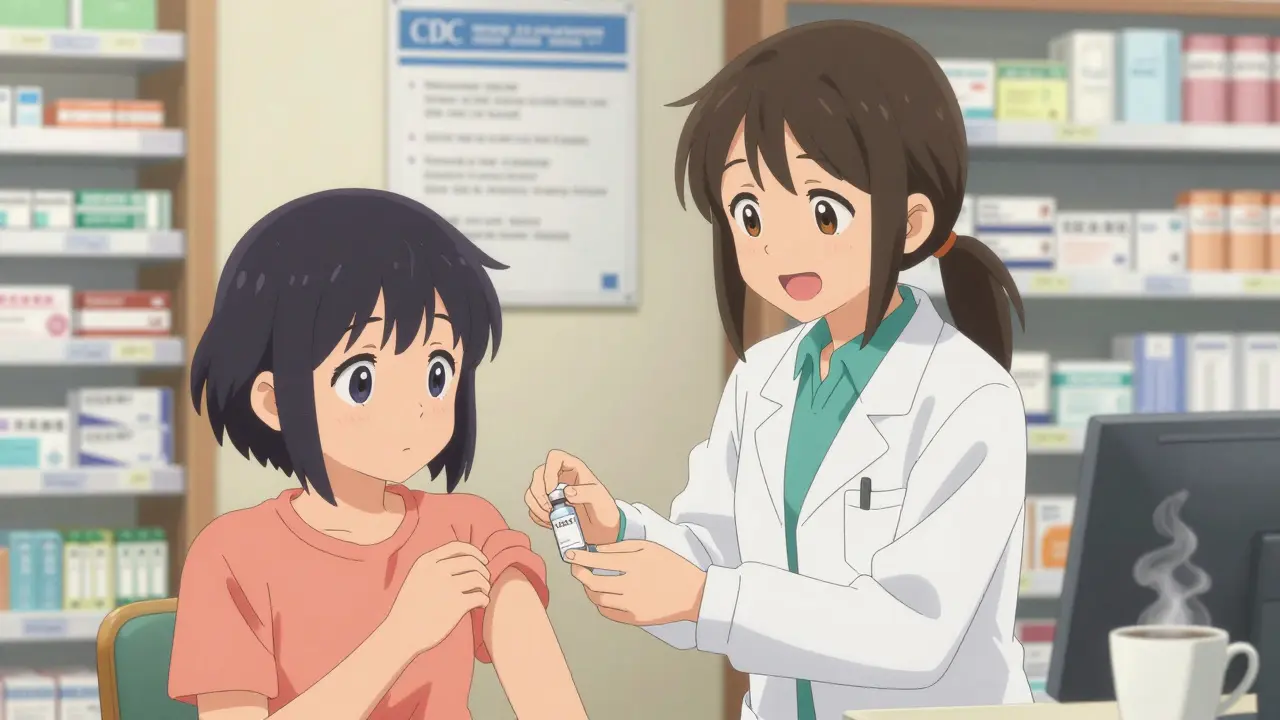
Pharmacists aren’t just handing out pills anymore. Across the U.S., they’re stepping into a bigger role-giving vaccines, pushing for cheaper meds, and fighting to make healthcare more accessible. It’s not just about filling prescriptions anymore. It’s about pharmacist advocacy-using their daily contact with patients to prevent disease and cut costs.
Why Pharmacists Are Key to Vaccines
You walk into a pharmacy for cough medicine, and next thing you know, you’re getting a flu shot. That’s not an accident. It’s by design. Nine out of ten Americans live within five miles of a community pharmacy. These places are open late, on weekends, and don’t need appointments. That makes them the most convenient place for millions to get vaccinated.
In 2023, pharmacies gave out nearly 40% of all adult flu shots in the U.S. That’s more than doctor’s offices. Chain pharmacies alone administered over 35 million flu vaccines in one season. Independent pharmacies aren’t far behind-92% now offer vaccines, up from just 65% in 2015.
It’s not just flu shots anymore. Pharmacists now give vaccines for shingles, pneumonia, HPV, and even COVID-19. In California, pharmacists can start and administer any FDA-approved vaccine for people three and older. Other states are catching up. Twenty-seven states expanded pharmacist authority between 2020 and 2023, and fourteen removed age limits for pediatric vaccines.
How Pharmacists Help Patients Choose Generic Drugs
While vaccines are about prevention, generic prescriptions are about affordability. Most people don’t realize that generics are chemically identical to brand-name drugs but cost 80% less. Pharmacists are often the first to notice when a patient is skipping doses because they can’t afford the price tag.
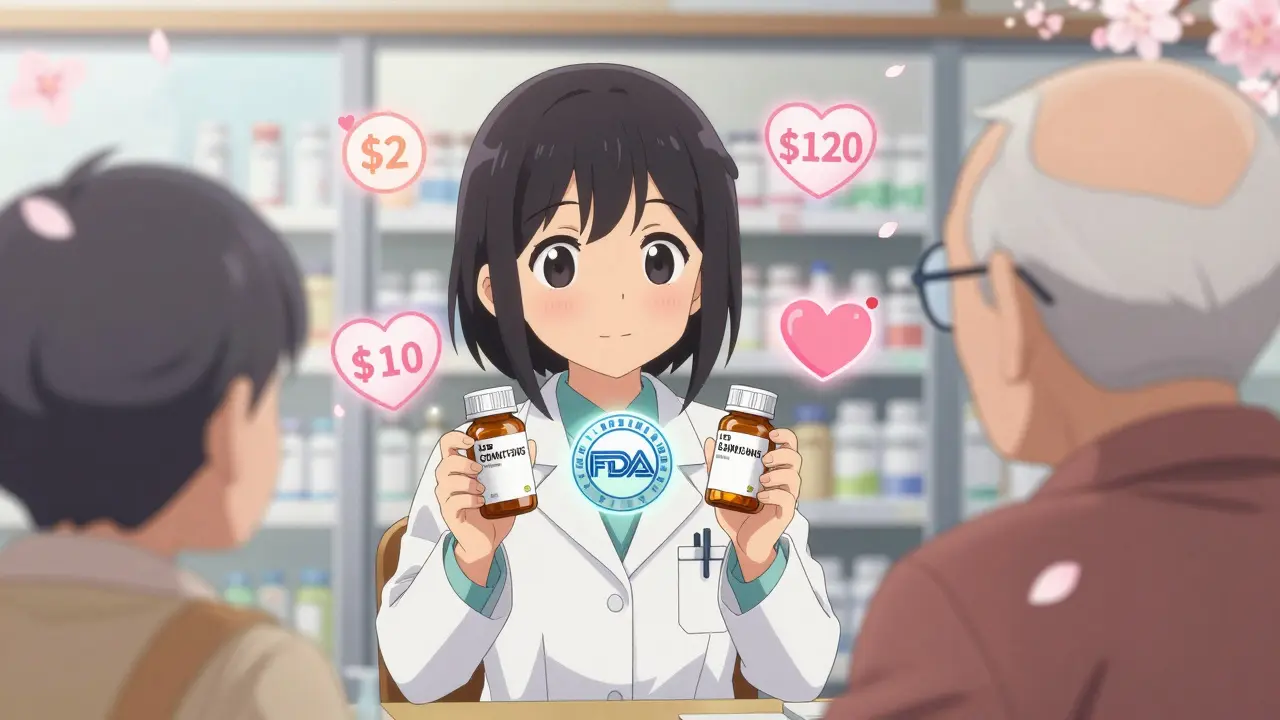
That’s when advocacy kicks in. A pharmacist might say, “This brand costs $120. The generic is $12. Same active ingredient. Same results.” They don’t just suggest it-they explain why it’s safe, show the FDA approval, and sometimes even help fill out paperwork for patient assistance programs.
But here’s the problem: Pharmacy Benefit Managers (PBMs) control drug pricing behind the scenes. They negotiate rebates with drugmakers, but those savings don’t always reach the pharmacy or the patient. A 2023 survey found that 78% of independent pharmacists say PBM practices hurt their ability to offer affordable meds. Some pharmacies lose money on generics because PBMs pay them less than the cost to buy the drug.
The Training Behind the Role
Pharmacists aren’t winging it when they give vaccines. Every one of them has gone through at least 20 to 30 hours of training. Most complete the American Pharmacists Association’s Pharmacy-Based Immunization Delivery certificate program. It covers injection technique, managing allergic reactions, and how to talk to vaccine-hesitant patients.
Ninety-eight percent of U.S. pharmacy schools now include immunization training in their curriculum. That’s a huge shift from 20 years ago, when most pharmacists had never given a shot. Now, it’s part of their core skill set.
After training, they still need to follow state rules. Thirty-four states require pharmacists to report every vaccine given to a state registry within 72 hours. Others give more time. Some states require continuing education every year. The paperwork adds up-but pharmacists do it because they know accurate records save lives.
Where the System Still Falls Short
Despite all the progress, big gaps remain. Reimbursement is the biggest one. Medicare pays pharmacists only 87% of what it actually costs to give a vaccine. That means many pharmacies lose money on every shot they give. Independent pharmacies, especially in rural areas, feel it the most. They don’t have the volume of big chains to absorb the losses.
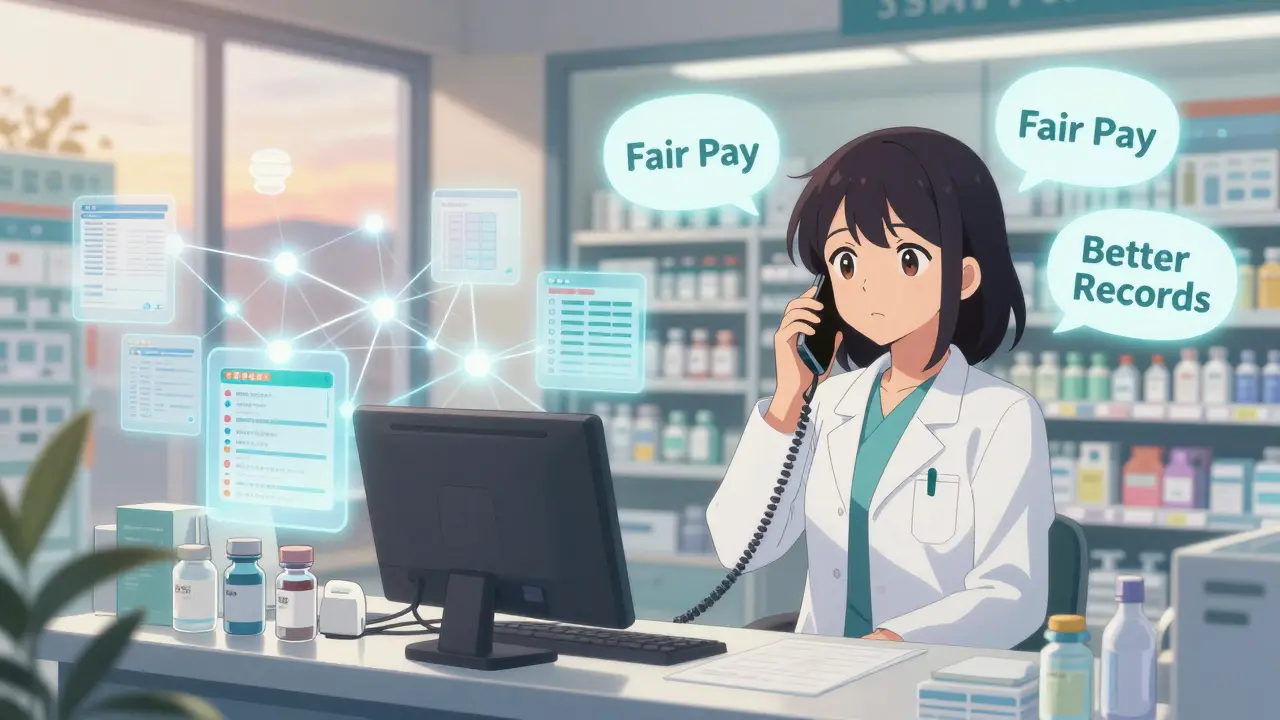
Insurance billing is another headache. Forty-two percent of patients say they’ve been billed incorrectly after getting a vaccine at the pharmacy. Sometimes the claim gets denied. Sometimes the patient gets a surprise bill. Pharmacists spend hours on the phone with insurers trying to fix it-time they could spend counseling patients.
Electronic records don’t talk to each other either. A pharmacist gives a vaccine, but if the patient’s primary care doctor doesn’t have access to that record, the patient might get the same shot twice-or miss a critical one. A 2022 survey found that 89% of pharmacists want better integration between pharmacy systems and electronic health records.
Real Stories Behind the Stats
One pharmacist in Ohio told a story about a 17-year-old who came in for a flu shot and started crying. He’d never been vaccinated before. His parents were afraid of side effects. The pharmacist sat with him for ten minutes. Showed him CDC data. Explained how mRNA works. By the end, the teen got his shot-and his mom called the next day to thank them.
On Reddit, r/pharmacy threads are full of similar stories. Pharmacists talk about convincing parents to vaccinate their kids, helping elderly patients understand why they need a pneumonia shot, or walking a diabetic patient through switching to a cheaper insulin generic.
These aren’t just transactions. They’re trust-building moments. Patients see pharmacists as approachable, non-judgmental, and always there. That’s why 87% of people choose pharmacies over clinics for vaccines-convenience is only part of it. The other part is confidence.
What’s Next for Pharmacist Advocacy
The push is growing. The American Pharmacists Association launched the “Finish the Fight” campaign, collecting over 23,000 letters from pharmacists urging Congress to fix PBM abuses. The CDC has set a goal to increase pharmacist-administered vaccines by 25% by 2025.
By 2026, analysts predict pharmacists will give over half of all adult vaccines in the U.S. That’s not just growth-it’s a transformation of healthcare delivery.
But it won’t happen without fair pay and better systems. Pharmacists are ready. They’ve trained. They’ve adapted. They’ve shown up during pandemics and flu seasons alike. Now, the system needs to catch up.
The future of healthcare isn’t just in hospitals or doctor’s offices. It’s in the corner pharmacy, where a pharmacist hands you a vaccine, explains your generic prescription, and quietly becomes your most reliable health advocate.
Can pharmacists really give vaccines legally in all states?
Yes. As of 2026, pharmacists have legal authority to administer vaccines in all 50 states, Washington D.C., and Puerto Rico. But rules vary. Some states allow them to give any vaccine to anyone over age three. Others restrict them to flu, COVID, or shingles shots-and may require a doctor’s order or limit them to adults only. Always check your state’s specific laws.
Are generic drugs really as good as brand-name ones?
Yes. The FDA requires generic drugs to have the same active ingredient, strength, dosage form, and route of administration as the brand-name version. They must also meet the same quality and safety standards. The only differences are in inactive ingredients (like fillers) and packaging. Generics work the same way and cost up to 80% less.
Why do pharmacies sometimes lose money on vaccines?
Because reimbursement rates, especially from Medicare and some private insurers, don’t cover the full cost. That includes the vaccine itself, storage, staff time, training, and reporting. Medicare pays about 87% of the actual cost. For independent pharmacies, that’s a financial strain-especially in areas with low patient volume.
How do pharmacists help patients who are scared of vaccines?
They listen first. Then they share facts-clearly and calmly. Many use CDC data, show vaccine safety studies, and explain how diseases are prevented. They address myths directly, like the false link between vaccines and autism. In one study, pharmacists spent 7-10 minutes per patient discussing concerns. That personal touch builds trust and often changes minds.
What’s being done to fix pharmacy reimbursement issues?
Pharmacist groups like the American Pharmacists Association and the National Community Pharmacists Association are lobbying Congress for fairer payment rules. The “Finish the Fight” campaign has gathered thousands of letters from pharmacists and patients. Some states are also passing laws to require insurers to pay pharmacists at parity with doctors for vaccine administration.
Can I get a generic prescription filled at any pharmacy?
Yes, but your insurance plan might push you toward certain pharmacies or mail-order services. Pharmacists can help you understand your plan’s formulary and find the lowest-cost option-even if it means switching pharmacies. They can also check for manufacturer coupons or patient assistance programs to further reduce your out-of-pocket cost.
Jacob Milano
January 4, 2026 AT 22:57Man, I never thought my local pharmacist would become my personal health hype-man. Last week I went in for a cold and walked out with a shingles shot, a free insulin coupon, and a lecture on why my brand-name blood pressure med is basically a fancy placebo. They didn’t just hand me a pill-they handed me back my dignity. These folks are the unsung heroes of primary care, and honestly? I’d trust them more than my doctor sometimes.
They know my name, my kid’s allergies, and that I hate needles. And yet they still make me feel like I’m not just a claim number. The system’s broken, sure-but pharmacists are out here patching it with duct tape and compassion.
Peyton Feuer
January 6, 2026 AT 21:50so like… i got my flu shot at walgreens last year and the guy asked if i wanted the high dose? i was like ‘wtf is that’ and he just explained it like i was 5. no jargon, no rush. i felt like a human. also generic lisinopril saved me $110 a month. i’m not rich but i’m alive so… yeah. thanks pharmacists. you guys are legit.
josh plum
January 7, 2026 AT 21:30Let me guess-you all think pharmacists are saints because they give shots? Wake up. The FDA doesn’t regulate ‘generic’ drugs like you think. There’s a whole shadow supply chain. I’ve seen the invoices. Some generics come from India with fillers that should be in a landfill, not your bloodstream. And don’t get me started on the vaccine mandates. You think they’re ‘saving lives’? They’re just lining the pockets of Big Pharma and PBMs who own the pharmacies. It’s all a racket. You’re being manipulated by the same system that sold you 5G towers in your backyard.
And why do you think they push generics so hard? Because they don’t want you to know the real drug costs. The ‘80% cheaper’ lie? That’s marketing. The real savings go to the middlemen. They don’t care about you. They care about profit. And you’re happy to be their puppet.
Next thing you know, they’ll be mandating booster shots for your houseplant.
Mandy Kowitz
January 8, 2026 AT 15:24Oh wow, a pharmacist gave someone a vaccine and now we’re writing odes to them? How novel. I’m sure the guy who handed me my insulin was just ‘being a health advocate’ and not just trying to hit his quarterly quota so he doesn’t get fired. These places are corporate factories now. The ‘personal touch’? That’s just scripted customer service with a white coat.
Also, generics? Yeah, right. My cousin’s thyroid med went generic and he started having heart palpitations. Turns out the filler was different. But hey, at least it was cheaper. I’m sure the pharmacist didn’t lose sleep over that.
Stop romanticizing retail healthcare. It’s not advocacy-it’s efficiency.
Justin Lowans
January 9, 2026 AT 04:05While the systemic challenges facing community pharmacies are profound-particularly regarding reimbursement inequities and interoperability gaps in health information exchange-their evolving scope of practice represents a paradigm shift in decentralized, patient-centered care.
The integration of immunization protocols into routine pharmacy workflows, coupled with pharmacogenomic counseling for generic substitution, aligns with the Institute of Medicine’s 2011 report on the future of health professions. The data on vaccine administration volume, particularly in underserved geographies, underscores a demonstrable reduction in preventable morbidity.
It is imperative that policy frameworks evolve to recognize pharmacists as reimbursable providers under Medicare Part B, and that state legislative bodies continue to remove archaic restrictions on pediatric immunization authority. The evidence base is robust; the moral imperative is clear.
Thank you to every pharmacist who shows up, even when the system doesn’t.
Ethan Purser
January 9, 2026 AT 12:25I used to think healthcare was about doctors in white coats with stethoscopes… until my grandma went to the pharmacy for her shingles shot and came back crying. Not from pain-from relief. She hadn’t seen a doctor in 7 years. She was scared. But the pharmacist sat with her for 20 minutes. Didn’t rush. Didn’t judge. Just talked. Like a real person.
That’s the moment I realized: healthcare isn’t a system. It’s a relationship.
And these people? They’re the ones holding it together while the rest of the machine burns.
So yeah, I cried too. Not because of the vaccine. Because for once, someone saw her. Not her医保, not her age, not her copay. Just her.
That’s more than any hospital ever gave her.
Thank you, pharmacists. You’re the last honest people left in this mess.
Doreen Pachificus
January 10, 2026 AT 05:36My mom got her pneumonia shot at the CVS next to the laundromat. She’s 78, doesn’t use the internet, and still thinks ‘generic’ means ‘fake.’ The pharmacist didn’t just hand her the shot-he sat down with her, drew a little diagram on a napkin, and explained how it works like a ‘training video for your immune system.’
She came home and told me, ‘That guy didn’t talk down to me. He talked like I mattered.’
I don’t know what’s more powerful: the science, or the fact that someone took the time to make her feel like she wasn’t invisible.
Angie Rehe
January 11, 2026 AT 18:35Let’s deconstruct the PBM reimbursement architecture through a value-based care lens. The current fee-for-service model is fundamentally misaligned with population health outcomes. When Medicare reimburses at 87% of ASP, it creates a negative margin externality that disproportionately impacts independent community pharmacies operating within rural HPSA-designated areas.
Furthermore, the lack of HL7/FHIR interoperability between pharmacy dispensing systems and EHRs creates critical data silos that directly contribute to vaccine duplication errors and adherence breakdowns. The 89% consensus among pharmacists for integrated records isn’t anecdotal-it’s a systems failure waiting to be addressed via CMS Rule 9117-F.
And let’s not conflate ‘convenience’ with ‘clinical efficacy.’ While pharmacists are trained, their scope remains adjunctive. The real solution isn’t more shots in arms-it’s structural reform of the pharmaceutical supply chain and payer-provider alignment.
Advocacy without policy change is performative.