
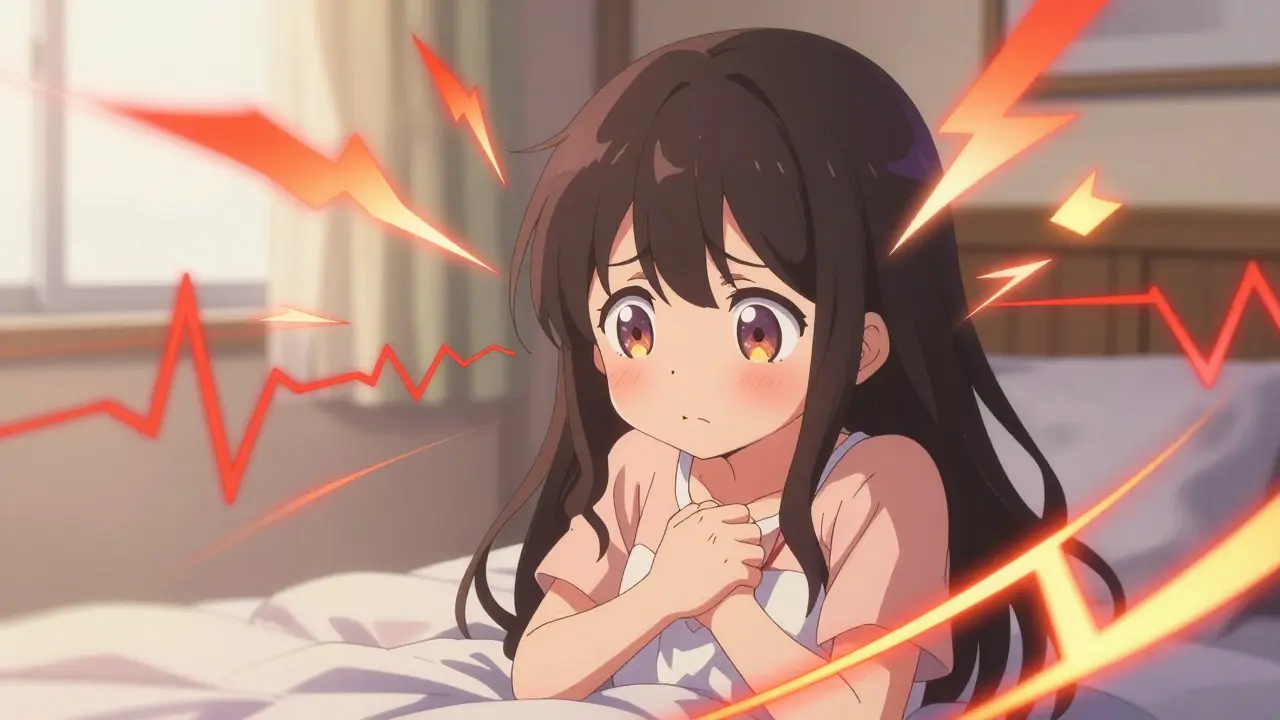
The danger lies in a "perfect storm" of chemistry. Your thyroid hormones already put your body in a state of high alert, essentially cranking up your internal metabolic thermostat. When you add a stimulant to that mix, you aren't just adding 1+1; you're creating a synergistic effect that multiplies the stress on your cardiovascular system. Understanding this interaction is the only way to avoid a trip to the ER and ensure your treatment for ADHD doesn't accidentally damage your heart.
Key Takeaways for Your Safety
- Cardiac Amplification: Hyperthyroidism increases your sensitivity to stimulants, which can skyrocket your heart rate and blood pressure.
- The Mimic Effect: Thyroid dysfunction often looks exactly like ADHD, leading to misdiagnosis and dangerous prescriptions.
- Medication Differences: Not all stimulants are equal; amphetamines generally carry higher cardiac risks than methylphenidates.
- Screening is Non-Negotiable: A simple TSH blood test before starting stimulants can prevent severe adverse reactions.
Why Your Heart Reacts Violently to Stimulants
To understand why this happens, we have to look at how these two forces interact in your bloodstream. Hyperthyroidism makes your beta-adrenergic receptors-the proteins that respond to adrenaline-significantly more sensitive. Research indicates these receptors can be 30-40% more reactive than normal. This means your body is already "primed" to react to any stimulus.
Now, enter Adderall is a combination of amphetamine and dextroamphetamine used to treat ADHD. This medication floods your synaptic clefts with norepinephrine and dopamine, increasing their release by 300-500%. When a hyperthyroid body receives this massive surge of stimulants, the resting heart rate can jump from a healthy 60-100 bpm to a dangerous 120-160 bpm. This isn't just "feeling jittery"; it's a state of extreme cardiovascular stress.
The risk of atrial fibrillation-an irregular, often rapid heart rate-is over three times higher for patients with hyperthyroidism who use stimulants compared to those who don't. In severe cases, especially with high doses of Adderall (over 30mg/day), the risk of ventricular tachycardia increases nearly five-fold. This is why the FDA explicitly warns that these medications should be used with extreme caution in patients with thyroid disorders.
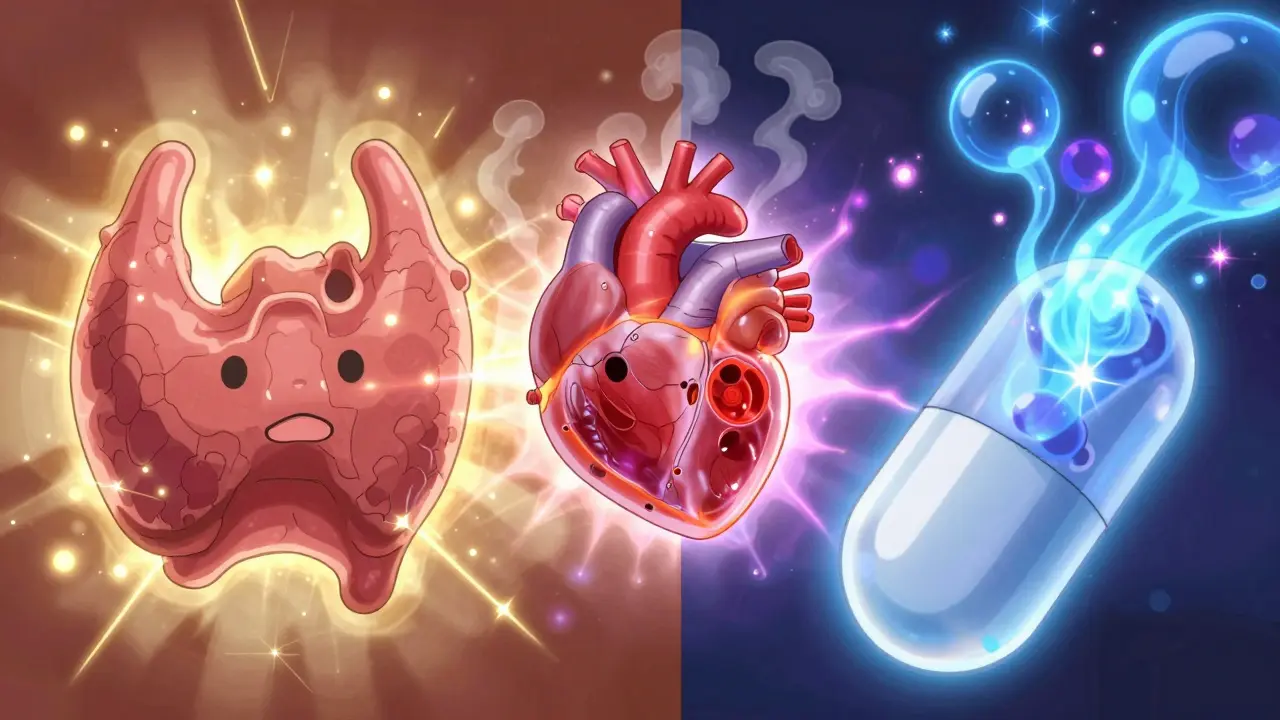
The Anxiety Loop: When ADHD and Thyroid Issues Blur
One of the biggest dangers in this medical intersection is misdiagnosis. The Endocrine Society reports that roughly 15-20% of adults with undiagnosed hyperthyroidism are initially mistaken for having ADHD. Why? Because both conditions cause restlessness, difficulty concentrating, sleep disturbances, and tremors.
When a doctor prescribes a stimulant to someone who actually has a thyroid storm, it acts like throwing gasoline on a fire. About 78% of patients with untreated hyperthyroidism who take stimulants report severe anxiety symptoms. This often manifests as sudden panic attacks within 30 minutes of dosing. Because the patient believes they are treating ADHD, they might assume the anxiety is just a "warm-up" period or a need for a dose adjustment, when in reality, their heart is screaming for help.
Comparing the Risks: Amphetamines vs. Methylphenidates
Not every stimulant behaves the same way. If you are navigating these risks, it is helpful to understand the different profiles of common medications. Methylphenidate (found in Ritalin) generally has a lower impact on heart rate than amphetamine-based drugs. While it still raises blood pressure, the spike is often less aggressive than the one caused by Adderall.
| Medication Type | Heart Rate Impact | Primary Risk | Clinical Recommendation |
|---|---|---|---|
| Amphetamines (e.g., Adderall) | Very High | Ventricular Tachycardia / Crisis | Generally Contraindicated |
| Methylphenidates (e.g., Ritalin) | Moderate | Hypertension / Anxiety | Low dose with monitoring |
| Prodrugs (e.g., Vyvanse) | Moderate-High | Delayed Cardiac Peaks | Cautious use; gradual onset |
| Non-Stimulants (e.g., Atomoxetine) | Low | Minimal Cardiovascular Shift | Preferred Alternative |
For those with mild subclinical hyperthyroidism, low doses of methylphenidate (under 18mg/day) might be an option, provided there is strict cardiac monitoring. However, for full-blown hyperthyroidism, the medical consensus is lean toward non-stimulant alternatives like Atomoxetine, which barely nudge the heart rate regardless of thyroid status.
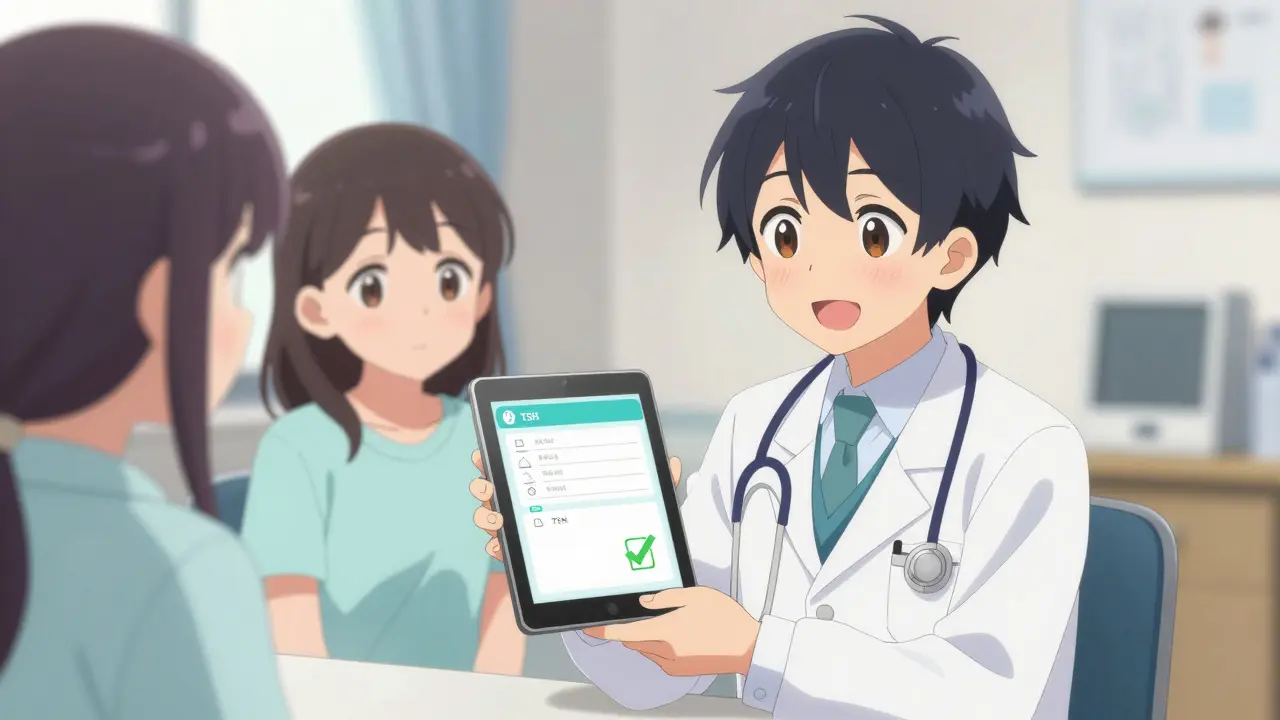
How to Manage Your Health Safely
If you have a known thyroid condition or suspect your ADHD symptoms might be thyroid-related, there is a specific protocol you should follow to stay safe. First, demand a full thyroid panel, including TSH and T4 levels, before touching a stimulant. This is the only way to ensure you aren't treating a hormonal imbalance with a neurological drug.
If your doctor decides that both treatments are necessary, you shouldn't just "wing it." Professional guidelines suggest a baseline echocardiogram and a 24-hour Holter monitor. This gives your medical team a map of how your heart behaves before the drugs are introduced. Once you start, the "low and slow" approach is critical: starting with 5-10mg and increasing only after your heart rate and anxiety levels have been verified as stable.
You also need to be your own best advocate. Watch for these red flags:
- A resting heart rate that consistently stays above 110 bpm.
- Chest pain or a feeling of "fluttering" in the chest.
- Anxiety or panic that doesn't fade within two hours of taking your dose.
- Unexpected weight loss despite an increased appetite.
The Long-Term Outlook and Monitoring
Managing this interaction isn't a one-time event; it's a long-term commitment. Your thyroid requirements change as you age, and stimulants can actually influence your thyroxine (T4) levels, particularly in children. This means a dose that worked last year might be dangerous this year.
The current gold standard for management involves thyroid function tests every three months during the adjustment phase. Because TSH levels can take up to three months to stabilize after a medication change, patience is key. Once you are stable, annual check-ups are the minimum requirement. Many endocrinologists are now pushing for TSH screening every six months for anyone on long-term stimulant therapy to catch any sliding levels before they cause a cardiac event.
Can I take Adderall if my thyroid levels are only slightly high?
Even mild hyperthyroidism can increase your sensitivity to stimulants. While some doctors may allow very low doses of methylphenidate under strict monitoring, Adderall is generally avoided because its potent effect on norepinephrine can trigger severe tachycardia or anxiety even in mild cases.
Why do ADHD and hyperthyroidism feel so similar?
Both conditions trigger a state of over-arousal in the nervous system. Hyperthyroidism floods the body with T3 and T4, which speeds up metabolism and heart rate, mimicking the restlessness, distractibility, and insomnia often seen in ADHD. This is why a blood test is essential for a correct diagnosis.
What is the safest alternative to stimulants for someone with thyroid issues?
Non-stimulant medications like Atomoxetine (Strattera) are typically the safest bet. They do not cause the same massive surge of norepinephrine and dopamine, resulting in a much lower increase in heart rate and blood pressure.
Will treating my thyroid first make my ADHD symptoms go away?
In many cases, yes. Some studies show that a significant percentage of people diagnosed with ADHD actually had undiagnosed thyroid abnormalities. Once the thyroid is stabilized with medication, the "ADHD-like" symptoms often resolve on their own.
How often should I get my thyroid checked if I'm on a stimulant?
During the initial phase of medication adjustment, you should have thyroid function tests every three months. Once you have reached a stable maintenance dose, annual testing is the minimum, though every six months is recommended by some specialists.
Del Bourne
April 5, 2026 AT 15:25It is absolutely critical that patients realize the overlap between endocrine disorders and neurodevelopmental symptoms. Many people spend years treating ADHD only to find out their thyroid was the primary driver of their restlessness. If you are starting a new stimulant, please ensure your physician has ordered a comprehensive metabolic panel and a TSH test. It is a simple precaution that can prevent significant cardiac distress, especially since beta-adrenergic sensitivity is so high in these cases. I always recommend keeping a daily log of your resting heart rate when transitioning medications to catch any spikes early.
Srikanth Makineni
April 7, 2026 AT 07:51scary stuff honestly
Daniel Trezub
April 8, 2026 AT 07:34Actually, the distinction between amphetamines and methylphenidates is often overblown in these guides. While the heart rate impact differs on paper, individual chemistry varies way too much to make a blanket statement like "generally contraindicated." Some people with hyperthyroidism handle low-dose Adderall just fine if they are on beta-blockers. Just saying it's a bit too simplistic to categorize them this way!
Benjamin cusden
April 8, 2026 AT 13:07The nuance here is missing the fundamental point about receptor density. It is quite obvious to anyone with a basic understanding of pharmacology that the synergistic effect is the real issue, not just the drug class. The insistence on Atomoxetine as the only safe bet is a lazy oversimplification for those who cannot grasp the complexities of titrating stimulants under cardiologist supervision.
Ethan Davis
April 9, 2026 AT 13:39Funny how the FDA "warns" about this but the pharma companies keep pushing these stimulants on everyone. They don't want you checking your thyroid because then you wouldn't need a lifelong prescription for a pill that makes your heart explode. Follow the money, people. They'd rather you have a panic attack than a healthy thyroid.
Victoria Gregory
April 9, 2026 AT 23:58Wow... this is such an important reminder to listen to our bodies!! 🌿✨ It's crazy how the mind and body are so connected. I just feel like we need more holistic approaches to this whole thing 🌸. Everyone's journey is different and we should just be kind to ourselves while navigating these health hurdles!! ❤️🙏
jack hunter
April 10, 2026 AT 10:56i mean why do we even care about thyroids lol... its all just chemicals in the brain anyway. like the whole idea of "metabolic thermostats" is just a metaphor to make us feel like machines. plus i bet the 78% stat is totally made up just to scare people into buying more tests. total nonsense if u actually think about the void of existence
GOPESH KUMAR
April 11, 2026 AT 00:02The intersection of hormonal chaos and neurological stimulation is a poetic tragedy of the human condition. We seek focus in a world of noise, only to realize our own biology is the loudest noise of all. However, the post fails to address the systemic failure of general practitioners who rarely order a TSH test unless you're literally shaking in the chair. It is an exercise in medical negligence masquerading as "standard care." Truly mediocre implementation of diagnostic protocols.
Laurie Iten
April 12, 2026 AT 13:42it makes me think about how we define restlessness... maybe the heart is just trying to tell us something that we are too busy medicating away
Kathleen Painter
April 13, 2026 AT 05:38I really appreciate the detailed breakdown here because so many of us in the neurodivergent community often feel like our physical symptoms are just "part of the ADHD experience" without ever questioning if there is a deeper physiological cause. It's so easy to just accept the anxiety as a side effect when in reality, your body might be fighting a hormonal battle that requires a completely different set of tools. I've seen so many friends struggle with the exact same symptoms, and it's just heartbreaking to think they might be risking their heart health because they didn't have this information. We should all be encouraging our peers to ask for those blood tests, even if the doctor seems sure about the ADHD diagnosis, because a little bit of caution now can save a lot of trouble in the emergency room later on. It's all about supporting each other and ensuring we're all getting the right kind of care for our specific bodies.
dwight koyner
April 14, 2026 AT 15:58I must emphasize that if you are experiencing chest flutters or a resting heart rate consistently above 100 bpm, you should contact your healthcare provider immediately. It is not advisable to adjust your dosage of stimulants without professional guidance, as the withdrawal or interaction effects can be complex. Please prioritize your cardiovascular safety above your productivity goals.
Jamar Taylor
April 15, 2026 AT 14:28You guys got this! Just stay on top of those check-ups and keep pushing for the right treatment! Knowledge is power and now you're equipped to handle this like a pro! Let's get those health levels stabilized! 🚀
Nikhil Bhatia
April 15, 2026 AT 20:56too long didnt read but looks okay i guess