
Why Secure Storage Matters More Than You Think
Every year, over 93,000 people in the U.S. die from drug overdoses. Nearly 16,000 of those deaths come from prescription opioids - drugs that were meant to help, not harm. And here’s the hard truth: most of these deaths aren’t happening to the person who was prescribed the medication. They’re happening to kids, teens, or even older adults who found pills left out in the open. A 2019 national survey found that more than half of people who misuse opioids got them from friends or family - often from medicine cabinets, nightstands, or kitchen drawers. If you’re storing high-risk medications like oxycodone, fentanyl patches, or hydrocodone in an unlocked spot, you’re not just risking your own safety. You’re putting everyone in your home at risk.
What Counts as a High-Risk Medication?
Not all prescriptions need the same level of security. High-risk medications are those with a high potential for misuse, addiction, or fatal overdose. These include:
- Opioid painkillers: oxycodone (OxyContin), hydrocodone (Vicodin), morphine, fentanyl patches
- Sedatives and anti-anxiety drugs: alprazolam (Xanax), diazepam (Valium)
- Sleep aids: zolpidem (Ambien)
- Stimulants: Adderall, Ritalin (especially when not prescribed to the user)
The FDA and CDC classify these as controlled substances because they can cause respiratory depression, dependence, or death even in small doses - especially for someone who hasn’t built up a tolerance. If you’re taking one of these, you’re not just managing pain or anxiety. You’re handling something that can kill someone else in your house if it’s not locked away.
The Gold Standard: Locked Storage
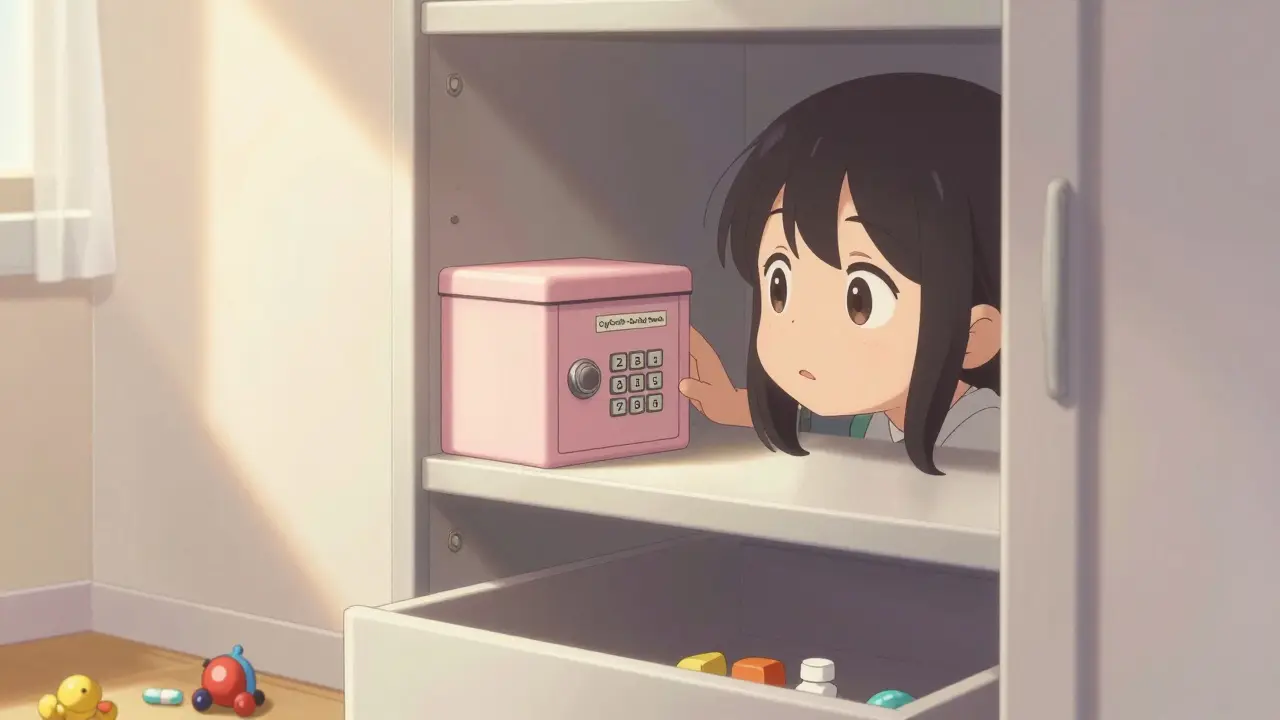
The single most effective step you can take? Lock it up. A 2018 study in JAMA Pediatrics showed that using a locked container reduces accidental child poisonings by 87%. That’s not a small number - that’s life-saving. But here’s the problem: only 23% of U.S. households with kids actually use them. Most people think, “I’ll just keep them out of sight,” or “My child won’t find them.” But kids are curious. They climb. They open drawers. They copy what adults do.
Look for a lockbox that meets ANSI Grade 2 or higher standards. These are tested to resist forced entry for at least 10 minutes. You don’t need a safe. A simple $25 lockbox from Walgreens or CVS works. Some even come with keypads so you don’t have to fumble with keys - useful if you have arthritis. Avoid plastic pill organizers without locks. They look neat, but they’re easy for kids to open. And never store medications in bags, boxes, or empty candy containers. That’s how kids think it’s candy.
Where to Put It - Height and Location Matter
Where you store the lockbox is just as important as having one. The CDC recommends keeping medications at least 4 feet off the ground. Why? Because the average 4-year-old can reach up to 36 inches. That means if your meds are on a nightstand, a shelf above the toilet, or even a dresser, they’re within reach. Store your lockbox on a high shelf in a bedroom closet, inside a locked cabinet in the laundry room, or even bolted to the wall behind a door.
Avoid these common mistakes:
- Don’t keep them in the kitchen - kids go there often, and cabinets are easy to open.
- Don’t leave them on the bathroom counter - humidity can ruin pills, and it’s a prime spot for access.
- Don’t store them with other medicines in a single drawer - it’s too easy to grab the wrong one.
One parent on Reddit shared how her toddler pulled down three drawers trying to get to her grandma’s fentanyl patches. The lockbox saved them. It wasn’t luck. It was placement.
Keep Them in Original Packaging
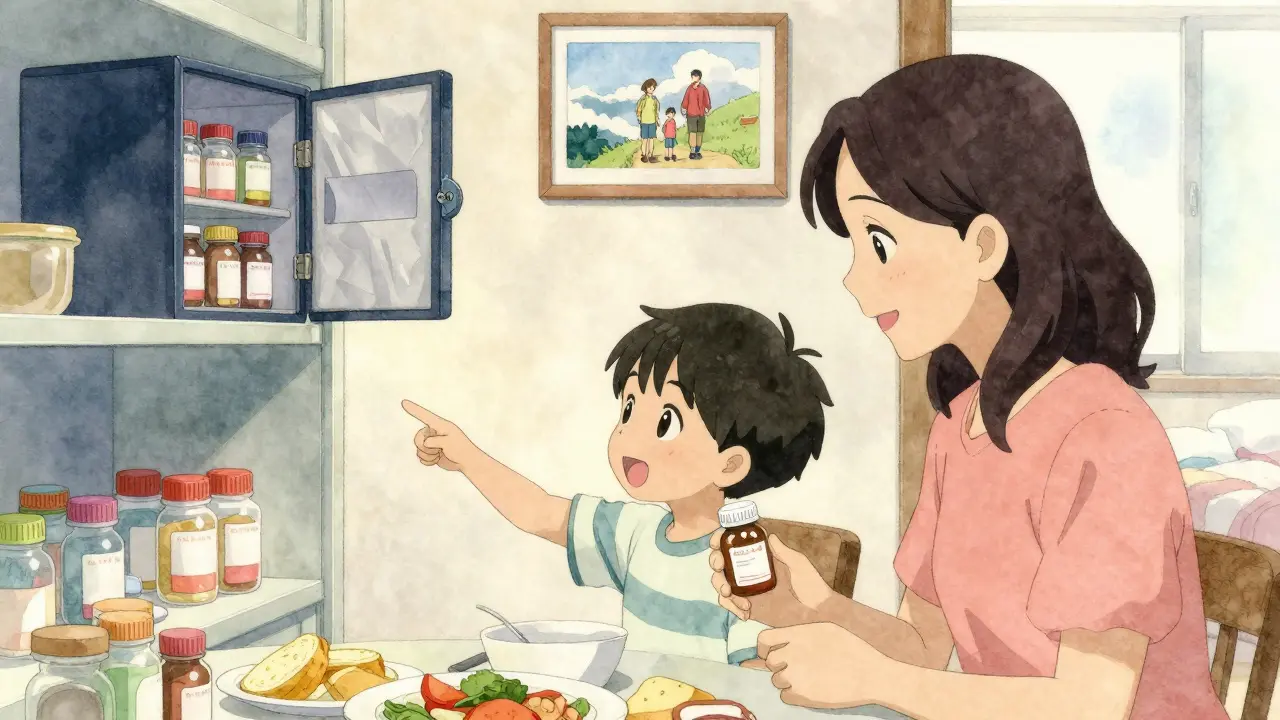
It’s tempting to dump pills into a pill organizer for convenience. But here’s why that’s dangerous: if your child finds a small plastic container with white pills, they have no idea what they are. Original bottles have labels with the patient’s name, drug name, dosage, and warnings. That’s critical information - not just for you, but for emergency responders if something goes wrong.
The FDA says transferring medications out of original containers increases accidental ingestions by 40%. And here’s another thing: child-resistant caps only work if they’re properly closed. Many people don’t push down and twist hard enough. Test yours. If you can open it with one hand, it’s not locked right. Teach everyone in the house how to close them correctly.
Track What You Have - Daily Counts Save Lives
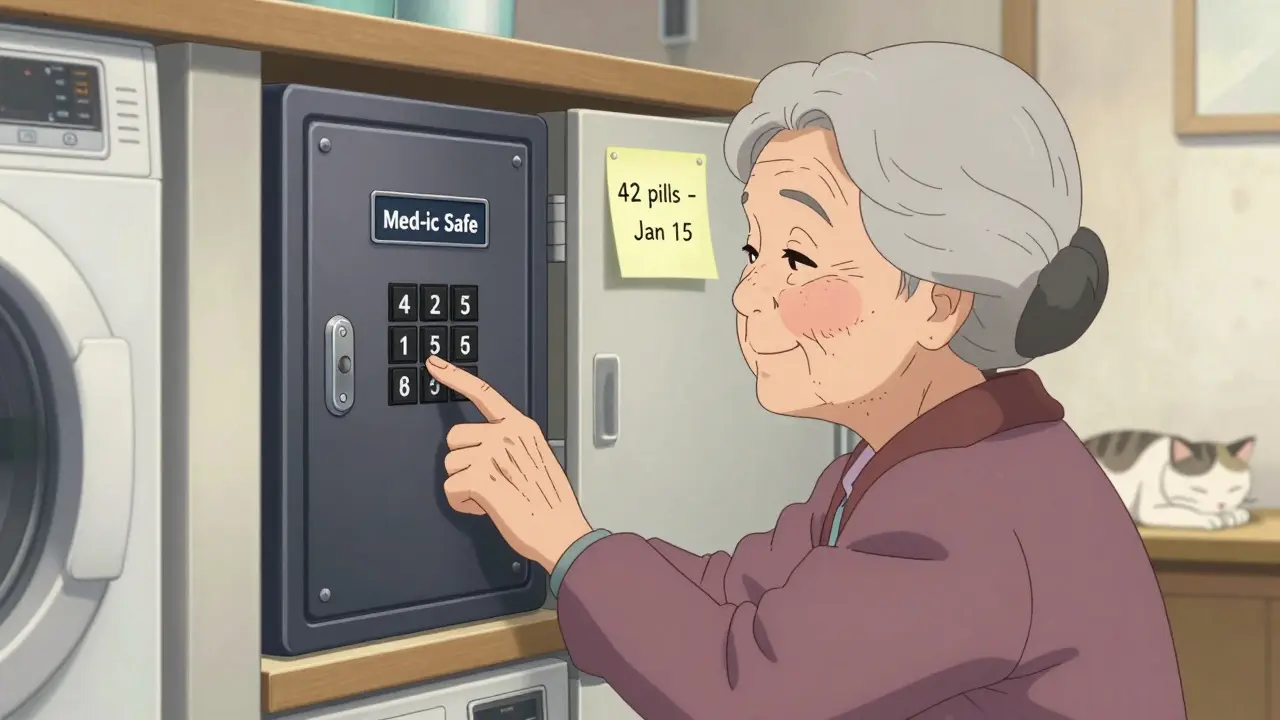
It sounds tedious, but counting your pills every day takes less than five minutes. Why? Because if you notice a missing pill, you know something’s wrong - before it turns into an emergency. Connecticut’s health department recommends writing down the date and number of pills left each morning. For example: “42 tablets remaining at 8:00 AM, Jan 15.”
You don’t need an app. A sticky note on the fridge works. Or keep a small notebook next to the lockbox. If you’re using a smart dispenser like Hero Health or MedMinder, great - they log access and alert you if someone opens it at 3 a.m. But those cost $100+, and most people can’t afford them. The low-tech version is just as effective.
What If You Can’t Use a Lockbox?
Some people - especially older adults with arthritis or limited hand strength - find child-resistant caps and lockboxes impossible to use. That’s a real problem. The CDC says 32% of users report accessibility issues. You shouldn’t have to choose between safety and being able to take your medicine.
There are solutions:
- Look for lockboxes with push-button codes instead of keys or complicated locks. The Med-ic Safe Locking Pill Organizer opens with a 4-digit code and costs under $35.
- Ask your pharmacist for a non-child-resistant bottle if you can’t open the caps. You’ll need to sign a waiver, but it’s legal and common.
- Ask a trusted family member to hold the key or code. Make sure they’re reliable and won’t forget.
- Use a combination lockbox you can set yourself - no keys needed.
Never skip storage because it’s hard. There’s always a way that works for you.
What About Disposal?
Storing meds safely is only half the battle. Unused or expired pills are still dangerous. Never flush them down the toilet or toss them in the trash. The DEA runs National Prescription Drug Take Back Days twice a year - in April and October. Over 985,000 pounds of medication were collected in 2022. You can also find permanent drop-off locations at pharmacies, hospitals, or police stations. The DEA website lists over 14,600 authorized sites across the country.
If you can’t wait for a take-back day, mix pills with coffee grounds or cat litter, seal them in a plastic bag, and throw them in the trash. It doesn’t make them safe, but it makes them unappealing and harder to retrieve.
What Doctors Should Be Telling You - But Often Don’t
Here’s a shocking stat: only 37% of doctors talk to patients about secure storage when prescribing opioids. That’s not because they don’t care. It’s because they’re rushed. But if you’re getting a prescription for a high-risk drug, you have the right to ask: “How should I store this?” “Is there a lockbox I can get?” “What do I do if someone else takes it?”
Dr. Scott Gottlieb, former FDA commissioner, called locking up opioids “the single most effective intervention” to prevent overdose at home. That’s not just opinion - it’s backed by data. If your doctor doesn’t mention it, bring it up. Write it down. Make it part of your treatment plan.
Real Stories, Real Consequences
A user on Reddit named u/PainPatient2021 shared: “My doctor never told me to lock up my oxycodone. My 16-year-old found them in my nightstand and overdosed - thank God Narcan worked.” That’s not an isolated case. The Washington Poison Center logged over 1,200 child exposures to medications in 2022 - almost all because the drugs were within reach.
On the flip side, another parent wrote: “The Walgreens lockbox saved my toddler from accessing grandma’s fentanyl patches.” Simple. Low-cost. Life-saving.
This isn’t about being paranoid. It’s about being responsible.
Final Checklist: Your 5-Step Secure Storage Plan
- Inventory - List every high-risk medication in your home. Include names, dosages, and quantities.
- Transfer - Put all pills back in original bottles with child-resistant caps securely closed.
- Lock - Buy a lockbox (ANSI Grade 2 or higher). Price range: $15-$150.
- Place - Store it at least 4 feet high, away from kitchens, bathrooms, and common areas.
- Track - Write down the number of pills left each day. If you’re using a smart device, confirm alerts are turned on.
Do this once. It takes less than an hour. Then spend two minutes a day checking. That’s all it takes to protect your family.
What to Do If Someone Overdoses
If you suspect someone has overdosed - whether it’s a child, teen, or adult - act fast:
- Call 911 immediately.
- If you have Narcan (naloxone), administer it as directed. It’s available over-the-counter in most states.
- Stay with the person until help arrives. Even if they wake up, they still need medical care.
- Keep the medication bottle. Emergency responders need to know what was taken.
Call the Poison Help hotline at 1-800-222-1222 anytime. They handled over 2 million calls in 2022 and resolved 92% without hospital visits. You don’t need to wait for symptoms to get worse. Call early. Save time. Save lives.