
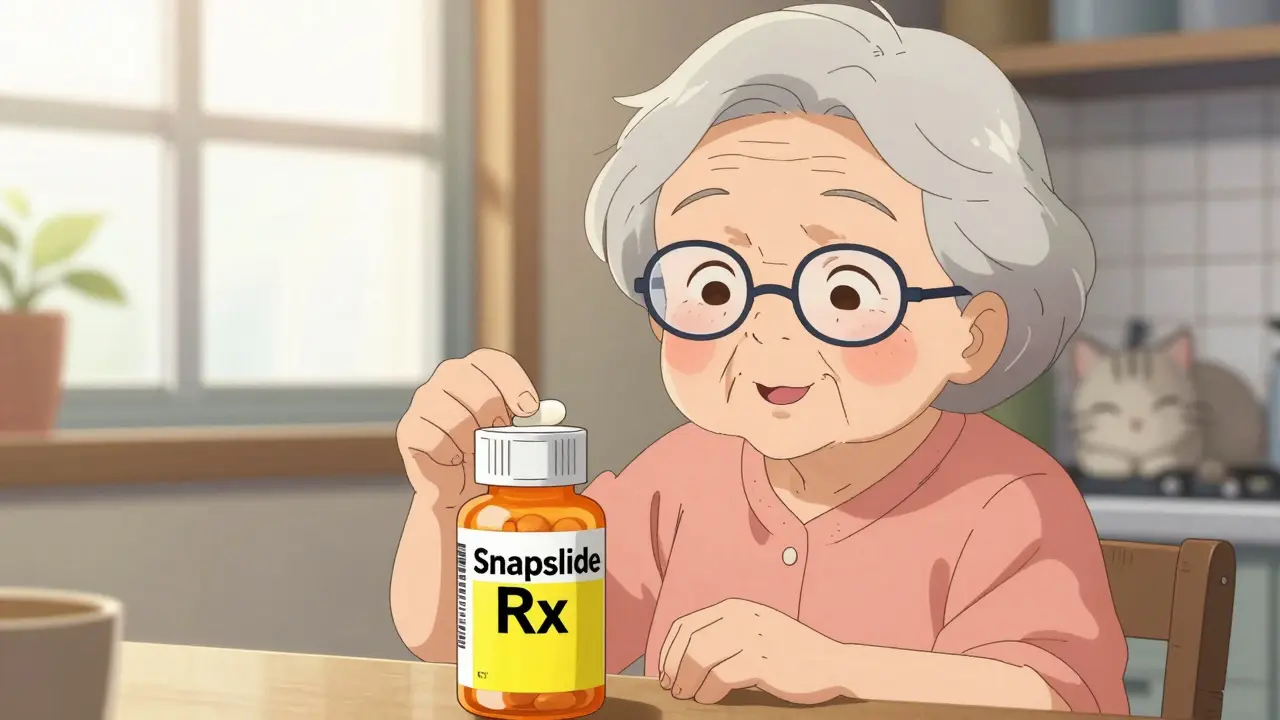
Getting your prescription meds shouldn’t feel like a puzzle you can’t solve. If you or someone you care for has arthritis, weak grip, or vision problems, standard child-resistant caps can turn daily medication into a daily struggle. You’re not alone. Nearly 49% of adults over 65 say they can’t open their pill bottles without help. But here’s the good news: you have a legal right to request easier-to-open caps and clear, accessible labels - and pharmacies are required to provide them.
Why Standard Pill Bottles Are Hard to Open
Child-resistant caps were designed in the 1970s to stop kids from accidentally swallowing medicine. The standard push-and-turn design works well for that - it’s hard for small hands to twist and press at the same time. But for many older adults, it’s nearly impossible. These caps require 4.5 to 8.5 pounds of downward pressure while twisting. That’s like squeezing a tightly sealed jar of pickles with stiff fingers. For someone with arthritis, that’s painful. For someone with limited hand strength, it’s impossible.
And it’s not just the cap. The label? Often printed in tiny 10-point font. If you’re over 60, you might need 16-point or larger to read it clearly. Braille? Rare. Audio labels? Almost never offered unless you ask.
According to a 2022 FDA report, nearly half of seniors struggle with standard packaging. That leads to skipped doses, wrong doses, or worse - taking the wrong medicine because they couldn’t read the label. This isn’t just inconvenient. It’s dangerous.
What Accessible Packaging Actually Looks Like
Accessible doesn’t mean childproof is gone. It means better design. Here’s what’s available:
- SnapSlide Rx: A sliding cap that opens with one hand. You just push and slide - no twisting. It uses less than 2.5 pounds of force. Independent tests show 87% of seniors with arthritis can open it in under 30 seconds. It still blocks 94% of children.
- EZ-Open caps: These have large ridges for better grip. They’re easier to turn but don’t always meet child-resistance standards. Ask if yours is certified.
- Large print labels: Minimum 16-point font, high-contrast colors (black on yellow, not gray on white), and clear spacing. No more squinting.
- Braille labels: Follows Grade 2 Braille standards with raised dots 0.5mm high. Must include drug name, dosage, and instructions.
- Audible labels: Some pharmacies offer QR codes that, when scanned with a phone, play a voice recording of the label info in under 90 seconds.
These aren’t rare prototypes. They’re real, tested, and approved. The SnapSlide Rx closure even won the 2024 IoPP AmeriStar Award for innovation in packaging safety.
Your Legal Right to Request These Options
You don’t need a doctor’s note. You don’t need to prove you’re disabled. You don’t need to beg. Under the Access Board’s 2019 guidelines - which are now law in 42 states - pharmacies must provide accessible packaging upon request. That includes:
- Easy-open caps (like SnapSlide or EZ-Open)
- Large print labels
- Braille labels
- Audible label options
The law is clear: if you ask, they must provide. No excuses. No “we don’t carry that.” That’s a violation of federal accessibility rules.
Some pharmacies still claim they “don’t have inventory.” But CVS Health now offers accessible packaging at all 10,000+ of its locations. Walgreens and Rite Aid are catching up. Independent pharmacies may lag - but they’re still required to comply.
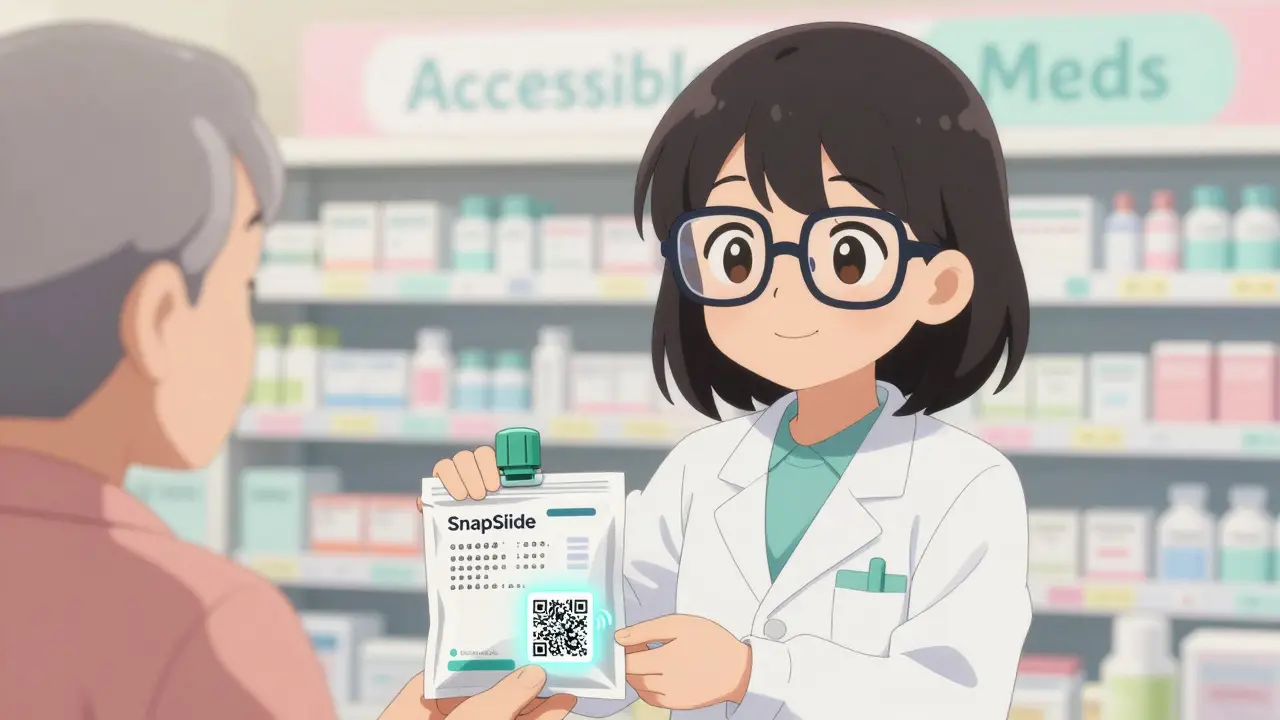
How to Ask - Step by Step
Don’t wait until pickup day. Start the process early. Here’s how to make it stick:
- Call or visit the pharmacy when the prescription is first filled. Don’t wait until you’re at the counter. Ask the pharmacist directly: “Can you fill this with an easy-open cap and large print label?”
- Be specific. Say: “I need SnapSlide Rx caps and 16-point font labels.” If they don’t know what you mean, ask them to look up the Access Board’s 2019 guidelines. You can even say: “This is required under federal accessibility law.”
- Ask for a timeline. Most pharmacies need 24 to 72 hours to prepare accessible packaging. Plan ahead. If you need it urgently, ask if they can rush it.
- Ask for confirmation. When you pick it up, check: Is the cap easy to open? Is the print big enough? If not, ask for a replacement.
- Document it. If they refuse, note the date, time, pharmacy name, and employee ID (if given). Call the National Council on Aging’s Medication Access Hotline at 1-800-555-0123. They helped resolve 94% of similar issues in Q1 2024.
What to Do If the Pharmacy Refuses
If they say “we don’t have it,” that’s not an excuse. It’s a violation. Here’s what to do next:
- Ask to speak to the manager. Most frontline staff aren’t trained on accessibility laws.
- Refer to the Access Board’s 2019 guidelines. You can print a one-page summary from their website (no need to link - just say “federal accessibility standards for prescription labels”).
- File a complaint with your state pharmacy board. All 42 states that adopted the guidelines have a formal process.
- Call the American Foundation for the Blind’s medication safety line. They track pharmacy compliance and can escalate issues.
One user on Reddit shared: “I cited HIPAA and the Access Board rules at Walgreens. They gave me the SnapSlide cap the next day. My adherence jumped from 65% to 95%.” That’s not luck - that’s knowing your rights.
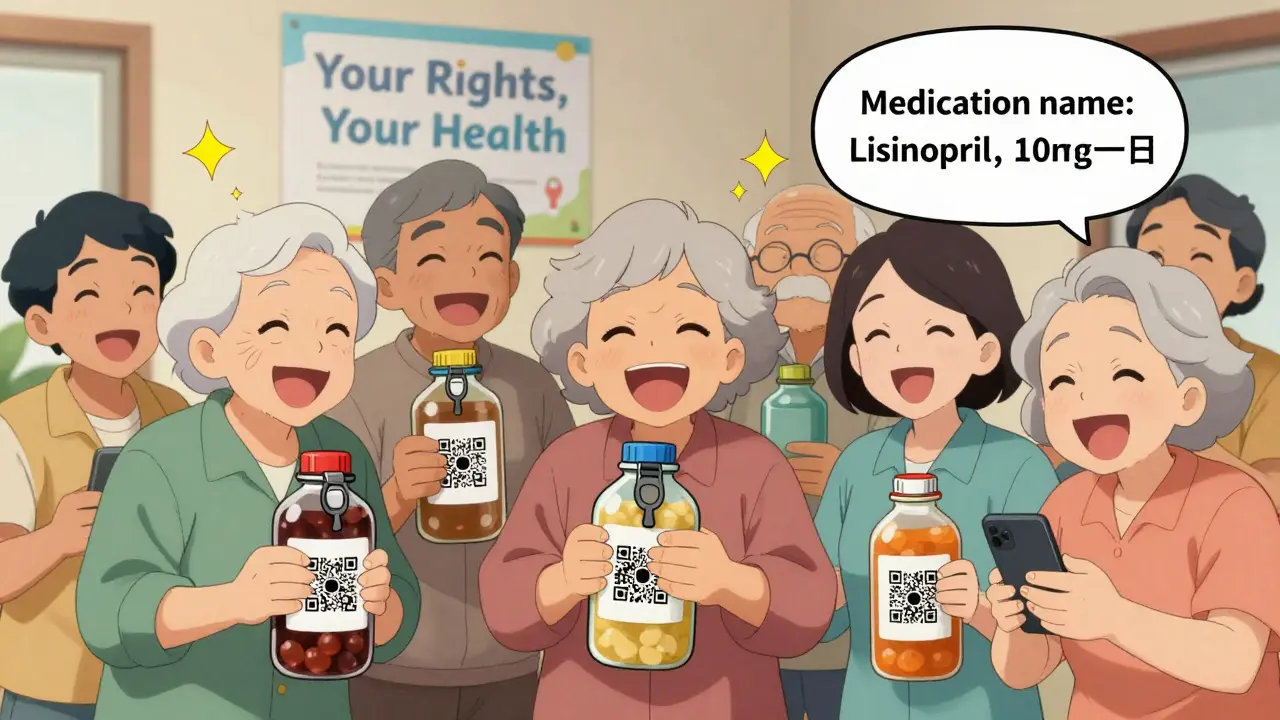
Why This Matters More Than You Think
By 2040, over 80 million Americans will be over 65. That’s 1 in 5 people. If pharmacies don’t adapt, millions will keep skipping meds, mixing up pills, or avoiding treatment because they can’t open the bottle.
The good news? The market is changing fast. In 2023, accessible packaging made up 12% of the $2.8 billion prescription closure market. By 2027, it’s projected to hit 18%. Medicare Part D now covers the extra cost for beneficiaries with documented dexterity or vision issues. That means no more out-of-pocket fees.
And innovation is accelerating. SnapSlide’s Version 2.0, coming in 2025, will include biometric authentication - so only authorized users can open it. The EU is requiring dual testing for child and senior safety starting January 2025. The FDA is pushing for mandatory accessibility assessments on all new prescriptions.
This isn’t a niche request. It’s a public health necessity.
What You Can Do Today
- Check your current pill bottles. Can you open them without help? Can you read the label without glasses?
- Call your pharmacy and ask for easy-open caps and large print labels. Do it now - don’t wait.
- If you help someone else, ask for them. Seniors often don’t know they have this right.
- Use the American Foundation for the Blind’s online tool to find pharmacies near you that offer accessible packaging.
Medication safety shouldn’t depend on your strength or your eyesight. It should be built into the design. And you have the power to make it happen.
Ashley Johnson
February 26, 2026 AT 22:52Lillian Knezek
February 27, 2026 AT 07:03Maranda Najar
February 28, 2026 AT 09:40lela izzani
March 1, 2026 AT 11:05Gabrielle Conroy
March 2, 2026 AT 19:58Spenser Bickett
March 4, 2026 AT 14:30Christopher Wiedenhaupt
March 5, 2026 AT 23:00John Smith
March 6, 2026 AT 04:27Shalini Gautam
March 6, 2026 AT 05:17