
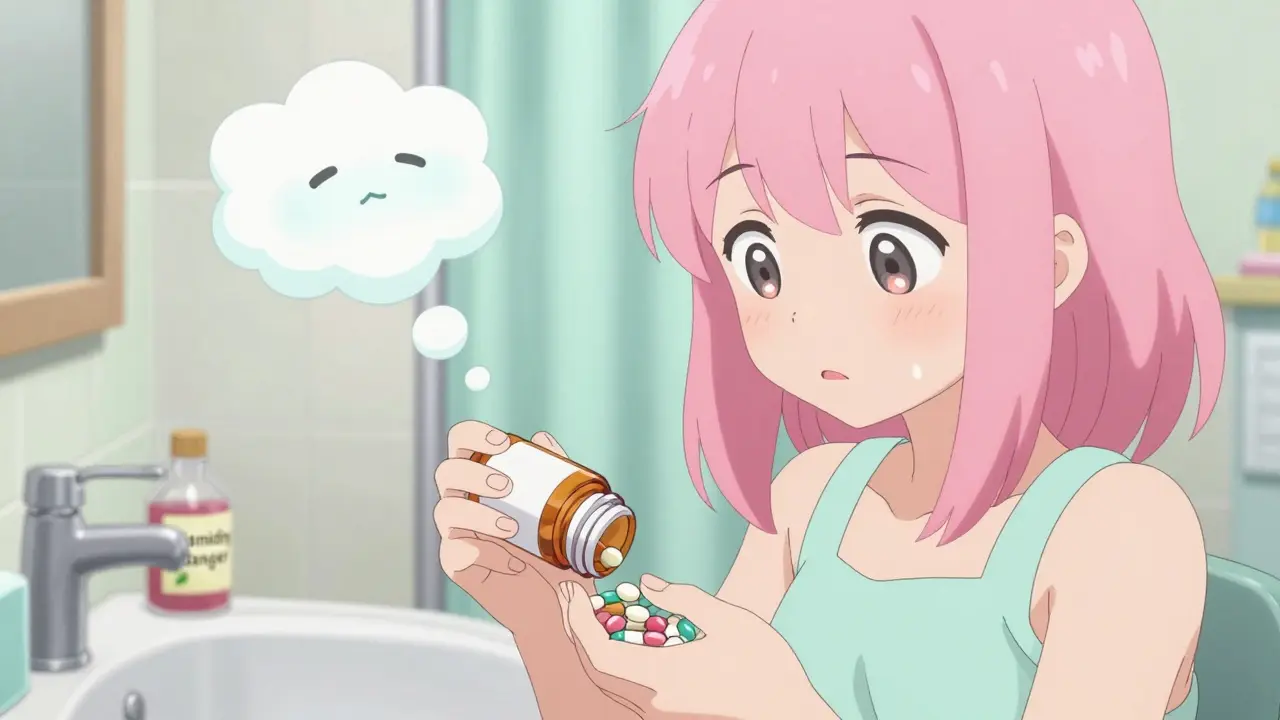
Ever opened a medicine bottle only to find the pills look strange-discolored, sticky, or smelling off? It’s not always bad luck. More often, it’s because the medication wasn’t stored the way it was meant to be. The instructions on the label aren’t just filler text. They’re your best defense against ineffective or even dangerous drugs.
Where to Find Storage Instructions on the Label
Storage directions don’t always show up in the same place, but they’re always there. For over-the-counter medicines like painkillers or allergy pills, look for the Drug Facts label. Scroll past the active ingredients, uses, and warnings. Right at the bottom, you’ll see a section called Other information. That’s where you’ll find it.
For prescription drugs, the label might say Storage Instructions or be tucked into the How Supplied section. Sometimes it’s printed on the bottle’s side or on a separate paper insert. If you’re unsure, check the bottle first, then the box, then the leaflet. Pharmacists say 40% of people miss these details because they’re not bolded or highlighted.
What the Words Actually Mean
Don’t just skim. Read closely. Here’s what common terms mean in real life:
- Store at room temperature - This means between 20°C and 25°C (68°F to 77°F). Not your bathroom. Not your car. A drawer in your bedroom or a kitchen cabinet away from the stove is ideal.
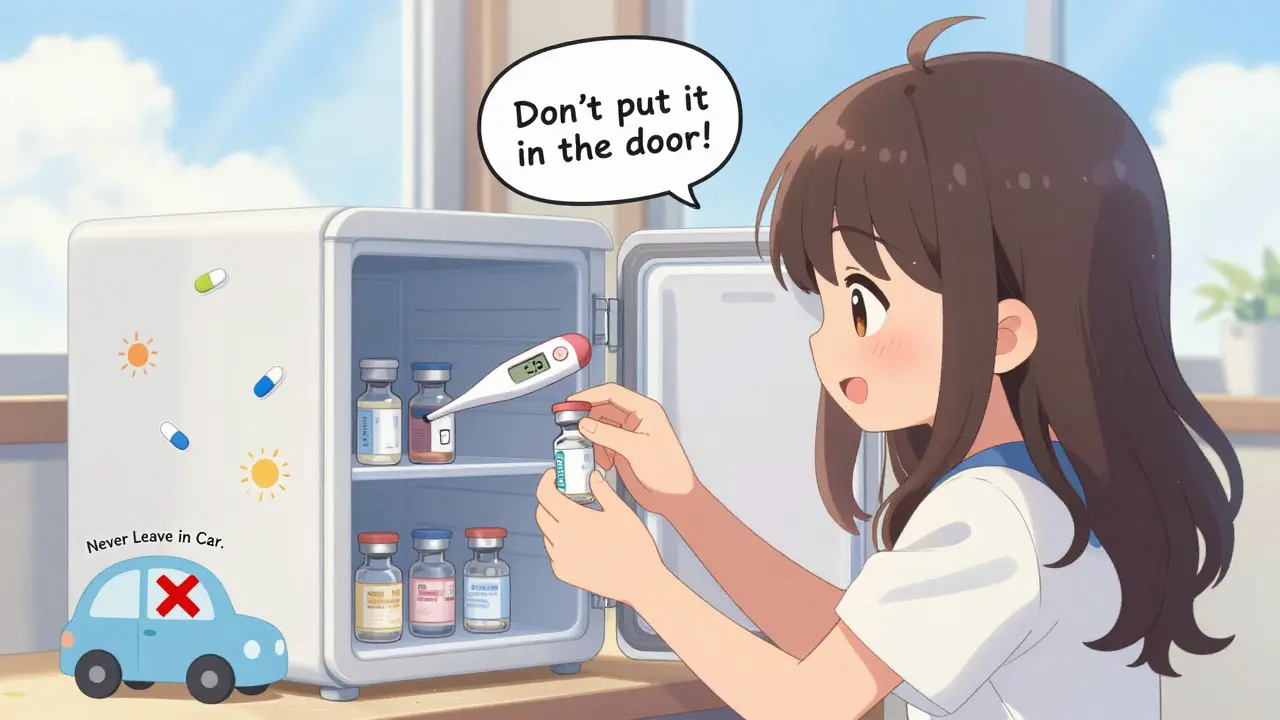
- Refrigerate - Keep it in the fridge, between 2°C and 8°C (36°F to 46°F). But don’t put it in the door. The door gets warm every time you open it. Store it on a shelf inside, where the temperature stays steady.
- Protect from light - Keep it in its original bottle. Don’t transfer it to a clear container. Sunlight and even bright indoor lights can break down some drugs, especially antibiotics and thyroid meds.
- Store in a dry place - Humidity kills. Bathrooms are the worst place for medicine. Steam from showers turns the air into a moisture trap. That’s why your aspirin sometimes cracks or sticks together.
- Avoid freezing - Just because it’s cold doesn’t mean it’s good. Some liquid medications, like insulin or certain antibiotics, can break down if frozen. Even if the bottle doesn’t crack, the medicine inside can become useless.
Why It Matters: What Happens When You Ignore These Rules
Storing medicine wrong doesn’t just make it less effective-it can make it harmful.
Take acetaminophen. If it’s exposed to heat and moisture for too long, it can break down into a toxic compound called NAPQI. That’s the same chemical that causes liver damage in overdose cases. You won’t feel sick right away. But over time, your body is slowly getting hit with low doses of poison.
Insulin? If left in a hot car, it denatures. You’ll still inject it. You’ll still feel like you took your dose. But your blood sugar won’t drop. You could end up in the hospital because you thought you were safe.
Antibiotics like amoxicillin? Once mixed with water, they start to lose strength after 10-14 days-even if refrigerated. If you keep using them past that point, you’re not treating the infection. You’re training bacteria to resist antibiotics.
The FDA reports that storage-related errors contributed to 1.2% of all medication errors between 2020 and 2022. That might sound small, but in a country of 330 million people, that’s tens of thousands of avoidable incidents. Most never get reported.
Common Mistakes People Make (And How to Avoid Them)
Here’s what actually happens in real homes:
- Storing meds in the bathroom - 42% of people do this, according to a 2023 survey by Express Scripts. The humidity from showers turns pills into mush. Move them out.
- Leaving pills in the car - On a 32°C day, the inside of a parked car can hit 60°C in under 30 minutes. That’s hotter than an oven. Even a few hours can ruin insulin, nitroglycerin, or seizure meds.
- Keeping meds in the glove compartment - Same problem as the car. Temperature swings. Sunlight. Dust. Don’t do it.
- Putting everything in one container - If you have one pill that needs refrigeration and another that needs to stay dry, don’t mix them. Use separate containers. Some pharmacies sell small coolers with ice packs for travel.
Here’s what works better:
- Use a locked plastic box on a shelf in your bedroom.
- Buy a small digital thermometer/hygrometer ($15 online) and keep it next to your meds. If humidity goes above 60% or temperature goes above 25°C, it’s time to move them.
- For travel, use a small insulated bag with a reusable ice pack. Keep it in your carry-on, not checked luggage.
Special Cases: Kids, Seniors, and Travel
Children’s medications often have different storage rules than adult versions. A children’s liquid antibiotic might need refrigeration after opening, while the adult tablet form doesn’t. Always check the label-even if you’ve used the same drug before.
Seniors living in homes without air conditioning face real challenges. If your house hits 35°C in summer, your meds might be at risk. Talk to your pharmacist. Ask if there’s a more stable version-like a tablet instead of a liquid-or if you can get a smaller supply more often to avoid long-term exposure to heat.
Traveling across time zones or climates? Pack extra. Keep temperature-sensitive meds in your carry-on. Never check them. Use a small cooler with a temperature indicator strip. These cost less than $10 and show if your medicine got too hot or cold during transit.
When in Doubt, Ask Your Pharmacist
Labels can be confusing. One bottle says “store in a cool place.” Another says “refrigerate.” What’s the difference? What if you’re not sure?
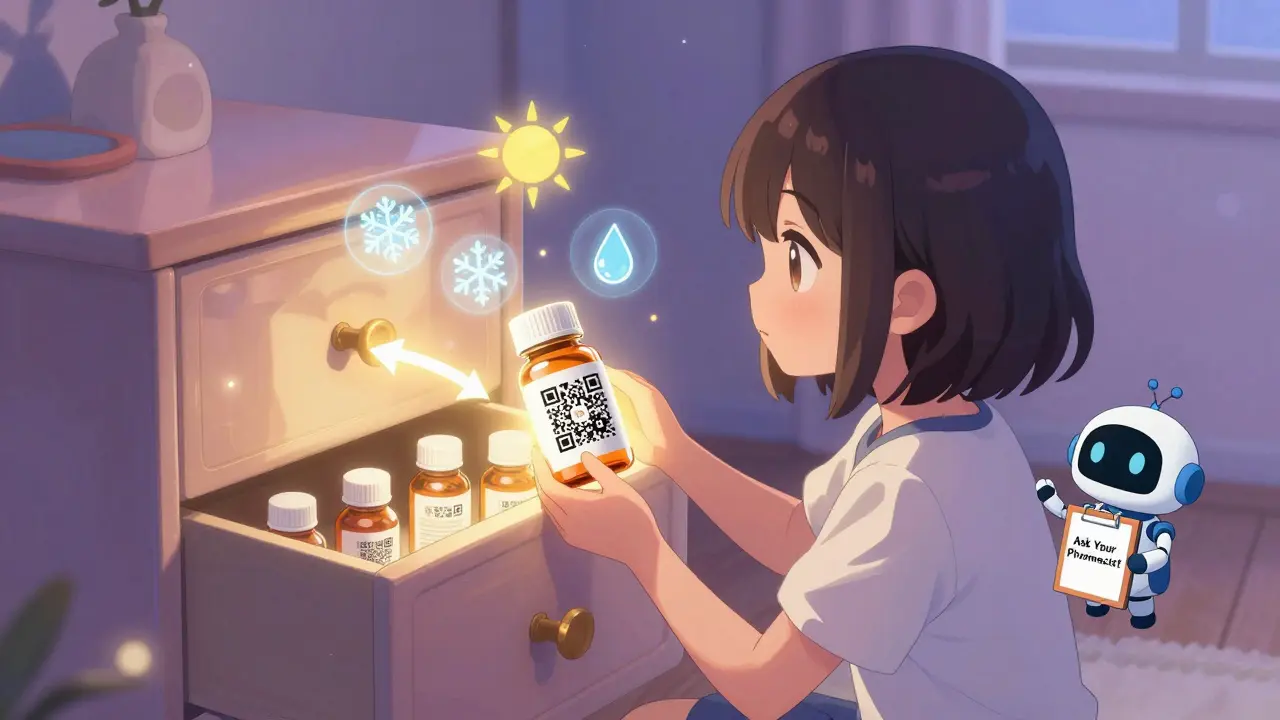
Pharmacists are trained to interpret these instructions. They know how climate, humidity, and packaging affect drugs. If you’re unsure, call them. Don’t guess. Don’t rely on Google. A quick five-minute call can prevent a serious mistake.
Dr. Sarah Thompson, a medication safety specialist at Nationwide Children’s Hospital, says: “If you’re ever unsure about proper storage, ask your pharmacist for specific guidance based on your home environment.”
What’s Changing: The Future of Medication Labels
Labels are getting smarter. By late 2024, CVS and Walgreens are testing QR codes on prescription bottles. Scan one, and you’ll get real-time storage advice based on your location and the current season. If you live in Perth and it’s 38°C outside, the app will tell you to keep your insulin extra cool.
In five years, some high-risk medications-like biologics or chemotherapy drugs-will come with built-in temperature sensors. If the drug got too warm during shipping or storage, the label will change color or flash a warning.
These changes are coming because of data: a 2022 survey found that 31.4% of patients couldn’t tell if their temperature-sensitive meds had been compromised. That’s nearly one in three people taking drugs they think are safe-but might not be.
Proper storage isn’t about being perfect. It’s about being aware. A little attention saves lives.
What happens if I store my medication in the bathroom?
Bathrooms are humid and warm, especially after showers. Moisture can cause pills to break down, stick together, or lose potency. Some medications, like nitroglycerin or insulin, can become ineffective or even dangerous when exposed to humidity. Always store meds in a dry, cool place like a bedroom drawer or kitchen cabinet away from the sink.
Can I leave my medication in the car for a few hours?
No. Even on a mild day, the inside of a car can reach 60°C within 30 minutes. Insulin, antibiotics, and seizure medications can degrade quickly at high temperatures. If you must transport meds in a car, keep them in a cooler with an ice pack and never leave them unattended for long. Always bring them inside with you.
Do all liquid medications need to be refrigerated?
Not all, but many do-especially after being mixed or opened. Liquid antibiotics like amoxicillin, insulin, and some pediatric syrups require refrigeration to stay effective. Check the label. Unopened liquids may be fine at room temperature, but once opened, they often need to be chilled. Most have a short shelf life after opening-usually 7-14 days-so don’t keep them longer than instructed.
What does ‘protect from light’ really mean?
It means keep the medication in its original container. Don’t transfer pills or liquids to clear bottles or jars. Sunlight and even bright indoor lighting can break down chemicals in drugs like tetracycline, warfarin, or certain antidepressants. The original bottle is designed to block harmful light. If you lose the bottle, ask your pharmacist for a new one.
How do I know if my medicine has gone bad?
Look for changes in color, texture, or smell. Pills that are cracked, sticky, or discolored shouldn’t be used. Liquids that are cloudy, have particles, or smell odd are likely degraded. If you’re unsure, don’t take it. Bring it to your pharmacy-they can tell you if it’s still safe. When in doubt, throw it out and get a new supply.
Is it okay to store medications in the fridge if the label doesn’t say to?
No. Refrigerating a medicine that doesn’t require it can cause problems. Some pills absorb moisture from the fridge and break down. Others become too cold and lose effectiveness. Only refrigerate if the label says so. If you’re worried about heat, find a cool, dry spot in your home instead-like a closet or drawer away from windows.
Can I transfer my pills to a pill organizer?
Yes, but only if the medication doesn’t need protection from light or moisture. If your pill says “protect from light” or “store in original container,” keep it in the bottle. Pill organizers expose meds to air and light, which can reduce potency. If you use one, only fill it for a few days at a time and keep the original bottle as backup.
Marian Gilan
January 27, 2026 AT 01:46Conor Murphy
January 28, 2026 AT 09:53Conor Flannelly
January 29, 2026 AT 15:08Patrick Merrell
January 29, 2026 AT 23:19Suresh Kumar Govindan
January 31, 2026 AT 04:30TONY ADAMS
January 31, 2026 AT 12:51George Rahn
February 1, 2026 AT 05:32Karen Droege
February 2, 2026 AT 12:30Kipper Pickens
February 2, 2026 AT 13:16Faisal Mohamed
February 2, 2026 AT 20:52Sally Dalton
February 3, 2026 AT 23:11Betty Bomber
February 5, 2026 AT 09:30Mohammed Rizvi
February 6, 2026 AT 21:49Dan Nichols
February 8, 2026 AT 10:10