

After giving birth, pain is normal - whether you had a vaginal delivery or a C-section. But if you're breastfeeding, choosing the right pain medication isn't just about feeling better. It’s about keeping your baby safe. Many new parents worry that taking any painkiller might harm their baby, but the truth is, most common pain relievers are perfectly safe when used correctly. The key is knowing which ones to take, when to take them, and which ones to avoid entirely.
What Pain Medications Are Safe While Breastfeeding?
The two safest options for postpartum pain are ibuprofen and acetaminophen. These are the first-line recommendations from the American College of Obstetricians and Gynecologists (ACOG), the Academy of Breastfeeding Medicine, and the InfantRisk Center. Both pass into breast milk in tiny amounts - less than 1% of the mother’s dose - and have been studied for decades in nursing mothers.
Ibuprofen transfers at about 0.6-0.7% of the maternal dose, peaking in milk 1-2 hours after taking it. Acetaminophen is even lower, at 0.1-1.0%. Neither affects milk supply. You can take them on a regular schedule without worrying about interrupting feeding times. In fact, many hospitals now recommend alternating them every 3 hours for better pain control after a C-section, especially in the first 24 hours.
For example, if you had a surgical delivery, you might get a dose of Toradol (ketorolac) via IV right after birth. That’s fine. Then, once you’re home, switch to oral ibuprofen and acetaminophen. You don’t need to stop breastfeeding. You don’t need to pump and dump. The idea that you should discard breast milk after taking pain meds is outdated and unsupported by current science.
Which Pain Medications Should You Avoid?
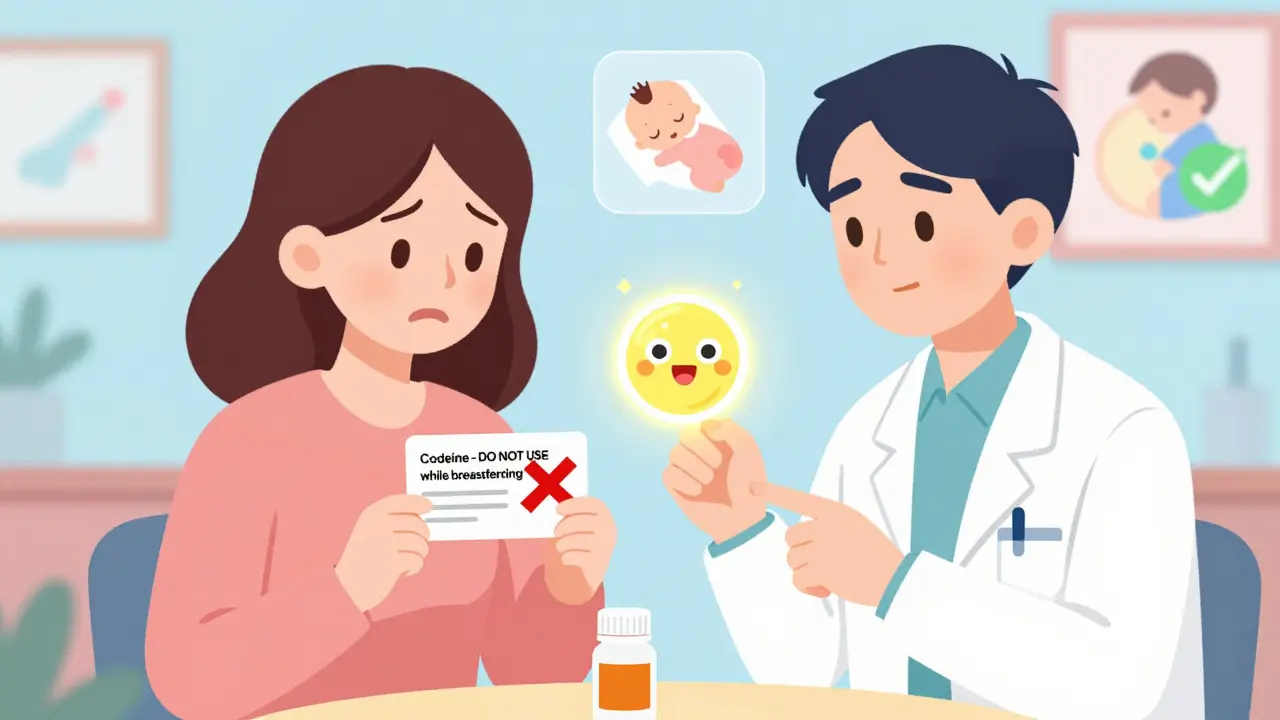
Some medications are not just risky - they can be deadly for your baby. The FDA issued strong warnings in 2017 and 2018 against using codeine and tramadol while breastfeeding. Why? Because a small number of mothers - about 1 in 100 - are ultra-rapid metabolizers. Their bodies turn these drugs into morphine or M1 (a powerful opioid metabolite) too quickly. That means your breast milk can suddenly contain dangerously high levels of opioids.
Infants exposed to these high levels can become excessively sleepy, have trouble latching, stop breathing, or even die. There are documented cases of healthy babies dying after their mothers took standard doses of codeine for postpartum pain. And here’s the worst part: you won’t know if you’re an ultra-rapid metabolizer unless you get genetic testing. Most doctors don’t test for it. So the safest choice is to avoid these drugs completely.
Other opioids like hydrocodone, oxycodone, and morphine can be used cautiously - but only if needed. Morphine is the safest opioid option because babies absorb very little of it from breast milk (only 0.5-1% of the dose). Even then, it should be used for no more than 4-6 days. Oxycodone transfers at 0.1-0.5% of the maternal dose and carries a risk of infant drowsiness. If you need an opioid, talk to your doctor about using the lowest effective dose for the shortest time possible.
How to Time Your Doses for Maximum Safety
If you’re taking an opioid like morphine or oxycodone, timing matters. Don’t take it right before feeding. Instead, take it right after you nurse. That way, your blood and milk levels are highest right after feeding - and they drop before the next one. For most opioids, peak levels in breast milk happen 1-2 hours after you take the pill. So if you feed your baby at 8 p.m., take your pain med at 9 p.m. Then wait until 11 p.m. or midnight to feed again.
For non-opioid pain relievers like ibuprofen and acetaminophen, timing isn’t as critical. You can take them anytime. Many moms find it easiest to take them with meals or right after a feeding, just to build a routine. You don’t need to wait or pump. Just feed normally.
Also, never combine multiple opioids. If you’re prescribed oxycodone for breakthrough pain, don’t also take tramadol or codeine. Even if you think you’re being careful, mixing opioids increases the risk of respiratory depression in your baby.
Watch for Warning Signs in Your Baby
If you’re using any opioid - even one considered relatively safe like morphine - keep an eye on your baby. Signs of opioid sedation include:
- Excessive sleepiness - harder to wake for feeds
- Difficulty latching or sucking
- Slow or shallow breathing
- Unusual fussiness or limpness
- Constipation or poor feeding
These signs can appear within hours - or sometimes take a day or two. That’s why the Breastfeeding Network advises monitoring your baby for 24 hours after each new opioid dose. If you notice any of these signs, stop the medication and contact your pediatrician immediately. Don’t wait. Don’t assume it’s just a sleepy newborn. Opioid overdose in infants can happen fast.
For non-opioid meds like ibuprofen or acetaminophen, you don’t need to monitor for side effects. There’s no evidence of harm at normal doses. Your baby is far more likely to be affected by lack of sleep, stress, or dehydration than by these medications.
What About Naproxen or Other NSAIDs?
Naproxen and indomethacin are NSAIDs like ibuprofen, but they’re not recommended for breastfeeding moms. Why? Because they stay in your system longer. Naproxen reaches concentrations of 1.5-2.0% of the maternal dose in breast milk after 24 hours. That’s significantly higher than ibuprofen. And for newborns or premature babies, that extra exposure can be risky.
Indomethacin has been linked to kidney problems and bleeding in infants. The Breastfeeding Network specifically advises against both drugs for new mothers, especially in the first few weeks. Stick with ibuprofen. It’s faster clearing, better studied, and safer.

What If You Accidentally Took Codeine or Tramadol?
If you took a single dose of codeine or tramadol before realizing it’s unsafe, don’t panic. Stop taking it immediately. Watch your baby closely for the next 24-48 hours. Look for signs of drowsiness, poor feeding, or breathing issues. If your baby seems fine, you’re probably okay. But don’t take another dose. And talk to your doctor about switching to a safer alternative.
For future prescriptions, always say: “I’m breastfeeding. Can you prescribe something that’s safe for my baby?” Most doctors know the guidelines now. But if they suggest codeine or tramadol, push back. Say: “I’ve read the FDA warnings. I need a safer option.”
What About Natural Pain Relief?
Heat packs, cold packs, massage, and proper positioning can help reduce pain without medication. After a C-section, using a pillow to support your incision when you cough or laugh makes a big difference. For perineal pain, sitz baths and witch hazel pads work well. Pelvic floor physical therapy can also help with long-term recovery.
But don’t rely on these alone if you’re in severe pain. Untreated pain can make it harder to bond with your baby, disrupt sleep, and even increase your risk of postpartum depression. Medication isn’t a weakness - it’s part of healing.
What’s the Bottom Line?
Here’s what you need to remember:
- Use ibuprofen and acetaminophen first. They’re safe, effective, and don’t require pumping or timing.
- Avoid codeine and tramadol completely. The risks to your baby are real and unpredictable.
- If you need an opioid, use morphine or oxycodone sparingly. Take it right after feeding, and only for a few days.
- Watch your baby for drowsiness, poor feeding, or breathing changes. Especially after opioids.
- Don’t pump and dump. Breast milk after anesthesia or most pain meds is safe. Stopping breastfeeding does more harm than good.
You’re not alone in this. Thousands of mothers manage postpartum pain safely every day while breastfeeding. The goal isn’t to suffer in silence. It’s to heal - and to keep your baby safe at the same time. With the right information, you can do both.
Can I take ibuprofen while breastfeeding?
Yes, ibuprofen is considered one of the safest pain relievers for breastfeeding mothers. Only about 0.6-0.7% of the maternal dose passes into breast milk, and it doesn’t affect milk supply or infant health at standard doses. It’s recommended as a first-line option by the American College of Obstetricians and Gynecologists and the Academy of Breastfeeding Medicine.
Is acetaminophen safe for breastfeeding moms?
Yes, acetaminophen is safe and widely recommended. It transfers into breast milk at levels of 0.1-1.0% of the maternal dose and has no known negative effects on infants. It’s often used alongside ibuprofen for better pain control after delivery, especially after a C-section.
Why is codeine dangerous while breastfeeding?
Codeine is converted by the body into morphine. Some mothers are ultra-rapid metabolizers - meaning they turn codeine into morphine much faster than average. This can cause dangerously high levels of morphine in breast milk, leading to life-threatening breathing problems or excessive sleepiness in infants. The FDA has issued strong warnings against codeine use during breastfeeding due to multiple infant deaths linked to this issue.
Can I take tramadol while breastfeeding?
No, tramadol is not recommended while breastfeeding. Like codeine, it’s metabolized into an active opioid compound (M1) that can reach unsafe levels in breast milk. The FDA has warned that tramadol can cause respiratory depression and even death in nursing infants, even when the mother takes the standard dose. Avoid it entirely.
Should I pump and dump after taking pain meds?
No, you do not need to pump and dump after taking ibuprofen, acetaminophen, or even most opioids like morphine. The amount of medication in breast milk is too low to harm your baby. Pumping and dumping doesn’t make your milk safer - it just reduces your supply. The Academy of Breastfeeding Medicine removed all pump-and-dump recommendations in 2021 after reviewing 15 years of evidence.
What should I do if my baby seems too sleepy after I take pain meds?
If your baby is unusually sleepy, difficult to wake for feeds, or has slow or shallow breathing, stop the medication immediately and contact your pediatrician or go to the emergency room. These could be signs of opioid overdose. Even if you’re taking a medication considered safe, every baby reacts differently - especially in the first weeks of life. Don’t wait.
Are there any pain meds I should avoid besides codeine and tramadol?
Yes. Naproxen and indomethacin are NSAIDs that stay in your system longer and reach higher levels in breast milk than ibuprofen. They’re not recommended for new mothers, especially if your baby is premature or under 2 months old. Stick with ibuprofen for NSAID pain relief.
How long should I use opioids after delivery?
Opioids should be used for the shortest time possible - ideally no more than 4-6 days. After that, most postpartum pain can be managed with ibuprofen and acetaminophen alone. If you’re still in significant pain after a week, talk to your doctor about other causes, like infection or pelvic floor issues, rather than continuing opioids.
Kuldipsinh Rathod
December 26, 2025 AT 06:45I was so scared to take anything after my C-section, but this post changed everything. I took ibuprofen like it was candy and my baby was fine. No pumping, no panic. Just feeding and healing.
SHAKTI BHARDWAJ
December 26, 2025 AT 08:19OMG I TOOK CODEINE FOR 3 DAYS AND MY BABY WAS SO SLEEPY I THOUGHT SHE WAS DEAD 😭😭😭 MY DOCTOR SAID IT WAS FINE BUT NOW I KNOW SHE COULD’VE DIED AND I DIDN’T EVEN KNOW WHAT ULTRA-RAPID METABOLIZER MEANS 😭😭😭
Matthew Ingersoll
December 28, 2025 AT 04:10The science here is rock solid. ACOG, ABM, InfantRisk - all aligned. The fact that we’re still seeing moms avoid ibuprofen because of myths is a failure of medical communication, not a failure of the meds.
carissa projo
December 29, 2025 AT 17:37Healing isn’t selfish. It’s sacred. You’re not just a mom - you’re a human who just gave birth, and your pain matters. The guilt we carry about taking meds? That’s not wisdom. That’s patriarchy in a hospital gown. Take the ibuprofen. Rest. Cry if you need to. Your baby needs you alive, not stoic.
josue robert figueroa salazar
December 30, 2025 AT 01:47Tramadol kills babies. Stop it. End of story.
david jackson
December 31, 2025 AT 04:28I didn’t realize how much fear was built into the whole postpartum experience until I read this. It’s not just about the meds - it’s about being told you’re being selfish for wanting to feel better. Like your body’s betrayal after birth isn’t enough. Then you’re handed a pill and told to feel guilty for taking it. This article doesn’t just inform - it liberates. I cried reading the part about not pumping and dumping. I’d been doing it for weeks. For what? For nothing. I’m done.
Jody Kennedy
December 31, 2025 AT 15:00YES. YES. YES. I took ibuprofen every 6 hours after my VBAC and still breastfed like a champ. No drama. No fear. Just mom energy. You don’t need to suffer to be a good mom. You need to heal. Go get that pain under control.
christian ebongue
January 2, 2026 AT 04:52So if I take oxycodone after feeding, my baby’s fine… but if I take it before, I’m basically giving them a sedative? Cool. So the real enemy here isn’t the drug - it’s my own damn timing. Thanks for making me feel like a scientist now.
jesse chen
January 3, 2026 AT 20:23I just want to say thank you to whoever wrote this. I had a C-section, took tramadol because my OB said it was fine, and my baby had trouble latching for days. I felt so guilty. Then I found this. I’m not blaming anyone - I just wish someone had told me this before. Please, if you’re reading this and you’re new to this - trust the science. Don’t trust the outdated advice.
Joanne Smith
January 5, 2026 AT 15:37Naproxen is the silent killer of breastfeeding moms who don’t read the fine print. I took it for my back pain - thought it was just "another NSAID" - and my 3-week-old got constipated to the point of needing a glycerin suppository. I didn’t know. Now I do. Ibuprofen is the MVP. Naproxen? Pass.
Zina Constantin
January 6, 2026 AT 04:05As a nurse who’s worked in L&D for 18 years, I’ve seen too many mothers told to "just push through" or "pump and dump" for no reason. This is the most accurate, compassionate, evidence-based guide I’ve read in years. Share it. Save a baby. Save a mom.
Michael Bond
January 8, 2026 AT 04:01Thank you. I needed this.