
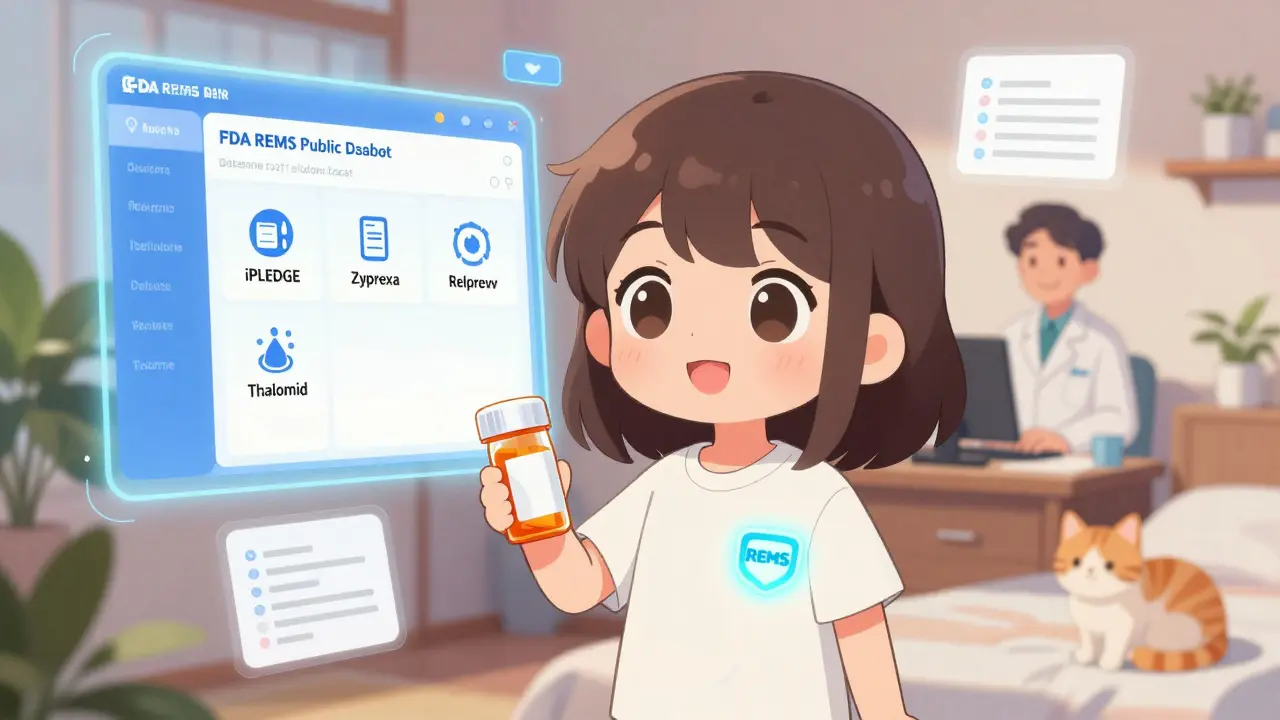
Before you start a new medication, especially one that carries serious risks, you need to know if it’s under a REMS program. REMS stands for Risk Evaluation and Mitigation Strategy. It’s not just paperwork. It’s a safety system built by the U.S. Food and Drug Administration (FDA) to make sure the benefits of certain drugs outweigh their dangers. If you skip checking REMS requirements, you could face delays, missed doses, or even life-threatening side effects.
What Is a REMS Program and Why Does It Matter?
REMS programs were created after the FDA gained authority under the Food and Drug Administration Amendments Act of 2007. They’re not optional. If a drug has a high risk-like causing birth defects, severe liver damage, or sudden death-the FDA requires a REMS before it can be sold. As of 2025, there are 76 active REMS programs in the U.S. covering everything from acne medicine to opioid painkillers.
Think of REMS like a safety lock on a powerful tool. You can still use it, but only if you’ve been trained, registered, or followed specific steps. For example, isotretinoin (Accutane) can cause severe birth defects. The iPLEDGE REMS program requires both the prescriber and the patient to register online before a prescription can be filled. Without that step, the pharmacy won’t dispense the drug.
Some REMS are simple. Others are complex. A few drugs, like Zyprexa Relprevv, can only be given in certified clinics where staff can watch you for hours after injection. Others require blood tests, regular check-ins, or mandatory training for doctors. Skipping these steps isn’t just a paperwork issue-it’s a safety risk.
How to Find Out If Your Medication Has a REMS
The first place to look is the medication’s official prescribing information. Every FDA-approved drug has a detailed document called the Prescribing Information (PI), which is available on DailyMed or the drug manufacturer’s website. Look for a section titled “REMS” or “Risk Evaluation and Mitigation Strategy.” If it’s there, the requirements are listed clearly.
But not everyone reads the PI. That’s why the FDA created the REMS Public Dashboard. It’s a free, searchable database where you can type in a drug name and instantly see:
- Whether a REMS is required
- What elements are included (like prescriber certification or patient registries)
- Whether the REMS has been modified recently
- Links to the official REMS program website
The dashboard was updated in March 2023 to show real-time data. But be aware: some updates can be delayed by up to two weeks. If you’re in a hurry, don’t rely on it alone.
Three Steps to Verify REMS Requirements Before Prescribing
Healthcare providers and patients should follow a simple three-step process every time a new medication is prescribed:
- Check the label and packaging. Look for the words “REMS” or “Medication Guide.” All REMS drugs must come with a printed guide for patients. If it’s missing, ask why.
- Search the FDA REMS Public Dashboard. Enter the brand or generic name. If a REMS is active, note the specific requirements-like whether you need to enroll in a registry or complete training.
- Confirm with the pharmacy or manufacturer. Call the pharmacy that will fill the prescription. Ask: “Does this drug require REMS enrollment?” Pharmacists are required to verify REMS compliance before dispensing. Some manufacturers also have dedicated REMS support lines. For example, the iPLEDGE program has its own website (ipleDGEprogram.com) with step-by-step instructions for patients and providers.
According to the Institute for Safe Medication Practices (ISMP), this three-step check reduces errors by over 80%. It’s not just good practice-it’s the standard.
Common REMS Programs You Should Know
Not all REMS are the same. Here are a few you’re likely to encounter:
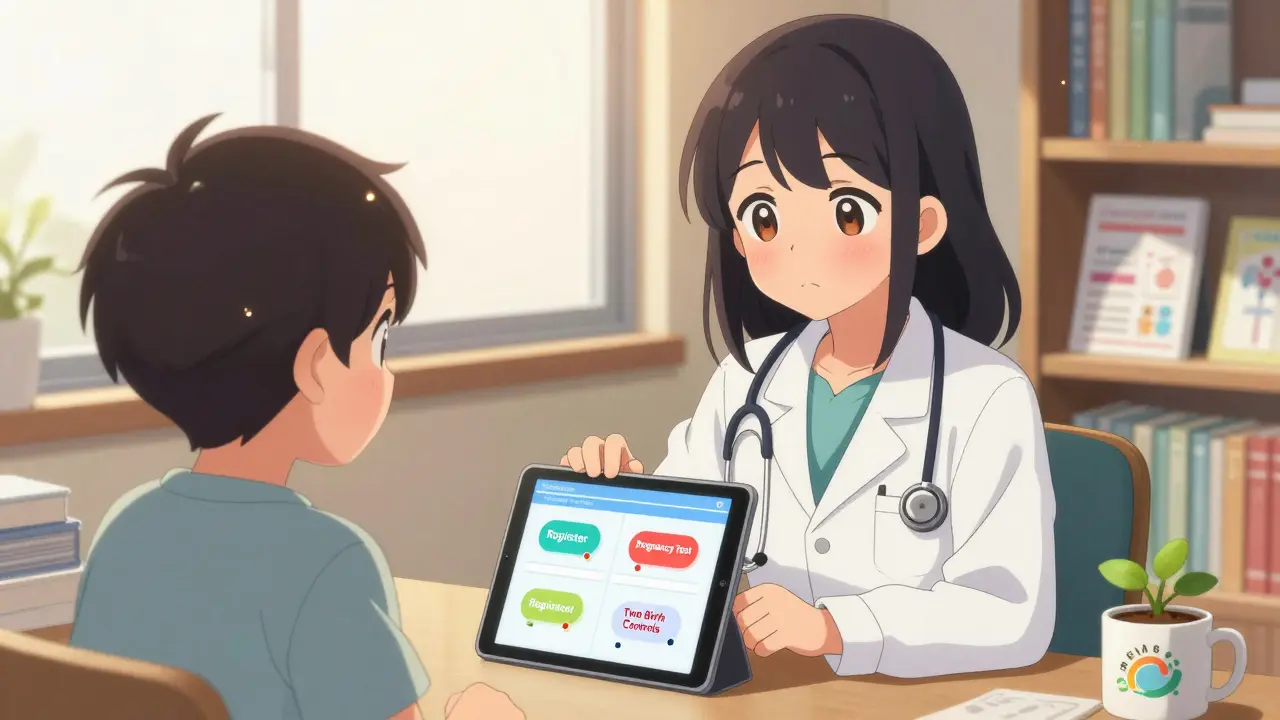
- iPLEDGE (isotretinoin): Requires online registration for both prescriber and patient. Female patients must use two forms of birth control and take monthly pregnancy tests.
- Opioid Analgesic REMS: Focuses on education. Prescribers must complete accredited training on safe opioid prescribing. No certification needed, but records must be kept.
- Mycophenolate REMS: For transplant patients. Requires pregnancy testing and counseling for women of childbearing age due to high risk of miscarriage and birth defects.
- Thalidomide (Thalomid): Requires prescriber and pharmacist certification. Patients must sign acknowledgment forms and enroll in a registry. This drug caused thousands of birth defects in the 1950s-REMS prevents history from repeating.
- Zyprexa Relprevv: Must be administered in certified clinics. Patients are monitored for at least three hours after injection due to risk of sudden sedation or delirium.
If you’re prescribed any of these, don’t assume your doctor already handled the REMS. Ask: “Do I need to sign up for anything?”
What Happens If You Skip REMS Requirements?
Pharmacies won’t fill REMS drugs without proper verification. You might show up to pick up your prescription only to be told, “We can’t dispense this until you complete the enrollment.” That can mean a delay of days-or even weeks.
A 2022 survey by the National Organization for Rare Disorders found that 42% of patients on REMS medications experienced treatment delays. The average delay? Six and a half business days. For someone with a life-threatening condition, that’s critical.
Some patients report confusion. One user on PatientsLikeMe said the Medication Guide for Vyvanse was “helpful but overwhelming,” filled with technical language. Others say their doctors didn’t explain REMS at all. That’s why it’s your job to ask.
And it’s not just patients. Doctors report spending an extra 12.7 minutes per REMS prescription just on paperwork. A 2019 AMA survey found 68% of physicians felt REMS slowed down care. But the FDA has responded-37% of REMS programs have been simplified since 2015 to cut unnecessary steps.
What Patients and Providers Can Do Now
If you’re a patient:
- Ask your doctor: “Does this drug have a REMS?”
- Check the FDA REMS Public Dashboard before your appointment.
- Keep a printed copy of your REMS enrollment confirmation.
- Don’t assume your pharmacy knows-call them ahead of time.
If you’re a provider:
- Build REMS checks into your standard workflow. Use a checklist.
- Allocate 8-12 minutes per new REMS prescription for verification.
- Complete accredited training if required-many are free and count for continuing education credits.
- Keep records for at least 10 years. The FDA audits them.
Pharmacists are on the front lines. Many clinics now use automated REMS checklists that cut processing time from 45 minutes to 15 minutes. That’s a win for everyone.
What’s Changing in REMS in 2025?
The FDA is pushing for modernization. In April 2023, they required all new REMS programs to include smartphone-accessible tools. That means you’ll soon be able to complete training, enroll in registries, or check your status right from your phone.
Pharmacy benefit managers (PBMs) are also integrating REMS checks into electronic prescribing systems. If your doctor e-prescribes, the system might flag a REMS requirement before the prescription even leaves the office.
Looking ahead, experts predict 25% more REMS programs over the next five years, especially for gene therapies and biologics. Blockchain technology may be used by 2026 to make verification faster and more secure.
But the goal hasn’t changed: keep dangerous drugs out of the wrong hands, while still letting patients who need them get access. REMS isn’t perfect-but it’s the best system we have.
Frequently Asked Questions
Do all high-risk medications have a REMS program?
No. Only medications with serious, identifiable risks that could be reduced through specific controls are required to have a REMS. The FDA evaluates each drug individually. For example, common blood pressure medications don’t need REMS, but drugs that cause birth defects, severe infections, or sudden death often do. As of 2025, about 15-20% of newly approved drugs require a REMS.
Can I get a REMS medication without enrolling in the program?
No. Pharmacies are legally required to verify REMS compliance before dispensing. If you haven’t completed the required steps-like registering in a patient registry or completing prescriber training-the pharmacy will not fill the prescription. This is not optional. Skipping it puts you and others at risk.
Are REMS programs only for prescription drugs?
Yes. REMS programs apply only to prescription medications approved by the FDA. Over-the-counter drugs, supplements, and vitamins are not subject to REMS. However, some OTC products have their own safety warnings or restricted distribution systems-but those are separate from FDA REMS.
How long does REMS enrollment take?
It varies. For simple programs like the Opioid Analgesic REMS, training takes about 1-2 hours and can be done online in one sitting. For programs like iPLEDGE or thalidomide, enrollment can take 15-30 minutes just to complete forms, plus additional time for training or testing. Some require monthly pregnancy tests or lab work, which adds days. Plan ahead-don’t wait until your prescription is ready.
Do REMS requirements change over time?
Yes. The FDA reviews all REMS programs every five years and often modifies them. Between 2015 and 2020, 37% of REMS were changed to reduce burden without lowering safety. In 2022 alone, 14 programs were simplified. Always check the FDA REMS Public Dashboard before starting a new course of treatment-even if you’ve taken the drug before.
What if I can’t complete REMS requirements because of cost or access?
Some REMS programs offer financial assistance or patient support services. For example, the iPLEDGE program provides free pregnancy tests and counseling. Many manufacturers have patient assistance programs to help with training, travel, or lab costs. Contact the REMS program directly or ask your pharmacist-they often have contact info for support teams. If you’re struggling, don’t give up-reach out. Many people have faced the same issue and found solutions.
Next Steps
If you’re about to start a new medication:
- Write down the drug’s name-brand and generic.
- Go to fda.gov/rems and search for it.
- Call your pharmacy and ask: “Does this drug require a REMS? What do I need to do?”
- Set a reminder to complete any training or registration at least 3-5 days before your prescription is due.
If you’re a provider, add REMS verification to your checklist for every new prescription. It’s one of the most important safety steps you can take.
REMS isn’t about bureaucracy. It’s about making sure the right person gets the right drug, safely. Taking a few extra minutes now can prevent months of harm later.
Branden Temew
January 1, 2026 AT 16:17Hanna Spittel
January 2, 2026 AT 19:35Brady K.
January 3, 2026 AT 04:24Kayla Kliphardt
January 3, 2026 AT 20:42Urvi Patel
January 4, 2026 AT 00:14anggit marga
January 5, 2026 AT 00:51Emma Hooper
January 6, 2026 AT 15:00Marilyn Ferrera
January 8, 2026 AT 09:36Robb Rice
January 9, 2026 AT 05:25Harriet Hollingsworth
January 10, 2026 AT 15:09Deepika D
January 10, 2026 AT 15:09