
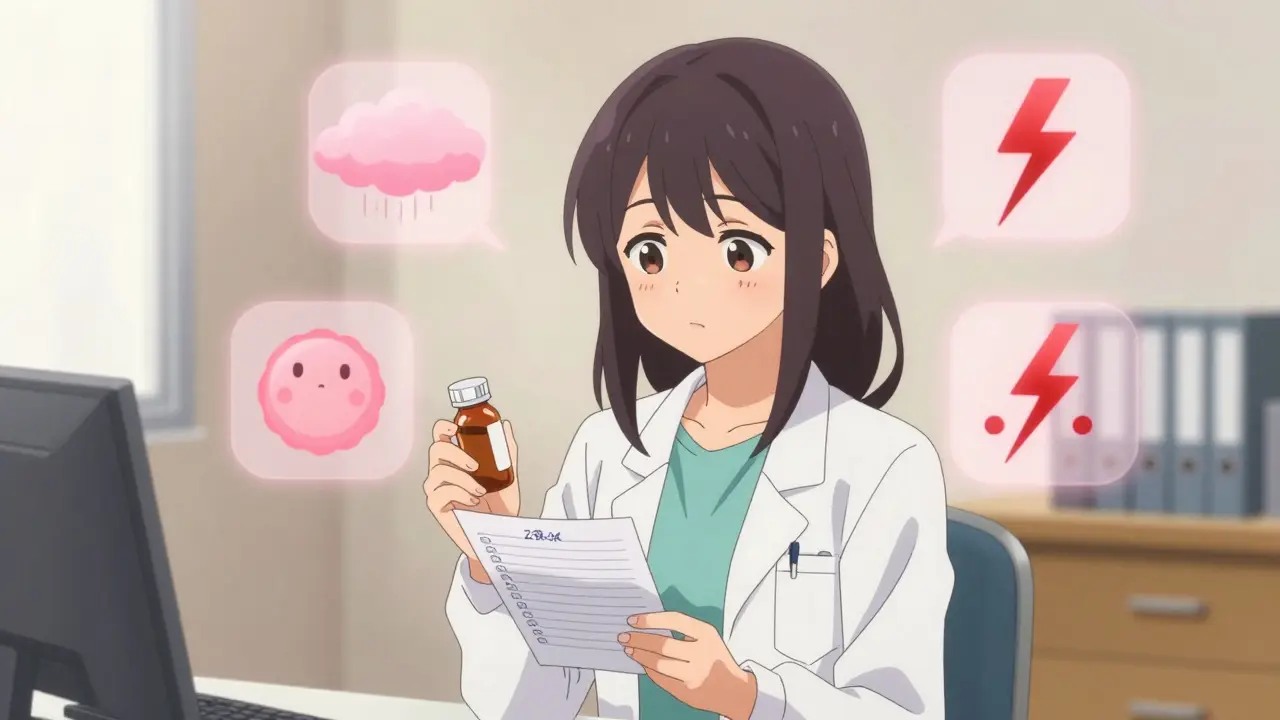
When you start a new medication, it’s normal to feel unsure about what’s happening in your body. Maybe you feel a little nauseous after taking your pill. Or your skin itches a bit. You wonder: Is this a side effect, or could it be something more serious-an allergic reaction?
Too many people mix these two up. And that mistake can cost you. It can lead to avoiding medicines that actually work, getting stronger antibiotics you don’t need, or even delaying treatment because you’re afraid to speak up. The good news? You don’t have to guess. You can learn how to tell the difference-and how to talk about it clearly with your doctor, pharmacist, or nurse.
Side Effects and Allergies Are Not the Same
Side effects are predictable. They happen because the drug affects more than just the target in your body. For example, statins can cause muscle aches. Antibiotics like amoxicillin often lead to stomach upset. These aren’t rare. In fact, 15-30% of people taking NSAIDs like ibuprofen get mild stomach irritation. About half of people who take diphenhydramine (Benadryl) feel drowsy. These aren’t signs your body is under attack. They’re just side effects-and they often fade after a few days or weeks as your body adjusts.
Allergic reactions are different. They’re your immune system overreacting. It doesn’t matter how much of the drug you take-even a tiny amount can trigger it. Symptoms like hives, swelling of the lips or throat, trouble breathing, or a sudden drop in blood pressure are red flags. These aren’t side effects. These are allergic reactions. And they need immediate attention.
Here’s the scary part: about 70% of people who say they’re allergic to penicillin aren’t. They had a rash or stomach upset years ago and labeled it an allergy. But studies show 90% of those people can safely take penicillin today after proper testing. Mislabeling leads to worse antibiotics being used-drugs that increase antibiotic resistance and raise your risk of infections like C. diff. That’s why knowing the difference matters.
How to Spot the Difference
Timing matters. Side effects usually show up within hours or a few days after starting the drug. They might get worse at first, then slowly fade. If you took your blood pressure pill on Monday and felt dizzy on Tuesday, that’s likely a side effect. If the dizziness went away by Friday, even better-it’s probably your body adapting.
Allergic reactions? They come fast. Within minutes to a couple of hours after taking the drug. And they don’t get better on their own. If you break out in hives after your first dose of amoxicillin, or your tongue swells up, that’s not something you wait out. That’s an emergency.
Symptoms help too. Side effects are usually mild and internal: nausea, headache, fatigue, dry mouth, dizziness. Allergic reactions show up on your skin or in your airways: rash, itching, swelling, wheezing, tight chest. Anaphylaxis-the most severe allergic reaction-can cause vomiting, fainting, or loss of consciousness. If you’ve ever had one of these, you need to tell your care team right away.
What to Say Before Your Appointment
Don’t walk into your appointment hoping you’ll remember what happened. Memory is unreliable. People forget details. They say, “I felt weird,” or “I didn’t feel right.” That’s too vague. Providers need specifics.
Start by writing down what happened. Use a simple log: date, time you took the medication, what you felt, how bad it was (on a scale of 1-10), and whether it got better or worse over time. If you skipped a dose and the symptom went away? Note that. If it came back when you took it again? That’s a clue.
Bring your medication bottles. Not just a list-actual bottles. That way, your provider can see the exact name, dose, and manufacturer. Verbal descriptions lead to mistakes. Seeing the label cuts down confusion by nearly 30%.
Use the S.O.A.P. method to organize your thoughts:
- Subjective: “I felt a rash on my arms after taking the pill.”
- Objective: “It started 2 hours after I took it. It itched but didn’t hurt. I didn’t have trouble breathing.”
- Assessment: “I think this might be an allergic reaction, but I’m not sure.”
- Plan: “Can we check if this is a side effect or allergy? Are there alternatives?”
This structure helps your provider understand faster. A Johns Hopkins study found that using S.O.A.P. improved communication accuracy by 41%.

Questions to Ask Your Care Team
Don’t be shy. Ask these questions directly. They’re not too much. They’re necessary.
- “What are the most common side effects of this medication? How many people get them?”
- “What symptoms would mean this is an allergic reaction, not just a side effect?”
- “Could this symptom be related to the drug? Or is it something else?”
- “If this is an allergy, are there other medications in a different class I could take?”
- “Should I get tested for a true allergy? Especially if it’s penicillin or another common drug.”
These aren’t dumb questions. They’re smart ones. Dr. Adriane Fugh-Berman from Georgetown says patients who ask these exact questions reduce mislabeling by 45%. That’s huge.
What Happens After You Speak Up
Good providers will listen. They’ll check your history. They might suggest stopping the drug temporarily to see if symptoms clear. Or they might refer you to an allergist for skin or blood testing. For penicillin, a simple skin test can confirm or rule out a true allergy in under an hour.
If it’s a side effect, they might adjust your dose, suggest taking it with food, or switch you to a similar drug with fewer side effects. For example, if you get stomach upset from ibuprofen, they might recommend naproxen or celecoxib instead. If drowsiness is a problem with an antihistamine, they might switch you to loratadine or cetirizine, which are less sedating.
And if it’s a true allergy? They’ll update your records. They’ll make sure your pharmacy and any future providers know. You’ll get an alert in your medical file. That’s how you stay safe.

Why This Matters Beyond You
When you mislabel a side effect as an allergy, it doesn’t just affect you. It affects everyone. You’re more likely to get broad-spectrum antibiotics, which kill off good bacteria and help resistant superbugs grow. The CDC says this contributes to 1.3 million emergency visits every year in the U.S. alone.
And it costs money. A 2023 analysis found that incorrect allergy labels add $1,200 to $2,500 per person each year in extra tests, drugs, and hospital visits. Hospitals are now using electronic alerts to catch these errors. But those alerts only work if your records are accurate.
By learning to tell the difference and speaking up clearly, you’re not just protecting yourself. You’re helping reduce unnecessary antibiotic use, lower healthcare costs, and fight antimicrobial resistance.
Tools That Help
You don’t have to do this alone. There are tools built to make it easier.
The American Pharmacists Association launched the Medication Reaction Tracker app in January 2023. It walks you through questions like: “Did the symptom start within 24 hours?” “Did it go away when you stopped the drug?” “Was there swelling or breathing trouble?” Based on your answers, it tells you whether it’s likely a side effect or possible allergy. Over 87,000 people have downloaded it.
The FDA now requires patient medication guides to clearly separate side effects from allergic reaction symptoms. If you’re prescribed a new drug, read the guide. It’s written for you-not for doctors.
And if you’ve been told you’re allergic to penicillin but never got tested? Ask for a referral. You might be able to take it safely. And that opens up better, cheaper, more effective treatment options.
Final Tip: Don’t Wait
Too many people wait days-sometimes weeks-to mention a symptom. They think it’s not serious. Or they’re embarrassed. Or they assume the doctor will ask.
Don’t do that. If you feel something unusual after starting a new medication, speak up within 24-48 hours. Write it down. Bring the bottle. Ask the questions. The more specific you are, the better your care will be.
You know your body better than anyone. Your job isn’t to diagnose. Your job is to describe. And when you do that clearly, your care team can help you stay safe-and get the right treatment.
How do I know if my rash is a side effect or an allergic reaction?
A side effect rash usually appears gradually, may be mild, and often improves over time-even if you keep taking the medication. An allergic rash, like hives, shows up quickly-within minutes to hours-and is often itchy, raised, and may spread. If you also have swelling, trouble breathing, or dizziness, it’s likely an allergic reaction and needs immediate attention. Track when the rash started relative to your dose and whether it gets worse with each dose.
Can I outgrow a drug allergy?
Yes, especially with penicillin. About 90% of people who believe they’re allergic to penicillin are not truly allergic after proper testing. Allergies can fade over time, especially if you haven’t taken the drug in years. But don’t assume you’ve outgrown it-get tested by an allergist before trying it again.
What if my doctor dismisses my symptoms?
If your concerns aren’t taken seriously, ask for a second opinion or request a referral to a pharmacist or allergist. You have the right to be heard. Bring your symptom log and medication bottles. Studies show patients who come prepared with details are 37% more likely to get accurate answers. Don’t give up-your health is worth pushing for.
Should I stop taking my medication if I think I’m having a side effect?
Don’t stop without talking to your provider first. Some side effects are normal and go away on their own. Stopping abruptly can be dangerous-for example, stopping blood pressure or antidepressant meds suddenly can cause rebound effects. But if you have signs of an allergic reaction (swelling, breathing trouble, hives), stop immediately and seek emergency care.
Is it safe to take a drug I was told I’m allergic to if the reaction was mild?
Not without testing. Even a mild rash years ago could be mislabeled. Many people think a mild reaction means it’s safe to try again, but that’s risky. A true allergy can become more severe over time. Get evaluated by an allergist. Skin or blood tests can confirm whether you’re truly allergic. You might be surprised to find out you can take it safely.
Can pharmacists help me tell the difference between side effects and allergies?
Yes-pharmacists are trained to help with this. They review your full medication list and can flag potential reactions. Many offer free consultations when you pick up a new prescription. Ask them: “Is this symptom common with this drug? Should I be worried?” They can also help you track reactions and connect you with an allergist if needed.
Nader Bsyouni
December 22, 2025 AT 15:00Candy Cotton
December 24, 2025 AT 06:02Jeremy Hendriks
December 25, 2025 AT 09:13Aliyu Sani
December 26, 2025 AT 20:15Gabriella da Silva Mendes
December 27, 2025 AT 12:51Kiranjit Kaur
December 27, 2025 AT 20:43Cara Hritz
December 28, 2025 AT 16:47Art Van Gelder
December 28, 2025 AT 16:54Tarun Sharma
December 30, 2025 AT 09:40Jim Brown
December 30, 2025 AT 15:03Sai Keerthan Reddy Proddatoori
December 31, 2025 AT 21:03