
How Hospitals Decide Which Generic Drugs to Stock
Every day, hospitals fill thousands of prescriptions. But not every generic drug is available on the shelf. Behind the scenes, a strict, evidence-based system decides which ones make the cut. This system is called a hospital formulary-a living list of approved medications that balances clinical effectiveness, safety, and cost. It’s not about picking the cheapest option. It’s about picking the right one for the patient and the system.
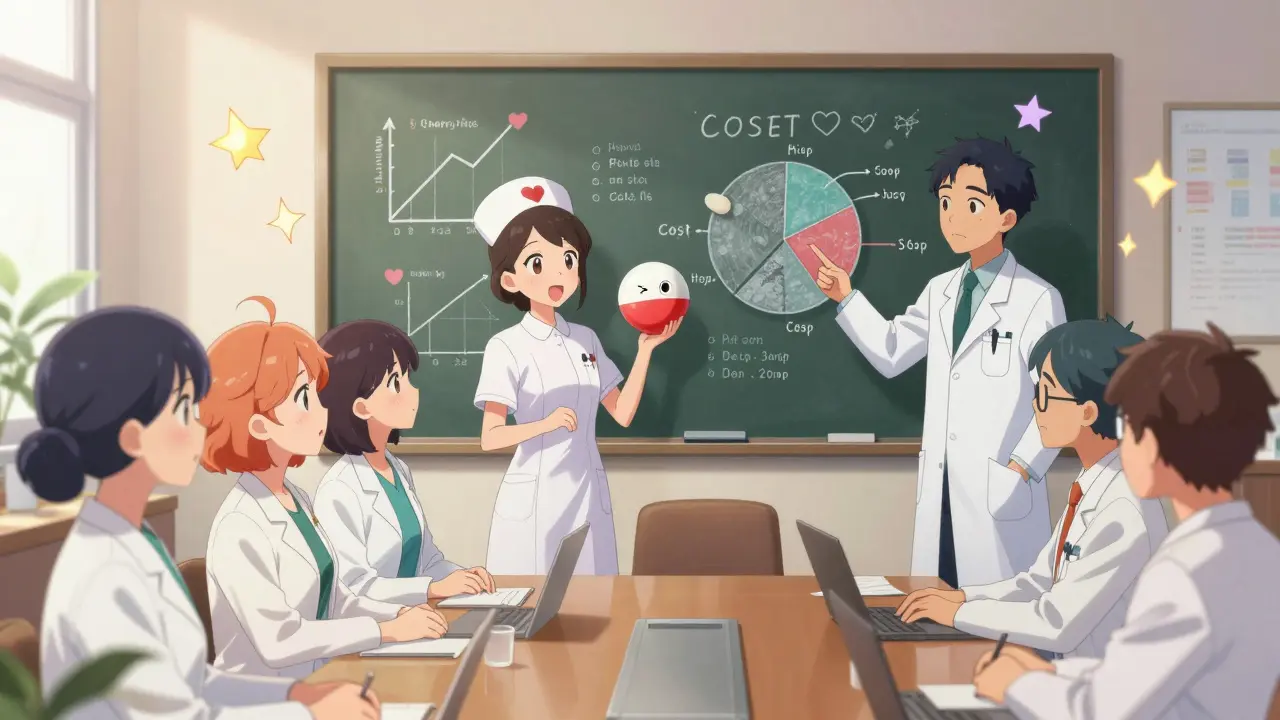
Hospitals don’t just accept every generic drug that the FDA approves. Even though a generic meets bioequivalence standards-meaning it delivers the same active ingredient within 80-125% of the brand-name drug’s absorption rate-it still has to pass through a rigorous review process. That process is led by the Pharmacy and Therapeutics (P&T) committee, a multidisciplinary group made up of pharmacists, physicians, nurses, and sometimes healthcare economists. These committees meet regularly, often quarterly in academic hospitals, to evaluate new drug requests and reassess existing ones.
The Criteria That Matter Most
When a generic drug is proposed for inclusion, the P&T committee doesn’t just look at price. They start with clinical evidence. How many studies support its use? Are those studies randomized, controlled, and peer-reviewed? The committee typically reviews 15 to 20 clinical studies per drug class before making a decision. Safety is next. They check FDA Adverse Event Reporting System (FAERS) data for patterns of side effects or interactions. A drug might be cheap, but if it causes more nausea or dizziness than alternatives, it gets flagged.
Cost is evaluated differently than you might expect. It’s not just the sticker price per pill. Hospitals calculate the total cost of care: how the drug affects length of hospital stay, readmission rates, emergency visits, and even lab monitoring needs. A cheaper generic that requires more frequent blood tests or leads to more complications ends up costing more overall. That’s why top-tier hospitals now use predictive analytics to model long-term outcomes, not just acquisition costs.
Formulary committees also consider patient adherence. A generic with a larger pill size, different coating, or unfamiliar dosing schedule can lead to missed doses. One 2022 study found that switching from a familiar generic to a new one increased non-adherence by 12% in elderly patients with hypertension. That’s why pharmacists often test formulations in real-world settings before full adoption.
Tiers and Access: How Generics Are Organized
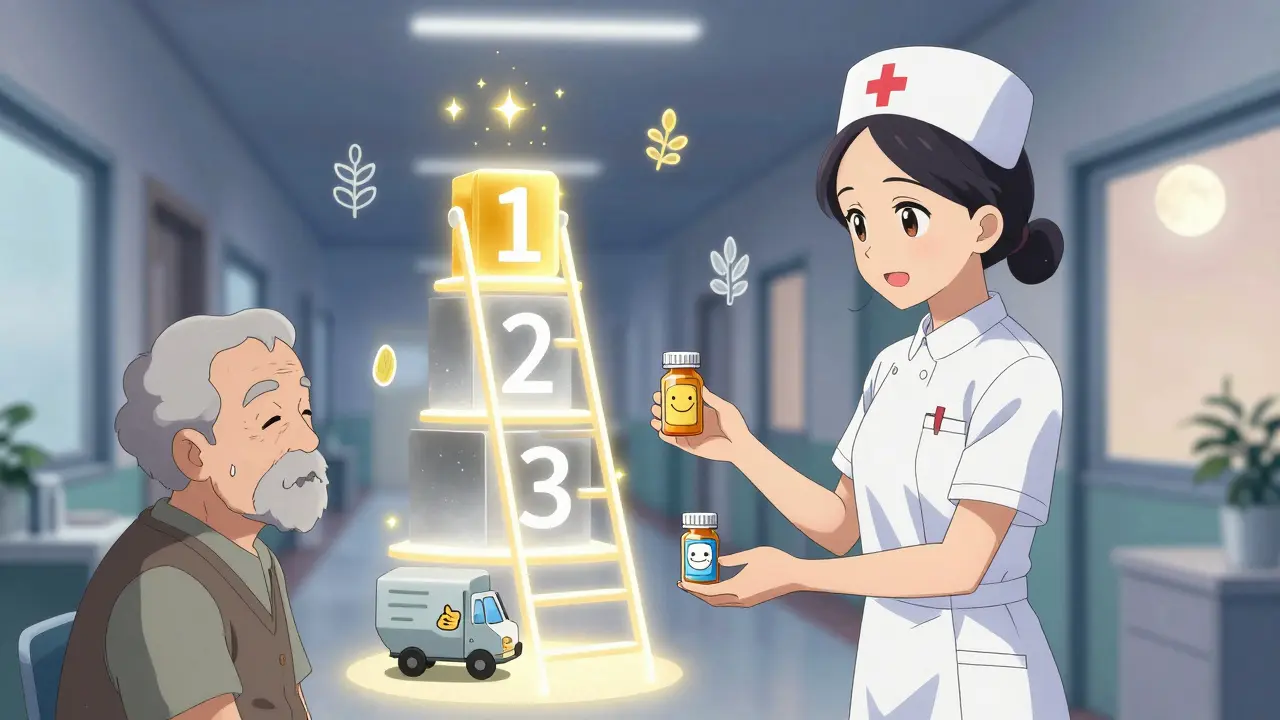
Most hospital formularies are divided into three to five tiers. Tier 1 is reserved for the most cost-effective, clinically preferred generics. These are the first-line choices, often with zero or minimal copay for patients. Tier 2 includes generics that are slightly more expensive or have less robust evidence. Tier 3 and above may include brand-name drugs or newer generics with limited real-world data.
But here’s the key: hospital formularies are usually closed. That means only approved drugs are stocked routinely. If a doctor wants to prescribe something off-formulary, they need prior authorization. This isn’t bureaucracy for the sake of it-it’s a safeguard. A 2021 AMA survey found that 32% of physicians felt formulary restrictions delayed care, but 87% of hospitals still use closed systems because they reduce medication errors and improve consistency.
For chronic conditions like high blood pressure, diabetes, or depression, formularies work especially well. In fact, 92% of ACE inhibitor prescriptions in U.S. hospitals are generic, and nearly all of those come from the formulary’s Tier 1 list. The savings are massive. One hospital system saved $1.2 million in a single year by standardizing on a single generic anticoagulant, with no rise in bleeding events.
When Generics Fail: Supply Chains and Shortages
Not every generic drug is reliable. In 2022, over 268 generic medications faced shortages in the U.S., according to ASHP tracking data. These aren’t always due to manufacturing issues-they can come from raw material delays, regulatory inspections, or consolidation among generic manufacturers.
Hospitals respond by activating therapeutic alternatives. At Mayo Clinic, for example, a dedicated team proactively identifies backup drugs before a shortage hits. If a key generic runs out, they switch to another bioequivalent drug already on the formulary. This system worked 98% of the time in their 2023 report. But not every hospital has that infrastructure. Smaller community hospitals often scramble when a generic disappears, sometimes reverting to more expensive brand-name drugs temporarily.
Pharmacists on ASHP Connect reported being forced to remove a generic from the formulary seven times in 2022 alone due to supply instability. That’s why many hospitals now track manufacturer reliability as part of their evaluation-not just the drug itself, but who makes it.
Conflicts and Challenges
Even the best systems have friction. One major pain point is therapeutic interchange-when a pharmacist automatically swaps a prescribed brand-name drug for a generic without the doctor’s direct approval. While this saves money and is clinically sound, it doesn’t always sit well with physicians. A 2022 American Pharmacists Association survey found that 57% of pharmacists had clashed with doctors over substitution decisions.
Nurses also feel the impact. When a formulary changes, they have to relearn how to administer the new generic. One nurse on AllNurses.com wrote: “We had a switch to a new generic insulin. The pen looked different. One patient got the wrong dose because we weren’t trained fast enough.” That’s why training and communication are now part of every formulary update.
Another issue is industry influence. Pharmaceutical reps still visit hospitals, sometimes offering free samples or educational materials that subtly favor their product. Harvard’s Dr. Jerry Avorn documented in JAMA Internal Medicine that even with conflict-of-interest disclosures, these interactions can sway decisions. That’s why ASHP now requires all P&T committee members to complete annual training on recognizing and avoiding bias.
What’s Changing Now
Hospital formularies are evolving. The biggest shift is moving from “lowest acquisition cost” to “best value for total care.” That means looking at how a drug affects patient outcomes over weeks and months-not just the price per tablet. A growing number of hospitals are now using outcomes-based contracts with manufacturers. If a generic doesn’t reduce readmissions, the price drops. If it does, the hospital pays a premium.
Another emerging trend is pharmacogenomics. Some academic centers are starting to restrict certain generics based on a patient’s genetic profile. For example, if a patient has a variant that metabolizes clopidogrel poorly, they may be steered away from a cheaper generic and toward a more effective alternative-even if it costs more. This is still rare, with only 18% of major hospitals piloting it, but it’s the future.
And then there’s the Inflation Reduction Act of 2022. Starting in 2025, Medicare Part D changes will push hospitals to align their formularies more closely with federal guidelines. That means even more pressure to standardize and justify every drug choice.
Why It Works
Despite the challenges, hospital formularies save lives and money. U.S. hospitals spend about $650 billion on drugs each year. Generics make up 90% of prescriptions but only 26% of costs. That’s a $480 billion savings annually-all because of a disciplined, committee-driven process.
It’s not perfect. Doctors complain. Nurses get overwhelmed. Supply chains break. But when done right, the formulary system ensures that patients get the right drug, at the right time, for the right reason. It turns chaos into consistency. It turns guesswork into science.
Behind every generic pill in a hospital drawer is a decision made by experts who weighed evidence, cost, safety, and human behavior. That’s not just policy. It’s patient care.
What is a hospital formulary?
A hospital formulary is a curated list of medications approved for use within a healthcare system. It’s maintained by a Pharmacy and Therapeutics (P&T) committee and includes only drugs that meet clinical, safety, and cost-effectiveness standards. Most hospitals use closed formularies, meaning only listed drugs are routinely stocked.
How are generic drugs selected for a hospital formulary?
Generic drugs are evaluated based on FDA therapeutic equivalence (via the Orange Book), clinical evidence from 15-20 peer-reviewed studies, safety data from FDA reports, cost-effectiveness (including total care impact), and patient adherence potential. Formulary committees prioritize drugs that deliver the best outcomes at the lowest total cost-not just the cheapest upfront price.
Why do hospitals use closed formularies instead of open ones?
Closed formularies improve consistency, reduce medication errors, and lower costs by limiting choices to clinically validated options. They allow hospitals to standardize treatment protocols, negotiate better bulk pricing, and ensure staff are trained on a manageable number of drugs. Open formularies, while more flexible, increase complexity and risk.
What role do pharmacists play in formulary decisions?
Pharmacists lead the evaluation process. They review clinical data, assess drug interactions, monitor adverse events, and often propose substitutions. Many are board-certified in pharmacotherapy (BCPP) and serve as key members of the P&T committee. They also manage therapeutic interchange programs, ensuring safe generic substitutions at the point of dispensing.
Do formularies affect patient care negatively?
Sometimes. About 32% of physicians report that formulary restrictions have delayed care, especially for newer or niche generics. Prior authorization requirements and supply shortages can also create barriers. However, studies show that when formularies are evidence-based, they improve outcomes and reduce costs without compromising safety. The goal is to balance access with responsible stewardship.
How often are hospital formularies updated?
Academic medical centers typically review their formularies quarterly. Community hospitals do so semi-annually. Urgent changes, like responding to a drug shortage, can be processed in 14-21 days. Every update requires documentation using GRADE methodology and must be approved by the full P&T committee.
What’s the difference between a hospital formulary and a Medicare Part D formulary?
Hospital formularies focus on clinical outcomes, total cost of care, and inpatient safety. Medicare Part D formularies prioritize patient out-of-pocket costs and use tiered copays to steer usage. Hospitals can substitute generics without patient consent; Medicare plans rely on financial incentives. Hospital formularies are tighter, more restrictive, and clinically driven.
Are biosimilars included in hospital formularies?
Only 37% of hospital formularies have formal protocols for evaluating biosimilars as of 2023. Unlike small-molecule generics, biosimilars are complex biologics with no true “equivalent” in the FDA’s Orange Book. Their inclusion requires specialized clinical review, real-world data, and often pilot programs before full adoption.
Matt Beck
January 6, 2026 AT 20:29Tiffany Adjei - Opong
January 7, 2026 AT 09:25Melanie Clark
January 8, 2026 AT 07:42Katie Schoen
January 8, 2026 AT 13:54Jeane Hendrix
January 10, 2026 AT 10:41Mukesh Pareek
January 11, 2026 AT 11:58Tom Swinton
January 13, 2026 AT 08:15Kelly Beck
January 14, 2026 AT 21:56Katelyn Slack
January 16, 2026 AT 09:33Gabrielle Panchev
January 16, 2026 AT 16:41Lily Lilyy
January 18, 2026 AT 05:34