
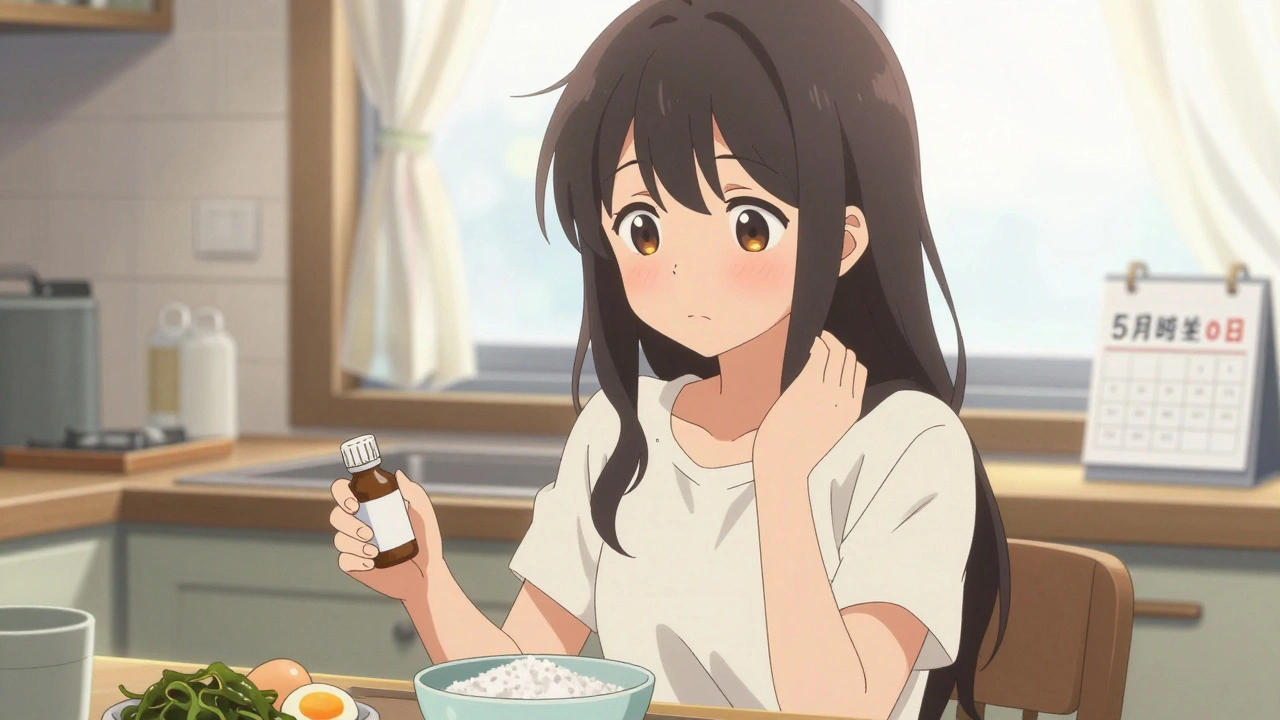
A goiter isn’t just a lump in the neck-it’s a sign your thyroid is working overtime. The thyroid, a small butterfly-shaped gland at the base of your throat, normally weighs about 15 to 20 grams. When it swells beyond 25 milliliters, you’ve got a goiter. For some, it’s barely noticeable. For others, it’s hard to ignore-especially when swallowing becomes difficult, your voice turns hoarse, or you feel like your collarbone is squeezing your windpipe.
What Causes a Goiter?
The biggest global cause? Iodine deficiency. Around 90% of goiter cases in countries without iodized salt are tied to not getting enough iodine. Your thyroid needs iodine to make thyroid hormones. Without it, the gland grows bigger, trying to trap more iodine from your blood. That’s why, in places like parts of Africa, South Asia, and mountainous regions in South America, goiters were once common.
In the U.S., where iodized salt has been standard since the 1920s, iodine deficiency is rare. Here, the top causes are autoimmune diseases. Hashimoto’s thyroiditis-where your immune system attacks your thyroid-is the most common. It leads to inflammation and swelling, often causing a painless, diffuse goiter. Another autoimmune condition, Graves’ disease, causes the thyroid to overproduce hormones and grow, leading to a toxic goiter that can also make your eyes bulge and your heart race.
Less common causes include thyroid nodules, inflammation from infection, and, rarely, thyroid cancer. Age and gender matter too. Women are three times more likely to develop a goiter than men. After age 40, your risk climbs. By 60, nearly 1 in 5 women may have a detectable goiter.
Iodine: The Missing Link
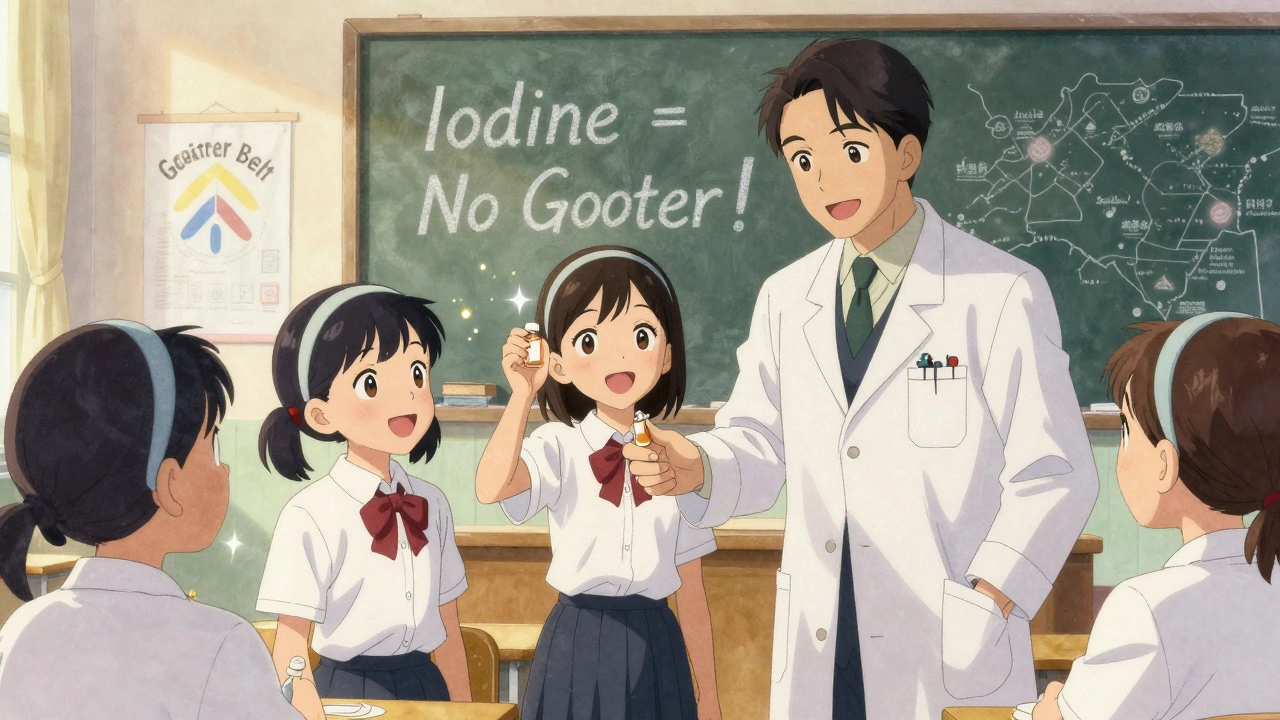
Before the 1920s, goiter was so common in the Great Lakes and Midwest U.S. that it was called the "goiter belt." In 1917, Dr. David Marine gave iodine supplements to 4,000 schoolgirls in Ohio. Within a year, goiter rates dropped by over 80%. That simple experiment changed public health forever.
Today, iodized salt is the backbone of prevention. One gram of iodized salt contains about 45 micrograms of iodine. The Recommended Dietary Allowance (RDA) for adults is 150 micrograms per day. Pregnant women need 220 micrograms. Breastfeeding women need 290. Most people get enough from salt, dairy, eggs, and seafood. But if you avoid salt, eat mostly processed foods (which often use non-iodized salt), or follow a strict vegan diet without seaweed or iodine-fortified foods, you might be at risk.
Supplementing iodine isn’t just about prevention-it’s treatment. For goiters caused by deficiency, taking 150 micrograms of iodine daily can shrink the gland by 30 to 40% within six to twelve months. In areas where salt iodization isn’t universal, health programs give potassium iodide pills: 90-150 mcg daily for kids, 150-250 mcg for adults and pregnant women.
How Is a Goiter Diagnosed?
It starts with a physical exam. Your doctor feels your neck while you swallow. If there’s swelling, they’ll order tests. Blood work checks your thyroid hormone levels (TSH, T3, T4) and antibodies to rule out Hashimoto’s or Graves’. An ultrasound measures the exact size of the gland-anything over 25 mL is abnormal. A radioactive iodine uptake scan shows if the gland is overactive (hot) or underactive (cold). Fine needle aspiration biopsy is used if nodules are found to check for cancer.
Don’t assume a visible lump is always a goiter. Some people have a naturally larger thyroid that’s perfectly healthy. The key is whether it’s causing symptoms or abnormal hormone levels.
Treatment: One Size Doesn’t Fit All
How you treat a goiter depends entirely on why it’s there.
Iodine-deficient goiter: Simple. Take 150 mcg of iodine daily. Most people see shrinkage within a year. If caught early, the thyroid can return to normal size.
Hashimoto’s-related goiter: This one’s trickier. Even if you take levothyroxine (the standard thyroid hormone replacement), the goiter shrinks only 10 to 20%. Why? Because over time, the gland gets scarred and fibrotic. The swelling doesn’t vanish, but your hormone levels stabilize. You’ll need lifelong medication.
Graves’ disease: You’ll need antithyroid drugs like methimazole, usually 5 to 30 mg daily. This cuts hormone production and shrinks the gland by 40 to 60% over a year or two. Some people go into remission. Others need surgery or radioactive iodine later.
Radioactive iodine: Used mostly for toxic goiters. A single oral dose of 5 to 15 millicuries destroys overactive thyroid tissue. It’s effective-50 to 60% shrinkage in six to twelve months. But here’s the catch: 75 to 80% of people end up with permanent hypothyroidism. That means lifelong levothyroxine.
Surgery: Reserved for large goiters (over 80-100 mL) or those causing breathing or swallowing problems. A total thyroidectomy removes 30 to 40 grams of tissue. It’s effective, but not without risk. About 15% of patients have voice changes due to nerve damage. Around 8% develop low calcium levels from damaged parathyroid glands.
What About Selenium?
You might hear about selenium supplements helping thyroid health. Some studies suggest it reduces inflammation in Hashimoto’s patients. But a 2021 Cochrane Review looked at 12 trials and found no significant benefit for reducing goiter size. The odds of improvement? Almost exactly the same as placebo. European guidelines say it *might* help in specific cases, but it’s not standard care. Don’t spend money on selenium pills unless your doctor recommends it based on blood tests.

What’s the Long-Term Outlook?
If your goiter is from iodine deficiency and you fix it early, your chances of full recovery are excellent-70 to 85% of cases resolve within one to two years.
But autoimmune goiters? That’s a different story. About 60% of people with Hashimoto’s develop atrophic thyroiditis over 10 to 15 years. The gland shrinks, scars, and stops working. You’ll need medication for life.
Even with treatment, goiters can come back. That’s why regular checkups matter. Thyroid hormone levels should be checked every 6 to 12 months after treatment starts. Ultrasounds may be repeated every few years to monitor size.
What You Can Do Now
Don’t wait for a visible lump. If you’re a woman over 40, have a family history of thyroid disease, or feel fatigued, cold, or have unexplained weight gain, get tested. A simple TSH blood test costs less than $50 and can catch problems early.
Check your salt. If you use sea salt, Himalayan salt, or kosher salt, you’re probably not getting iodine. Switch to iodized table salt for everyday cooking. Eat eggs, dairy, or fish a few times a week. If you’re pregnant or planning to be, take a prenatal vitamin with iodine-many don’t include it.
Don’t self-treat with iodine supplements unless you’ve been diagnosed with deficiency. Too much iodine can trigger thyroid problems in people with underlying autoimmune conditions. More isn’t always better.
What’s Next in Research?
Scientists are digging deeper. The NIH-funded TRIPOD study, tracking 5,000 people across 10 countries, has already found 37 genetic markers linked to thyroid size. That could lead to personalized risk scores. Meanwhile, the global market for thyroid treatments is growing fast-projected to hit $6.3 billion by 2027. Levothyroxine alone is prescribed over 120 million times a year in the U.S.
Regulations are catching up too. The FDA now requires iodine content to be labeled on all salt products. Europe has standardized radioactive iodine dosing. These changes help doctors make better decisions and patients make smarter choices.
Goiter isn’t a death sentence. It’s a signal. Listen to your body. Get tested. Treat the cause-not just the swelling.
Can iodine supplements shrink a goiter?
Yes-if the goiter is caused by iodine deficiency. Taking 150 micrograms of iodine daily can reduce thyroid size by 30 to 40% within 6 to 12 months. But if the goiter is due to Hashimoto’s or Graves’ disease, iodine won’t help and could make things worse. Always get tested before supplementing.
Is iodized salt enough to prevent goiter?
For most people in the U.S. and other countries with iodized salt programs, yes. One gram of iodized salt contains about 45 micrograms of iodine. The daily requirement is 150 micrograms, so using salt regularly in cooking and eating iodine-rich foods like eggs and dairy usually covers it. People on strict vegan diets or who avoid salt should consider a multivitamin with iodine.
Can a goiter go away on its own?
Rarely. A small goiter from mild iodine deficiency might stabilize if you start eating more iodine-rich foods. But most goiters don’t shrink without treatment. Autoimmune goiters almost never resolve on their own and usually get larger or lead to hypothyroidism over time. Early intervention is key.
Is surgery the only option for a large goiter?
No. Surgery is usually reserved for goiters over 80-100 mL or those causing breathing or swallowing problems. Smaller goiters can be managed with medication or radioactive iodine. For toxic goiters, antithyroid drugs or radioactive iodine often shrink the gland enough to avoid surgery. The choice depends on cause, size, symptoms, and patient preference.
Does selenium help with goiter?
Not reliably. A 2021 Cochrane Review analyzed 12 studies and found no significant benefit for reducing goiter size. Some European guidelines suggest selenium *might* help reduce thyroid antibodies in Hashimoto’s patients, but it doesn’t shrink the gland. Don’t take selenium supplements unless your doctor confirms a deficiency through blood tests.
Why are women more likely to get goiters?
Women are three times more likely than men to develop thyroid disorders, including goiter. This is likely due to hormonal fluctuations-especially during pregnancy, postpartum, and menopause-that trigger or worsen autoimmune reactions. Estrogen may also influence immune system activity, making women more prone to Hashimoto’s and Graves’ disease.
Can goiter cause cancer?
Goiter itself doesn’t cause cancer. But a goiter can contain nodules, and some of those nodules may be cancerous. About 5 to 10% of thyroid nodules turn out to be malignant. That’s why any new or growing goiter should be evaluated with ultrasound and possibly a biopsy. Most thyroid cancers are highly treatable, especially when caught early.
How often should I get my thyroid checked if I have a goiter?
If you’ve been diagnosed with a goiter, get a TSH blood test every 6 to 12 months. If you’re on medication like levothyroxine, your dose may need adjusting. An ultrasound is typically repeated every 1 to 3 years, depending on size and whether nodules are present. If symptoms change-like new hoarseness, difficulty swallowing, or rapid growth-see your doctor sooner.
zac grant
December 4, 2025 AT 13:58Goiter’s a classic example of how evolution didn’t account for industrialized food systems. Our ancestors got iodine from coastal diets, soil, and wild plants. Now we’re eating processed crap with non-iodized salt and wondering why our thyroids are staging a protest. The fact that iodized salt cut goiter rates by 80% in a year is one of public health’s quietest victories. Yet here we are, backpedaling because people think sea salt is ‘purer.’ It’s not. It’s just a fancy mineral garnish with zero functional benefit.
Joe Lam
December 4, 2025 AT 16:27Let’s be real-anyone who still thinks selenium supplements fix thyroid issues hasn’t read a Cochrane review since 2020. This isn’t biohacking. It’s endocrinology. You don’t get to cherry-pick micronutrients like they’re TikTok trends. The data is clear: no meaningful reduction in goiter size. If your doctor hasn’t tested your selenium levels, you’re wasting money and potentially stressing your kidneys. Stop listening to wellness influencers and start reading peer-reviewed journals.
Dematteo Lasonya
December 5, 2025 AT 10:57I had a goiter diagnosed at 42. Turned out I was using Himalayan salt because it looked prettier on my kitchen counter. Never realized it had zero iodine. Started using iodized salt and eating eggs three times a week. My thyroid shrunk by half in 9 months. No meds. No drama. Just basic nutrition. Sometimes the simplest fixes are the ones we ignore because they’re not glamorous.
Gillian Watson
December 5, 2025 AT 17:28My mum had a goiter in the 80s in rural Wales. No iodized salt there back then. She got a tiny dose of potassium iodide from the NHS clinic. Within a year, it was gone. We didn’t know it was a global issue until I studied public health. It’s wild how something so simple-salt-could be the difference between health and decades of suffering. We take it for granted now.
Chad Handy
December 7, 2025 AT 16:47Let me tell you about my cousin who went full biohacker after reading a Medium post. He started taking 600 mcg of iodine daily because ‘more is better.’ Three months later, he was in the ER with thyroid storm. His TSH was undetectable. His heart was racing like a racecar. He’s on beta-blockers now. And guess what? His goiter didn’t shrink-it got worse. The irony? He was vegan, ate no seafood, and thought seaweed snacks were enough. Spoiler: they’re not. Iodine isn’t a supplement you sprinkle like cinnamon. It’s a precise tool. Misuse it and you’re not healing-you’re playing Russian roulette with your endocrine system.
And don’t get me started on the people who say ‘natural remedies’ fix this. Your thyroid isn’t a yoga pose. It’s a gland that needs bioavailable iodine, not crystals or moonwater. The fact that this article even mentions the 1917 Ohio study is refreshing. Real science, real results. Not some influencer’s 3am Instagram story about ‘thyroid cleanses.’
I work in primary care. I see this every month. Women over 40, tired, cold, gaining weight, thinking it’s ‘just stress.’ They’re not. It’s hypothyroidism. TSH test costs less than a latte. Do it. Don’t wait for your neck to swell like a balloon. And if you’re pregnant? Please, for the love of all that’s holy, check your prenatal vitamin. Half of them don’t even have iodine. You’re not being ‘clean’-you’re risking your baby’s brain development.
And yes, Hashimoto’s is a beast. Levothyroxine doesn’t make the goiter vanish. It makes you live. That’s not failure. That’s medicine. Stop romanticizing ‘healing’ and start accepting that some things need lifelong management. Your thyroid doesn’t care about your aura. It cares about TSH levels.
And selenium? Still no. The Cochrane review didn’t lie. You’re not a lab rat for some European anecdote. If your doctor says ‘try it,’ fine. But don’t go buy 1000 mcg pills on Amazon because some guy in a hoodie said it ‘harmonizes your chakras.’
Goiter isn’t a spiritual awakening. It’s biology. Treat it like it.
Jenny Rogers
December 8, 2025 AT 05:53It is, of course, profoundly disheartening to observe the persistent cultural glorification of unregulated dietary supplementation in the face of overwhelming clinical evidence. The notion that one can self-diagnose and self-treat a complex endocrine disorder via internet forums is not merely misguided-it is a systemic failure of medical literacy. One must question the ethical responsibility of platforms that allow such misinformation to proliferate without consequence. The thyroid is not a metaphysical entity to be balanced with crystals or coconut oil. It is a physiological organ governed by immutable biochemical laws. To treat it otherwise is not only irresponsible-it is dangerous.
Benjamin Sedler
December 10, 2025 AT 02:42So let me get this straight-iodized salt saved millions, but now we’re back to ‘artisanal’ salt because it’s Instagrammable? Meanwhile, people are taking 500 mcg iodine pills like they’re gummy vitamins and wondering why their thyroid’s throwing a tantrum. I’ve seen it. Guy in the gym, taking kelp capsules, convinced he’s ‘optimizing’ his hormones. Bro, your thyroid isn’t a Tesla. You don’t upgrade it with a firmware update from a guy named ‘ThyroidWizard99.’
And don’t even get me started on the ‘selenium for Hashimoto’s’ cult. You know what else reduces antibodies? Time. And sleep. And not eating gluten because you read a blog that said so. Correlation isn’t causation, people. Stop turning your medicine cabinet into a cult shrine.
Also, why is everyone still using sea salt? It’s salt. With minerals. Like rock. It’s not magic. It’s just sodium chloride with a fancy name and a higher price tag. You’re not ‘detoxing.’ You’re just paying extra to not get iodine.
Gareth Storer
December 11, 2025 AT 23:00So the solution to a swollen thyroid is… more salt? Brilliant. Next up: curing diabetes with sugar cubes and a prayer. At least the guy in the 1920s had a control group. We’re just giving people iodine like it’s a free sample at Costco. Meanwhile, autoimmune thyroid disease is skyrocketing. Coincidence? Or did we just trade one problem for another by forcing iodine into everything? Maybe the real issue isn’t deficiency-it’s our bodies screaming, ‘Enough already!’
Bill Wolfe
December 13, 2025 AT 10:27Look, I get it. People want simple answers. But thyroid health isn’t a TikTok challenge. It’s a complex interplay of genetics, environment, immune dysregulation, and decades of nutritional neglect. The fact that we’re still having this conversation in 2025 is embarrassing. We had the solution in 1924. We had the data. We had the science. And yet here we are, with people arguing over Himalayan salt like it’s a religious artifact. The real tragedy isn’t the goiter-it’s that we’ve forgotten how to trust evidence. We’d rather believe in a $30 selenium capsule than a $0.02 pinch of iodized salt. That’s not ignorance. That’s a cultural collapse.
And let’s not pretend the FDA labeling requirement is some heroic act. It’s a last-ditch effort to clean up the mess we made by letting wellness culture turn nutrition into a cult. If you’re pregnant and your prenatal doesn’t have iodine, complain. Demand it. Don’t just accept it. Your baby’s IQ is worth more than your supplement brand’s profit margin.
Jordan Wall
December 13, 2025 AT 22:49Just read the paper on TRIPOD study. 37 genetic markers linked to thyroid size. So… we’re not just talking nutrition anymore. We’re talking epigenetics, ancestry, and regional iodine exposure over generations. That’s why a vegan in Oregon might need supplements while a fisherman in Norway doesn’t. This isn’t one-size-fits-all. And yet, everyone still wants a magic bullet. The future of thyroid care isn’t salt-it’s personalized risk scores. But nope, we’re still arguing over sea salt. Sigh.