
When you’re managing Type 2 diabetes, taking multiple pills every day gets exhausting. Four or five tablets scattered across your morning and evening routine? It’s easy to miss one. That’s why doctors often turn to diabetes combination medications-single pills that pack two or more drugs into one. They cut down pill count, make adherence easier, and often work better than single drugs alone. But here’s the real question most people face: Can I switch to a cheaper generic version without risking my blood sugar control?
What Are Diabetes Combination Medications?
Diabetes combination medications aren’t new, but they’ve become essential tools in modern care. They combine two drugs that work in different ways to lower blood glucose. The most common formula? Metformin paired with another agent. Why metformin? Because it’s the first-line treatment for Type 2 diabetes-effective, safe, and cheap. When it stops doing enough, doctors add a second drug. Instead of prescribing two separate pills, they combine them into one.These combos target multiple problems at once: insulin resistance, overproduction of glucose by the liver, and poor insulin secretion. For example, metformin improves how your body uses insulin, while a DPP-4 inhibitor like sitagliptin helps your body make more insulin when needed. Together, they often bring HbA1c levels down by 1.2% to 1.8%, compared to just 0.7% to 1.0% with metformin alone.
As of 2023, there are about 25 such combinations on the U.S. market. But only five have generic versions. The rest? Still brand-name and expensive. That’s where substitution comes in-and where things get tricky.
Which Combination Medications Have Generic Versions?
Not all combos are created equal when it comes to generics. The older the drugs in the combo, the more likely they’re available as generics. Here’s what’s actually on the market:- Metaglip (glipizide + metformin): Generic since 2012. Cost: around $18.75 for 60 tablets.
- Glucovance (glyburide + metformin): Generic since 2010. Cost: about $15.20 for 60 tablets.
- Jentadueto (linagliptin + metformin): Generic approved in 2023, but not yet widely available due to patent delays.
- Janumet (sitagliptin + metformin): Still brand-only. No generic until 2025-2026.
- Synjardy (empagliflozin + metformin): Brand-only. Patent protection runs until at least 2026.
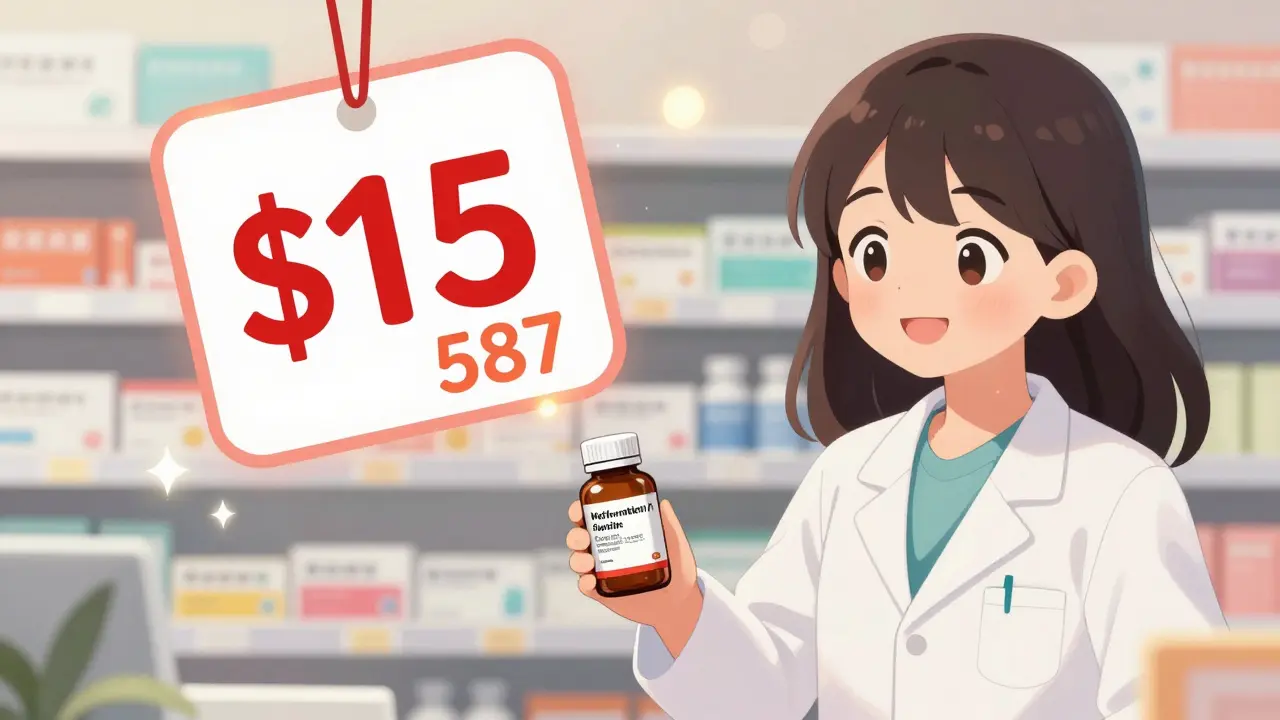
That’s the pattern: older sulfonylurea combos (glipizide, glyburide) are cheap generics. Newer ones with DPP-4 or SGLT2 inhibitors? Still locked behind patents. The cost difference is staggering. A 30-day supply of Synjardy can cost $587. The generic version of Glucovance? $15. That’s a 97% savings.
Why Generic Substitution Isn’t Always Simple
You might think: if the active ingredients are the same, why does it matter? But diabetes meds aren’t like ibuprofen. Small differences in how a drug is absorbed or released can swing your blood sugar.Take Glucovance. The brand version uses a specific timed-release system for glyburide. Some generic versions use a different formulation. One patient on Reddit, ‘Type2Warrior,’ switched to generic Glucovance and started having low blood sugar episodes-severe enough to require emergency care. Turns out, the generic released glyburide faster, causing a spike in insulin that wasn’t matched by food intake.
Even when the active ingredients match, the inactive ingredients (fillers, coatings, binders) can affect how the pill dissolves in your gut. That’s why some people report new stomach issues or different pill sizes after switching. One GoodRx review noted: “The generic pill is twice as big. I can’t swallow it without water.”
The FDA requires generics to be within 80-125% of the brand’s blood concentration. That’s a wide range. For drugs with a narrow therapeutic window-like sulfonylureas-those small differences matter more. Endocrinologists like Dr. John Buse have warned that this standard may not be enough for diabetes medications.
When Generic Substitution Works Best
There’s good news: for many people, switching to generic works perfectly. The key is stability.If you’ve been on a stable dose of a brand-name combo for six months or more, and your HbA1c is under 7%, you’re a good candidate. Studies show that 76% of patients switching from brand to generic Metaglip or Glucovance had no change in blood sugar control. Many report no side effects at all.
Here’s who benefits most:
- Patients on older combos (metformin + sulfonylurea)
- Those with predictable glucose patterns
- People on fixed doses who don’t need fine-tuning
- Those with no history of hypoglycemia or kidney issues
For these folks, switching to generic isn’t just smart-it’s life-changing. A 2022 Joslin Diabetes Center survey found that 68% of patients saved over $200 a month after switching. That’s money for groceries, transportation, or insulin if they need it later.
When You Should Avoid Substitution
Not everyone should switch. Here’s when to hold off:- You’re on an extended-release (XR) combo like Janumet XR. Generic XR versions don’t exist yet.
- Your doctor is fine-tuning your dose. Combination pills lock the ratio-you can’t adjust one drug without the other.
- You’ve had side effects from one component before. If you’re sensitive to metformin’s GI effects, you can’t just stop the metformin in the combo-you’d have to stop the whole pill.
- You have kidney problems. Most metformin combos require an eGFR above 30. Generic versions don’t change that, but if your kidney function is borderline, your doctor may prefer to monitor you closely on separate pills.
- Your insurance forces substitution without your doctor’s approval. That’s a red flag.
Pharmacists can legally substitute generics unless your doctor writes “Dispense as Written” or “Do Not Substitute.” But that doesn’t mean you should let it happen without a conversation.
How to Safely Switch to a Generic
If you and your doctor agree to switch, here’s how to do it right:- Get your doctor’s approval in writing. Don’t rely on the pharmacist’s recommendation alone.
- Ask for the exact generic name. For example, “metformin/glipizide 5mg/500mg” not just “the generic for Metaglip.”
- Monitor your blood sugar closely for 2-4 weeks. Test fasting and 2 hours after meals, at least 4 times a day.
- Watch for signs of low or high blood sugar: dizziness, sweating, extreme thirst, blurred vision.
- Call your doctor if your average glucose changes by more than 15% from your baseline.
- Keep your old pill bottle until you’re sure the new one works. Some generics look different-don’t assume it’s the same just because the name matches.
Most endocrinologists recommend this approach. The American Association of Clinical Endocrinology says automatic substitution without patient notification increases the risk of treatment failure by 19%.
Cost vs. Risk: The Real Trade-Off
Let’s be honest: the price gap is huge. A brand-name combo can cost $500 a month. A generic? $15-$25. That’s not just savings-it’s access. Many people skip doses or stop meds entirely because they can’t afford them. Generics save lives.But cost shouldn’t be the only factor. If you’re on a newer combo like Jardiance or Farxiga with metformin, there’s no generic yet. And if you’re doing well on your current regimen, why risk it? The goal isn’t just to save money-it’s to stay healthy.
Here’s the bottom line: if your combo is old (metformin + sulfonylurea), switching to generic is low-risk and high-reward. If it’s new (metformin + SGLT2 or DPP-4), stick with the brand until generics arrive. And always, always talk to your doctor before switching.
What’s Coming Next?
Patents for Janumet XR and Jentadueto expire in 2025-2026. That means generic versions could hit the market soon. When they do, prices could drop by 90%. The American Diabetes Association predicts that within five years, 80% of metformin-based combos will be generic.That’s good news for patients. But it also means pharmacies will push substitution harder. You need to be ready. Know your meds. Know your options. And don’t let cost pressure override your health.
The future of diabetes care isn’t just about new drugs-it’s about making the right ones affordable. Generics play a huge role. But they’re not magic. They’re tools. And like any tool, they work best when used wisely.
Can I switch from a brand-name diabetes combo to a generic without my doctor’s approval?
Legally, a pharmacist can substitute a generic unless your doctor writes "Do Not Substitute." But medically, you should never switch without talking to your doctor first. Diabetes medications require precise dosing, and even small changes in absorption can cause dangerous blood sugar swings. Always get written approval before switching.
Are generic diabetes combination pills as effective as brand-name ones?
For older combinations like metformin/glipizide or metformin/glyburide, yes-most patients see the same results. Studies show 70-80% of users report no change in blood sugar control after switching. But for newer combos or extended-release versions, generics aren’t available yet. Even when they are, bioequivalence standards allow for up to 25% variation in drug levels, which can matter for drugs with narrow therapeutic windows.
Why are some diabetes combos still brand-only while others are generic?
It comes down to patents. Older drugs like metformin and glyburide lost patent protection years ago, so their combinations can be made generically. Newer drugs like sitagliptin and empagliflozin are still under patent protection, meaning only the original manufacturers can produce them. Generic versions won’t be available until those patents expire-usually 10-15 years after approval.
What should I do if I notice changes in my blood sugar after switching to a generic?
Test your blood sugar more frequently-4 times a day for 2-4 weeks. Keep a log of your readings, meals, and symptoms. If your average glucose changes by more than 15% or you experience hypoglycemia or hyperglycemia, contact your doctor immediately. You may need to switch back or adjust your dose. Don’t ignore these signs.
Do generic diabetes meds have the same side effects as brand-name ones?
The active ingredients are the same, so the main side effects should be too. But inactive ingredients (fillers, coatings) can differ, which may cause new stomach upset, allergic reactions, or difficulty swallowing. Some patients report new GI issues after switching. If you notice unusual side effects, talk to your doctor or pharmacist. It doesn’t mean the generic is unsafe-it just might not be the best fit for your body.
Kathy McDaniel
January 27, 2026 AT 16:10just switched to generic glucovance last month and my bg’s been stable as hell 😊 no issues so far
astrid cook
January 27, 2026 AT 23:04you people are so naive. generics are just cheap knockoffs. the fillers are toxic and they’ll kill you slowly. my cousin went into a coma after switching. don’t trust the FDA. they’re paid off.
April Williams
January 29, 2026 AT 13:04how is this even a question? if you can’t afford your meds you deserve to have complications. stop being lazy and get a second job. this country doesn’t owe you free medicine.
Paul Taylor
January 30, 2026 AT 07:45look i’ve been on metformin/glipizide for 7 years and switched to generic about 4 years ago. i tested my bg 5x a day for the first month. no change. zero. my a1c stayed at 6.2. i’ve seen people freak out over pill size or color but the active ingredients are identical. the FDA’s 80-125% window is actually fine for sulfonylureas if you’re stable. if you’re new to meds or your numbers are wild then yeah maybe stick with brand. but for the majority of us? it’s fine. save your money for insulin if you need it later. this isn’t rocket science.
Anjula Jyala
January 31, 2026 AT 17:36bioequivalence metrics are inadequate for narrow therapeutic index agents like glyburide. pharmacokinetic variability in Cmax and AUC can induce hypoglycemic events especially in elderly with renal impairment. the 25% deviation threshold is archaic and fails to account for interindividual pharmacodynamic sensitivity
Desaundrea Morton-Pusey
February 2, 2026 AT 10:30why do we even let big pharma control this? they delay generics for years just to keep prices high. this is capitalism at its worst. i hate how they make us choose between food and medicine. shame on the FDA for letting this happen.
Murphy Game
February 4, 2026 AT 08:16you know what’s really happening? the generics are being dosed wrong on purpose. they’re putting less active ingredient in so people get sick and go back to the brand. it’s a trap. the government and pharma are in cahoots. i’ve got 17 different blood sugar logs and they all show the same pattern after switching. it’s not coincidence.
John O'Brien
February 6, 2026 AT 07:22my doc told me to switch to generic metaglip and i did. first week i was paranoid and tested every 2 hours. nothing. my wife even joked i was acting like a robot. saved $400 a month. no side effects. if your doc says it’s safe and you’re stable? do it. stop overthinking. you’re not a lab rat.
Kegan Powell
February 6, 2026 AT 20:51life’s about balance right? 💡 saving money doesn’t mean sacrificing health but sometimes the smartest thing you can do is choose the cheaper option when the science says it’s safe. i’ve seen people cry because they can’t afford their meds. generics aren’t magic but they’re a lifeline. trust your doc not the fear. 🙏
Harry Henderson
February 7, 2026 AT 11:41if you’re not switching to generic you’re literally throwing away your future. every dollar you waste on brand name is a dollar you can’t spend on your kid’s college or your own retirement. get smart. get cheap. get healthy. no excuses.
Kirstin Santiago
February 9, 2026 AT 05:49just wanted to say thanks to everyone sharing their stories. i’ve been nervous about switching but reading this made me feel less alone. i’ll talk to my doctor this week. no one should have to choose between meds and groceries. you’re all doing important work just by speaking up.