
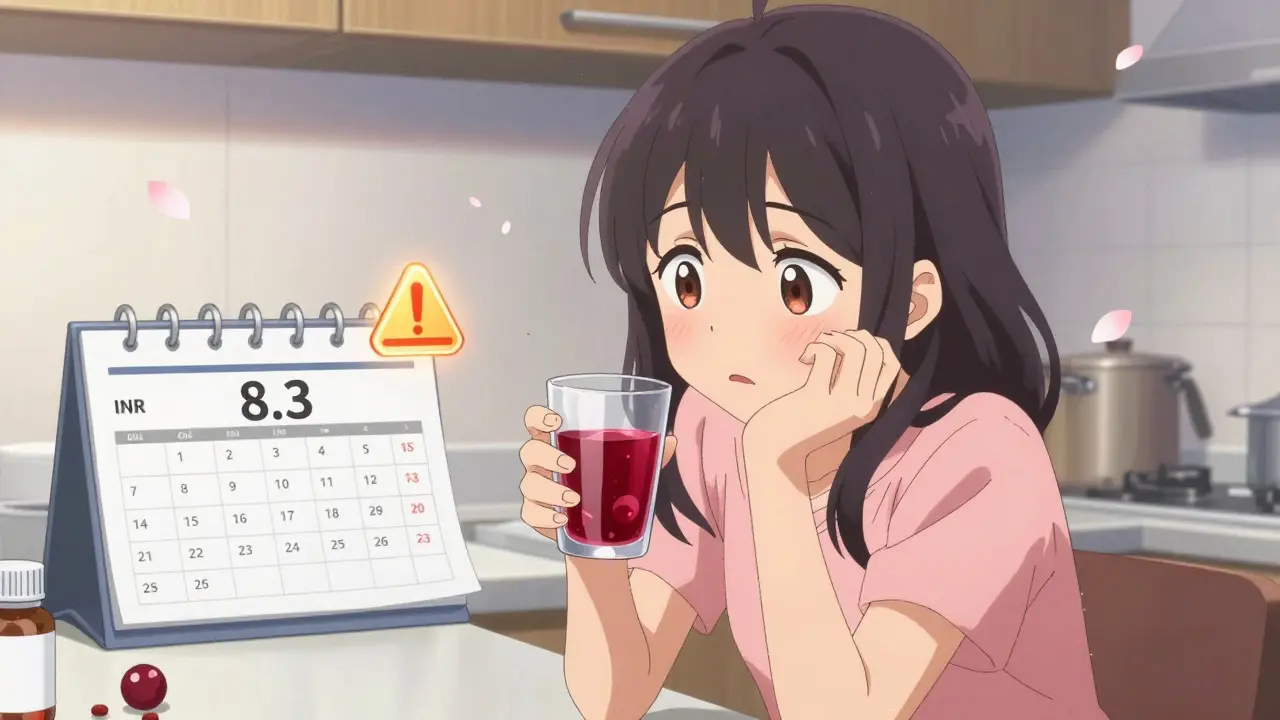
When you’re on warfarin, even small changes in your diet can have big consequences. One of the most dangerous yet often overlooked interactions involves something many people think is harmless: cranberry. Whether it’s juice, capsules, or even cranberry-flavored snacks, these products can push your INR levels into dangerous territory - increasing your risk of serious bleeding. This isn’t just a theory. It’s a documented, life-threatening risk that’s been reported in hospitals and emergency rooms for over two decades.
Why Cranberry and Warfarin Don’t Mix
Warfarin is a blood thinner used to prevent clots in people with atrial fibrillation, artificial heart valves, or a history of deep vein thrombosis. It works by blocking vitamin K’s role in clotting, but it’s tricky to get right. Your target INR (International Normalized Ratio) is usually between 2.0 and 3.0. Go above 4.5, and your risk of internal bleeding spikes. Go below 2.0, and clots can form. There’s no room for guesswork. Cranberry products interfere with how your body breaks down warfarin. Specifically, compounds in cranberries - like quercetin and other flavonoids - block an enzyme in your liver called CYP2C9. This enzyme is responsible for clearing the more potent form of warfarin (S-warfarin) from your bloodstream. When it’s inhibited, warfarin builds up. That’s when your INR starts climbing, sometimes dramatically. Case reports show INR levels jumping from 2.5 to over 8.0 after just a week of daily cranberry juice. One 78-year-old man on 45 mg of warfarin per week saw his INR hit 6.45 after drinking half a gallon of cranberry-apple juice every week. He didn’t feel sick until he started bleeding internally. Another woman developed gastrointestinal bleeding after two weeks of cranberry cocktail consumption. Her INR rose from 2.5 to 8.3.What Counts as a Cranberry Product?
It’s not just cranberry juice. Any product made from Vaccinium macrocarpon - the North American cranberry - can trigger this reaction. That includes:- Cranberry juice (even diluted or mixed with apple juice)
- Cranberry capsules and tablets
- Cranberry extract supplements
- Cranberry-flavored sodas, teas, or snacks
- Dried cranberries (especially if sweetened with added juice concentrate)
How Big Is the Risk?
Some studies say the risk is real. Others say it’s unclear. But here’s the thing: when it comes to warfarin, you don’t need a statistical average. You need to protect your life. The FDA’s adverse event database recorded 17 cranberry-warfarin interaction reports between 2020 and 2022. In New Zealand, 33 out of 236 warfarin interaction reports between 2021 and 2022 involved food or supplements - and cranberry was a major contributor. On Reddit’s r/anticoagulants community, users consistently report INR spikes after starting cranberry juice for UTI prevention. One person wrote: “My INR went from 2.4 to 4.1 in one week. My hematologist told me to stop everything.” But not everyone has a reaction. Some people take cranberry pills for years with no issues. Why? Because genetics matter. About 15-20% of people carry a genetic variant (CYP2C9*2 or CYP2C9*3) that makes them extra sensitive to this interaction. For them, cranberry can cause INR spikes two to three times higher than in normal metabolizers.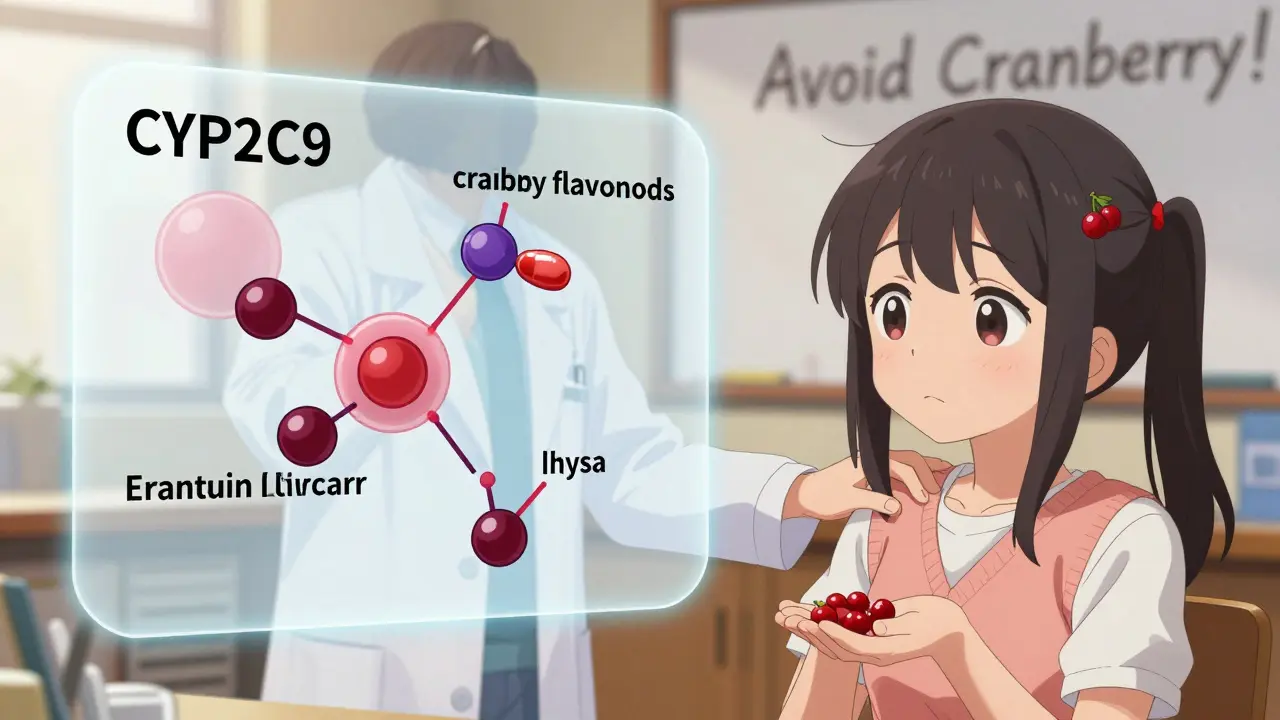
How Quickly Does It Happen?
This isn’t a slow burn. INR levels typically rise within 3 to 7 days after starting cranberry products. In some cases, it’s as fast as 48 hours. And if you stop? The effect usually fades within 5 to 7 days. That’s why doctors often recommend checking your INR within 3-5 days of starting or stopping cranberry - even if you’ve never had a problem before. The timing matters because many people think, “I’ve had cranberry juice for years, why now?” But warfarin doses are finely tuned. A change in diet, a new antibiotic, or even switching cranberry brands can throw off your balance. A bottle labeled “100% juice” might have a different concentration of active compounds than the one you used last month. That’s enough to trigger a spike.What Should You Do?
If you’re on warfarin, here’s the bottom line:- Avoid all cranberry products. Not just juice - capsules, extracts, and even flavored drinks count.
- If you’ve been using cranberry for UTI prevention, talk to your doctor about alternatives. Methenamine hippurate or low-dose antibiotics are safer options.
- Don’t assume “a little won’t hurt.” Even 150 mL of cranberry juice per day has triggered bleeding in sensitive individuals.
- Inform every healthcare provider you see - including pharmacists and naturopaths - that you’re on warfarin. Many don’t know about this interaction.
- Keep your INR checks regular. If you accidentally consume cranberry, get tested within 3 days.

Hayley Ash
December 31, 2025 AT 03:52My grandma drank cranberry juice with warfarin for 12 years and never had an INR above 3.1. You’re scaremongering with case reports like they’re gospel.
kelly tracy
December 31, 2025 AT 15:25Nadia Spira
January 2, 2026 AT 10:25So yes, avoid cranberry. But also demand genetic testing. Demand standardization. Demand better science.
henry mateo
January 2, 2026 AT 17:27Kunal Karakoti
January 3, 2026 AT 11:21Aayush Khandelwal
January 4, 2026 AT 21:02Sandeep Mishra
January 5, 2026 AT 17:58Don’t panic. Don’t rage. Just check with your doc. And maybe skip the juice. Your future self will thank you. 🙏
Colin L
January 7, 2026 AT 16:38srishti Jain
January 9, 2026 AT 05:02Joseph Corry
January 10, 2026 AT 16:56Cheyenne Sims
January 11, 2026 AT 10:28Shae Chapman
January 11, 2026 AT 15:53Kelly Gerrard
January 12, 2026 AT 21:35Glendon Cone
January 14, 2026 AT 01:49Henry Ward
January 15, 2026 AT 02:59