
Steroid-Induced Diabetes Insulin Calculator
Steroid Dose Calculator
Calculate recommended basal insulin adjustments based on prednisone-equivalent dose.
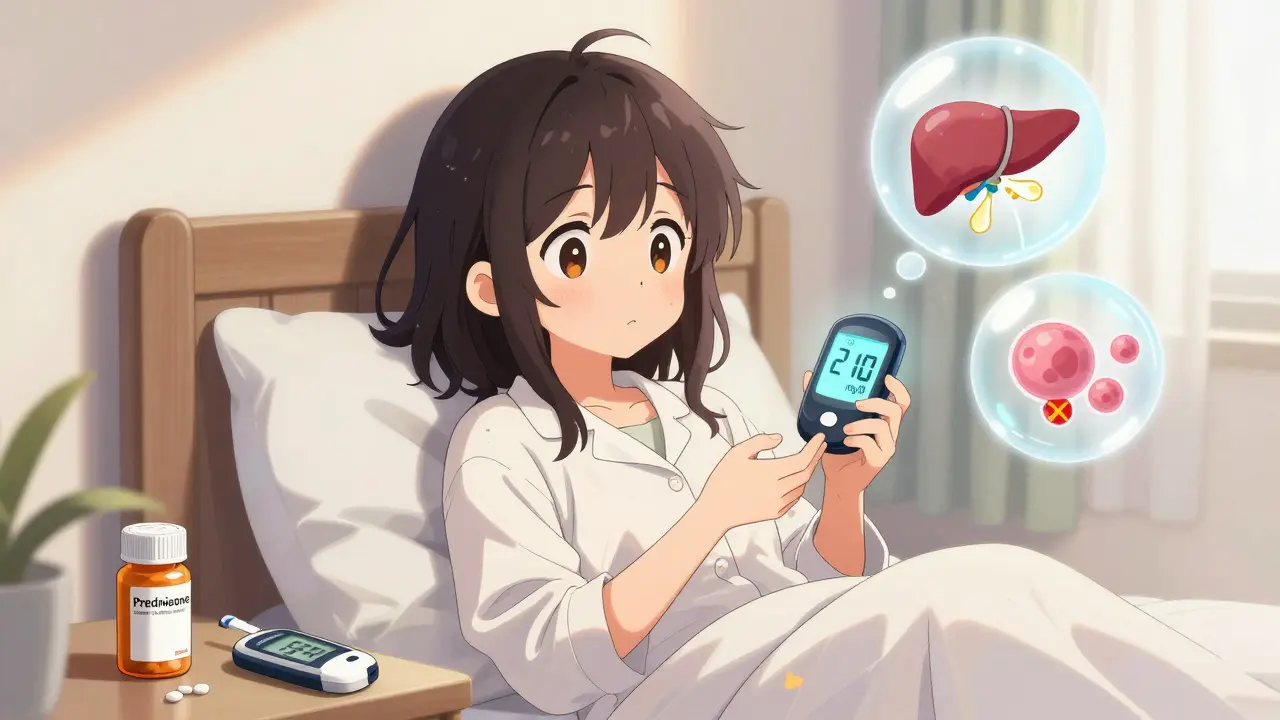
When you take corticosteroids like prednisone or dexamethasone for asthma, arthritis, or an autoimmune flare-up, your body doesn’t just fight inflammation-it also starts spiking your blood sugar. This isn’t a side effect you can ignore. In fact, 20-50% of people on high-dose steroids develop hyperglycemia, even if they’ve never had diabetes before. For many, it happens fast-sometimes within 24 to 48 hours of starting the medication. And if left unchecked, it can lead to serious complications like diabetic ketoacidosis or hyperosmolar hyperglycemic state, both of which carry a 15-20% mortality risk.
Why Corticosteroids Raise Blood Sugar
Corticosteroids don’t just cause a simple spike in glucose. They mess with your body’s entire glucose system in four key ways. First, they tell your liver to pump out more sugar. Studies show liver glucose production increases by 35-40% because steroids turn on enzymes like phosphoenolpyruvate carboxykinase and glucose-6-phosphatase. This means your liver is making sugar even when you’re not eating. Second, they block insulin from doing its job in your muscles and fat tissue. Insulin normally tells cells to grab glucose from the blood, but steroids interfere with the GLUT4 transporter, cutting glucose uptake by about 30%. The result? Sugar builds up in your bloodstream because your muscles can’t absorb it. Third, steroids break down fat faster. This releases free fatty acids into your blood, which further worsen insulin resistance. The more fat your body breaks down, the harder it is for insulin to work. This is why people on long-term steroids often gain weight around their belly-even if they eat the same amount. Lastly, steroids directly damage your pancreas. They reduce insulin production by 20-35% by lowering the expression of GLUT2 and glucokinase, the two proteins your beta cells need to sense blood sugar and release insulin. So you’re not just resistant to insulin-you’re also making less of it. This double hit is why steroid-induced diabetes is so hard to manage with oral pills alone.Who’s Most at Risk?
Not everyone on steroids gets high blood sugar. But certain people are much more likely to. If you’re over 50, your risk jumps by 3.1 times. If you’re overweight (BMI 25 or higher), your risk increases by 2.5 times. A family history of diabetes? That’s a 2.7-fold increase. And if you’ve had gestational diabetes before, your risk skyrockets to 4.3 times higher. The dose matters too. Every extra 5 mg of prednisone per day increases your risk by 18%. Dexamethasone is even worse-it’s 6 to 8 times more likely to cause hyperglycemia than prednisone at the same anti-inflammatory dose. And it’s not just about how much you take, but how long. After the first two weeks, your risk goes up by 12% per week of continued use. Even kidney problems raise your risk. If your eGFR is below 60 mL/min, your chance of developing steroid-induced diabetes is nearly 4 times higher. That’s why doctors should check kidney function before starting long-term steroid therapy.What Symptoms Should You Watch For?
Some people feel it right away. Sixty-five percent report extreme thirst. Seventy-two percent notice they’re peeing more often. Eighty-one percent feel unusually tired. But here’s the problem: 40% of cases show no symptoms at all. That’s why routine blood sugar checks are critical, especially if you’re on high-dose steroids. Other signs overlap with steroid side effects, making it easy to miss. Increased hunger? That’s common with steroids. Weight gain? That’s expected. Blurred vision? Could be from steroids or high blood sugar. Mood swings? Steroids cause those too. This overlap is why so many patients don’t realize their fatigue and blurry vision are linked to blood sugar. Reddit threads from the r/diabetes community show how common this oversight is. In a 2023 thread with over 140 comments, 68% of users said their doctor never warned them about this risk. Many only found out after their blood sugar hit 300 mg/dL or higher-sometimes in the ER.
How to Monitor Blood Sugar During Steroid Therapy
If you’re taking prednisone at 20 mg or more per day (or an equivalent dose of another steroid), you need to check your blood sugar at least twice daily. The NIH recommends testing fasting glucose in the morning and again two hours after your largest meal. Target levels? Fasting glucose should stay below 140 mg/dL (7.8 mmol/L). Random readings should stay below 180 mg/dL (10.0 mmol/L). If you’re already diabetic, your insulin needs may jump by 50-100% during steroid treatment. Timing matters. Steroid-induced hyperglycemia doesn’t peak right after you take your pill. It usually hits 4 to 8 hours later. So if you take prednisone in the morning, your highest blood sugar will likely be after lunch or early afternoon-not at breakfast. That’s why monitoring only at fasting isn’t enough. For those on dexamethasone, which lasts 36-72 hours, glucose levels stay elevated longer. You might need to test three times a day, especially if you’re hospitalized.How to Treat Steroid-Induced Hyperglycemia
Oral diabetes pills often don’t work well here. Metformin helps a little with insulin resistance, but it doesn’t fix the insulin shortage. Sulfonylureas like glipizide can force your pancreas to release more insulin, but they’re risky when steroids are tapered-your body suddenly needs less insulin, and you can crash into hypoglycemia. In fact, 37% of adverse events linked to sulfonylureas happen during steroid withdrawal. That’s why insulin is the first-line treatment. Basal insulin (like glargine or detemir) covers the liver’s sugar overproduction. The University of California San Francisco recommends increasing basal insulin by 20% for every 10 mg above 20 mg of prednisone. So if you’re on 40 mg of prednisone, your basal insulin dose should be 40% higher than your usual dose. Rapid-acting insulin (like lispro or aspart) handles meal spikes. Use a ratio of 1 unit per 5-10 grams of carbs. Most people need to adjust this daily based on their readings. Newer options are emerging. GLP-1 receptor agonists (like semaglutide) are being tested in the NIH’s GLUCO-STER trial. Early results show they cause 28% fewer low blood sugar events than insulin, because they only trigger insulin release when glucose is high. That’s a big advantage during steroid tapering.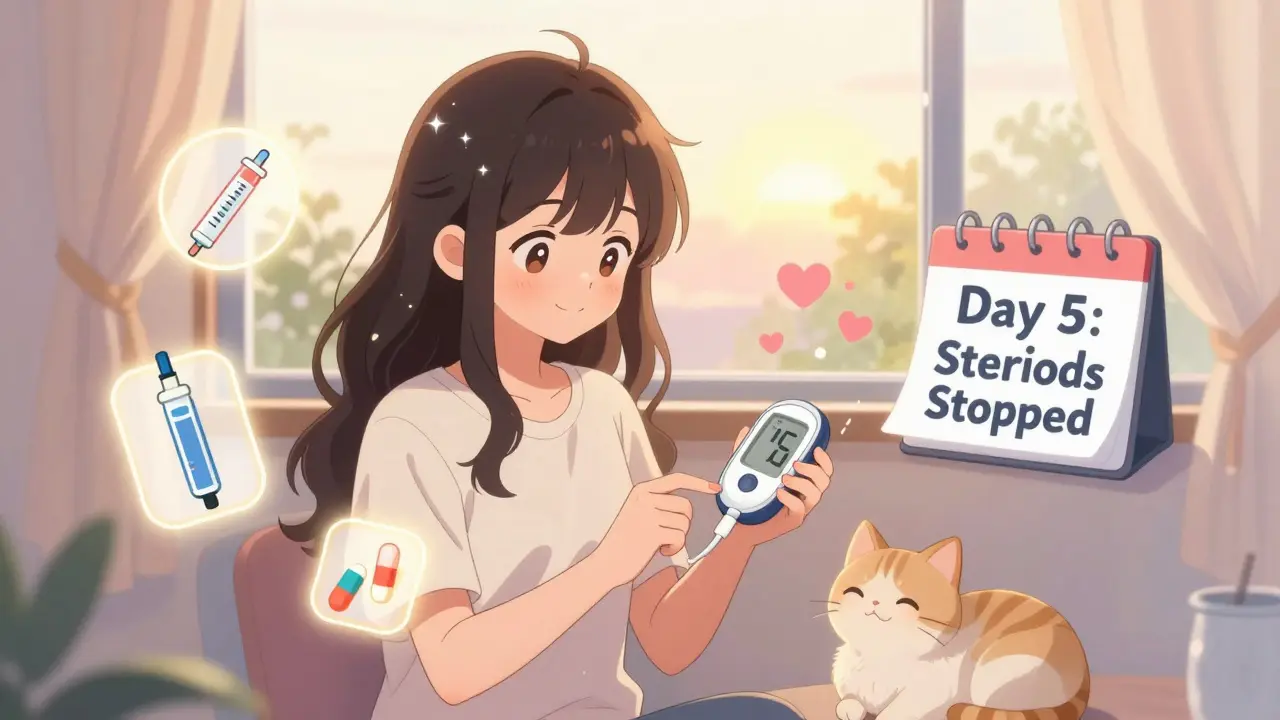
What Happens When You Stop Steroids?
The good news? Steroid-induced diabetes usually goes away. Once you stop taking the steroid, your blood sugar typically normalizes within 3 to 5 days. But here’s the trap: many patients keep taking diabetes meds out of habit. One study found that 63% of patients continued oral diabetes drugs or insulin even after steroids were stopped, leading to unnecessary hypoglycemia. That’s why education is key. Your doctor should give you a clear plan: when to stop insulin, when to reduce doses, and when to stop checking blood sugar altogether. If you’re on long-term steroids (like for lupus or COPD), your risk doesn’t vanish. You might develop true type 2 diabetes over time. That’s why ongoing monitoring-even after stopping-is important.What’s Changing in 2025?
New tools are helping. The European Association for the Study of Diabetes launched the STEROID-Glucose app in 2023. It takes your steroid dose and blood sugar readings and gives you real-time insulin adjustment suggestions. In pilot studies, it cut hyperglycemic events by 32%. Researchers are also working on smarter steroids. Compound XG-201, a tissue-selective glucocorticoid receptor modulator, showed a 65% reduction in hyperglycemia compared to prednisone in phase II trials-while keeping the same anti-inflammatory power. And the problem is growing. Corticosteroids are now used in over 40% of CAR-T cell cancer therapies, where hyperglycemia occurs in 75-85% of patients. With rising use in autoimmune and post-COVID inflammatory conditions, experts predict steroid-induced diabetes will become the third most common cause of secondary diabetes by 2030.What You Can Do Now
If you’re prescribed corticosteroids:- Ask your doctor if you’re at high risk for hyperglycemia based on your age, weight, and medical history.
- Request a baseline blood sugar test before starting.
- Ask for a monitoring plan-how often to check, what targets to aim for, and when to call for help.
- Don’t assume fatigue or thirst is just from the steroid. Test your blood sugar.
- If you’re on insulin, keep a log of your steroid dose and glucose readings. This helps your doctor adjust faster.
- When your steroid dose is lowered, don’t stop your diabetes meds without talking to your provider.