
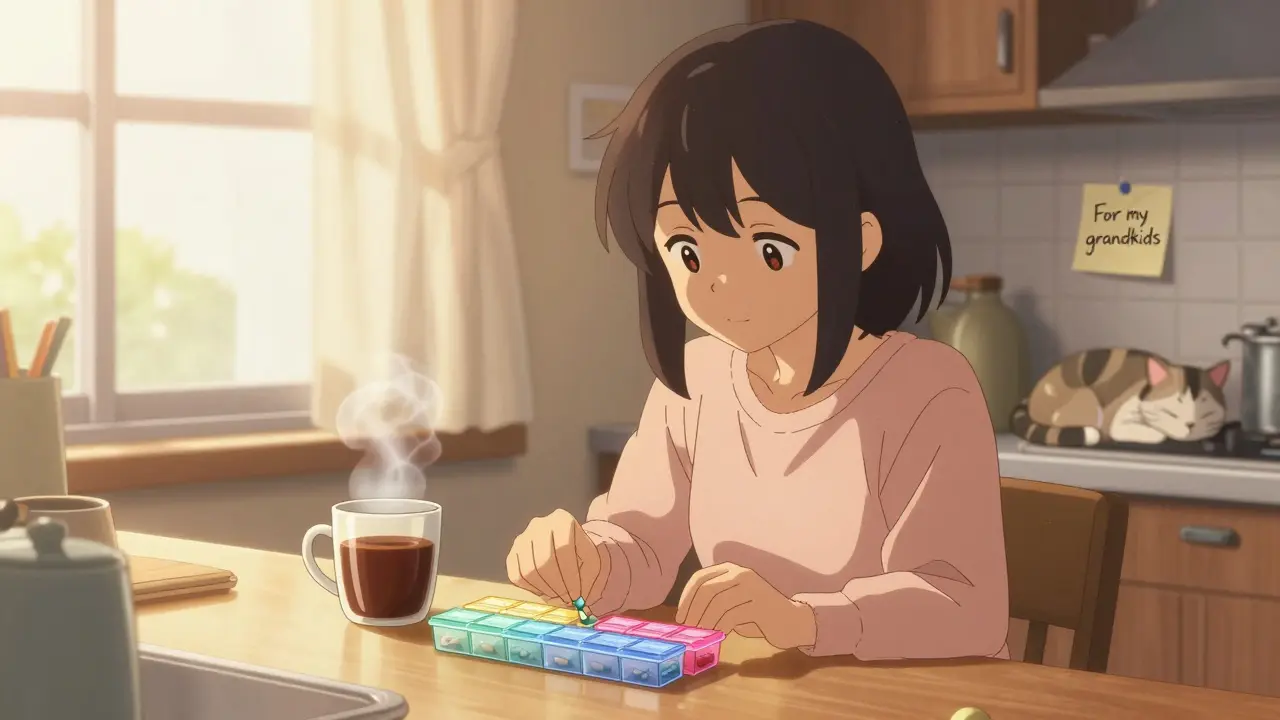
Taking pills every day for years isn’t just about remembering to swallow them. For millions of people living with chronic conditions-diabetes, high blood pressure, rheumatoid arthritis, or heart disease-it’s a daily battle against fatigue, fear, cost, and confusion. And when you’re doing it for decades, the emotional weight can be heavier than the pill bottle. So what helps people actually stick with their meds? Not willpower. Not guilt. Not even reminders on their phone. The real answer lies in copings strategies-the quiet, personal ways people learn to live with their medicine instead of fighting it.
Why Most Advice on Medication Adherence Falls Short
You’ve probably heard: "Take your pills on time." "Use a pill organizer." "Set alarms." These are practical tips, sure. But they ignore the real problem: people aren’t failing because they forget. They’re failing because they’re exhausted, scared, or overwhelmed. A 2022 review of 15 studies found that 78% of patients who used active problem-solving strategies stuck with their meds better than others. That’s not because they were more disciplined. It’s because they learned how to tackle the barriers head-on.
Think about it. If your medication costs $200 a month and you’re on a fixed income, no amount of reminders will help if you’re skipping doses to pay for groceries. If you’ve been on the same drug for five years and still don’t know why you’re taking it, you’re more likely to quit. And if you’re tired of feeling like a patient, not a person, the routine becomes a reminder of loss, not health.
The Five Coping Strategies That Actually Move the Needle
Research from the Journal of Pharmacy Practice breaks down five main ways people cope with long-term medication use. Not all of them work. Some even backfire. Here’s what the data says about each:
1. Problem-Solving / Active Coping (78% Effective)
This is the gold standard. It’s not about being organized-it’s about being strategic. People who use this strategy don’t just take their pills. They ask: "What’s getting in my way?" Then they fix it.
- They call their pharmacist to switch from three daily pills to one combination pill.
- They talk to their doctor about generic alternatives when the cost is too high.
- They use apps that track side effects and bring the data to appointments.
In one rheumatoid arthritis study, patients who scored higher on active coping had significantly better adherence. Not because they were more motivated-but because they treated their medication routine like a puzzle to solve, not a chore to endure.
2. Emotion-Focused Coping (69% Effective)
Sometimes, the problem isn’t logistics-it’s feelings. Anxiety about side effects. Shame over needing daily meds. Grief over losing your old self. Emotion-focused coping helps people manage those feelings without letting them derail their routine.
- Journaling about how the medication makes them feel.
- Using mindfulness or breathing exercises before taking pills.
- Reframing: "I’m not taking this because I’m sick. I’m taking this because I want to keep hiking with my grandkids."
One study found that patients who used self-encouragement-talking to themselves kindly about their routine-were more likely to stay on track. This isn’t fluff. It’s psychological resilience in action.
3. Seeking Understanding (Consistently Positive)
People who understand why they’re taking a drug are far more likely to stick with it. But most patients don’t. A CDC report found that nearly half of people on chronic meds couldn’t explain their own treatment plan.
Those who asked questions-"Why this drug?", "What happens if I skip?", "Are there alternatives?"-had better outcomes. It’s not about memorizing medical jargon. It’s about feeling like a partner, not a patient.
4. Support-Seeking Coping (Consistently Positive)
No one should manage chronic medication alone. People who reached out-whether to family, support groups, pharmacists, or online communities-had higher adherence rates. The CDC found that team-based care (pharmacists + doctors + social workers) boosted adherence to 89% after a year. That’s not magic. That’s human connection.
One woman in Perth told a nurse: "I don’t trust myself to remember. But I trust my sister to check on me every morning." That simple system worked better than any app.
5. Problem Avoidance (50% Harmful)
This is the silent killer. Ignoring the problem. Pretending it’s not a big deal. Skipping doses "just this once." Believing "I’ll start again next week." This strategy showed negative effects in half of the studies. And in some cases, it even made people feel worse-because they knew they were failing, but didn’t know how to fix it.
It’s not laziness. It’s fear. Fear of side effects. Fear of dependency. Fear of being labeled "noncompliant." The trick isn’t to shame people into compliance. It’s to help them talk about it.
What the Data Doesn’t Tell You (And Why It Matters)
The studies show averages. But real life doesn’t average out. One woman with arthritis was 4.5 times more likely to stick with her meds if she was female. Older patients did better. Those with shorter disease duration did better. Income mattered. Education mattered. Access to transportation mattered.
That’s why cookie-cutter advice fails. A 28-year-old single dad working two jobs needs different help than a 72-year-old widow with a fixed pension. One might need help with childcare so she can go to the pharmacy. The other might need someone to open his pill bottle for him.
And here’s the truth no one talks about: sometimes, the best strategy is to simplify. The CDC says reducing pill burden-switching to once-daily doses, combination pills, or generics-does more for adherence than any behavioral intervention. If you’re taking seven pills a day, no amount of coping will fix that. You need a doctor who’s willing to rethink the regimen.
What Works in Real Life: A Few Practical Examples
Here’s what actually happened in real cases-not theory:
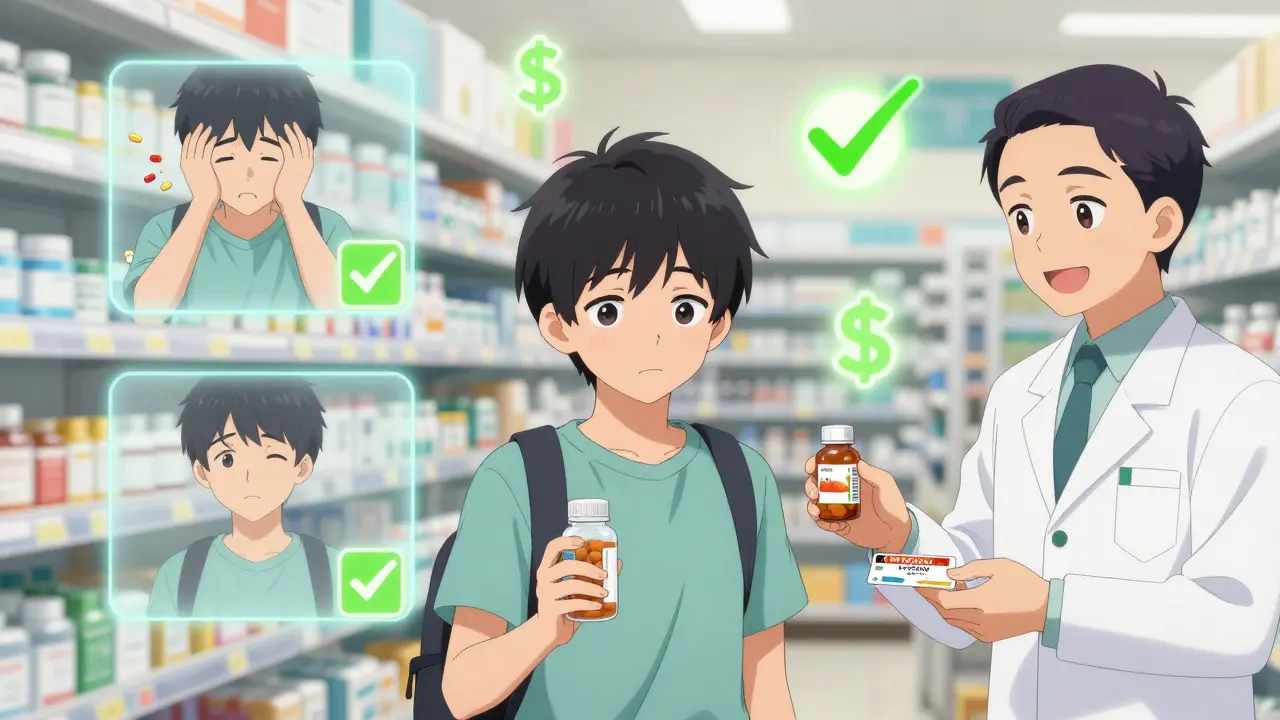
- A man with type 2 diabetes started skipping his insulin because he hated the needles. His pharmacist switched him to an oral medication. Adherence went from 30% to 92%.
- A woman with high blood pressure couldn’t afford her medication. Her doctor connected her with RxAssist.org. She now pays $5 a month. She hasn’t missed a dose in 18 months.
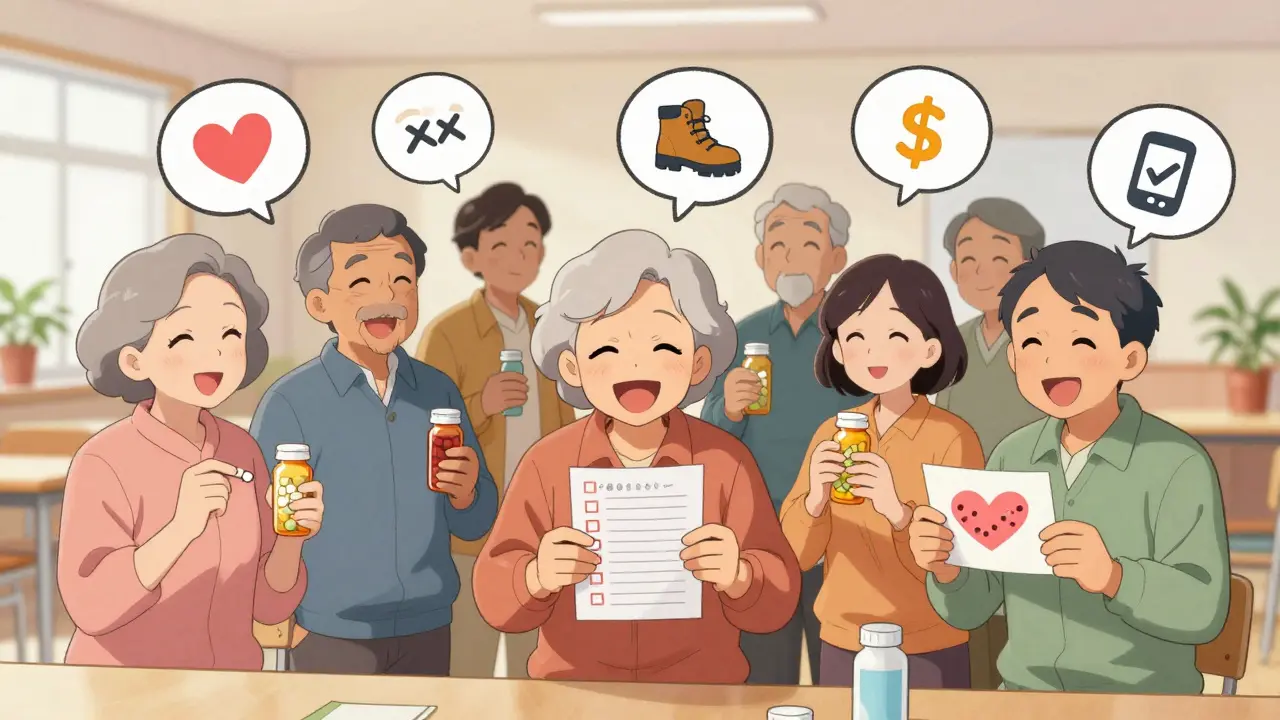
- A group of older patients in Perth started meeting weekly at the community center to take their meds together. They checked in. They laughed. They reminded each other. Adherence jumped from 68% to 86% in six months.
These aren’t clinical trials. They’re human solutions. And they work because they’re tailored.
How to Build Your Own Coping System
You don’t need to be perfect. You just need to be consistent. Here’s how to start:
- Identify your biggest barrier. Is it cost? Side effects? Complexity? Forgetting? Write it down. Don’t guess.
- Choose one strategy to try. If it’s cost, talk to your pharmacist about generics. If it’s forgetfulness, try a pill box with alarms. If it’s fear, write down one thing you’re afraid of-and ask your doctor about it.
- Test it for two weeks. Don’t aim for perfection. Aim for progress. Did it help? Did it make things worse?
- Adjust or try another. Coping isn’t one-size-fits-all. It’s trial and error. And it’s okay to change your approach.
And if you’re a caregiver, family member, or friend? Don’t nag. Ask: "What’s the hardest part about taking your meds right now?" Then listen. Really listen.
The Bigger Picture: Why This Matters Beyond You
Medication nonadherence costs the U.S. healthcare system $100-300 billion a year. That’s not just numbers. It’s hospitalizations. Emergency visits. Lost work. Family stress.
But here’s the flip side: when people stick with their meds, hospital visits drop. Life expectancy improves. Quality of life goes up. And the cost of care goes down.
It’s not about being obedient. It’s about being empowered. You’re not a problem to be fixed. You’re a person with a life-and your medicine is just one part of keeping it.
Why do some people stop taking their chronic medication even when they know it’s important?
Many stop because the reasons go deeper than forgetfulness. Common causes include side effects that feel worse than the condition, high out-of-pocket costs, feeling like the medication is controlling their life, or simply being overwhelmed by the number of pills they have to take each day. Some also fear long-term dependency or don’t feel any immediate benefit, so they assume the pills aren’t working. Without support or clear communication from their care team, they may quietly stop without telling anyone.
Can coping strategies really improve medication adherence, or is it just about willpower?
Willpower isn’t enough for long-term habits. Research shows that coping strategies-like problem-solving, emotional regulation, and seeking support-directly improve adherence. One study found that patients using active problem-solving were 78% more likely to stick with their regimen. These strategies work because they address the real-life barriers: cost, complexity, fear, and fatigue. It’s not about being strong. It’s about having tools.
What should I do if my medication is too expensive?
Talk to your pharmacist or doctor. Ask if a generic version exists. Many brand-name drugs have cheaper alternatives that work just as well. You can also check programs like RxAssist.org, which helps people find patient assistance programs from drug manufacturers. Some pharmacies offer discount cards or 90-day supply discounts. In Australia, the PBS (Pharmaceutical Benefits Scheme) subsidizes many chronic medications-make sure you’re registered. Never skip doses because of cost. There’s always a solution if you ask.
Is it okay to take my medication differently than prescribed if I feel fine?
No. Feeling fine doesn’t mean the condition is gone. Many chronic diseases-like high blood pressure or diabetes-don’t cause symptoms until damage is already done. Skipping doses or changing timing can lead to serious complications down the line. If you want to adjust your regimen, talk to your doctor. They can help you find a safer, simpler option, but never change it on your own.
How can I make taking my meds part of my daily routine without it feeling like a chore?
Link it to something you already do. Take your pills right after brushing your teeth, or while your coffee brews. Use a pill box with days and times labeled. Set a visual cue-like leaving your bottle on the kitchen counter. Some people find it helps to say aloud why they’re taking it: "This helps me stay strong for my kids." Turning it into a ritual, not a task, makes it easier to stick with.
Are there tools or apps that actually help with long-term medication adherence?
Yes-but only if they match your needs. Simple pill boxes with alarms work better for many than complex apps. Some people benefit from automated refill reminders via phone call or text. Others prefer apps that let them log side effects and share the data with their doctor. The best tool is the one you’ll actually use. Don’t overcomplicate it. A sticky note on the mirror can be more effective than a $20 app.
Final Thought: You’re Not Alone in This
Long-term medication use isn’t a failure. It’s a form of strength. Every day you take your pills, you’re choosing to keep living your life-not just surviving it. The goal isn’t perfection. It’s progress. Find your strategy. Ask for help. Adjust as you go. And remember: you’re not just taking medicine. You’re building a life.
Justin Archuletta
March 19, 2026 AT 04:59Sanjana Rajan
March 20, 2026 AT 22:43Kyle Young
March 21, 2026 AT 14:07Shameer Ahammad
March 22, 2026 AT 17:03Alexander Pitt
March 23, 2026 AT 13:22Manish Singh
March 23, 2026 AT 22:39Nilesh Khedekar
March 24, 2026 AT 22:20Robin Hall
March 26, 2026 AT 02:39jared baker
March 27, 2026 AT 05:33Michelle Jackson
March 28, 2026 AT 16:25Justin Archuletta
March 30, 2026 AT 05:45