
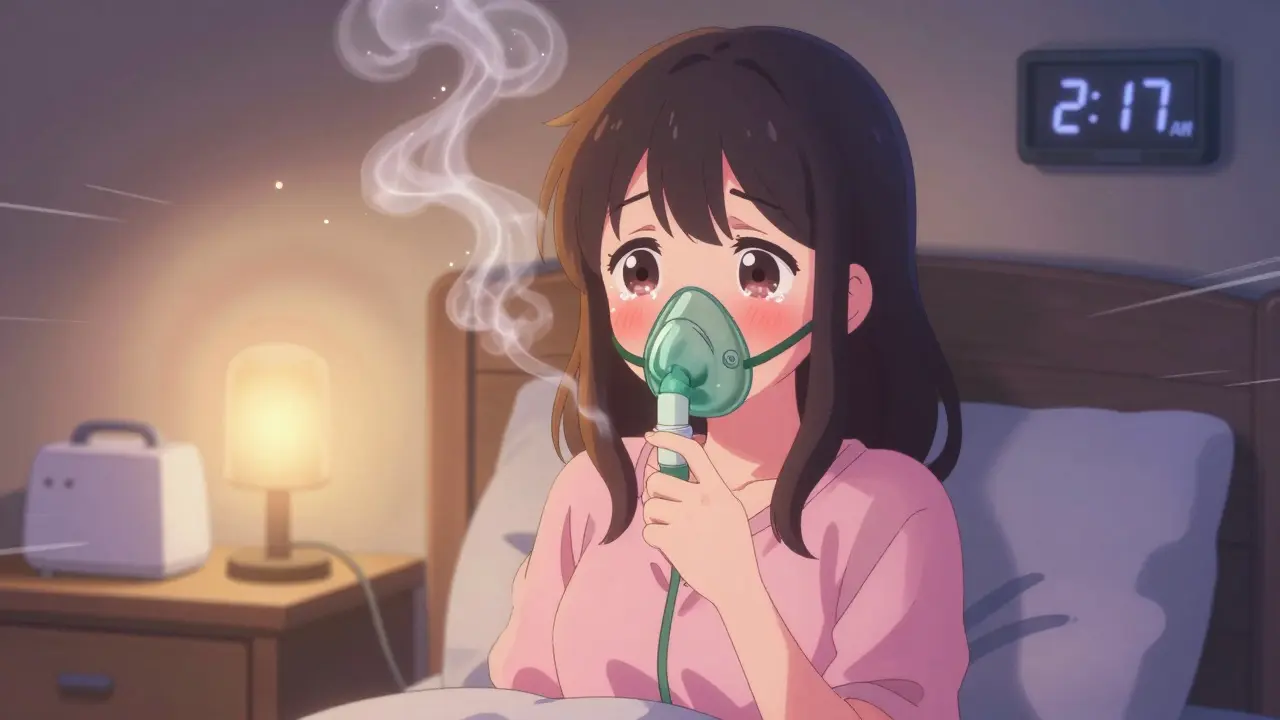
Cluster headaches aren’t just bad headaches. They’re among the most painful conditions known to medicine - so intense that people who experience them often describe it as worse than childbirth or broken bones. The pain hits like a drill boring into one side of your head, usually around the eye or temple, and it doesn’t fade. It explodes. And it comes back, again and again, sometimes multiple times a day, for weeks or months at a time. There’s no warning. No trigger you can always avoid. Just sudden, brutal pain that leaves you pacing, rocking, or even screaming - because sitting still feels impossible.
For decades, people suffering from cluster headaches were told it was "just a headache" or that they were exaggerating. But the truth is, this isn’t a migraine. It’s not a tension headache. It’s a neurological storm that strikes without mercy. And the one treatment that consistently stops it in its tracks - fast, safely, and without drugs - is 100% oxygen therapy.
What Makes Cluster Headaches So Different?
Cluster headaches occur in cycles, or "bouts," that last anywhere from a few weeks to a few months. During a bout, you might get one to eight attacks a day, all at roughly the same time - often waking you up 2 to 3 hours after falling asleep. Each attack lasts between 15 and 180 minutes. That’s long enough to feel like an eternity when the pain is this bad.
Unlike migraines, which often come with nausea and light sensitivity, cluster headaches come with clear physical signs on the same side as the pain: a watery eye, a stuffy or runny nose, a drooping eyelid, or a flushed face. People don’t lie down during an attack. They can’t. The pain is so sharp and focused that movement - pacing, rocking, even clawing at the face - is the only thing that offers a sliver of relief.
It affects about 1 in 1,000 people. Men are three times more likely to get it than women, and most people start experiencing attacks between ages 20 and 50. But no one knows exactly why. It’s linked to the hypothalamus - the part of the brain that controls your biological clock - which is why attacks often happen at the same time every day. Some people get them seasonally, like clockwork, every spring or fall.
Why Oxygen Therapy Works When Nothing Else Does
When you’re in the middle of a cluster headache, time is everything. The sooner you act, the better your chance of stopping the attack. That’s where oxygen therapy comes in.
Breathing 100% pure oxygen through a non-rebreather mask at 12 to 15 liters per minute can shut down a cluster headache in as little as 8 to 15 minutes. Studies show that 78% of people become pain-free within that window. Compare that to triptans - the most common migraine drugs - which work in about 74% of cases but come with side effects like chest tightness, dizziness, and, in rare cases, heart risks. Oxygen? No side effects. No drug interactions. No long-term damage.
It works because high-flow oxygen helps calm the overactive nerves in your brainstem and reduces inflammation around the trigeminal nerve - the main pain pathway involved in cluster headaches. It also increases oxygen levels in the blood, which may help reset the abnormal brain activity causing the attack.
It’s not magic. It’s science. And it’s been proven in dozens of clinical trials since the 1950s. The American Academy of Neurology and the European Headache Federation both give oxygen therapy their highest recommendation - Level A evidence - meaning it’s the gold standard for acute treatment.
How to Use Oxygen Therapy Correctly
Getting oxygen therapy right matters. If you do it wrong, it won’t work - and you’ll waste precious minutes while the pain climbs to its peak.
- Use a non-rebreather mask - not a nasal cannula. The mask must have a reservoir bag and one-way valves to ensure you’re breathing pure oxygen, not air mixed in.
- Set the flow rate to 12-15 liters per minute. Anything less than 10 L/min is often ineffective. Most people get the best results at 15 L/min.
- Start immediately. Don’t wait. The moment you feel the pain begin, put on the mask and breathe deeply and steadily. The first 5-10 minutes are critical.
- Sit upright. Leaning back or lying down reduces oxygen delivery efficiency. Sit in a chair or stand - whatever lets you breathe fully.
- Keep it going for at least 15 minutes, even if the pain fades. Stopping too early can let the headache return.
Many people find it helps to have the oxygen setup ready before bed - especially if attacks happen at night. Keep the mask and tubing clean. Replace the mask every few months. A poor seal or cracked tubing can cut your oxygen flow by half.
What Doesn’t Work - And Why
Not everyone responds to oxygen. About 1 in 5 people don’t get relief, even when everything’s done perfectly. Why? Research points to a few predictors:
- You’ve never smoked - surprisingly, non-smokers are less likely to respond.
- Your attacks last longer than 180 minutes.
- You still have dull, constant pain between attacks (called "persistent interictal headache").
Also, oxygen won’t prevent attacks - it only stops them once they’ve started. That means you still need preventive treatments like verapamil, lithium, or topiramate during a cluster cycle. Oxygen is your emergency tool. Not your daily shield.
Other treatments like nasal sprays (zolmitriptan) or injections (sumatriptan) work for some, but they’re slower, more expensive, and carry risks. Triptans can’t be used by people with heart disease or high blood pressure - and about 15% of cluster headache patients fall into that category. Oxygen has no such restrictions.
Access and Cost: The Hidden Battle
The biggest problem with oxygen therapy isn’t effectiveness - it’s getting it.
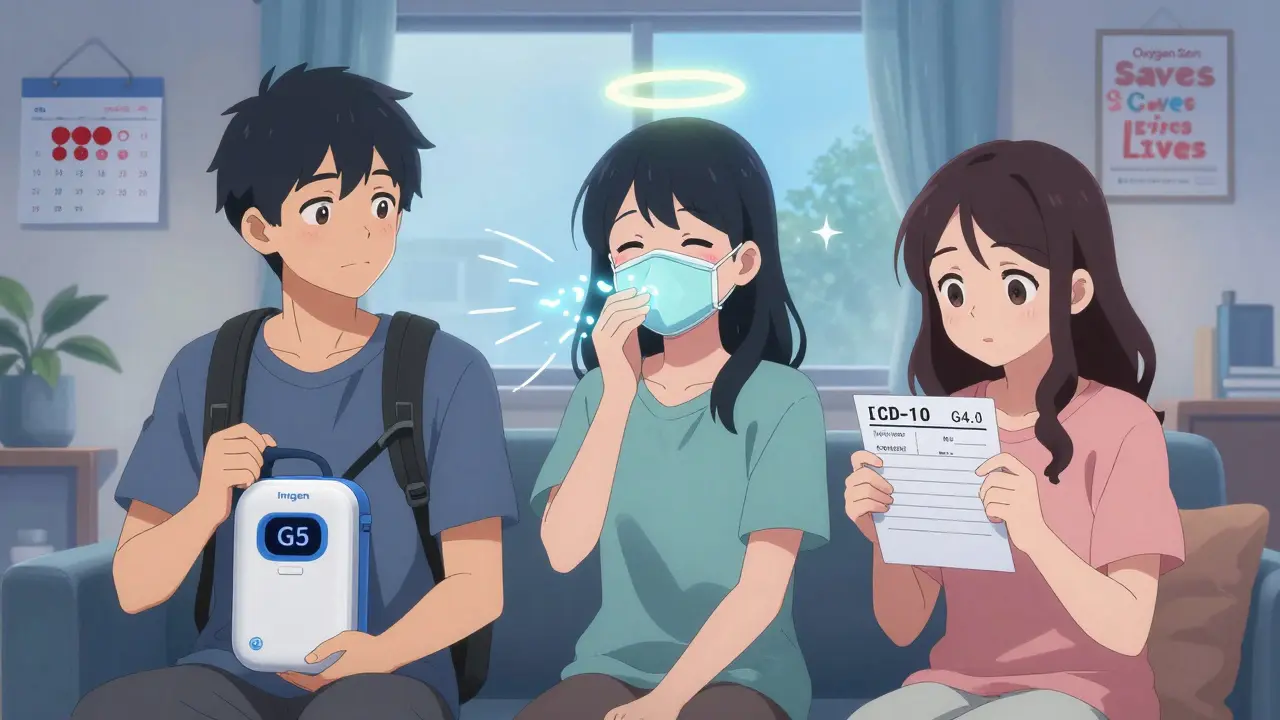
In the U.S., you need a prescription. Your doctor will write it for "medical oxygen for cluster headache" using ICD-10 code G44.0. Then you have to go through a durable medical equipment (DME) provider. That process can take 2 to 4 weeks. Insurance doesn’t always cover it. Medicare denies 41% of initial claims. Private insurers vary wildly - UnitedHealthcare approves 68% of claims, but Aetna only approves 42%.
The equipment itself isn’t cheap. A home oxygen concentrator that delivers 15 L/min costs $1,200 to $2,500 upfront. Monthly rentals run $150-$300. Non-rebreather masks cost $5-$10 each. Many people end up buying their own because insurance delays or denials leave them with no other option.
That’s why portable options are changing the game. New devices like the Inogen One G5 and the FDA-cleared O2VERA weigh under 5.5 pounds and fit in a backpack. They’re battery-powered, so you can carry them to work, the car, or even on a plane. For people who get attacks outside the house, this is life-changing.

Real People, Real Results
On Reddit’s r/ClusterHeadaches community, over 1,200 users shared their oxygen therapy experiences. Seventy-two percent said it gave them "significant or complete relief." One user wrote: "12 L/min non-rebreather mask gets me pain-free in 8-10 minutes if I catch it early - game changer from my previous 9/10 pain scores."
Others talk about the emotional toll - how the fear of the next attack makes them anxious, isolated, or depressed. But oxygen gives them control. "Before oxygen, I felt like a prisoner to my own brain," one person said. "Now, I have a weapon. I know what to do. That’s peace of mind."
Some have even seen fewer attacks over time. One patient reported his cluster cycle dropped from 8 attacks a day to just 2 - after using oxygen consistently for three months. No one knows why, but it’s a pattern others have reported too.
What’s Next for Cluster Headache Treatment?
Research is moving fast. In 2024, the European Medicines Agency approved a new nasal oxygen delivery system that works in 89% of cases - faster and more convenient than masks. Clinical trials are testing demand-valve oxygen systems that release oxygen only when you inhale, cutting waste and increasing portability.
Devices like gammaCore, which stimulate nerves through the skin, are helping people who don’t respond to oxygen. But for now, oxygen remains the most reliable, safest, and fastest option.
Advocacy groups like Clusterbusters have pushed for laws in 22 U.S. states to force insurance companies to cover oxygen therapy for cluster headaches. These efforts are working. More people are getting access. But there’s still a gap - especially in rural areas, where only 28% of patients have immediate access compared to 63% in cities.
For now, if you or someone you know suffers from cluster headaches, the message is simple: oxygen therapy works. It’s not experimental. It’s not optional. It’s the standard of care. And if your doctor hasn’t mentioned it, ask for it - loudly and clearly.
Can oxygen therapy prevent cluster headaches?
No. Oxygen therapy only stops an attack once it has started. It doesn’t reduce how often they happen. To prevent attacks during a cluster cycle, you need daily preventive medications like verapamil, lithium, or topiramate. Oxygen is your emergency tool, not your daily shield.
Do I need a prescription for oxygen therapy?
Yes. In most countries, including the U.S., you need a doctor’s prescription to get medical-grade oxygen. Your doctor will use ICD-10 code G44.0 for cluster headache. Without it, insurance won’t cover the cost, and DME providers won’t supply equipment.
Why doesn’t oxygen work for everyone?
About 20% of people don’t respond to oxygen, even when used correctly. Factors that reduce effectiveness include never having smoked, attacks lasting longer than 3 hours, and having constant pain between attacks. If oxygen doesn’t help, other options like injectable sumatriptan or neuromodulation devices may be considered.
Is it safe to use oxygen at home?
Yes, when used properly. Medical oxygen is not flammable, but it supports combustion. Keep it away from open flames, cigarettes, and heaters. Use only equipment designed for medical use. Never modify masks or tubing. Store oxygen concentrators in well-ventilated areas. Follow all safety instructions from your DME provider.
Can I use an oxygen concentrator while traveling?
Yes, if you have a portable, FAA-approved device like the Inogen One G5 or O2VERA. Most airlines allow these on board, but you must notify them in advance and bring extra batteries. Always carry your prescription and a letter from your doctor. Test your device before flying - battery life varies with flow rate and altitude.
How long does it take to get oxygen equipment after a prescription?
It usually takes 2 to 4 weeks to get equipment through insurance and a DME provider. If you’re in a crisis and can’t wait, some providers offer emergency rentals or loaner units. Some patients buy their own portable devices outright to avoid delays. Always ask your doctor for help navigating the process.
If you’ve been told your headaches are "just stress" or "all in your head," know this: cluster headaches are real, measurable, and treatable. Oxygen therapy isn’t a last resort - it’s the first and best line of defense. Don’t wait for someone else to tell you it’s worth trying. Ask for it. Demand it. And if you’re reading this and you’re not the one suffering - tell someone who is.
Sue Stone
January 23, 2026 AT 04:42Just read this whole thing and I’m stunned. I had no idea oxygen was this effective. My brother’s been suffering for years and his doctor never mentioned it. I’m sending him this right now.
Susannah Green
January 24, 2026 AT 10:33My husband’s been using oxygen for 8 months now-15 L/min, non-rebreather, sitting up like they said. It cuts his attacks from 90 minutes to 7. I’ve started keeping a log. It’s not magic. It’s math. And it’s working.
Stacy Thomes
January 24, 2026 AT 20:31THIS. IS. LIFE-CHANGING. I used to cry in the shower every night because I knew the pain was coming. Now I have my oxygen tank by the bed. I turn it on. I breathe. I survive. Thank you for writing this. Someone finally gets it.
charley lopez
January 26, 2026 AT 06:02The neurophysiological mechanism underlying oxygen’s efficacy in cluster headache attenuation is likely mediated via hypoxic suppression of the trigeminovascular system and hypothalamic modulation. The clinical evidence base is robust, with Level A recommendations from both AAN and EHF. However, access disparities remain a systemic issue.
Andrew Smirnykh
January 26, 2026 AT 14:53I’m from Nigeria, and I’ve never seen anyone here talk about this. We have so little access to even basic headache meds. If this works, why isn’t it being pushed harder globally? This shouldn’t be a luxury.
Janet King
January 27, 2026 AT 05:02It is important to note that oxygen therapy is not a preventive measure. It is an acute intervention only. Patients must still use verapamil or other prophylactic agents during cluster cycles. Oxygen is for stopping the attack, not preventing it. This distinction is critical.
Kerry Evans
January 27, 2026 AT 08:10Everyone’s acting like oxygen is some miracle cure. I’ve used it. For 18 months. Didn’t work for me. And I did everything right. Mask, flow rate, sitting up. Nothing. So don’t go telling people it’s the answer. It’s not. And the people who say it is? They’re just lucky.
Kerry Moore
January 28, 2026 AT 08:36I appreciate the detailed clinical breakdown. I’m curious-do you have any data on whether long-term oxygen use correlates with a reduction in attack frequency over time? There are anecdotal reports, but is there any longitudinal study?
Laura Rice
January 28, 2026 AT 21:28My doctor laughed when I asked for oxygen. Said it was "old school." I cried in the parking lot. I bought my own tank. Now I’m pain-free 90% of the time. If your doctor doesn’t get it, go elsewhere. Your pain is real. You deserve better.
Anna Pryde-Smith
January 29, 2026 AT 20:09How DARE you say oxygen is the gold standard without mentioning how expensive and inaccessible it is? People are dying because insurance won’t cover it. This isn’t a medical article-it’s a cry for help. And nobody’s listening.
Vanessa Barber
January 31, 2026 AT 14:48Actually, I read a paper last year that said oxygen’s efficacy might be placebo-driven because of the ritual of putting on the mask. The real relief is psychological. Just saying.
dana torgersen
February 1, 2026 AT 23:52oxygen... it's like... the brain just... needs more air? like when you're hyperventilating but not? i think it's the way it resets the... thing? the... clock? in your head? the hypothalamus? i don't know. but it works. i've had 4 attacks this week. 4. and oxygen stopped 3. so... yeah. it's real. i'm not crazy. i think.
Oladeji Omobolaji
February 2, 2026 AT 20:59My cousin in Lagos got oxygen from a friend who brought it from the US. He used it once and said it felt like someone turned off a fire in his skull. He’s been asking me to help him get a machine. This isn’t just medicine. It’s dignity.