
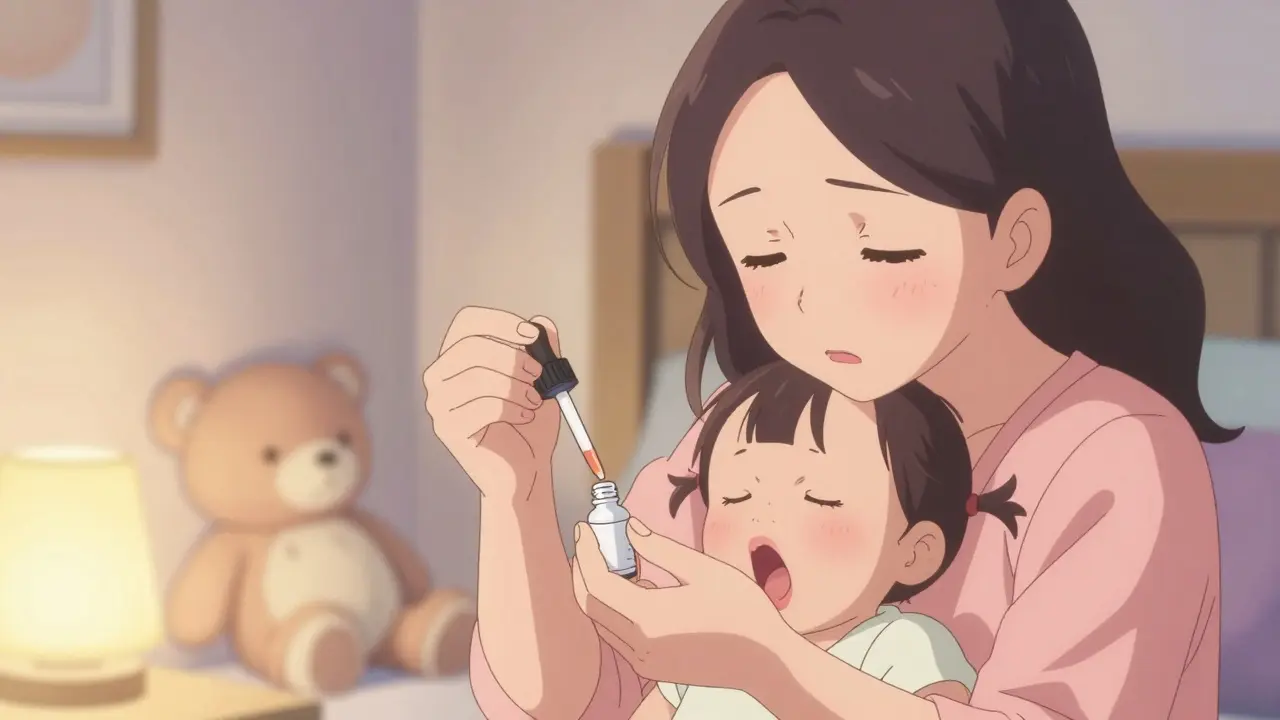
Child Antihistamine Dosing Calculator
Find the right dose for your child
This tool calculates safe antihistamine doses based on age and weight. Always follow your pediatrician's advice.
Enter child's age, weight, and antihistamine type to see the recommended dose.
When your child wakes up with a rash, sneezing nonstop, or swollen eyes from an allergic reaction, it’s natural to reach for an antihistamine. But not all antihistamines are safe for kids-and giving the wrong one, or the wrong dose, can be dangerous. Many parents still turn to Benadryl because it’s easy to find and seems to work fast. But what they don’t know is that for children, especially under age 2, it might be doing more harm than good.
Why First-Generation Antihistamines Like Benadryl Are Risky for Kids
Diphenhydramine, the active ingredient in Benadryl, is a first-generation antihistamine. It crosses the blood-brain barrier easily, which is why it causes drowsiness in adults. In young children, that same effect can turn into something far more serious: extreme sleepiness, confusion, rapid heartbeat, dry mouth, trouble urinating, or even seizures. The FDA has warned since 2008 that diphenhydramine should not be used in children under 2 without a doctor’s supervision. Even for kids aged 2 to 5, the risks often outweigh the benefits.Studies show that 50-60% of children given diphenhydramine become drowsy. But in some, it causes the opposite-agitation, hallucinations, or a racing heart. These side effects are not rare. In fact, poison control centers in the U.S. receive over 10,000 calls each year about accidental overdoses in children under 6, mostly from diphenhydramine. And when parents use it to help their child sleep? That risk jumps by 300%.
Second-Generation Antihistamines: The Safer Choice
Cetirizine (Zyrtec) and loratadine (Claritin) are second-generation antihistamines. They were designed to stay out of the brain as much as possible, so they cause far less drowsiness and have fewer side effects. For kids, this makes them the clear first choice.Research published in Pediatric Allergy and Immunology in 2020 showed that cetirizine is safe and effective in infants as young as 6 months. The American Academy of Allergy, Asthma & Immunology now recommends cetirizine over diphenhydramine for treating hives and allergic reactions in babies. Dr. Eric Macy, a leading pediatric allergist, says: “Given that cetirizine 0.25 mg/kg/day has been shown to be safe and effective in infants 6 to 11 months old, I would recommend starting at 0.125 mg/kg/day and increasing to 0.25 mg/kg/day if needed.”
Loratadine is even less likely to cause drowsiness. Studies show only 6.9% of children on loratadine feel sleepy, compared to 14.7% on cetirizine. That makes loratadine a great option for kids who need daily allergy control without the grogginess.
Age-Appropriate Dosing: Exact Numbers You Can Trust
Dosing isn’t guesswork. It’s based on age, weight, and the specific drug. Using a kitchen spoon or guessing a “half tablet” can lead to overdose.For infants 6 to 11 months:
Cetirizine: 0.125 mg per kg of body weight per day (e.g., 1 mg for an 8 kg baby). This is off-label but supported by clinical evidence. Always start low and increase only if needed, under a doctor’s guidance.
For children 1 to 2 years:
Cetirizine: 0.25 mg/kg/day, split into two doses if needed. Loratadine: Not FDA-approved until age 2, but many doctors prescribe 2.5 mg daily if the child weighs at least 10 kg. Always confirm with your pediatrician.
For children 2 to 5 years:
Cetirizine: 2.5 mg once daily (½ teaspoon of 5 mg/5mL liquid).
Loratadine: 2.5 mg once daily (½ teaspoon of 5 mg/5mL liquid).
Diphenhydramine: Only if prescribed. Dose is 1.25 mg/kg every 6 hours, max 4 doses in 24 hours. For a 30-pound child, that’s 7.5 mL of liquid (12.5 mg/5mL).
For children 6 to 11 years:
Cetirizine: 5 mg daily, can increase to 10 mg if needed.
Loratadine: 5 mg daily.
Diphenhydramine: 12.5 mg every 4-6 hours, max 6 doses in 24 hours.
For children 12 and older:
Cetirizine: 10 mg daily.
Loratadine: 10 mg daily.
Always use the measuring device that comes with the liquid. A kitchen teaspoon holds anywhere from 3 mL to 7 mL-far too inconsistent for a child’s dose. Even a small mistake can be dangerous.
What to Avoid at All Costs
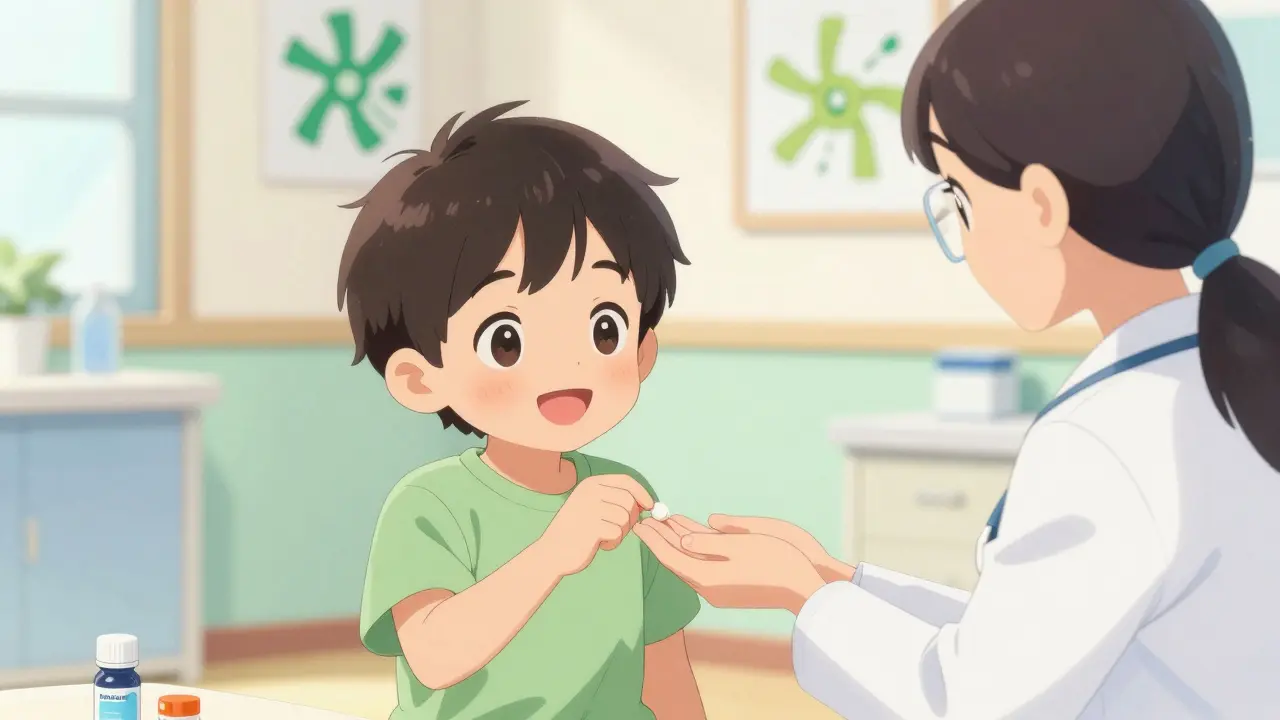
Many products marketed for kids contain more than just antihistamines. “Children’s allergy + cold” formulas often include decongestants like pseudoephedrine or phenylephrine. These are not recommended for children under 6 and can cause dangerous spikes in blood pressure or heart rate.Another common mistake: using adult tablets for kids. A 10 mg cetirizine tablet is too strong for a 3-year-old. Cutting it in half doesn’t always give you 5 mg-some tablets aren’t scored evenly. Chewables also vary. Some are 5 mg, others are 10 mg. Always check the label.
Never use antihistamines to make your child sleepy. That’s not what they’re for. The American College of Allergy, Asthma, and Immunology warns this practice increases overdose risk dramatically. If your child has trouble sleeping, talk to your doctor about the real cause-maybe it’s allergies keeping them awake, not the other way around.
When to Call for Help
Signs of an antihistamine overdose in children include:- Extreme drowsiness or inability to wake up
- Blurry vision or dilated pupils
- Confusion or hallucinations
- Racing heart or flushed skin
- Difficulty urinating
- Seizures or unresponsiveness
If you suspect an overdose, call Poison Control immediately at 1-800-222-1222. Do not wait for symptoms to worsen. Even small overdoses in young children can become life-threatening quickly.
What’s Changing in 2025 and Beyond
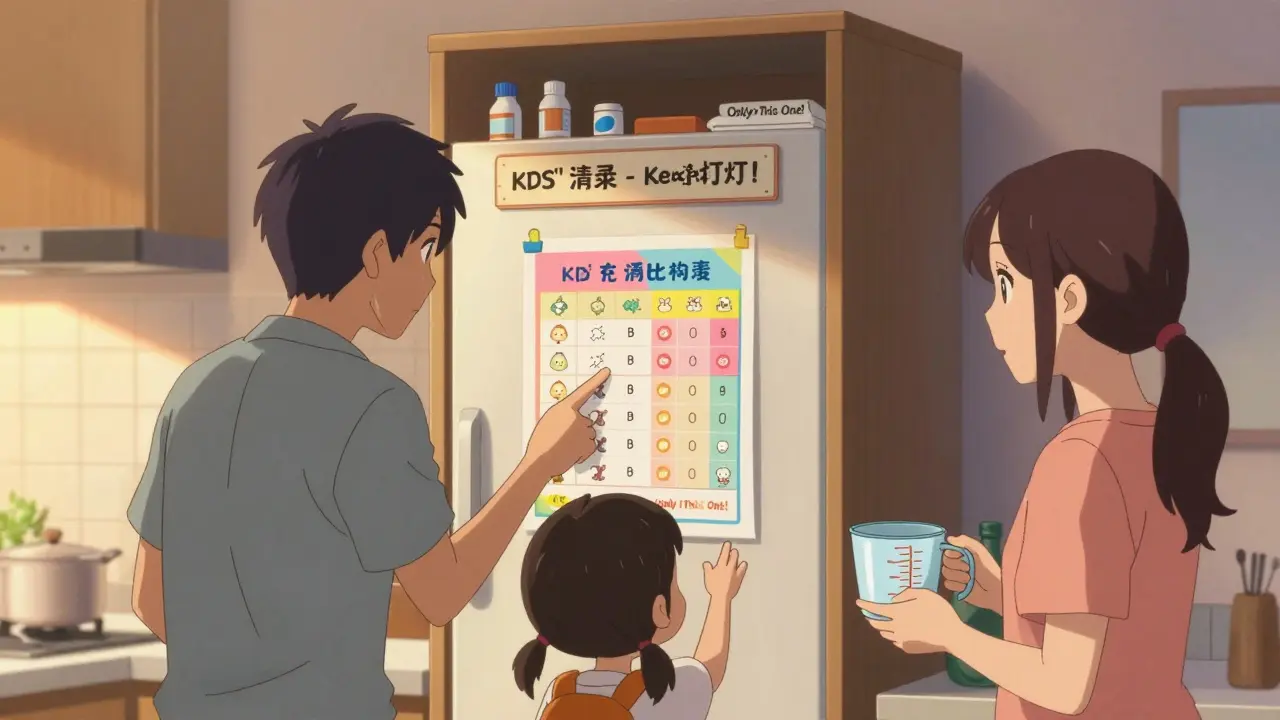
The FDA is requiring new safety studies for all antihistamines used in children under 2. Results are expected by late 2025. Early data from ongoing trials suggest cetirizine may soon be approved for infants as young as 3 months. But until then, doctors are using it off-label with careful dosing.Hospitals like Boston Children’s, St. Louis Children’s, and Children’s Hospital Colorado now have standardized protocols that make cetirizine the first-line treatment for allergic reactions in kids. Diphenhydramine is reserved for emergency situations-like anaphylaxis-under direct medical supervision.
Prescriptions for second-generation antihistamines in children have grown by 17.3% each year since 2018. That’s because more parents and doctors are learning the facts: older antihistamines are outdated and risky. The future of pediatric allergy care is safer, smarter, and more precise.
What Parents Should Do Today
1. Stop using Benadryl for routine allergies. It’s not the best choice for kids. 2. Switch to cetirizine or loratadine. These are safer, more predictable, and just as effective for most allergic symptoms. 3. Use only the measuring device that comes with the medicine. No spoons, no eyeballing. 4. Check every label. Chewables and liquids vary in strength. Know exactly how many milligrams you’re giving. 5. Call your pediatrician before giving any antihistamine to a child under 2. Even if it’s “just a rash.” 6. Keep all medications out of reach. Children’s antihistamines look like candy. Store them locked away.Antihistamines can be lifesavers for kids with allergies-but only when used correctly. The goal isn’t just to stop the sneezing. It’s to keep your child safe while doing it.
Can I give my 1-year-old Benadryl for allergies?
No, Benadryl (diphenhydramine) is not recommended for children under 2 years unless a doctor specifically prescribes it. The FDA warns it can cause dangerous side effects like extreme drowsiness, confusion, or breathing problems in young children. Safer options like cetirizine (Zyrtec) are available and approved for infants 6 months and older.
What’s the right dose of Zyrtec for a 2-year-old?
For a 2-year-old, the standard dose of cetirizine (Zyrtec) is 2.5 mg once daily. That’s half a teaspoon of the liquid formulation (5 mg per 5 mL). Do not exceed this dose unless directed by a doctor. Always use the measuring cup that comes with the bottle-never a kitchen spoon.
Is loratadine safer than cetirizine for toddlers?
Yes, loratadine (Claritin) is slightly less likely to cause drowsiness than cetirizine. Studies show only about 7% of children on loratadine feel sleepy, compared to 15% on cetirizine. For toddlers who need daily allergy control without any grogginess, loratadine is often the better choice. But both are far safer than diphenhydramine.
Can I give my child adult antihistamines by cutting the pill?
No. Adult tablets are not designed to be split safely for children. Even if you cut a 10 mg tablet in half, you might not get exactly 5 mg. Some tablets are not scored evenly, and the dose can be inaccurate. Always use the child-specific liquid or chewable forms with clearly labeled dosages.
Why do some doctors still prescribe Benadryl to kids?
Some doctors still prescribe it out of habit or because it’s fast-acting for sudden reactions like hives or insect bites. But experts agree it’s not ideal. First-generation antihistamines like Benadryl have more side effects and are not recommended for routine use in children. Most pediatric allergists now prefer second-generation options like cetirizine or loratadine for long-term management.
How do I know if my child is having an allergic reaction or just a cold?
Allergic reactions often include itchy eyes, sneezing, runny nose with clear mucus, and skin rashes like hives. Colds usually come with thick yellow mucus, sore throat, fever, and body aches. Allergies don’t cause fever. If you’re unsure, track symptoms over time. Allergies tend to happen at the same time each day or season. A pediatrician can help confirm the cause.
Caitlin Foster
December 28, 2025 AT 20:26Oh wow, Benadryl? The pediatric version of ‘I didn’t read the label’? 🙃 I gave my 18-month-old a ‘tiny bit’ once because she was ‘just sneezing’-turns out ‘tiny bit’ = 3x the recommended dose. She slept for 14 hours, woke up screaming at the ceiling, and I spent the next week Googling ‘is my child brain-damaged from antihistamines?’ Spoiler: she’s fine. But I’m never again trusting a drug that comes in grape flavor and looks like candy. Cetirizine all the way now. No more ‘quick fixes.’
Andrew Gurung
December 29, 2025 AT 03:32Let me be the first to say this: if you’re still using Benadryl for your toddler, you’re not a parent-you’re a walking FDA violation. 🤦♂️ Cetirizine isn’t just ‘safer,’ it’s the *only* rational choice. Loratadine? Fine. But if you’re splitting adult tablets like you’re in a chemistry lab… you’re one spoonful away from the ER. I’ve seen it. I’ve cried. I’ve filed reports. Don’t be that person. Your kid deserves better than your ignorance.
Paula Alencar
December 30, 2025 AT 13:50As a pediatric nurse with over two decades of experience in emergency departments, I cannot overstate the gravity of this issue. The normalization of diphenhydramine use in households across America is not merely a medical oversight-it is a systemic failure of public health education. Parents are not malfeasant; they are misinformed. The marketing of Benadryl as a ‘gentle sleep aid’ for children has created a cultural blind spot that has cost lives. The data is unequivocal: second-generation antihistamines are not merely preferable-they are ethically imperative. I urge every caregiver to consult the AAP guidelines, to measure with precision, and to never, ever use medication as a sedative. Our children’s neurological development is not negotiable.
Chris Garcia
December 31, 2025 AT 03:17In my village in Nigeria, we use neem leaves, honey, and prayer for allergies. But I have seen American hospitals-clean, bright, filled with machines-and I know science has its place. Still, I wonder: why do we forget that medicine is not just dosage and labels, but trust? The father who cuts a pill with a knife, the mother who gives ‘just a spoonful’-they are not fools. They are tired. They are afraid. The answer is not just Zyrtec-it is education that walks beside them, not above them. Let us not replace one poison with another, but replace fear with knowledge. And let us never forget: a child’s body is not a scaled-down adult. It is a universe unto itself.
Satyakki Bhattacharjee
December 31, 2025 AT 09:17This whole post is just corporate propaganda. Benadryl has been around for 70 years. If it was so dangerous, why is it still sold? You people want to scare parents into buying expensive pills made by big pharma. My cousin gave his kid Benadryl for 5 years and he’s now a doctor. So stop the fearmongering.
Kishor Raibole
January 2, 2026 AT 01:52While I acknowledge the empirical data presented, I must respectfully challenge the underlying epistemological assumption that clinical guidelines constitute moral authority. The privileging of second-generation antihistamines reflects not merely pharmacological superiority, but a broader cultural shift toward medicalization of childhood behavior. One must ask: why is drowsiness deemed an unacceptable side effect, rather than a natural physiological response? Is the modern child’s hyperactivity so intolerable that we must engineer pharmacological neutrality? The FDA’s stance, while statistically sound, may inadvertently suppress the holistic understanding of pediatric physiology. One cannot reduce a child’s immune response to a milligram-per-kilogram equation.
John Barron
January 3, 2026 AT 12:25UPDATE: I just checked my kid’s Zyrtec bottle. The measuring cup says ‘1 tsp = 5mg’ but the label says ‘5mg per 5mL’. I used a kitchen spoon once. I think I gave him 7mL. I’m panicking. Is he going to die? 😭 I called Poison Control and they said ‘monitor for drowsiness or agitation.’ But I’ve been watching him for 4 hours and he’s just… quiet. Too quiet. Is that bad? Should I take him to the ER? I’m so stupid. I didn’t even know teaspoons vary. I thought everyone knew this. 😭
Liz MENDOZA
January 3, 2026 AT 16:25Thank you for this. I’m a single mom of two, and I’ve been terrified to give anything for fear of messing up. I used Benadryl last winter because I didn’t know better. I felt guilty for weeks. This post didn’t just give me facts-it gave me permission to stop blaming myself. I switched to Zyrtec last week. Used the cup. Measured exactly. My 3-year-old didn’t fall asleep at dinner. He played. He laughed. He asked for more grapes. That’s the win. You don’t need to be a doctor to do this right. You just need to care enough to learn. And you’re not alone.