
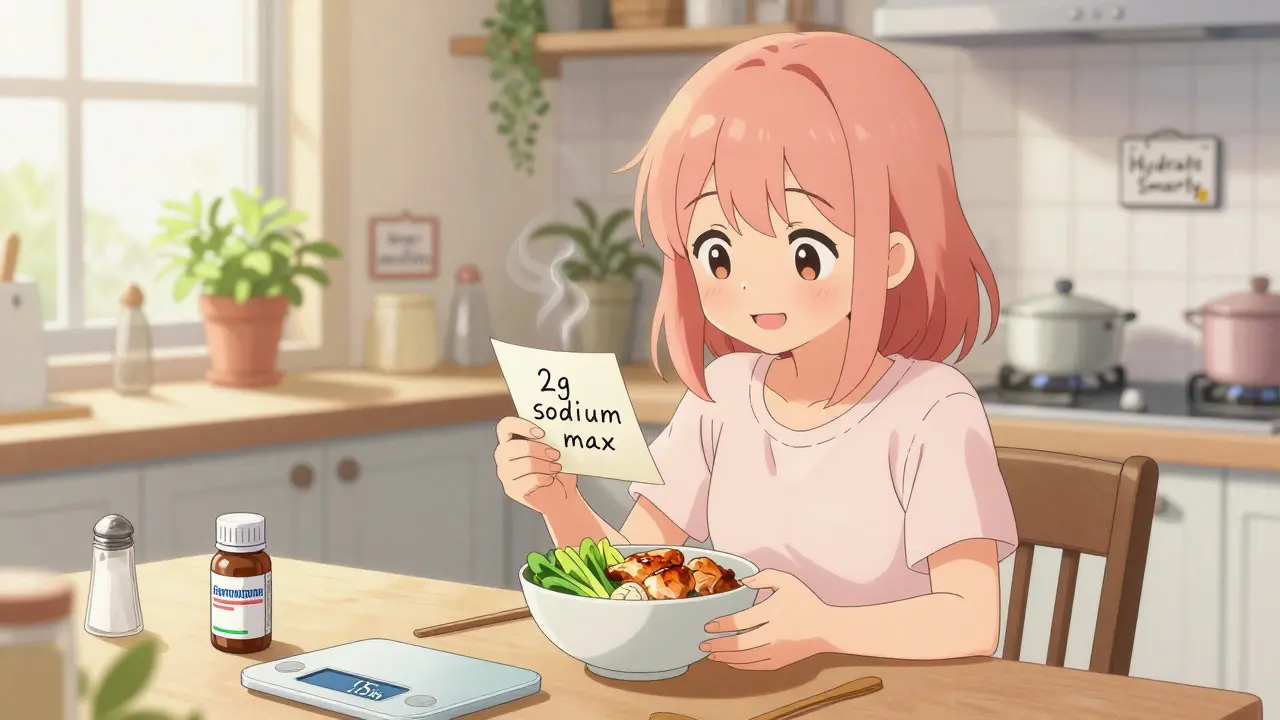
When fluid builds up in your belly because of advanced liver disease, it’s called ascites. It’s not just uncomfortable-it’s a warning sign that your liver isn’t keeping up. About half of people with cirrhosis will develop ascites within 10 years, and once it shows up, your chances of surviving the next two years drop by half. The good news? Most cases can be controlled with two simple tools: cutting back on salt and taking diuretics. But here’s the twist-the advice you’ve heard might be outdated.
Why Ascites Happens
Ascites doesn’t appear out of nowhere. It’s the result of two big problems working together: high pressure in the liver’s blood vessels (portal hypertension) and your kidneys holding onto too much salt and water. When your liver is damaged, blood can’t flow through it easily. That pressure backs up, forcing fluid out into your belly. At the same time, your body thinks it’s low on blood volume-even though there’s too much fluid in your abdomen. So your kidneys go into survival mode: hold onto salt. And where salt goes, water follows.
This isn’t just about drinking too much water. It’s about your body’s broken signals. The more your liver fails, the harder your kidneys work to keep fluid in, even when they shouldn’t. That’s why treating ascites isn’t about draining the belly alone-it’s about fixing the system behind it.
The Salt Debate: Less Is Better? Or Not?
For decades, doctors told patients with ascites to cut sodium to less than 2 grams a day. That’s about 5 grams of salt-roughly one teaspoon. It sounds simple, but try living on it. Most of the salt we eat doesn’t come from the shaker. It’s in bread, soup, canned veggies, sauces, and even breakfast cereal. A single slice of store-bought bread can have 200-400 mg of sodium. To hit under 2 grams a day, you’d need to eat almost nothing processed. And for people already struggling with appetite and muscle loss from liver disease, that’s dangerous.
Recent studies are flipping the script. In two randomized trials, patients who ate 5-6.5 grams of salt per day (about 2-2.5 grams of sodium) had better outcomes than those on strict low-salt diets. More of them saw their belly fluid go down. Fewer needed to have fluid drained out with a needle. Why? Because going too low on salt can make your kidneys work harder to hold onto every bit of sodium they can find. That can drop blood flow to the kidneys, increasing the risk of kidney failure-a common and deadly complication in cirrhosis.
Some experts, like Dr. Pere Gines, argue that strict salt restriction may actually make ascites worse. Others, like Dr. Guadalupe Garcia-Tsao, who helped write the official U.S. guidelines, still say 2 grams is the target-especially if you’re on diuretics. The truth? There’s no one-size-fits-all answer. Most hepatologists now adjust based on how you’re doing. If your sodium levels are low, your weight is dropping too fast, or you’re losing muscle, they’ll ease up on the salt.
Diuretics: The Real Workhorses
Diuretics are the main tool for getting rid of ascites. They’re not magic pills-they’re your kidneys’ boosters. The first-line drug is spironolactone. It blocks the hormone that tells your kidneys to hold onto salt. Doctors usually start with 100 mg a day and bump it up every few days, up to 400 mg if needed. It works slowly, but it’s gentle on your kidneys.
If that’s not enough, they add furosemide. This one kicks out more fluid, faster. You start with 40 mg a day, maxing out at 160 mg. The combo works better than either drug alone. But here’s the catch: you can’t just take these and eat whatever you want. Diuretics work best when paired with salt control-even if that control isn’t extreme.
How do you know it’s working? Weight loss. You should aim to lose no more than 0.5 kg (1 pound) a day if you don’t have swollen legs, and up to 1 kg (2 pounds) if you do. Losing weight faster than that risks dehydration and kidney damage. That’s why your doctor will check your blood sodium levels at least twice a week when you start treatment. If your sodium drops below 130, they’ll adjust your meds or fluids.

What to Avoid
Some common medicines can make ascites worse-or even trigger kidney failure. NSAIDs like ibuprofen or naproxen are a big no. They reduce blood flow to the kidneys, which your liver-damaged body can’t handle. ACE inhibitors and ARBs, often used for high blood pressure, are also risky. Studies show people on these drugs with cirrhosis are more than twice as likely to need dialysis.
Alcohol? Absolutely off-limits. Even small amounts can speed up liver damage. And while it’s tempting to drink more water to “flush things out,” that’s not helpful. In fact, if your sodium is already low, drinking too much fluid can make hyponatremia worse. Your doctor might tell you to limit fluids to 1-1.5 liters a day.
What If Diuretics Don’t Work?
About 5-10% of people with ascites don’t respond to maximum doses of diuretics. That’s called refractory ascites. Survival drops sharply-only half make it past six months without a transplant. At this point, the only reliable option is large-volume paracentesis: a procedure where a needle drains 5-10 liters of fluid from your belly in one session.
But here’s the key: you can’t just drain the fluid and walk away. You need albumin-a protein given through an IV-to replace what’s lost. Without it, your blood pressure can crash, and your kidneys can fail. Each liter of fluid removed needs 8 grams of albumin. That’s expensive and requires a hospital visit, but it’s life-saving.
Other drugs like vaptans (to block water retention) sound promising, but they’re costly-up to $7,000 for a month’s supply-and only approved for 30 days. They’re not a long-term fix.

Real-Life Challenges
Following dietary advice is harder than it sounds. One study found less than 40% of patients stick to strict salt limits. Why? Because it’s nearly impossible without help. Most people don’t know how much salt is in their food. A meal at a restaurant can have more than your entire daily limit.
And cirrhosis often comes with malnutrition. About 35-90% of patients don’t get enough protein or calories. If you’re cutting salt too hard, you might lose your appetite even more. That’s why some doctors now focus on protein-rich, low-sodium meals instead of just slashing salt. A chicken breast with herbs, steamed veggies, and brown rice is better than a salt-free processed meal with no flavor or nutrition.
Monitoring matters too. Keep a daily log: weight, urine output, how you feel. Bring it to your appointments. Small changes in weight or energy can signal trouble before it becomes an emergency.
The Future: Personalized Care
The old rulebook is crumbling. Instead of telling everyone to eat less than 2 grams of sodium, doctors are starting to ask: What’s your urine sodium? What’s your blood pressure? Are you losing muscle? Are you on the transplant list?
A new trial called PROMETHEUS, expected to finish in late 2025, is comparing unrestricted diets with strict restriction. It might finally give us the answer we’ve waited for since the 1950s.
Until then, the best approach is balance. Don’t panic over every grain of salt. Don’t skip your diuretics. Eat real food. Avoid processed junk. Stay hydrated-but not overhydrated. And work with your doctor to find the right mix for your body.
Ascites is serious. But it’s not a death sentence. With the right tools-and the right mindset-you can live well for years.
Can I still eat salt if I have ascites?
Yes-but not freely. Most guidelines recommend under 2 grams of sodium daily, but newer studies show moderate restriction (2-2.5 grams) may be safer and just as effective, especially when paired with diuretics. Avoid processed foods, canned soups, and salty snacks. Focus on fresh meats, vegetables, and home-cooked meals. Your doctor can help you find the right balance based on your blood tests and symptoms.
How long does it take for diuretics to reduce ascites?
Spironolactone usually starts working in 3-5 days, but you may not notice major changes for 1-2 weeks. Furosemide acts faster-sometimes within 24 hours. Most patients see noticeable fluid loss in 7-10 days. Weight loss should be slow: no more than 0.5-1 kg per day. Faster loss can lead to kidney problems or low blood pressure.
Can ascites go away completely?
In early or mild cases, yes-with strict adherence to diuretics and diet, ascites can resolve. But in advanced cirrhosis, it usually comes back. That’s because the root cause-liver damage-isn’t reversed. The goal isn’t always to eliminate fluid completely, but to control it so you feel better and avoid complications like infection or kidney failure. For many, it’s a long-term management issue.
What happens if I stop taking my diuretics?
Fluid will likely return quickly-sometimes within days. Stopping diuretics without medical supervision can cause rapid fluid buildup, increased belly pressure, breathing trouble, and higher risk of infection (spontaneous bacterial peritonitis). It can also trigger kidney failure. Never stop or change your dose without talking to your doctor first.
Is drinking more water helpful for ascites?
No. Drinking extra water doesn’t flush out ascites-it can make it worse. When your body has low sodium levels (common in ascites), too much water dilutes your blood further, leading to hyponatremia. This can cause confusion, seizures, or coma. Most doctors recommend limiting fluids to 1-1.5 liters per day if your sodium is low. Always follow your doctor’s advice on fluid intake.
Jillian Angus
December 22, 2025 AT 17:01Still take my spironolactone. Still check my weight every morning. Simple. Works.
Georgia Brach
December 24, 2025 AT 11:00Isaac Bonillo Alcaina
December 25, 2025 AT 00:50Bhargav Patel
December 26, 2025 AT 22:59Joe Jeter
December 27, 2025 AT 00:12Sidra Khan
December 27, 2025 AT 03:39Lu Jelonek
December 28, 2025 AT 03:23Ademola Madehin
December 29, 2025 AT 05:30siddharth tiwari
December 30, 2025 AT 12:04Diana Alime
December 31, 2025 AT 15:03Bartholomew Henry Allen
January 1, 2026 AT 03:49