
Every year, more people in Australia and around the world start taking antidepressants to manage depression, anxiety, or other mental health conditions. But what happens if you take too much? Or if you mix your medication with something else - even an over-the-counter cough syrup? The answer could be serotonin syndrome, a dangerous and sometimes deadly reaction that develops fast - often within hours.
What Exactly Is Serotonin Syndrome?
Serotonin syndrome isn’t just a side effect. It’s a medical emergency caused by too much serotonin building up in your nervous system. This happens when you take medications that increase serotonin levels, especially when they’re combined. Common culprits include SSRIs like sertraline or escitalopram, SNRIs like venlafaxine, and even some painkillers like tramadol or fentanyl. Even something as simple as a cold medicine with dextromethorphan can trigger it if taken with your antidepressant.The body doesn’t handle excess serotonin well. Your brain and nerves get overstimulated. Symptoms don’t creep in slowly - they hit hard and fast. Most people notice something’s wrong within 24 hours, and for many, it’s within just one to six hours after a new dose or drug interaction.
The Three Clusters of Warning Signs
Serotonin syndrome shows up in three clear ways: mental changes, body system overload, and muscle problems. You don’t need all of them to be in danger - even one or two together can mean trouble.Mental status changes include confusion, agitation, restlessness, or feeling unusually anxious. Some people report a sudden sense of panic or racing thoughts that feel out of control. In more severe cases, people become disoriented or even lose consciousness.
Autonomic hyperactivity means your body’s automatic systems go into overdrive. You might sweat heavily - even if it’s cool outside. Your heart races (over 100 beats per minute), your blood pressure spikes, and your breathing becomes rapid. Your pupils may widen noticeably. And your body temperature can climb dangerously high - above 38°C (100.4°F) is a red flag. In extreme cases, fever hits 41°C (106°F), which can lead to organ failure.
Neuromuscular symptoms are the most telling. The biggest red flag is clonus - that’s when your muscles contract and relax uncontrollably. You might notice your foot jerking repeatedly when you point your toes, or your fingers twitching without meaning to. Tremors, muscle stiffness, and exaggerated reflexes (like your knee jerking too hard when tapped) are also common. These aren’t normal shakes or spasms. They’re specific, abnormal movements that doctors look for to confirm the diagnosis.
What Does a Serious Case Look Like?
Mild cases might feel like a bad flu: nausea, sweating, shakiness. But severe serotonin syndrome is life-threatening. Signs you need emergency help right now:- High fever above 38.5°C (101.3°F)
- Muscles so stiff you can’t move them
- Seizures
- Irregular heartbeat
- Loss of consciousness
These aren’t things you can wait out. Delaying treatment increases the risk of rhabdomyolysis - when muscles break down and flood your kidneys with toxic proteins - or multi-organ failure. Death rates range from 0.5% to 12%, depending on how quickly you get care.

Why People Miss the Signs
Too many people think they’re just anxious, or coming down with the flu. One Reddit thread with over 1,200 comments from people who’ve experienced serotonin syndrome showed that 68% weren’t warned about this risk when they started their antidepressant. They assumed the tremors or nausea were just part of adjusting to the medication.Even doctors can miss it. Studies show nearly one in four cases are misdiagnosed. It’s often confused with neuroleptic malignant syndrome (NMS), which has similar symptoms but develops over days, not hours. NMS causes slow, stiff muscles and low reflexes - the opposite of serotonin syndrome’s hyperactive reflexes and clonus. It’s also mistaken for anticholinergic toxicity, which gives you dry mouth and constipation - not the sweating and diarrhea you see in serotonin syndrome.
What to Do If You Suspect It
If you’re taking an antidepressant and suddenly feel off - especially after starting a new drug or changing your dose - stop everything and get help. Don’t wait. Don’t text your doctor. Call an ambulance or go to the nearest emergency room.At the hospital, doctors will:
- Stop all serotonergic drugs immediately
- Give you IV fluids to prevent dehydration from vomiting and sweating
- Use cooling methods (like ice packs or fans) to bring down your temperature
- Administer benzodiazepines like lorazepam to calm muscle spasms and reduce agitation
- If it’s severe, give cyproheptadine - the only specific antidote - usually starting with 12mg orally, then repeating every 2 hours until symptoms improve
Most people start feeling better within 24 to 48 hours if treated early. Recovery can take up to a week in serious cases, but survival rates are high with prompt care.
How to Prevent It
The best way to avoid serotonin syndrome is to know what you’re taking - and what you shouldn’t mix with it.- Never combine SSRIs or SNRIs with MAOIs without a 14-day gap. This is non-negotiable.
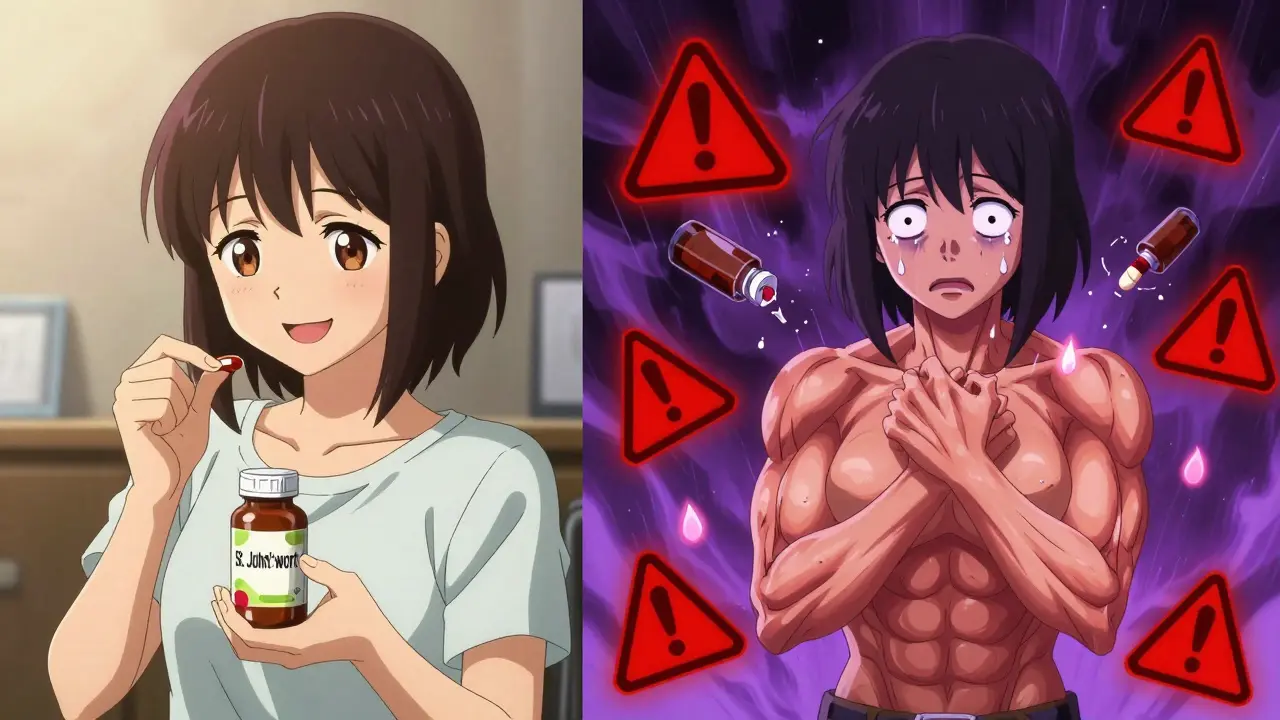
- Check every new medication - even cough syrups, herbal supplements like St. John’s Wort, or painkillers - with your pharmacist or doctor before taking it.
- If you’re switching antidepressants, ask for a clear washout plan. Don’t assume your doctor will remember every medication you’ve taken.
- Keep a written list of all your medications, including doses and when you take them. Bring it to every appointment.
- If you’re prescribed a new drug and feel strange within hours, don’t blame yourself. Ask: “Could this be serotonin syndrome?”
Research shows that when patients are educated about interactions, the risk drops by nearly half. When doctors do full medication reviews, risk falls by over 60%. You’re not being paranoid - you’re being smart.
Why This Is Getting Worse
In Australia, reports of serotonin syndrome have risen 38% since 2015. Why? More people are on antidepressants. More people are on multiple drugs at once. Over 78% of cases involve two or more serotonergic medications. SSRIs are the most common trigger (62%), followed by SNRIs (24%), and MAOIs (8%).Doctors are treating complex mental health conditions with combinations of drugs - and that’s often necessary. But without clear communication, the risk goes up. You’re not alone in this. But you need to be the one watching for signs.
Final Reminder
Serotonin syndrome doesn’t care if you’re “just taking a little extra” or “didn’t think it would matter.” It doesn’t wait for you to feel better. It doesn’t care if you’re young, healthy, or have been on the same meds for years.If you feel sudden shaking, confusion, high fever, or muscle stiffness - especially after a medication change - act fast. Your life depends on recognizing the signs before it’s too late.
Josh josh
January 25, 2026 AT 06:55bro i took tramadol with my zoloft once and thought i was having a panic attack but my fingers were doing that weird twitchy thing and i swear my eyes felt like they were gonna pop out
called my doc next day and they were like oh lol thats serotonin syndrome
im lucky i didnt end up in the er
Sally Dalton
January 26, 2026 AT 04:45i had no idea this was even a thing until my best friend almost died last year. she was on cymbalta and took a cold med with dextro and started shaking so bad she couldn’t hold her coffee cup. her mom thought she was having a seizure. by the time they got to the hospital she was at 104°F. they had to sedate her and give her that cyproheptadine thing. it’s wild how fast it hits. i now check every single med with my pharmacist before i take it. seriously, if you’re on an SSRI, don’t be lazy. your life matters.
Nicholas Miter
January 26, 2026 AT 12:32just wanted to say this post is one of the most clear, non-alarmist, actually useful things ive read about mental health meds. most people either panic or ignore it. you laid it out like a medical textbook but in english. i showed this to my cousin who’s on lexapro and her mom thought she was just ‘being dramatic’ about her tremors. now she’s got the list printed and taped to the fridge. thank you.
Ashley Karanja
January 28, 2026 AT 02:31as someone who’s been on three different SNRIs over the last decade, i can’t stress enough how the neuromuscular symptoms are the dead giveaway. clonus isn’t just ‘shaking’ - it’s like your body is trying to tap-dance without your permission. i once thought i had restless leg syndrome until i realized it only happened after i took a melatonin gummy with my venlafaxine. now i keep a meds log on my phone with color-coded alerts. if it says ‘serotonergic’ - i double-check. the fact that doctors don’t routinely warn patients is criminal. we’re not just numbers on a prescription pad.
Shweta Deshpande
January 28, 2026 AT 11:57my sister had this after switching from fluoxetine to escitalopram without a washout period. she was fine for two days, then woke up screaming because her legs wouldn’t stop moving. the ER doctor said she was lucky she didn’t have seizures. now she’s on a stable dose and we all know the warning signs. i even made a little chart for our family group chat - clonus, fever, confusion - if you see two, call 911. no waiting. no ‘maybe it’ll pass.’ this isn’t anxiety, it’s your body screaming.
Geoff Miskinis
January 30, 2026 AT 05:19While the clinical description is accurate, the narrative framing exhibits a concerning tendency toward medical sensationalism. The mortality rate cited (0.5%-12%) is contextually misleading without stratification by severity tier, and the assertion that ‘you’re not being paranoid - you’re being smart’ implicitly delegitimizes legitimate patient autonomy in medication management. One might argue that the real issue lies in fragmented pharmacovigilance systems, not individual negligence.
TONY ADAMS
January 30, 2026 AT 15:12so i took a cough syrup with dextro and my zoloft and thought i was gonna die
my heart was going like a jackhammer and i couldnt stop sweating
called my mom and she said ‘just chill’
i said ‘mom i think im melting’
she drove me to the hospital
they gave me benzos and i slept for 12 hours
now i dont even touch cold medicine
Mohammed Rizvi
January 30, 2026 AT 18:27in india we call this ‘jugaad overdose’ - when you mix your antidepressant with some ayurvedic ‘nerve tonic’ from the local shop because ‘it’s natural’. last month, a guy in Bangalore ended up in ICU after combining fluoxetine with ashwagandha + a cough syrup. no one told him that ‘natural’ doesn’t mean ‘safe with SSRIs’. we need public service ads on this. not just in the US. this is a global silent killer.
Curtis Younker
January 31, 2026 AT 00:07yo i just wanna say this is the kind of post that makes me believe reddit can still be a force for good. i’ve been on antidepressants for 8 years and never once had a doctor sit down and say ‘hey, if you take this with that, your body might turn into a human lava lamp.’ i’ve had tremors, night sweats, even that weird foot clonus - thought i was just ‘anxious’. now i’m the guy who brings a printed meds list to every appointment. i even made a QR code that links to this article and put it on my pill organizer. if you’re reading this and you’re on meds - please, don’t be the person who waits until it’s too late. you’re not weak for asking. you’re smart for knowing.
Suresh Kumar Govindan
February 1, 2026 AT 19:47It is statistically evident that 78% of cases involve polypharmacy. The pharmaceutical industry’s incentive structure incentivizes polypharmacy over patient education. The rise in serotonin syndrome cases correlates directly with the commodification of mental health care. The fact that cyproheptadine is not universally stocked in emergency departments is a systemic failure. This is not a medical issue - it is a capitalist failure.
Shawn Raja
February 3, 2026 AT 18:33so we’ve got a society where we’re okay giving people powerful brain-altering drugs like candy, but if you ask ‘what if i mix this with my NyQuil?’ they treat you like you’re asking if the moon is made of cheese. we medicate depression but don’t teach people how not to kill themselves with the cure. it’s like giving someone a chainsaw and saying ‘be careful’ without teaching them how to hold it. and then when they cut their leg off, we say ‘why didn’t you read the manual?’ - but the manual was written in Latin and sold separately.
bella nash
February 4, 2026 AT 08:40The conflation of mild transient side effects with clinical serotonin syndrome is a diagnostic hazard. While the triad of symptoms is well-documented, the absence of objective biomarkers renders clinical diagnosis inherently subjective. Furthermore, the reliance on patient self-reporting introduces significant recall bias. The article, while well-intentioned, may inadvertently promote iatrogenic anxiety among patients who misattribute benign autonomic fluctuations as life-threatening pathology.
Betty Bomber
February 6, 2026 AT 05:07my therapist told me to never mix meds without checking. i thought she was being extra. then i took melatonin with my lexapro and my whole body felt like it was buzzing. i thought i was having a stroke. turned out it was just serotonin overload. now i have a sticky note on my mirror: ‘no new meds without pharmacy check’. small thing. big difference.
Rakesh Kakkad
February 6, 2026 AT 19:18As a medical professional in Mumbai, I have observed a distressing trend: patients self-prescribe antidepressants based on online forums and combine them with traditional herbal remedies without disclosing such usage to clinicians. The absence of centralized electronic health records in India exacerbates this risk. It is imperative that pharmacists assume the role of gatekeepers and initiate mandatory counseling upon dispensing serotonergic agents. This is not a cultural issue - it is a public health emergency.